AP Psychology Unit 1 History & Approaches NS
 Call Kai
 Learn
Learn Practice Test
 Spaced Repetition
 Match
Match Flashcards
 Knowt Play
1/32

There's no tags or description
Looks like no tags are added yet.
Name | Mastery | Learn | Test | Matching | Spaced | Call with Kai | Chat |
|---|
No analytics yet
Send a link to your students to track their progress
33 Terms
Empiricism
The view that knowledge originates in experience and that science should therefore rely on observation and experimentation.

Structuralism
Developed by Edward Bradford Titchener, it focused on self-reflection and introspection. Highly unreliable.

Functionalism
A school of psychology that focused on how our mental and behavioral processes enable us to adapt, survive, and flourish.

Experimental Psychology
The study of behavior and thinking using the experimental method.

Behaviorism
The view that psychology (1) should be an objective science that (2) studies behavior without reference to mental processes.

Humanistic Psychology
The historically significant perspective that emphasized the growth potential of healthy people and the individual's potential for personal growth.

Cognitive Neuroscience
The interdisciplinary study of the brain activity linked with thinking including perception, thinking, memory, and language.

Psychology
The science of behavior and mental processes.

Nature-Nurture Issue
The longstanding controversy over the relative contributions that genes and experience make to the development of psychological traits and behaviors. Today's science sees traits and behaviors arising from the interaction of the two.

Natural Selection
The principle that, among the range of inherited trait variations, those contributing to reproduction and survival will most likely be passed on to succeeding generations.

Biopsychosocial Approach
An integrated approach that incorporates biological, psychological, and social-cultural levels of analysis.

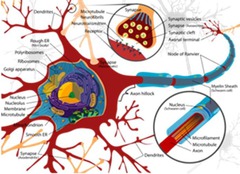
Biological Psychology
A branch of psychology concerned with the links between biology and behavior.
Evolutionary Psychology
The study of the roots of behavior and mental processes using the principles of natural selection.

Psychodynamic Psychology
A branch of psychology that studies how unconscious drives and conflicts influence behavior, and uses that information to treat people with psychological disorders.

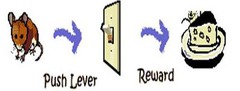
Behavioral Psychology
Method of changing abnormal behavior thru systematic program based on the learning principles of CLASSICAL conditioning, OPERANT Conditioning, or OBSERVATIONAL Learning.
Cognitive Psychology
The scientific study of all the mental activities associated with thinking, knowing, remembering, and communicating.

Social-Cultural Psychology
The study of how situations and cultures affect our behavior and thinking.

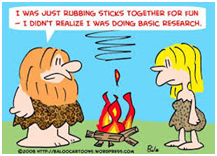
Basic Research
One of the two main types of research, pure research that aims to confirm an existing theory or to learn more about a concept or phenomenon
Developmental Psychology
A branch of psychology that studies physical, cognitive, and social change throughout the life span.

Educational Psychology
The study of how psychological processes affect and can enhance teaching and learning.

Personality Psychology
The study of an individual's characteristic pattern of thinking, feeling, and acting.

Social Psychology
The scientific study of how we think about, influence, and relate to one another.

Applied Research
One of the two main types of research, conducted specifically to solve practical problems and improve the quality of life.

Industrial-Organizational (I/O) Psychology
The application of psychological concepts and methods to optimizing human behavior in workplaces.

Counseling Psychology
A branch of psychology that assists people with problems in living (often related to school, work, or marriage) and in achieving greater well-being.

Clinical Psychology
A branch of psychology that studies, assesses, and treats people with psychological disorders.

Psychiatry
A branch of medicine dealing with psychological disorders; practiced by physicians who often provide medical (for example, drug) treatments as well as psychological therapy.

Frued
founder of psychoanalysis

Watson
Behaviorism; "Little Albert Study"; aversion therapy

John Locke
tabula rasa (blank slate)

Dorthea Dix
woman who pushed for changes in the treatment of the mentally ill and founded 32 mental hospitals

Gestalt Psychology
a psychological approach that emphasizes that we often perceive the whole rather than the sum of the parts

Psychoanalysis
Freud's theory of personality that attributes thoughts and actions to unconscious motives and conflicts; the techniques used in treating psychological disorders by seeking to expose and interpret unconscious tensions