Suturing
 Call Kai
 Learn
 Practice Test
 Spaced Repetition
 Match
 Flashcards
 Knowt Play
1/16

There's no tags or description
Looks like no tags are added yet.
17 Terms
Why is the number of throws given in a knott a balance?
Need to both ensure knott is tight AND minismise the suture material left in the patient
What is a gambee knott?
Appositional pattern for gut mucosa


What type of knott is this?
Interrupted intradermal / subcuticular

What type of suture is this?
Ford interlocking
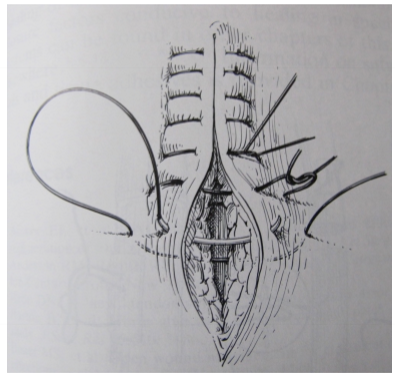
What type of suture is this?
Interrupted vertical mattress

What type of suture is this?
interrupted horizonal mattress
What is the name of an interrupted inverted stitch
Interrupted lambert


What type of contious inverting stitch is this?
Continous lembert
What type of stitch is this (continuos inverting)
Halstead

What type of stitch is this? (continuos inverted)
Cushing / Connell
What is the difference between a cushing / connel suture?

What three layers need closing in the abdmonial wall?
muscle
sub-cutaneous
skin
How should we close the muscle layer when closing the abdomen?
Usually simple continuous (or interrupted)
Knots facing out of abdomen (not buried)
How should we close the suncutaneous layer when closing the abdomen
Usually simple continuous
need to eliminate the dead and bring skin edges together
Want knots to be facing downwards do they dont poke through the skin layer (buired knot)
How should we close the skin layer when closing the abdominal wall
Usually a cruciate mattress
could be simple interrupte but requires more sutures
MUST BE LOOSE
allow for sweling
purely cosmetic
What equipment should be used for hollow organs
Hollow organs (intestine/uterus/bladder etc) require the use of atraumatic forceps and round bodied
needles.
What equipment should be used for dense tissue such as skin / tendons?
Forceps that can cause more tissue trauma e.g. Treves should only be used for dense tissue,
such as skin and fascia.