CVD Pt II
 Call Kai
 Learn
 Practice Test
 Spaced Repetition
 Match
 Flashcards
 Knowt Play
1/17

There's no tags or description
Looks like no tags are added yet.
18 Terms
What are two pathogenesis’ of atherothrombotic disease?
endothelial dysfunction
damage to vascular wall
What is endothelial dysfunction?
biochemical factors and functional changes which promote the development of atherosclerotic lesions
What are five biochemical factors which can promote the development of atherosclerotic lesions?
increased cytokines
increased adhesion molecules (attract immune cells)
increased growth factors
increased inflammation
decreased NO (NO by itself is important for contraction and relaxation of vascular wall)
What are two functional changes that can occur due to the biochemical factors that promote the development of atherosclerotic lesions?
vasoconstriction
platelet aggregation
What are atherosclerotic lesions?
related to the deposition of lipid within the vascular wall (fatty streak) and the development of a harder plaque and fibrosis around the fatty streak
What are three ways that we can get damage at the vascular wall?
stress of high BP
oxidation stress
inflammatory responses
Why is damage at the vascular wall bad?
monocytes are attracted to the damage
bring lipids (such as LDL) which promote more oxidation and plaque buildup as a result of the oxidation
plaque can build up and break apart and have a thrombosis (clot)
What are the two main things regarding the cause of atherosclerosis?
LDL
Inflammation
used to think it was all LDL, however now know that inflammation is the main main driver
Characteristics surrounding LDL as the main causal factor of atherosclerosis.
too much LDL circulating bc LDL receptor mediated uptake is too low
LDL particles can traffic in and out of sub-endothelial spaces however its when they are retained through the sub-clinical oxidation process which is when its an issue (LDL is attracted by inflammation but is also a trigger for sub-clinical inflammation)
LDL gets older and smaller and thus can squeeze between endothelial cells
Characteristics surrounding inflammation as the main causal factor of atherosclerosis.
inflammation that can have multiple sources (excess adipose, GI tract, smoking)
increases chronic levels of circulating cytokines and inflammatory mediators
causes damage to endothelial wall due to presence of inflammatory meditators and sheer stress (high BP)
old, small LDL get into sub-endothelial space, which are oxidized by immune cells already present
What are six promotors of plaque progression?
pro-inflammatory state
insulin resistance
elevated BP
atherogenic dyslipidemia (high blood circulating lipids)
pro-thrombotic sate
abdominal obesity
How do we know that LDL is not the primary cause of atherosclerosis/CVD?
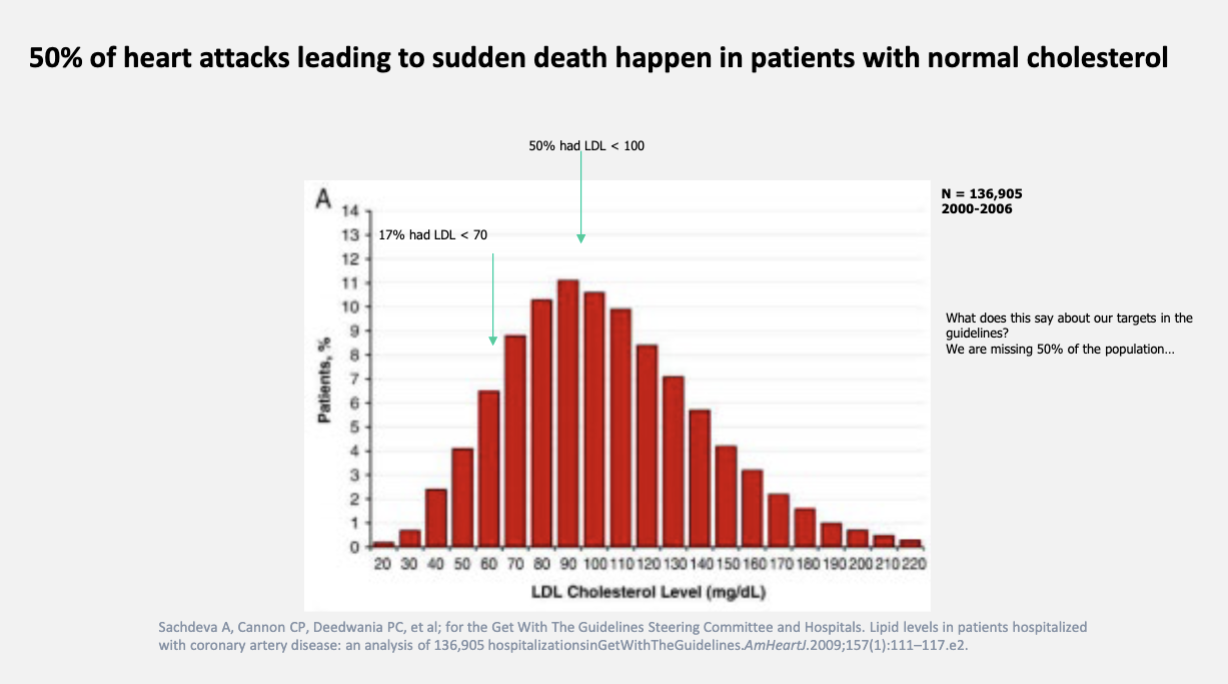
target for CHOL = < or equal to 100
shows that CHOL is not the only factor; it is also other cardiometabolic factors (subclinical inflammation, high levels of glycemia, insulin resistance, BP, etc)
What is hyperlipidemia?
elevation of plasma lipids and lipoproteins
cholesterol (Chol), chol esters (CE), triglycerides (TG), and apolipoproteins
What are four lipid panel measures that come from blood work?
total chol
HDL chol
TG directly
LDL chol (calculated from other values)
What equation is used to calculate LDL chol?
Friedwald equation
LDL chol = tot chol - (HDL + (0.2 x TG))
only valid when TG are within normal values
What are two commonly used lipid ratios?
total chol/HDL
LDL/HDL
Besides diet and PA, what are other factor can influence lipoprotein concentrations?
gene variation (can affect plasma lipoprotein concentrations and therapeutic response to diet modifications)
there are many proteins that are genetically determined
What some genetically driven proteins that influence cardiovascular risk in terms of lipid levels? (5)
apoB
LDL receptor
apoE → several genotypes
apoA
Lp(a) → not modified by diet but genetically driven lipoprotein that is athrogenic