Chinese Art and Periphery Midterm
 Call Kai
 Learn
 Practice Test
 Spaced Repetition
 Match
 Flashcards
 Knowt Play
1/24

There's no tags or description
Looks like no tags are added yet.
25 Terms
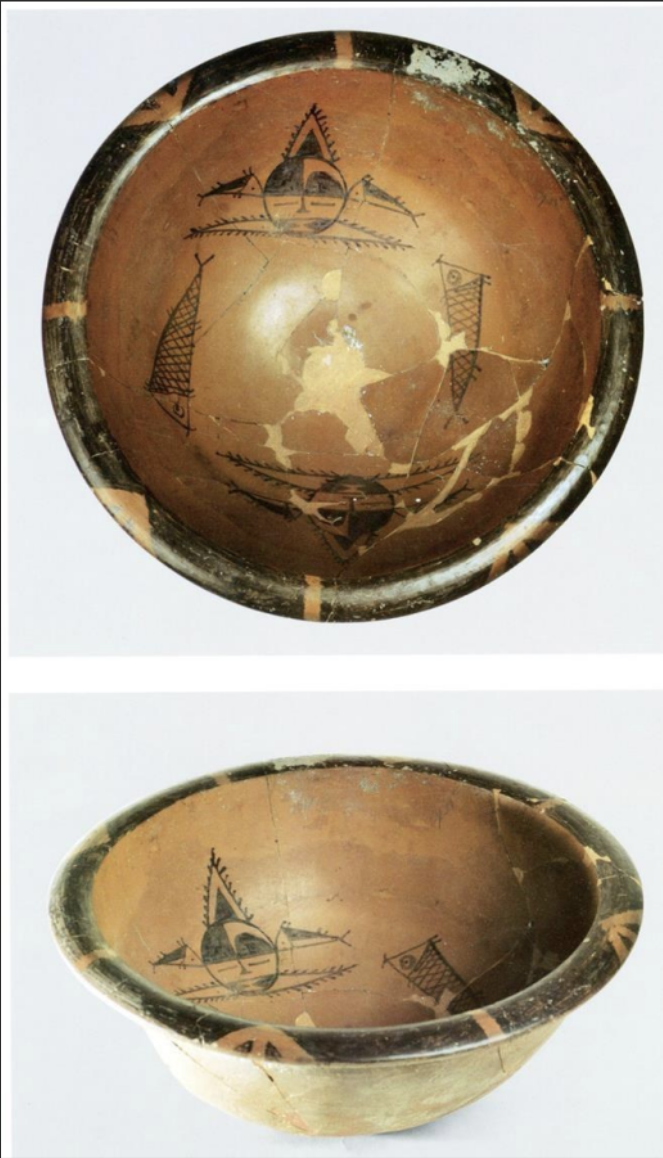
Name: Banpo painted basin (human face and fish design)
Date: 5th Millenium, Yangshao culture
Material: Earthenware with Paint
Province: Banpo, Shaanxi
Meaning: The human-fish composition is often linked to ritual or burial use, since such basins were used as child urn-burial covers. It shows that painting and ritual meaning appear long before bronze.

Name: Majiayao Painted jar with spiral designs
Date: 4000 BCE, late neolithic period (Majiayao Culture)
Material: Painted earthenware
Province: Yellow River region, Gansu Province
Meaning: Shows that the northwest, a “periphery” of the later Central Plains, had a sophisticated painted-pottery tradition of its own. The dynamic swirls contrast with the more representational Banpo style.
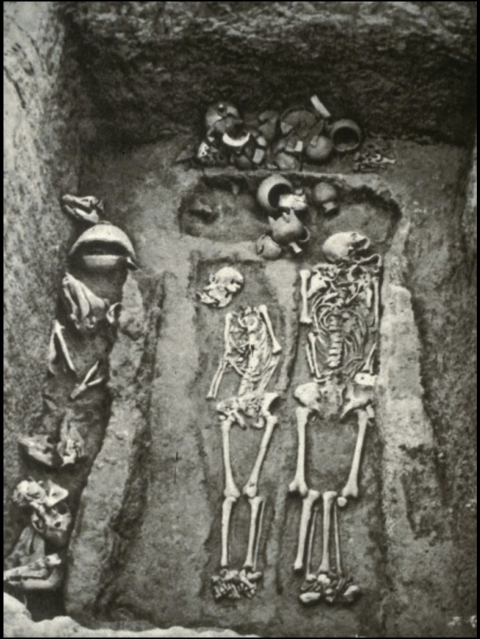
Name:Dawenkou Tomb No.10
Date: 4th-3rd millennium BC Late Neolithic Period
Material: Excavation photograph; human remains, ceramic vessels
Province: Excavation Site in Shandong Province
Meaning: Grave goods show social differentiation and early ritual practice. Burial assemblages are how the Chinese reconstruct belief and hierarchy.

Name: Shimao site
Date: 2000 BC, late Neolithic Era (Longshan Culture)
Material: Stone-faced rammed-earth architecture
Province: Shenmu, Shaanxi Province
Meaning: A massive walled city in the northern frontier shows that major centers were not limited to the Central Plains. Also had Human sacrifices.

Name: Stem Cup
Date: 3rd Millennium, Longshan Culture (Neolithic Period)
Material: Eggshell Ware
Province: Chucheng, Shadong Provence
Meaning: Technically demanding, ritual-quality ceramics suggest specialized craftsmen and elite use. Were buried with rich upperclass nobles. Probably signified status.

Name: Jade Cong
Date: 3300–2200 BCE, Neolithic (Liangzhu culture)
Material: Carved neprite jade
Province: Lower Yangzi Region, Zhejiang Province
Meaning: Jade working without metal tools shows large-scale organized labor and ritual authority in a southeastern culture. The cong form persists in later Chinese ritual tradition.
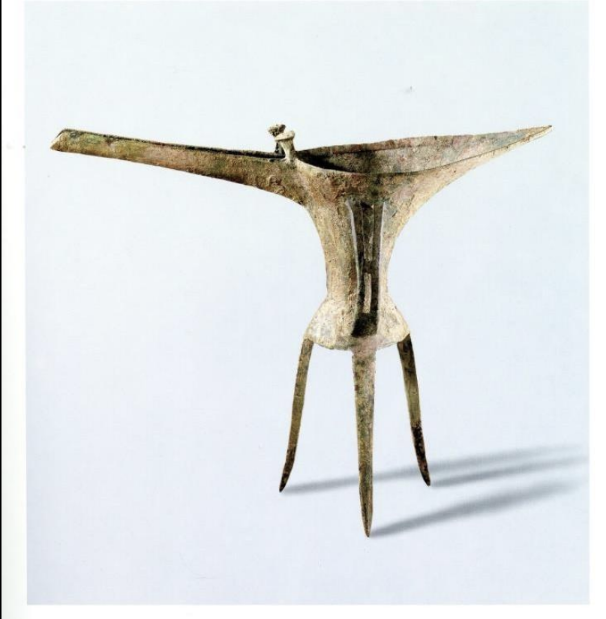
Name: Bronze Jue
Date: 2nd Millenium BC, Late Xia Dynasty
Material: Cast bronze, piece-mold, with three blade legs
Province: Erlitou, Yanshi, Henan Province
Meaning: Among the earliest cast ritual bronzes. It establishes the vessel-based ritual system of drinking and offerings that defines the Shang.

Name: Houmuwu Bronze Ding
Date: 13th century BC, Late Shang Dynasty
Material: Piece-mold cast bronze
Province: Anyang, Henan Province
Meaning: Monumental scale and taotie decoration indicate royal power and sacrificial ritual. It shows the Erligang expansion of a standardized bronze style from the center.

Name: Bronze rhino zun vessel
Date: 11th century BCE, late Shang Dynasty
Material: Cast bronze with patina
Province: Liangshan, Shandong Province
Meaning: Zoomorphic vessels show the naturalism and imagination of Shang casting. The rhinoceros hints at the environment and long-distance resources of the Shang world.

Name: Bronze Square Ding
Date: Mid 2nd Millenium B.C, mid Shang Dynasty
Material: Piece-mold cast bronze
Province: Zhengzhou, Henan province
Meaning: Shows the full Anyang style of layered pattern, which the Loehr and Nickel readings analyze. It is used to discuss casting technique and “imperfect symmetry.”

Name: Fengchu Western Zhou Dynasty royal temple
Date: 11th century BCE, early Western Zhou Dynasty
Material: Line-drawing reconstruction of rammed-earth and timber architecture
Province: Fengchu, Qishan, Shaanxi Province
Meaning: Early evidence of the enclosed courtyard plan that shapes later Chinese architecture. It ties to Wu Hung’s argument about monumentality and ancestral ritual space.

Name: Mao Gong Ding
Date: 9th Century BC, Western Zhou Dynasty
Material: Cast bronze; ink rubbing on paper
Province: Qishan, Shaanxi Province
Meaning: Dings were used widely as ritual vessels and became hierarchical symbols during the Zhou dynasty.

Name: Bronze Hu Vessel
Date: 5th century BC, Eastern Zhou Dynasty
Material: Bronze with inlaid or incised figural scenes
Province: Central Plains, Henan Province
Meaning: Narrative imagery replaces monster-mask ornament, showing bronzes shifting from ritual awe to depiction of elite life. Rubbings are how scholars “unroll” curved designs.
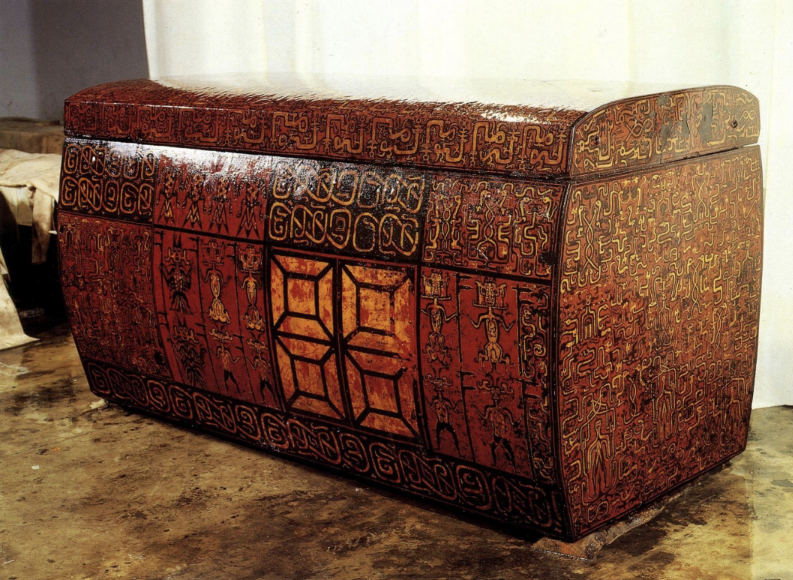
Name: Painted lacquer coffin of Marquis Yi of Zeng
Date: 433 BCE, Eastern Zhou Dynasty (Warring States)
Material: Lacquered wood with painted and incised designs
Province: Suixian, Hubei Province
Meaning: laborate lacquer and protective guardian imagery show southern (Chu-sphere) artistic tradition. It is also evidence of lavish regional elite burial.

Name: Bronze chime bells (zhong) of Marquis Yi
Date: 433 BCE, Warring States
Material: Cast bronze bells on a lacquered wooden frame
Province: Suixian, Hubei Province
Meaning: The inscriptions and musical information of the Bianzhong of Marquis Yi of Zeng represent the earliest surviving archaeological documents that demonstrate the mathematical relationships in music.

Name: Zun and pan set of Marquis Yi
Date: 5th Century BC, Eastern Zhou Dynasty (Warring States)
Material: Cast bronze
Province: Suixian, Hubei Province
Meaning: Dazzling virtuosity shows bronzes becoming display objects rather than only ritual ones. It reflects the “decline of ritual bronzes” theme, where technical showmanship replaces older ritual function.
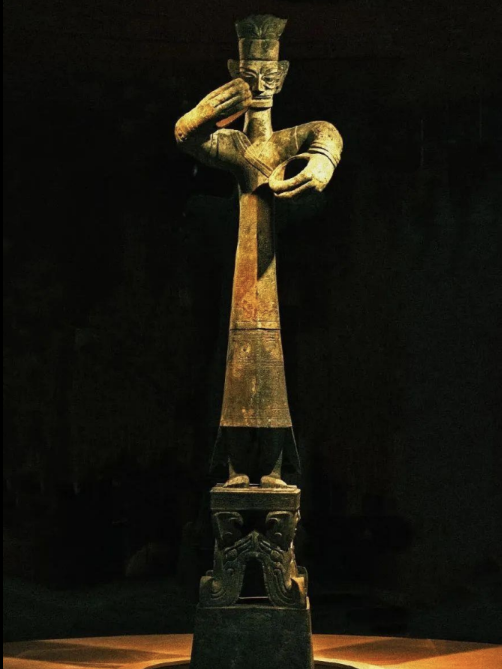
Name: Large standing bronze figure
Date: 1200–1050 BC, Late Shang Dynasty.
Material: Cast bronze
Province: Sanxingdui, Sichuan Province
Meaning: A major example of a non-Central-Plains bronze culture that used the technology for human-scale sculpture. Proving that sophisticated bronze cultures existed far beyond the Yellow River heartland.

Name: Bird Shaped Bronze Zun Vessel
Date: 5th Century BC, Eastern Zhou Dynasty
Material: Bronze with silver (or gold) inlay
Province: Taiyuan, Shanxi Province
Meaning: Inlaid “bird-script” calligraphy shows writing as ornament. It reflects regional states developing distinctive styles.

Name: Silk Painting of Figures, Dragons, and Phoenixes
Date: 4th–3rd century BCE, Warring States Period (Late Zhou Dynasty)
Material: Ink on silk, a funerary banner
Province: Changsha, Hunan Province
Meaning: One of the earliest surviving Chinese paintings, in confident ink line. It shows Chu beliefs about the soul’s journey. First silk painting.

Name: Bronze Chariots and Horses
Date: 210–209 BCE, Qin Dynasty
Material: Cast bronze with painted details
Province: First Emperor’s Lishan Mausoleum, Xi’an, Shaanxi Province
Meaning: Part of an afterlife retinue that reproduces the emperor’s travel.

Name: Terracotta army general
Date: 210 BCE, Qin dynasty
Material: Molded, hand-finished, painted terracotta
Province: First Emperor’s Burial Mound, Xi'an, Shaanxi Province
Meaning: Modular production with individualized faces shows the empire’s organization and military power. It is central to arguments about the First Emperor.

Name: Unarmored, bare-chested terracotta figures (acrobat)
Date: Qin Dynasty (c. 210–209 BCE).
Material: Terracotta
Province: First Emperor’s Tomb, Xi’an Shaanxi Province
Meaning: The more naturalistic, non-military body shows the emperor’s entertainers in the afterlife. It suggests Qin sculpture was more varied than the soldier army alone.

Name:
Date:
Material:
Province:
Meaning:
Name:
Date:
Material:
Province:
Meaning:
Name:
Date:
Material:
Province:
Meaning: