NSG 217: Legal, Ethics, Violence
 Call Kai
 Learn
 Practice Test
 Spaced Repetition
 Match
 Flashcards
 Knowt Play
1/33

There's no tags or description
Looks like no tags are added yet.
34 Terms
Legal Issues Related to Children: Informed Consent
Informed Consent
Must be obtained before any invasive procedure
Should obtain sufficient information to make an informed health care decision
Expected outcome, potential risks, benefits and alternatives.
Informed consent for children needs to be from an adult
Before they sign the informed consent, the doctor has to have been talking to the family about their procedure
the RN can get the actual signature but cannot explain the procedure
So if the family has additional questions about not understanding the procedure you need to call the physician to come and answer their questions before the family signs the informed consent
3 conditions to obtain valid consent
Person must be capable of giving consent (age of majority & considered competent)
age of majority is 18
are they developmentally delayed?
Can they sign for themselves?
Probably not if they’re developmentally delayed, they probable have someone who is in guardianship of them
Person must receive the information necessary to make an intelligent decision
They need all possible risks, side effects, worse case scenerios.
Person must act voluntarily
meaning they’re not being forced into consenting to something
With the exception of when courts have intervened or in emergency cases where you have someone who may be dying or unconscious and can’t make that call
The patient has a right to accept or refuse any health care if they are the age of majority
if they’re less than the age of majority then the parents have the right to accept or refuse any sort of healthcare for that child
Informed Consent con’t
One universal consent is not sufficient
You must have one signed for each procedure
Ex. getting blood
Decisions involving the care of older children and adolescents should include their assent
Assent should include:
Developmentally appropriate awareness
Telling them what they can expect in terms that aren’t scary to them
Assessment of their understanding
An expression of their willingness to accept proposed treatment
Unfortunately in the end it is the parent’s decision, but it’s also good to see how the child is also feeling about it
Eligibility for Giving Informed Consent
Parents or Legal Guardians have full responsibility for the care of their minor children
Required to give informed consent
Married parents
Usually only 1 needs to give consent
Divorced
Consent from the parent who has legal custody
This might be found on the chart
Social services might ask for this
In urgent or emergent situations, treatment can be given even when the parent isn’t available or doesn’t give informed consent
Can also be given by proxy
meaning by a grandparent, teacher, or whoever was in charge of the child at the time
Emancipated Minors
18 is age of majority in most states
Emancipated minor is legally under the age of majority
Legal capacity as an adult under the law
Petitioned in court
essentially became emancipated or separated from parents & are now considered to be adults
Pregnancy, marriage, military service.
You can’t give any information to the parents at that point
They do have to have a copy in their chart to prove their emancipation
State law can greatly differ regarding age of majority
Adolescents Consent Confidentiality
Minors are ‘medically emancipated’ for conditions
Sexually transmitted infections
Pregnancy
Contraceptive advice
Mental health services
Substance abuse
Consent to abortion is controversial
Minors may not want to seek out help for these issues if they think you’re going to contact their parents
Child Maltreatment
Broad Term that includes:
Intentional Physical Abuse or Neglect
Emotional Abuse or Neglect
Sexual Abuse of Children
Many cases go unreported because
the child is too young to say anything
the child has been threatened and believe that their abuser will go through with that threat
the other parent may not report it because they are being abused and they are also scared
We need to be very observant as nurses of anything that may lead us to believe some sort of abuse may be going on
Child Neglect
Most Common Form of Maltreatment
Neglect: failure of a parent/guardian to provide for the child’s basic needs & adequate level of care
Types
Physical Neglect
Deprivation of food, clothing, shelter, supervision, medical care & education
Emotional Neglect
Lack of affection, attention & emotional nurturance
Watch video on powerpoint
You have to also determine if it is intentional
Parent’s may have lack of knowledge, lack of resources, caretaker substance abuse
they may demonstrate poor parenting skills
they may not know how to feed that baby
Neglect can also be lack of intervention for or fostering the maladaptive behavior
Example: If someone knows that a child is being abused and you don’t step in, you’re technically committing neglect as well
Physical Abuse
Physical Abuse:
Deliberate Infliction of Physical Injury on a Child
Usually by the care giver
Universally accepted definition of what constitutes are minor and major physical abuse does not exist
Does the story match the injury?
be observant, vigilant, be an advocate for these kids
Don’t make assumptions based on social statuses
Shaken Baby Syndrome/Traumatic Brain Injury
Shaken Baby Syndrome (SBS)
Violent shaking of infants
brain bounces off of the front & back of their skull
because their brain has not fully grown & there’s a lot of CSF
Abusive head trauma
A lot of the time this happens because the caregiver becomes frustrated with crying
In US:
1200-1400/year
25-30% die as a result
Peak incidence is three months of age
Most victims are male
What happens in Shaken Baby Syndrome/Traumatic Brain Injury?
What Happens:
Large Head-to-Body Ratio
Weak neck muscles
Large amount of water in the Brain
Violent shaking cases brain to rotate in skull—results in shearing head injury
Shaken Baby Syndrome/Traumatic Brain Injury Prevention
Prevention:
Teach caregivers about crying
Techniques how to cope with inconsolable crying
Educational site:
National Center on Shaken Baby Syndrome
Let the parents know that they’re not alone and that this is a phase that the child will eventually grow out of it.
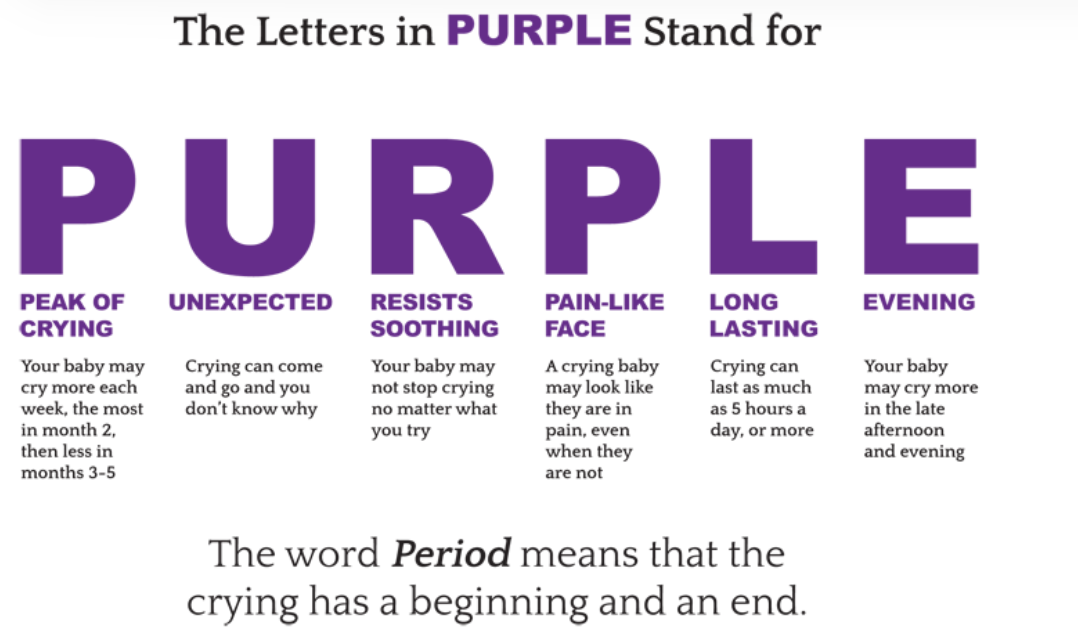
PURPLE Cry
In this period shaken baby syndrome may occur
It’s important to educate parents on that purple cry period and educate them on how to get through that period
Munchausen Syndrome by Proxy
Rare/deliberate form of child abuse
Physical/emotional and psychologic abuse for the gratification of the caregiver
they enjoy the gratification of having a child that is sick. Makes them feel important
Reported caregiver history of symptoms can result in unnecessary medical procedures
May be painful
Ex. if the parent reports that their child has stomach pain constantly, then maybe they would try to scope them or do something like that which may result in procedures that they don’t need
Essentially medical child abuse, may create factitious disorders
Unfortunately the perpetrator is often the mother and has some degree of medical knowledge
3 Commonly Identified Risk Factors Predisposing to Physical Abuse
3 Commonly Identified Risk Factors:
Parental characteristics
Characteristics of the child
Environmental characteristics
No single factor indicates abuse, it can happen to anyone
Parental Characteristics
Younger Parents
May have a lack of knowledge on parenting skills
Single Parents
For Single parents usually their Unrelated Partners may be the abusers
Difficulty coping with stress
Social isolation
Poor support systems
Low-income
Undereducated (may not know/understand growth & development)
Substance abuse
Parental low self-esteem & little knowledge of appropriate parenting skills
Severely punished as children (break the chain)
Child Characteristics
Birth-3 years are at highest risk
Children who were unwanted, brain damaged, hyperactive or physically disabled are at high risk too
In families of 2 or more
Only one child is the victim
Removing the abused child victim from home may place other siblings at risk for abuse
Incompatibility between child’s & parent’s temperament and parent’s ability to deal with behavioral style
Blame for the abuse is always on the abuser
Environmental Characteristics
Chronic stress
Divorce, poverty, unemployment, poor housing, substance abuse, frequent relocation, crowded living conditions
Most reported from lower socioeconomic populations
Child abuse can occur in ANY socioeconomic population
Families that have substitute caregivers like nannies or daycare providers may be at risk
Sexual Abuse
Defined as:
“The use, persuasion, or coercion of any child to engage in sexually explicit conduct or simulation of such conduct for producing visual depiction of such conduct, or rape, molestation, prostitution, or incest with children”
-(Child Abuse and Prevention Act)
Most devastating type of child maltreatment
Human Trafficking has also become more prevalent
Types of Sexual Abuse
Types
Incest
Molestation
Exhibitionism
Child pornography
Child prostitution
Pedophilia
Human Trafficking
Characteristics of Abusers and Victims
Typical abuser is male whom the victim and family knows
Often are employed/volunteer in positions that deal with children (teachers/coaches)
May commit many assaults before being caught
Spends time to gain trust
Offers gifts or privileges
Pressures victim into secrecy
All socioeconomic backgrounds
Victims
Feel they can’t tell
May feel like no one will believe them because the abuser may be known for being well loved and nice
Nursing Care of the Maltreated Child
Identify abusive situations as early as possible
Prevention, identification and protection from further abuse
History pertaining to the incident
Look for inconsistencies in the story
Believe children when they say they have been abused
Teach children to just say NO
Evidence of maltreatment
Pattern or combination of indicators that arouse suspicion and further investigation
Protect child from further abuse
Consistent Caregivers
Never the child’s fault
Use therapeutic play with them to get them to tell you as much about what happened as they could recall, without you soliciting information from them & potentially putting words in their mouth
Legal Responsibility
In the ER, doctors office, school etc…
Protect Child from Further Abuse
You are a MANDATED REPORTER
even if you have a little suspicion that something maybe going on, you have to report it
Report ALL child abuse cases to the State Department of Social Services
Call IMMEDIATELY
The report that’s filled out is called a 3200 form
Report objective facts only
Careful to not to ‘contaminate’ the witness
or jar their memories
Priority is to remove the child from the Abusive Situation to prevent further injury
Teen Suicide
Suicide:
deliberate act of self-injury with the intent that the injury results in death
Most experts distinguish among:
Suicidal ideation
important to determine if they have a plan
Suicide attempt (or parasuicide)
acted on plan, but it just didn’t work
Suicide
when you are successful
Can be accidental
someone may accidentally shoot themselves, overdose, etc.
A suicide attempt is intended to cause injury or death
Watch for social isolation
if you see an increase in the child’s social isolation that could be an indicator that they may attempt
Sometimes they do attempt for attention
Nursing Alert
A history of a previous suicide attempt is a SERIOUS INDICATOR for possible suicide completion in the future
You need to include this when asking questions in your admission history
Studies of adolescent suicides have found that as many as half of the adolescents had made previous attempts.
Suicide Incidence
Suicide is currently the third leading cause of death during the teenage years
Surpassed only by death from motor vehicle crashes & homicides
Watch video on powerpoint
Suicide Etiology
Single most important individual factor is the presence of an active psychiatric disorder
Depression
Bipolar disorder
Psychosis
Substance abuse
Alcohol use is associated with 50% of suicides
Inhibitions are down & impulsiveness is up as well as impaired judgement
Conduct disorder
Suicide Etiology Continued
Gay, lesbian, and bisexual adolescents are at particularly high risk
Especially if raised in an environment where they are denied support systems
Family factors influencing suicide:
Parental loss
Family disruption
Family history of suicide
Depression
Substance abuse
Emotional disturbance
Child abuse or neglect
Unavailable parents
Poor communication
Isolation within the family
Family conflict
Unrealistically high parental expectations
Parental indifference with low expectations
Suicide Methods
Firearms are by far the most commonly used instruments in completed suicides among males & females
For adolescent males:
2nd most common ~~ hanging
3rd most common ~~ overdose
For adolescent females:
2nd most common ~~ overdose
3rd most common ~~ strangulation
If the patient has suicidal ideations with a plan, & that plan includes a firearm, it’s important to know whether they have access to that firearm
we need to make sure that it isn’t accessible to the patient
Suicide Motivation
Suicidal ideation is common in adolescents
Represents numerous fantasies
Relief from suffering
Means of gaining comfort and sympathy
Means of revenge against those who have hurt them
Adolescents have the erroneous perception that the act of suicide will evoke remorse and pity and that they will be able to return and witness the grief
Watch Video in Powerpoint
Suicide Warning Signs
Preoccupation with themes of death—focuses on morbid thoughts
Wants to give away cherished possessions
Talks of own death, desire to die
Loss of energy, loss of interest, listlessness
Exhaustion without obvious cause
Changes in sleep patterns—too much or too little
Increased irritability, argumentativeness, or stubbornness
Physical complaints—recurrent stomachaches, headaches
Repeated visits to physician, nurse practitioner, or emergency department for treatment of injuries
Reckless behavior
Antisocial behavior
Engages in drinking, uses drugs, fights, commits acts of vandalism, runs away from home, becomes sexually promiscuous
Sudden change in school performance
Lowered grades, cutting classes, dropping out of activities
Resists or refuses to go to school
Remains distant, sad, remote
Flat affect, frozen facial expression
Describes self as worthless
Sudden cheerfulness after deep depression
Social withdrawal from friends, activities, interests that were previously enjoyed
Impaired concentration
Dramatic change in appetite
Suicide Diagnostic Evaluation
Depression is common among adolescents who attempt suicide
Characterized by both subjective symptoms and objective signs that reflect the adolescent's sadness and despair
Adolescents describe feelings of:
Sadness, despair, helplessness, hopelessness, boredom, loss of interest, & isolation
May also feel self-reproach, self-deprecation & guilt
Subjective symptoms of depression or specific changes in behavior place an adolescent at risk for suicide
Usually they’d have a psychiatrist come in & talk to them to find out exactly what the cause of the depression is & determine a treatment plan
Suicide Therapeutic management
Threats of suicide should ALWAYS be take seriously
Competent psychiatric care
They should have a competent psychiatric doctor caring for them
Suicide Nursing Alert
Adolescents who express suicidal feelings AND have a specific plan should be monitored at all times!!
Should not have access to:
Firearms, prescription or over-the-counter drugs, belts, scarves, shoestrings, sharp objects, matches, or lighters
If they are intoxicated, they must be restrained or placed in a protective environment until a psychiatrist or psychologist can assess them
Need a 1:1 nurse sitting with them 24/7