Molecular Geometry, Chemical Bonding, and Intermolecular Forces
 Call Kai
 Learn
 Practice Test
 Spaced Repetition
 Match
 Flashcards
 Knowt Play
1/25

Earn XP
Description and Tags
Vocabulary flashcards covering molecular geometries, Lewis structures, bond angles, electronegativity, bond polarity ranges, intramolecular forces, and intermolecular forces with their effects on physical properties.
26 Terms
Bonding Site
Any single bond, double bond, or triple bond on a central atom, each counting as exactly one site when determining molecular geometry.
H bonds only occur if
H is boned to to a O, N, or F
Like dissolved like
Same bond toes dissolve the same bond types
Polar molecules dissolve
Polar molécules and ionic compounds
Non polar bonds dissolve
Nonpolar bonds
Linear shape
A molecular shape with 2 bonding sites and 0 lone pairs of electrons (LPE) on the central atom ex: CO2
Trigonal Planar
A molecular shape with 3 bonding sites and 0 lone pairs of electrons (LPE) on the central atom,
Tetrahedral
A molecular shape with 4 bonding sites and 0 lone pairs of electrons (LPE) on the central atom

Trigonal Pyramidal
A molecular shape with 3 bonding sites and 1 lone pair of electrons (LPE) on the central atom
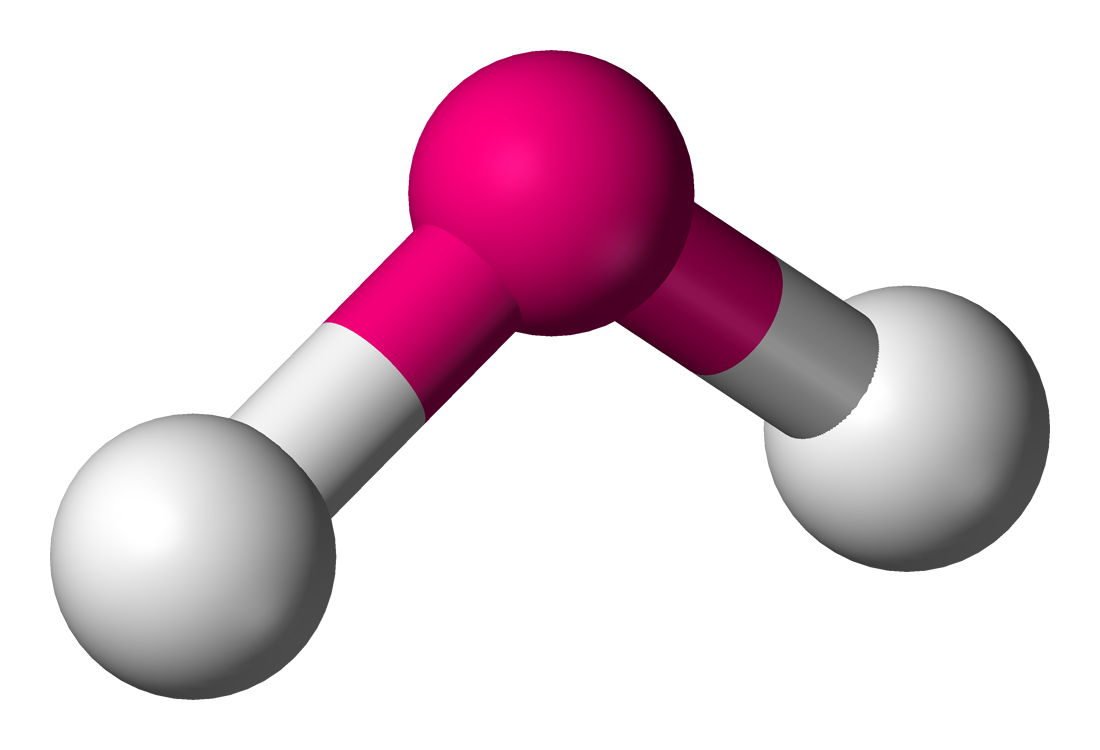
Bent Geometry
A molecular shape with 2 bonding sites with either 1 or 2 lone pairs of electrons (LPE) on the central atom
Bond Polarity
The classification of a bond based on the electronegativity difference between two bonded atoms. ex: nonpolar covalent
Electronegativity
A measure of how likely an atom is to attract a bonding pair of electrons toward itself in a chemical bond.
Nonpolar Covalent Bond
A bond where electrons are shared equally, resulting in no charge separation and an electronegativity difference of 0−0.4.
Polar Covalent Bond
A bond where electrons are shared unequally, producing partial charges and having an electronegativity difference ranging from 0.41−2.0.
Ionic Bond
A chemical bond where electrons are not shared but transferred, resulting in full charges and an electronegativity difference of 2.1 and up.
Intramolecular Forces
Forces within a molecule that hold atoms together (chemical bonds), responsible for macroscopic properties like electrical conductivity, hardness, and luster.
Intermolecular Forces (IMFs)
Attractions between separate particles or neighboring compounds that hold molecules together in liquids and solids.
London Dispersion Forces
The weakest category of intermolecular forces, occurring between nonpolar molecules (such as in CCl4 or Br2).
Dipole-Dipole Forces
Intermolecular forces of moderate strength occurring between polar molecules (such as in HCl).
Hydrogen Bonding
A strong intermolecular attraction that occurs only when hydrogen is covalently bonded to a highly electronegative atom: F, O, or N.( polar)
Ion-Dipole Forces
The strongest category of intermolecular forces, occurring between an ion and a polar molecule (such as NaCl or KCl dissolved in water).( polar)
Surface Tension
An inward force and attraction of particles in a liquid's surface layer that tends to minimize surface area. More surface tension- stronger IMF
Evaporation in relation to IMF
Quicker evaporation rate = lower IMF( vice - versea)
Boiling Point Relationship to IMFs
The principle that stronger intermolecular forces require more kinetic energy and higher temperatures to separate particles, resulting in higher boiling and melting points.
Evaporation Rate Relationship to IMFs
The principle that as the strength of intermolecular forces increases, molecules escape less readily into the gas phase, leading to a slower rate of evaporation.