Science History: Notable Scientists (& their Contributions) and their Most Famous Contributions to their Respective Fields (& Basic Information) and Scientific Movements (& their Scientists and Characteristics)
 Call Kai
 Learn
 Practice Test
 Spaced Repetition
 Match
 Flashcards
 Knowt Play
1/247

There's no tags or description
Looks like no tags are added yet.
248 Terms
The Scientific Revolution [Scientists]
- Nicholas Copernicus
- Johannes Kepler
- Galileo Gallilei
- Isaac Newton
- Tycho Brahe
- Robert Boyle
- Robert Hooke
- William Harvey
- Andreas Vesalius
- Anton van Leeuwenhoek
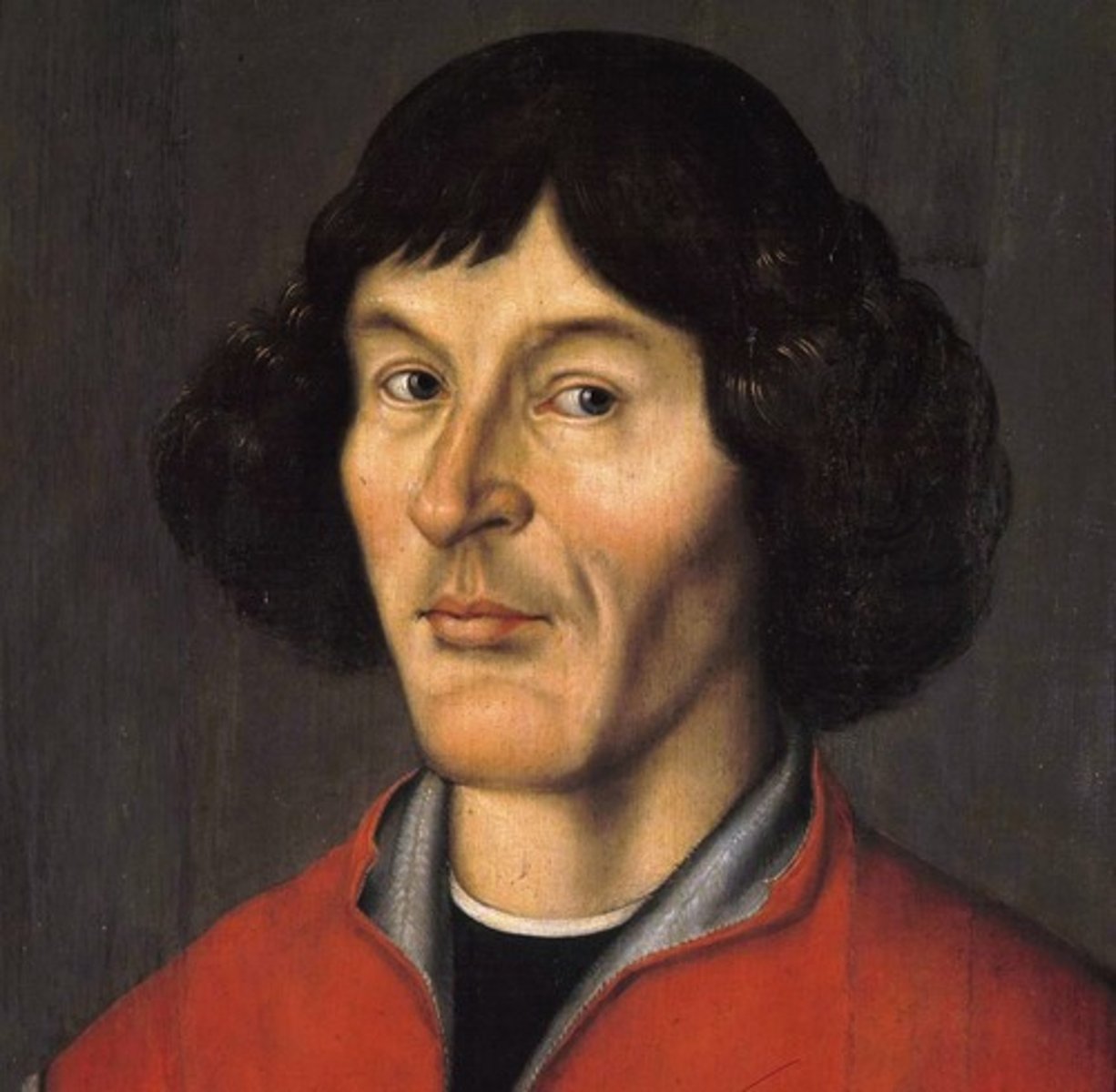
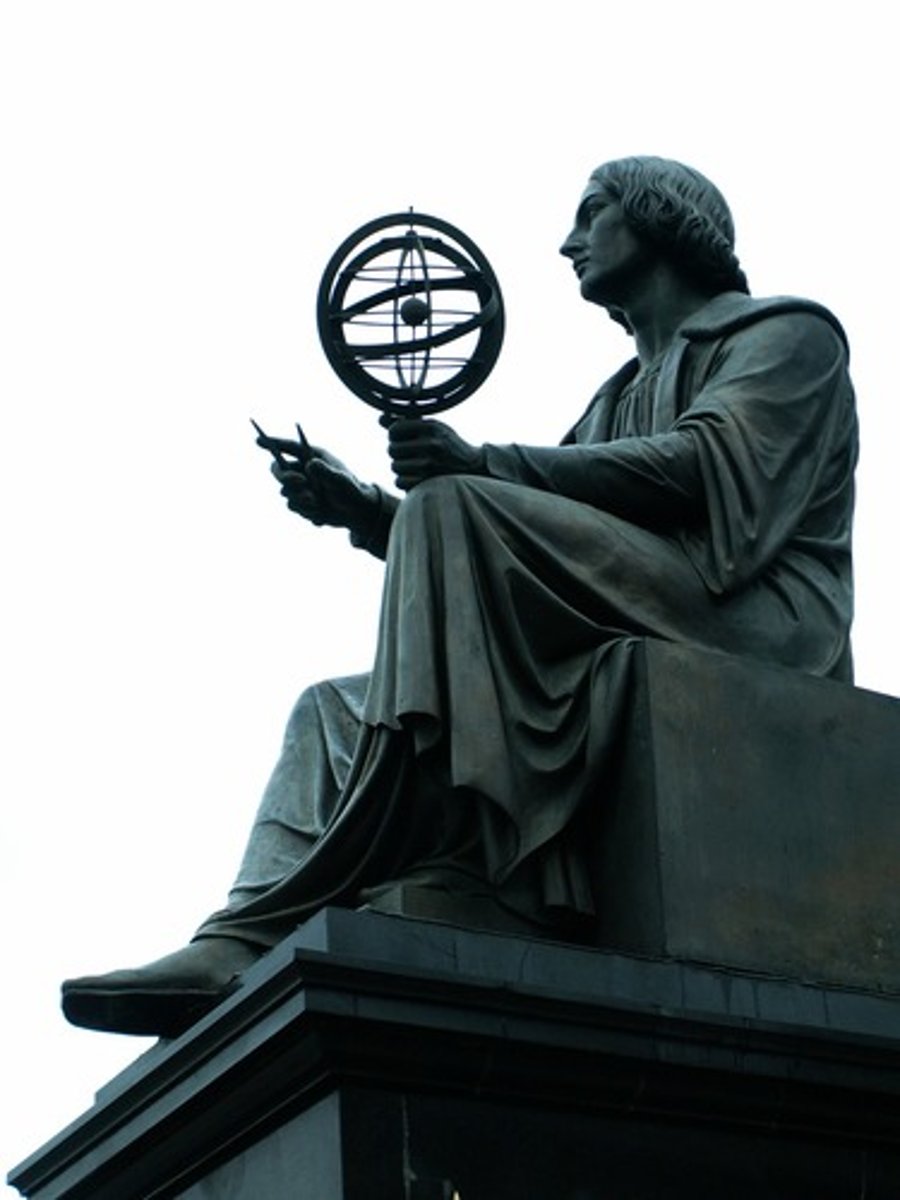
Nicholas Copernicus
- 16th Century Scientific Revolution Polish Astronomer
- Was called on by the Catholic Church to develop a more accurate calendar
Nicholas Copernicus: On the Revolutions of Heavenly Spheres
Describes the Heliocentric Model proposed by the scientists who authored the work, revolutionary in the sense that the work discusses how he believes God's special creation of humans were longer the center of the universe
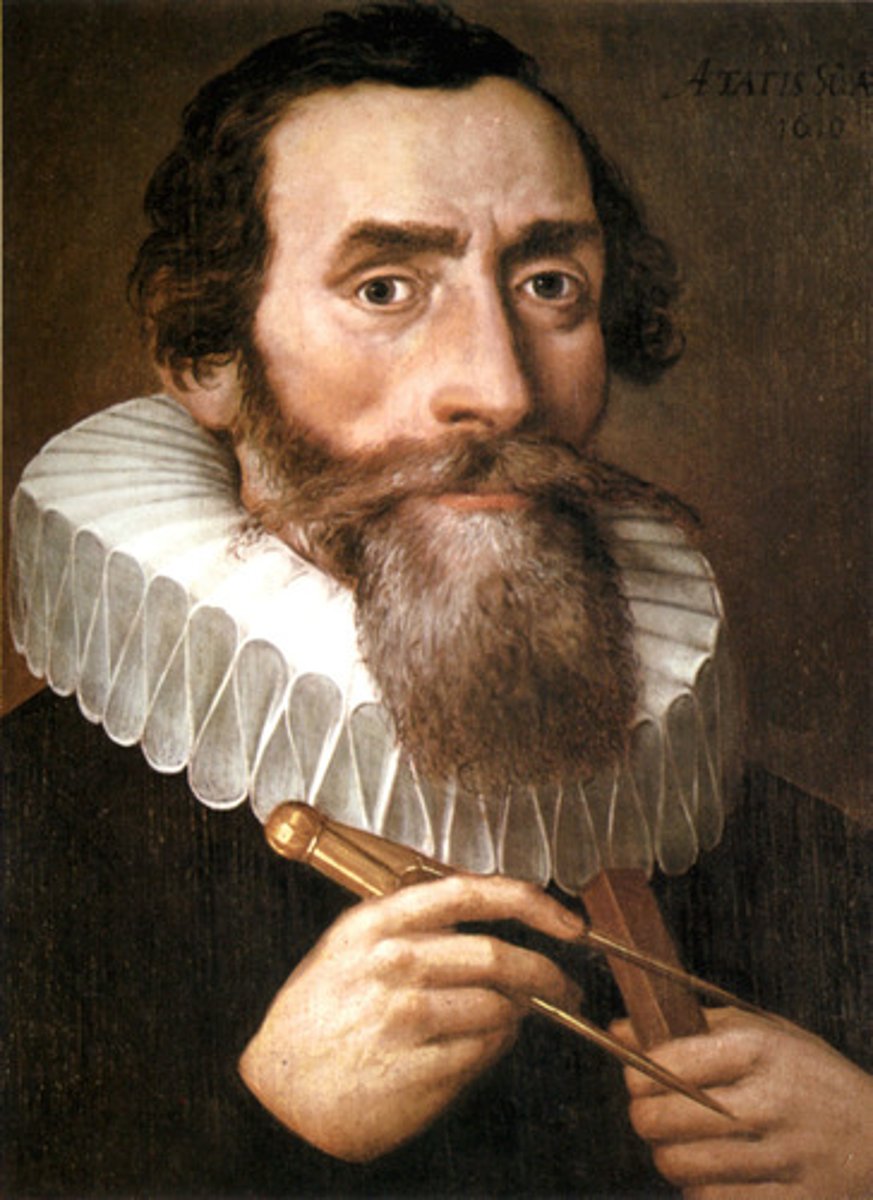
Johannes Kepler
- 16th-17th Century Scientific Revolution German Astronomer
- Created what we now call Kepler's Laws, 3 equations that describe planetary motion, the closer a planet orbited the sun, the faster it moved, which fit his previous observations
- Based on the data collected by Brahe, Kepler concluded that the anomalies of the Copernican System wouldn't exist based on the assumption that planets travel in elliptical paths, and this helped him form his laws
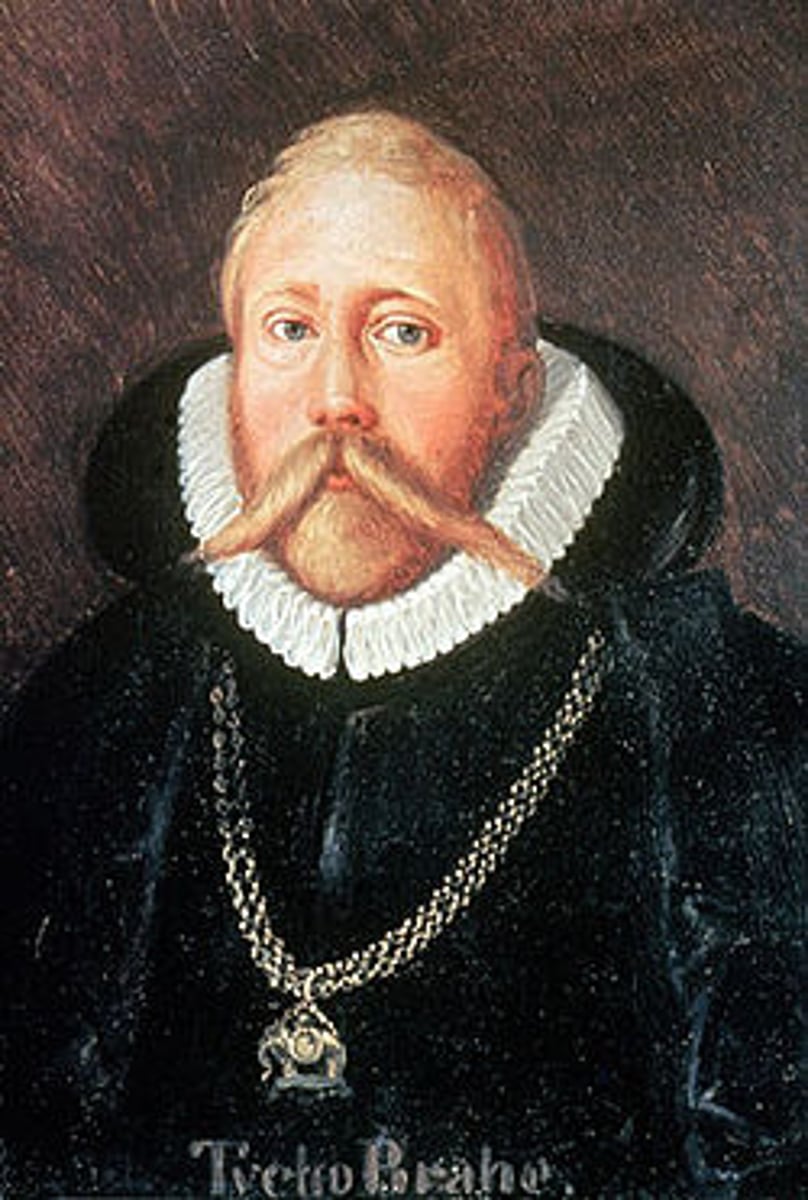
Tycho Brahe
- 16th Century Danish Astronomer
- Provided the systematic observations for Copernicus's heliocentric theory
- Charted the path of a comet that seemed to be traveling in an irregular or non-circular path as it passed through the sky, contrary to the Ptolemaic View
- He spent 20 years staring at the sky without a telescope off the coast of Denmark to track the path of the comet
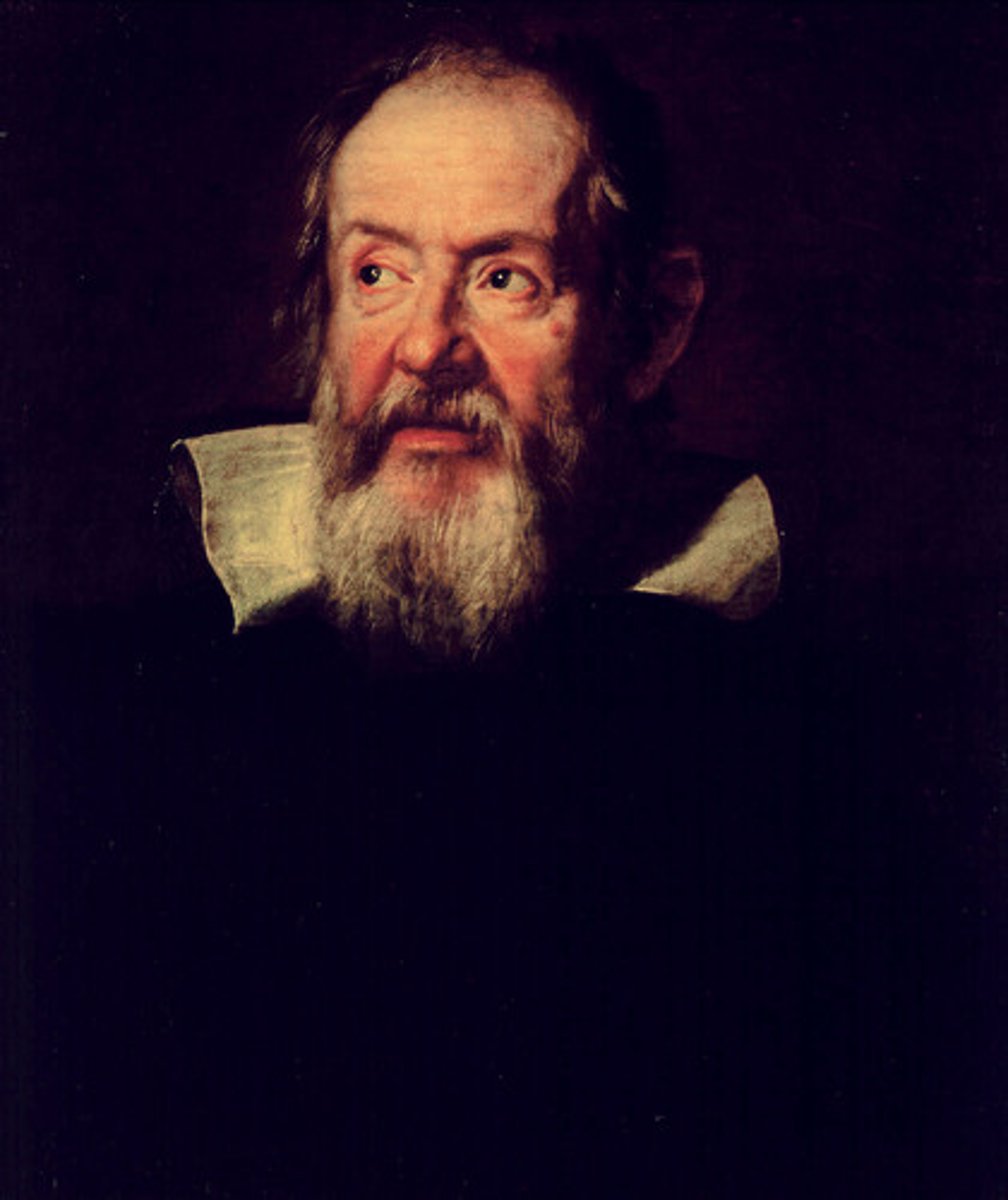
Galileo Galilei
- 16th-17th Century Italian Astronomer
- Created the first constant (g) or the Universal Gravitation Constant of 32 ft/s/s based on a series of repeated experiments
- Created the first modern telescope in 1609
Galileo Galilei: The Starry Messenger
A series of depictions of the moon and its surface, the sun and its sunspots, the moons of Jupiter and Saturn, and millions of stars and ended up disproving the previous ideas of perfectly heavenly bodies, the limited/static size of the universe, and that all bodies rotate the Earth
Galileo Galilei: Dialogue Concerning the two Chief World Systems: Ptolemaic and Copernican
Endorses Copernicus's heliocentric model and provides empirical support for it
Isaac Newton (Fact A)
- 17th-18th Century Scientific Revolution English Polymath
- Created Calculus
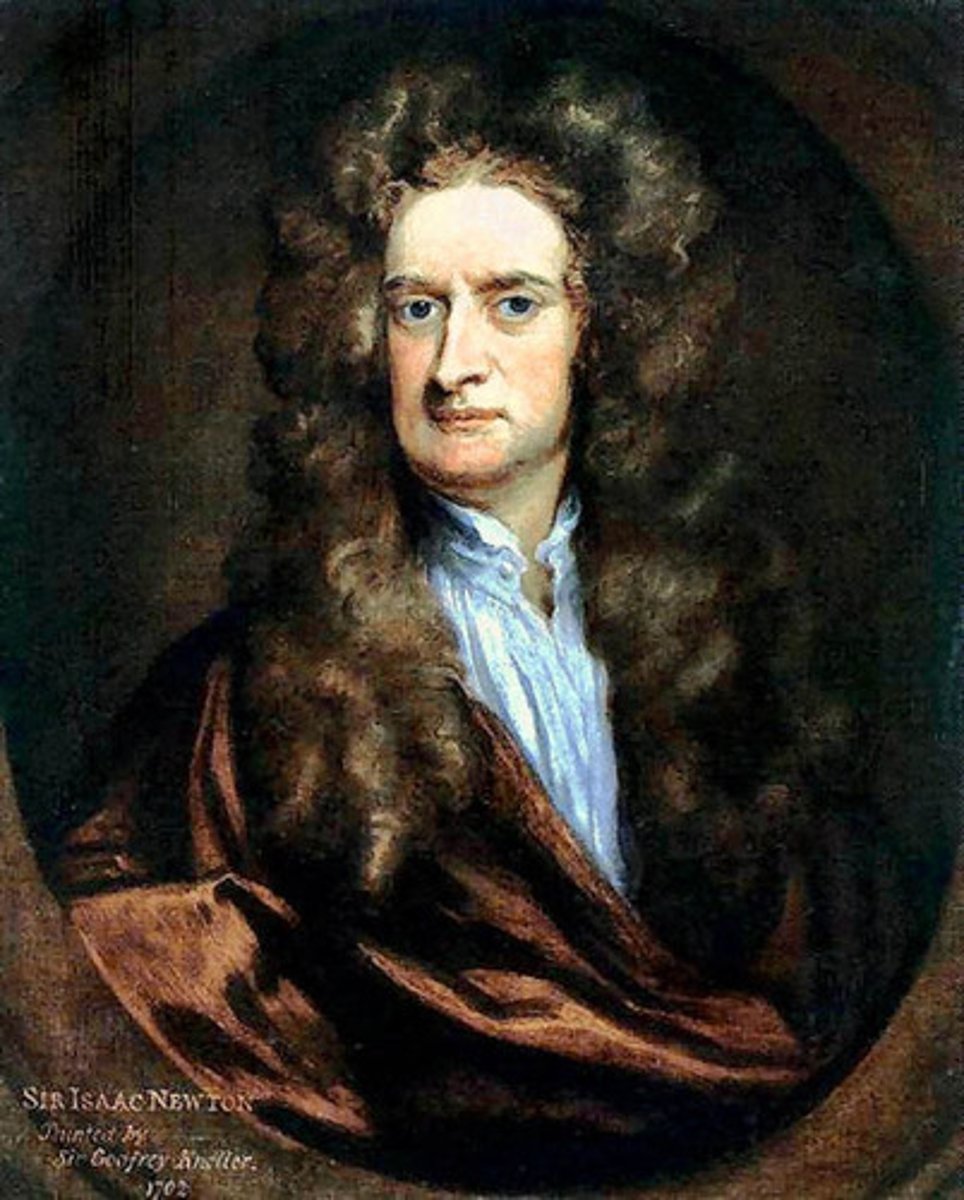
Isaac Newton (FACT B)
- Is famous for saying, "If I have been able to see so far, it is only because I stood on the shoulders of giants"
- Was as religious as he was scientific
- Born the same year Galileo died
Isaac Newton: Principia Mathematica
Describes what we now call Newton's Laws of Motion, in which he applied Galilei's universal law of gravitation and describes the 3 fundamental laws of an object's motion as it combined Newton's profound conceptual insights, precise mathematical expression, systematic observation, and coherent view of the World based on universal laws
William Harvey
-16th-17th Century Scientific Revolution English Physician
- Created the first modern theory of blood flow, with arteries and veins circulating Oxygen through human tissue
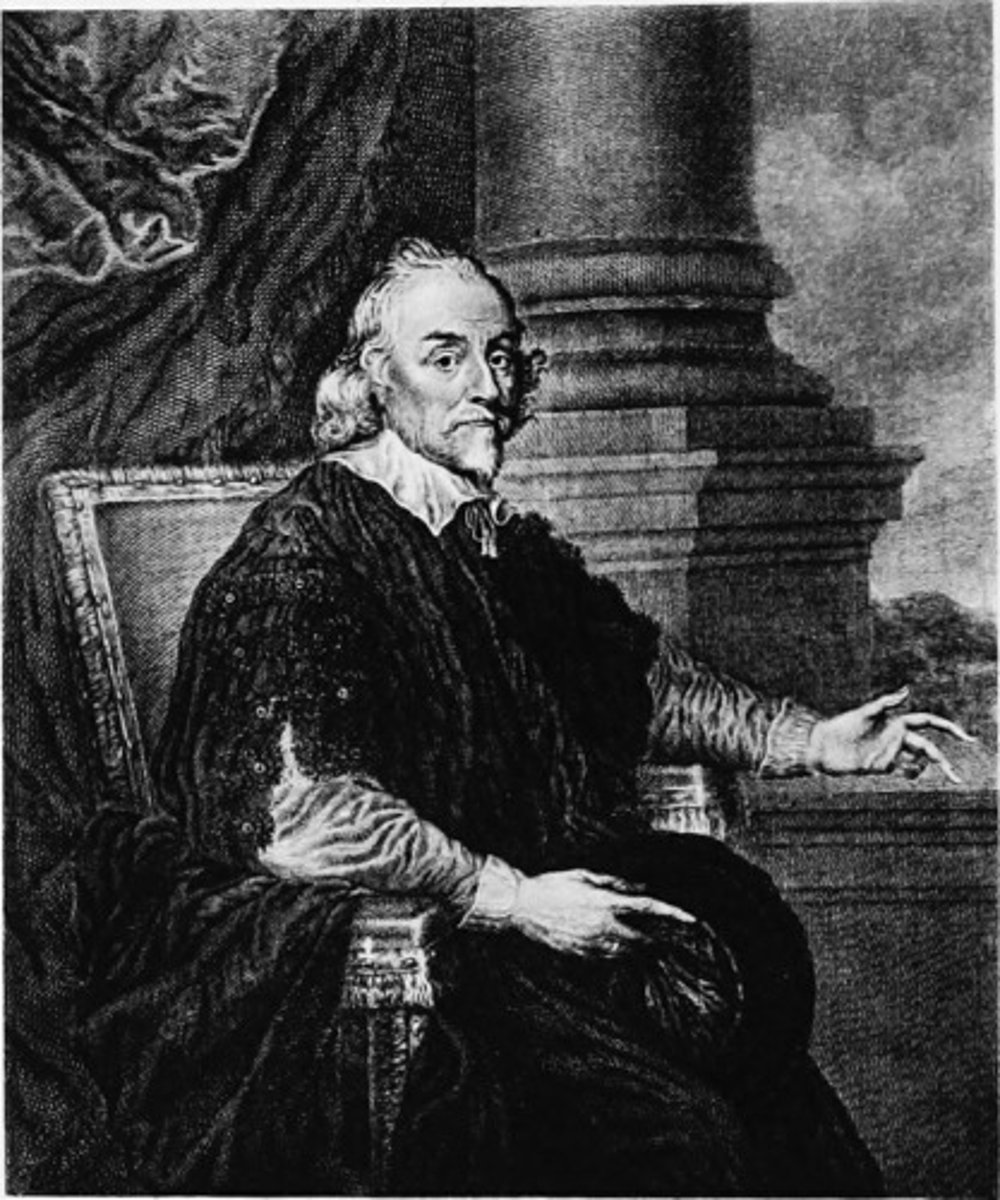
Andreas Vesalius
16th-17th Century Scientific Revolution Flemish Anatomist
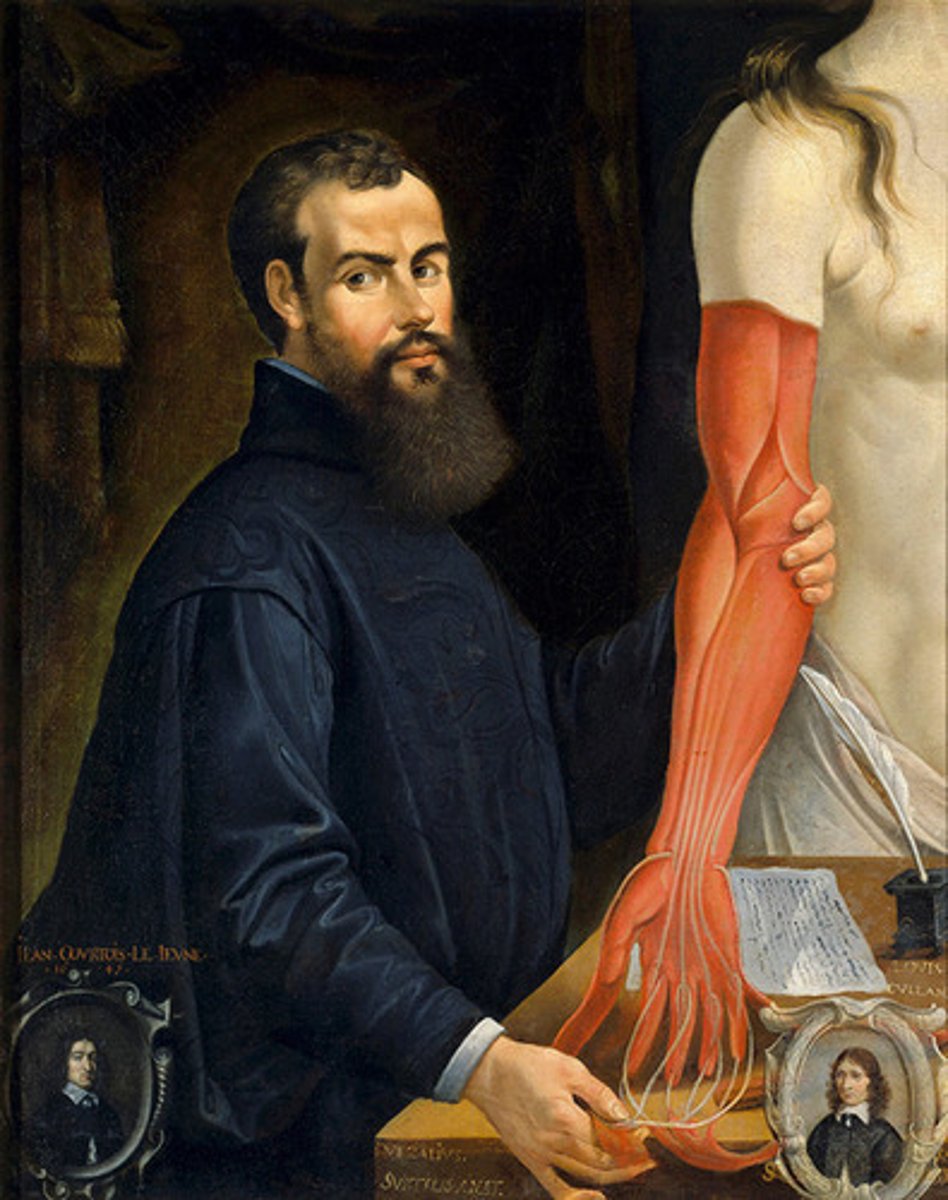
Andreas Vesalius: On the Fabric of the Human Body
A collection of precise drawings and dissections that directly employed empirical evidence against the ideas of the Galen System
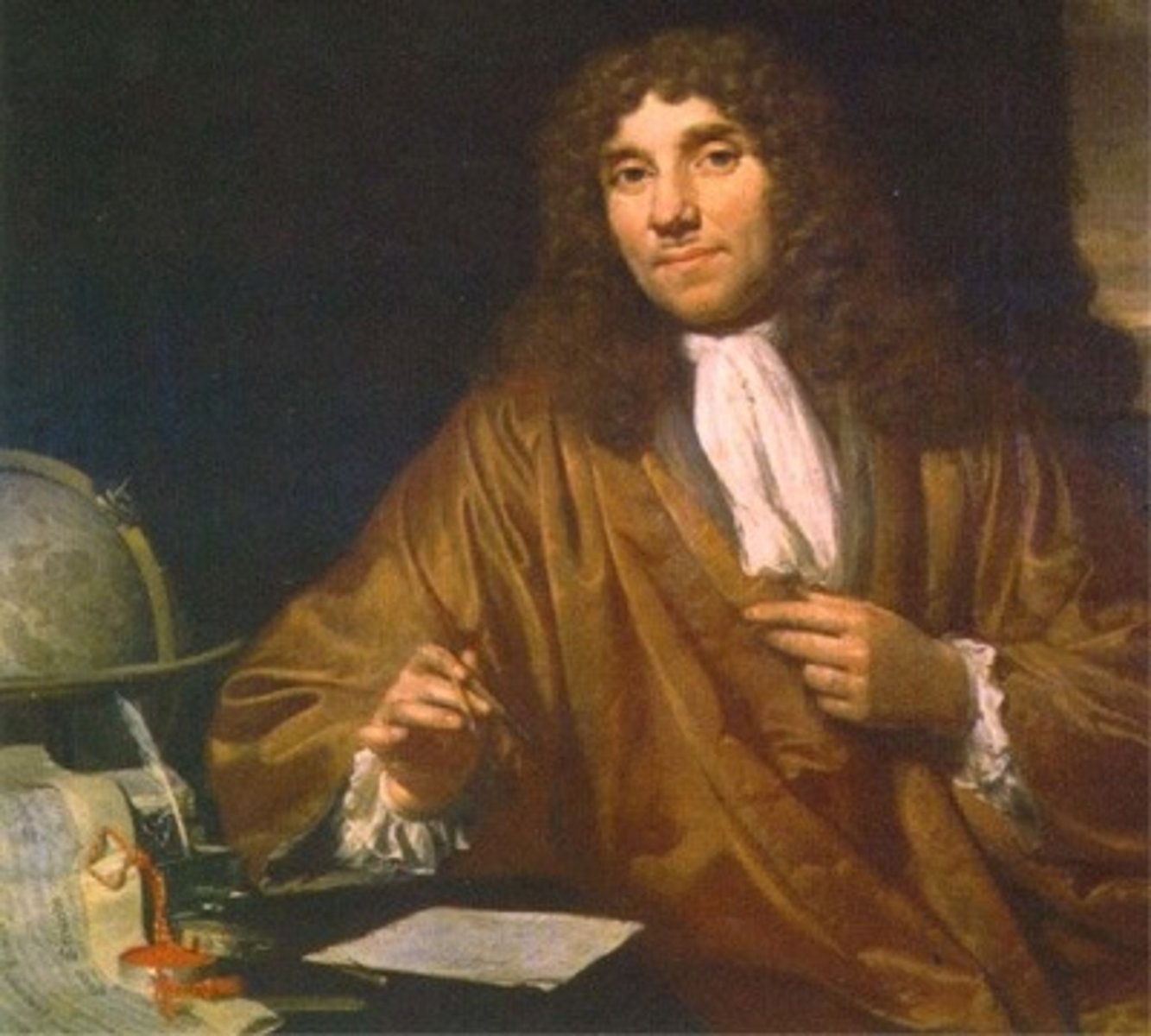
Anton van Leeuwenhoek
-16th-17th Century Scientific Revolution Dutch Biologist
- Father of "Microbiology"
- He discovered blood corpuscles, bacteria, and sperm, through a series of investigations with the use of the microscope (which he didn't event, it is unclear who did)
Robert Hooke
- 17th Century Scientific Revolution English Polymath
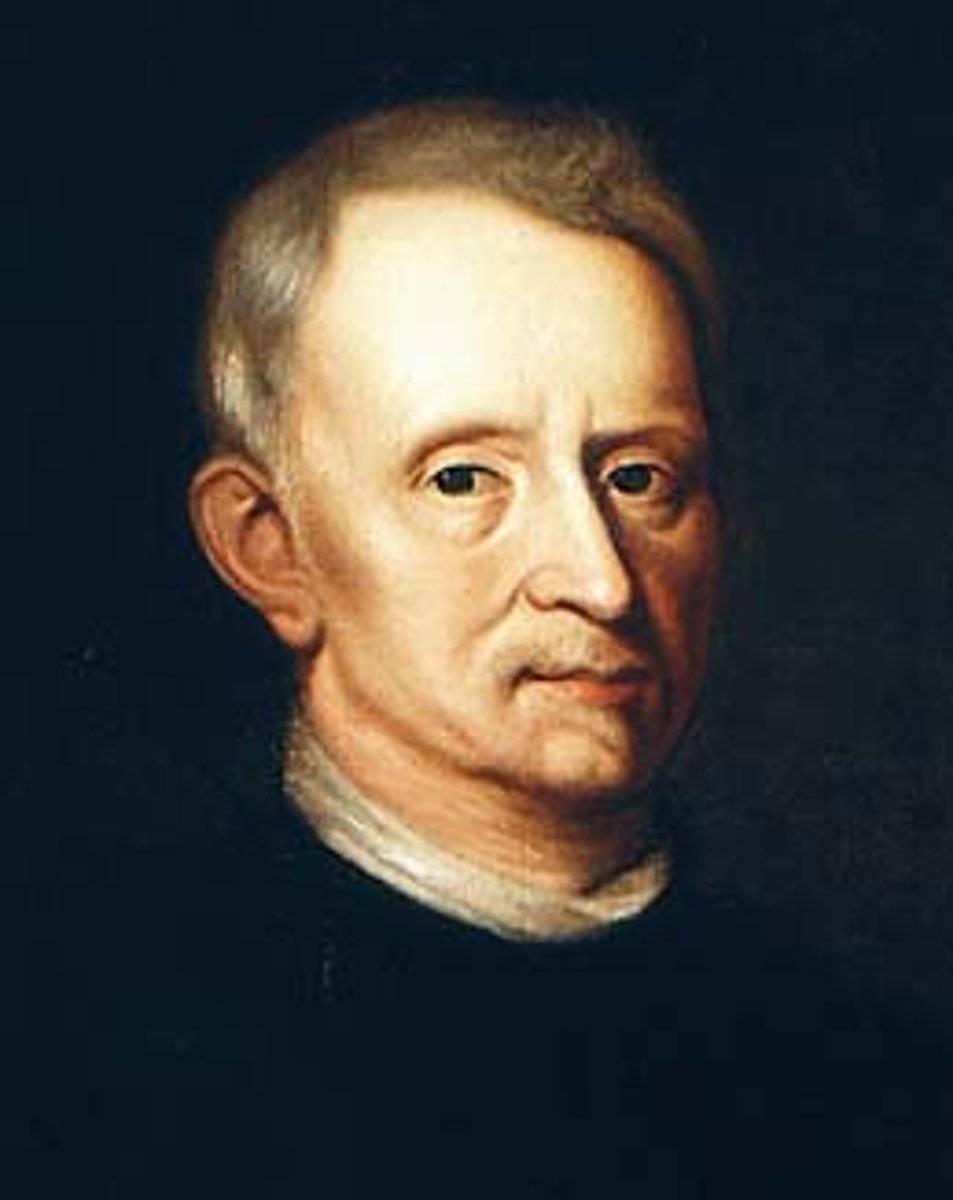
Robert Hooke: Micrographia
...
Robert Boyle
- 17th Century English-Irish Scientific Revolution Chemist & Physicist
- Created what we now call Boyle's Gas Law, in which Pressure and Volume in a system of an ideas gas are inversely related
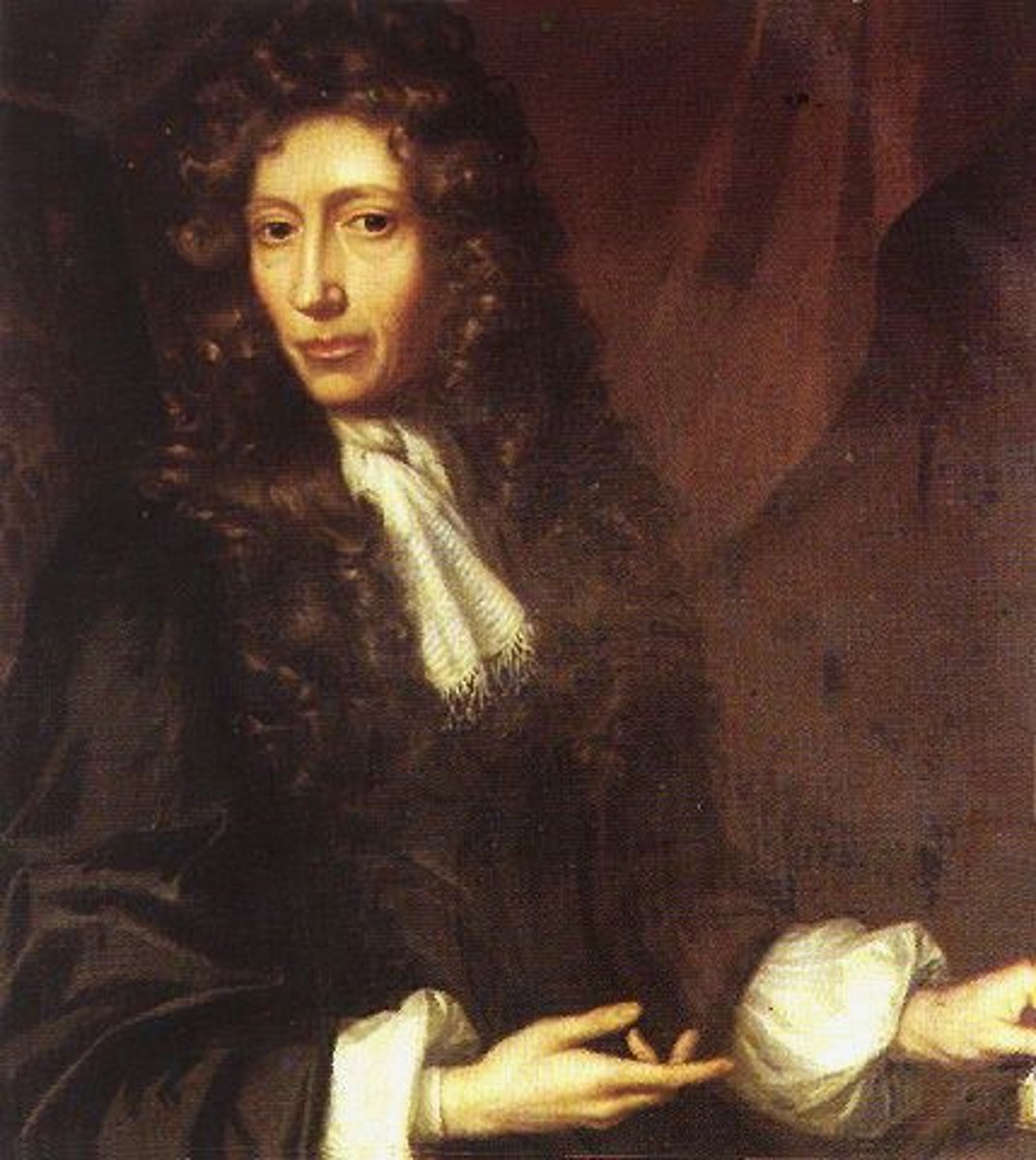
Robert Boyle: The Skeptical Chemist
Criticizes the blending of alchemy with chemistry, explaining that they are two distinguishable concepts, while emphasizing that chemistry alone should involve the scientific investigation of the elements that make up the universe
Thales of Miletus (Fact 1)
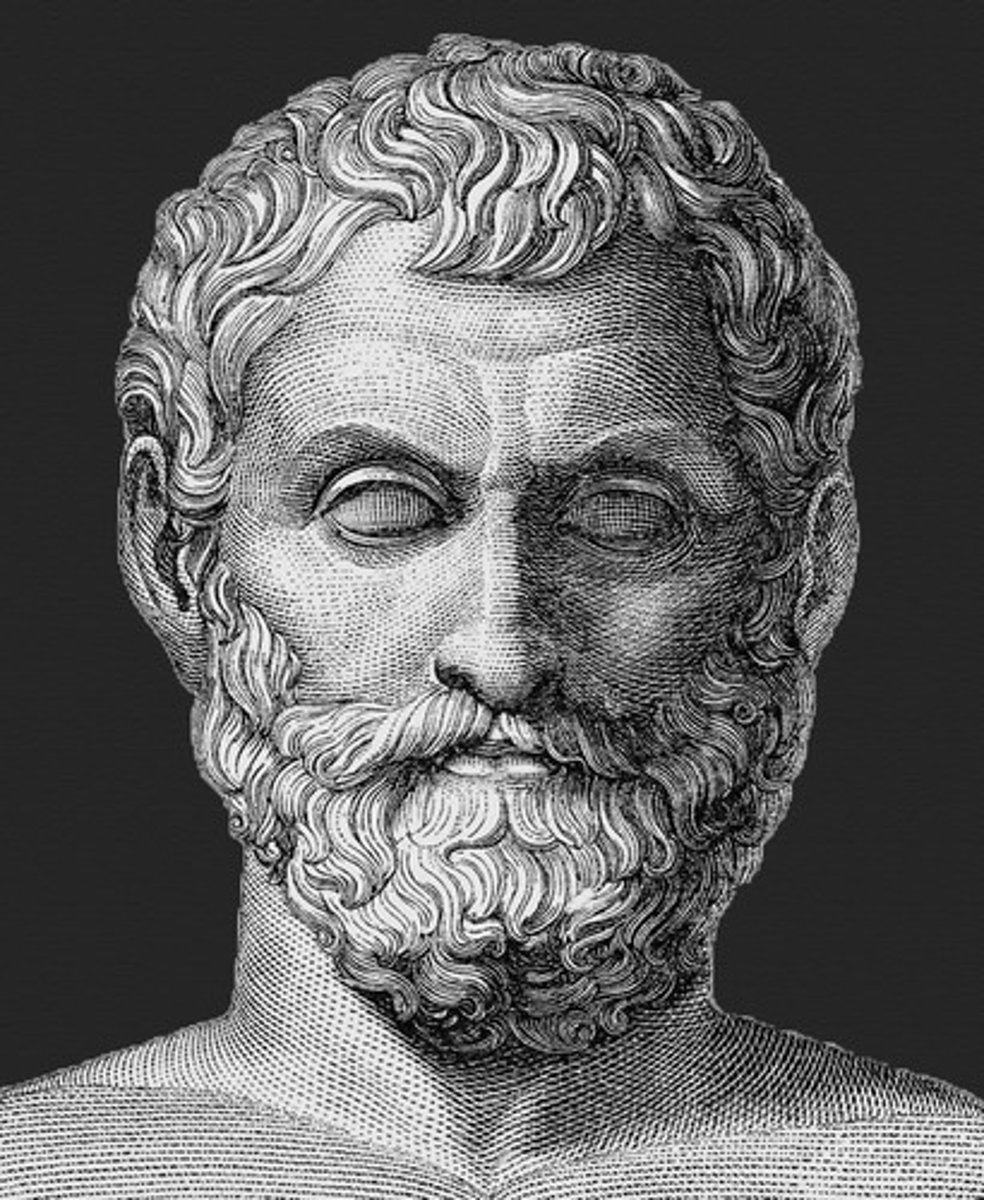
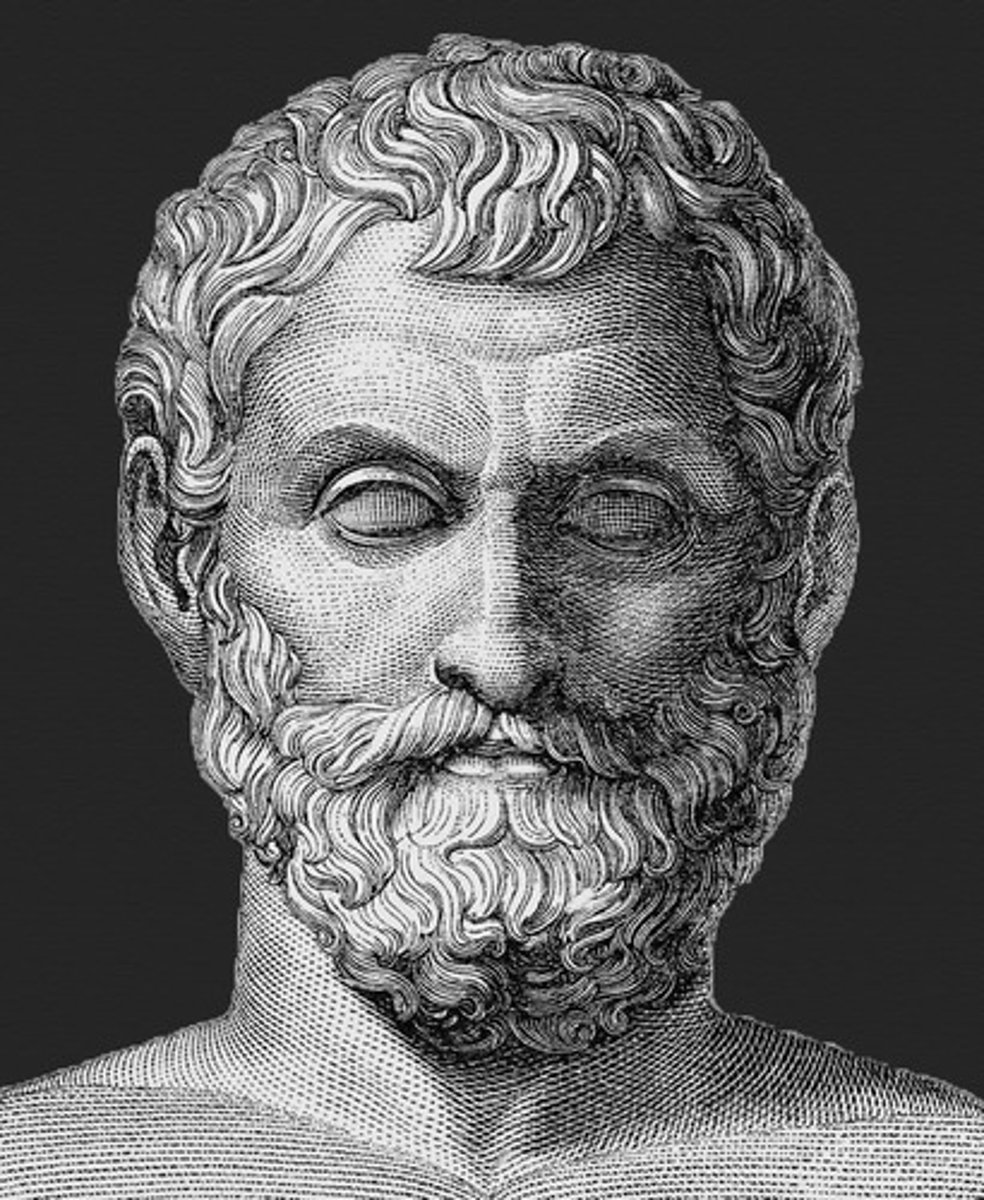
Considered the first Western Scientist, he was the first individual recognized for replacing mythological explanations of the world, universe, phenomena, and natural objects with naturalistic theories and hypotheses, a precursor to modern science
Thales of Miletus (Theory 1)
Hypothesized that earthquakes occur because Earth floats on water and that they occur when the Earth is rocked by the waves of the water it floats on
Anaximander of Miletus (Fact 1)
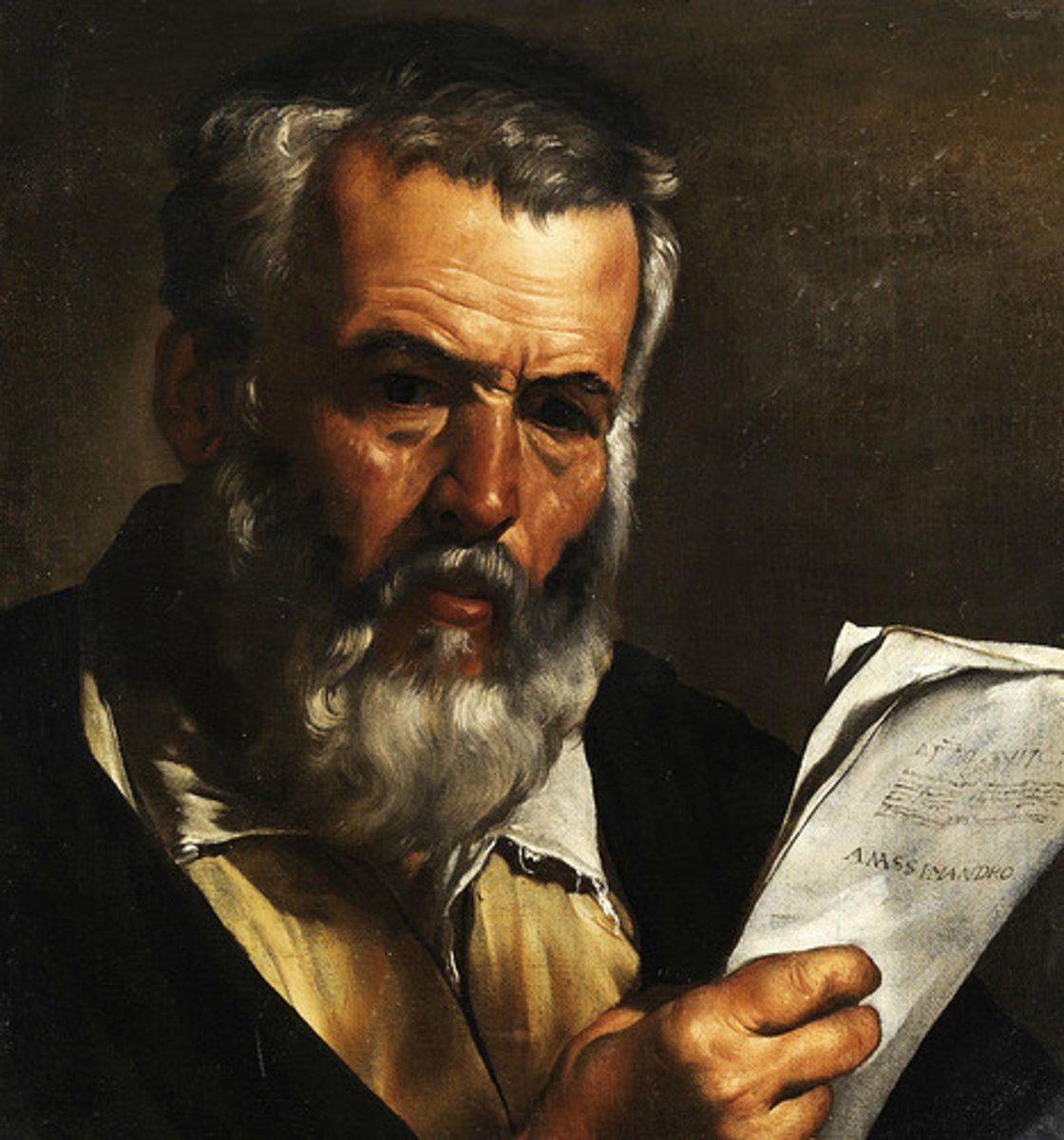
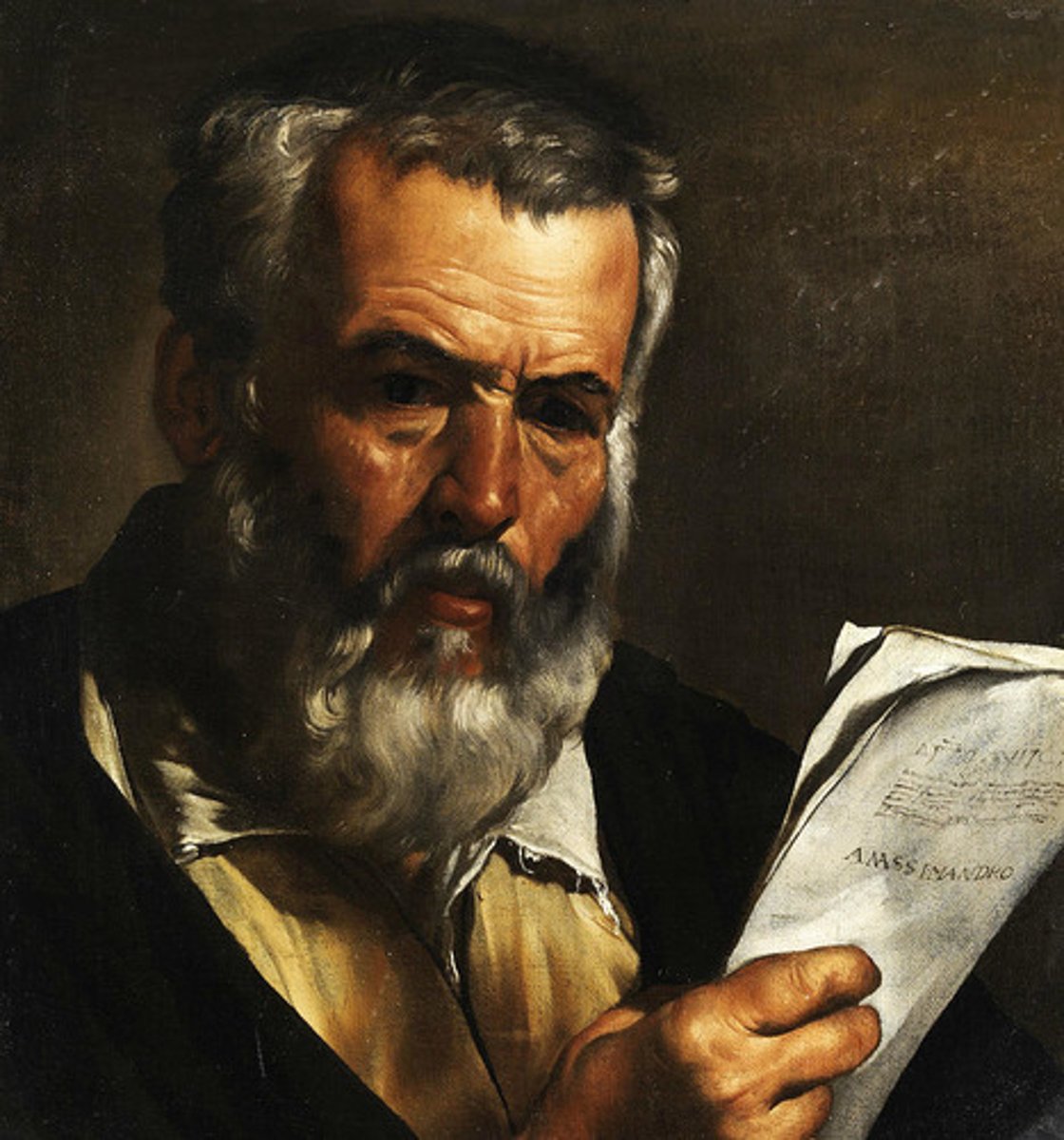
Considered the first true Western Scientist for having conducted the earliest recorded scientific experiment (something which is not credited to his predecessor)
Anaximander of Miletus (Fact 2)
Considered the first true Western Cartographer for having made an accurate map of the Black Sea and even (according to some ancient witnesses) having tried to make a map of the whole world
Anaximenes of Miletus (Theory 1)
Hypothesized that rainbows occur because the sunlight is going through clouds and that the rays of the sun fall onto clouds and that it is due to the sun's rays falling on a thick cloud, of which the rays cannot penetrate
Anaximenes of Miletus (Theory 2)
Hypothesized that hail is frozen rainwater
Anaximenes of Miletus (Theory 3)
Hypothesized that snow is hail (frozen water) with wind mixed into it
Anaximenes of Miletus (Theory 4)
Hypothesized that thunder occurs when wind "leaves" or "breaks out of" clouds
Anaximenes of Miletus (Theory 5)
Hypothesized that earthquakes occur when the Earth is too dry, thus cracking open; or too wet, thus dissolving in on itself or cracking when dry after being extremely moistened by rains
Aristotle (Fact 2)
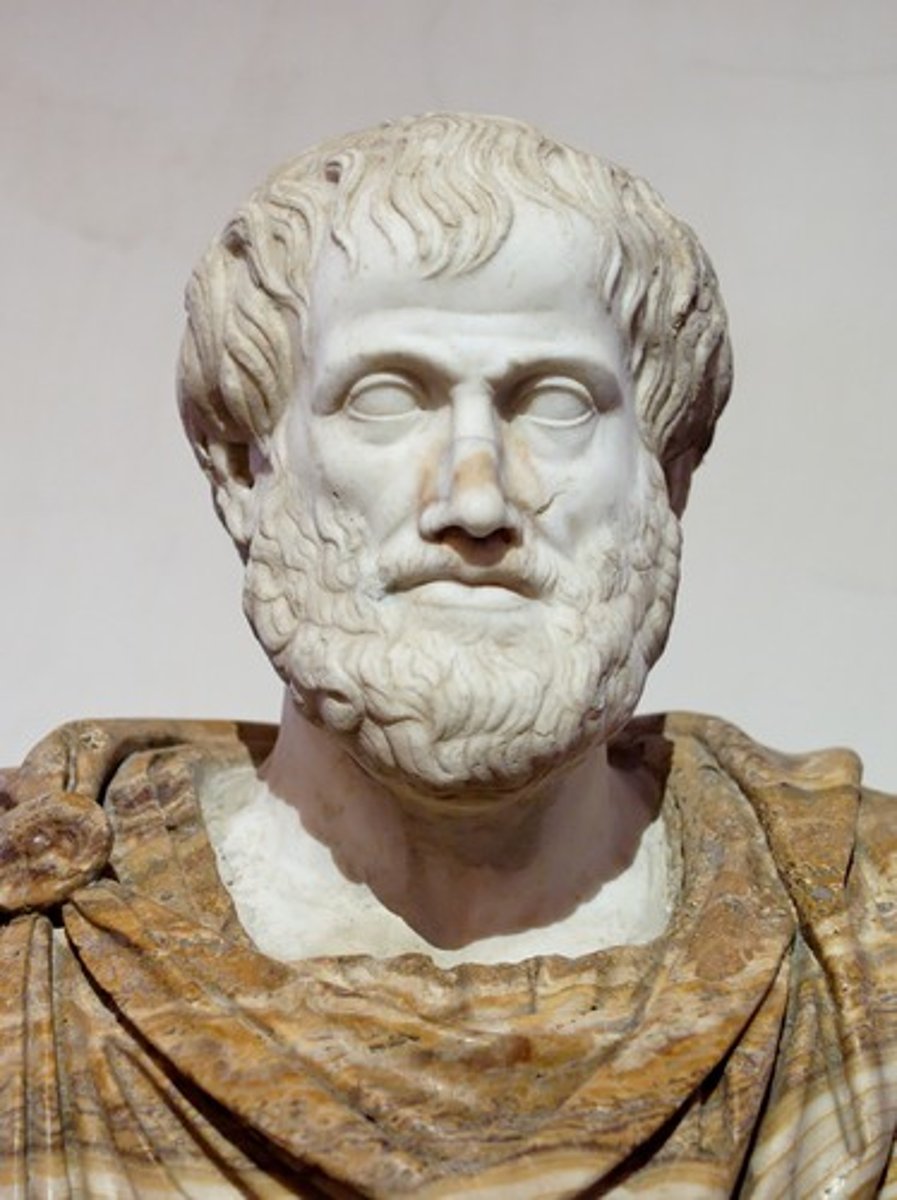
Believed that all Matter was composed of and behaved according to 4 Elements (Compositions), which were Water, Fire, Earth, and Air and the 4 Principles (Behaviors) which were Moist, Hot, Cold, and Dry
Aristotle (Fact 3)
Acknowledged that when pottery is made, wet clay is converted to ceramic because the heat of the fire drives out the moist quality of the wet clay and replaces it with the dry quality of the ceramic
Aristotle (Fact 4)
Acknowledged that warm air causes ice to melt by replacing the dry quality of ice with the most quality of water
Aristotle (Fact 5)
Believed that matter was continuous rather than atomistic, whose view was accepted from his time for the next 2,000 years because it was based on reason and logic rather than experimentation
Aristotle (Fact 6)
Believed that it was theoretically possible to transform any substance into another substance simply by altering the relative proportions of the four basic qualities and principles with which he formulated, a concept that laid the foundations for alchemy
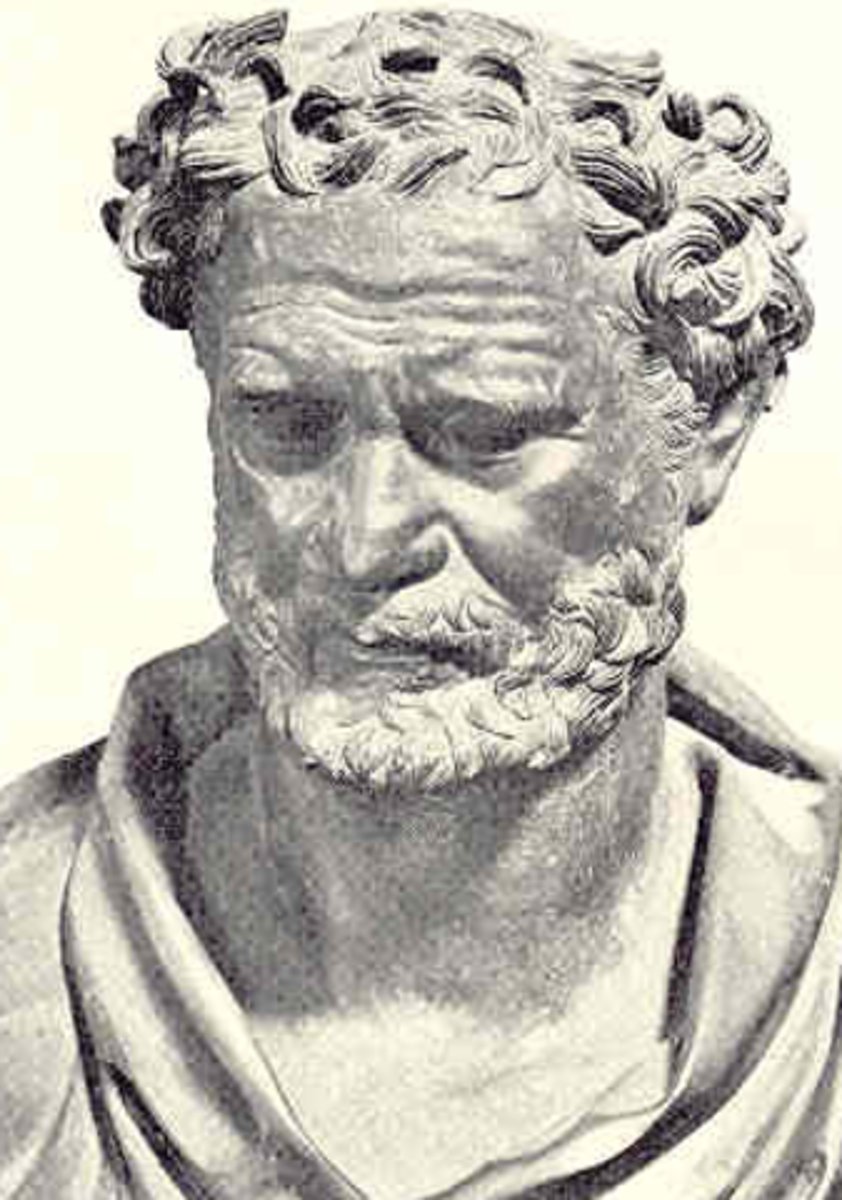
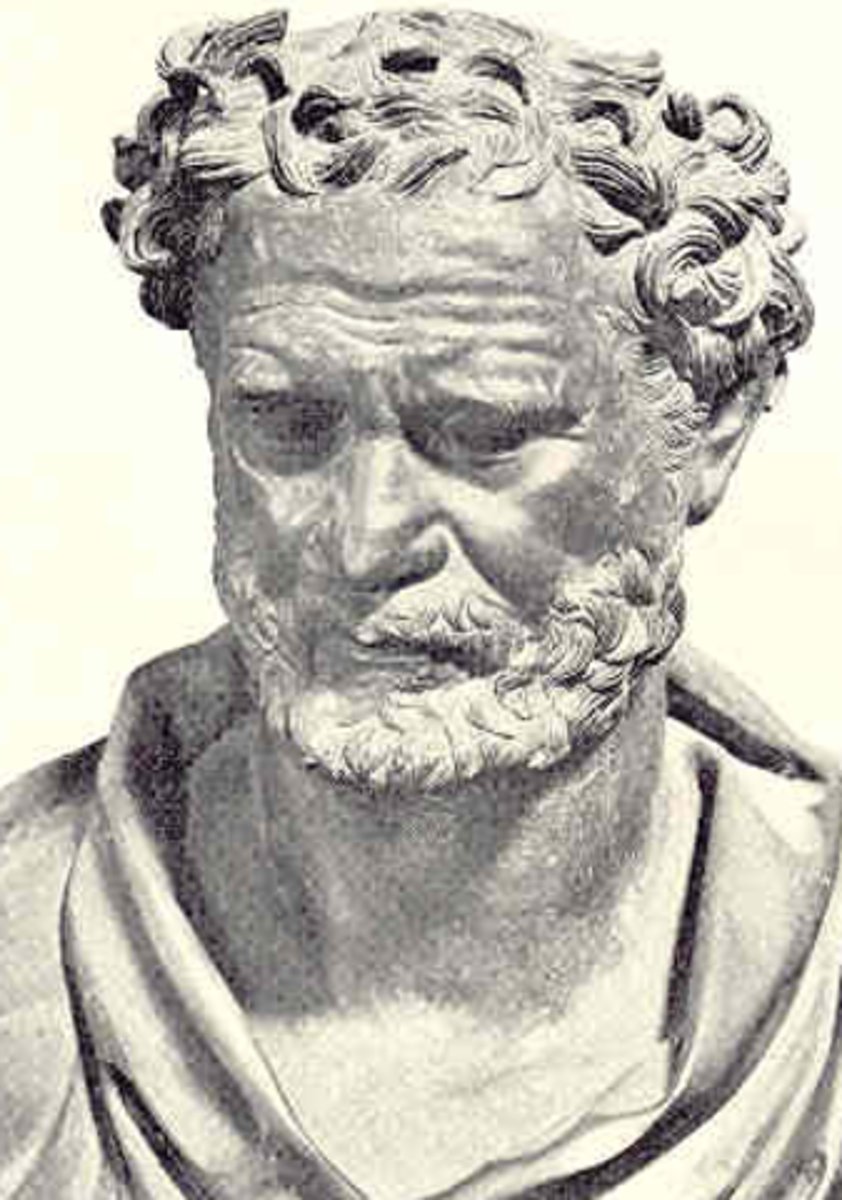
Democritus (Fact 1)
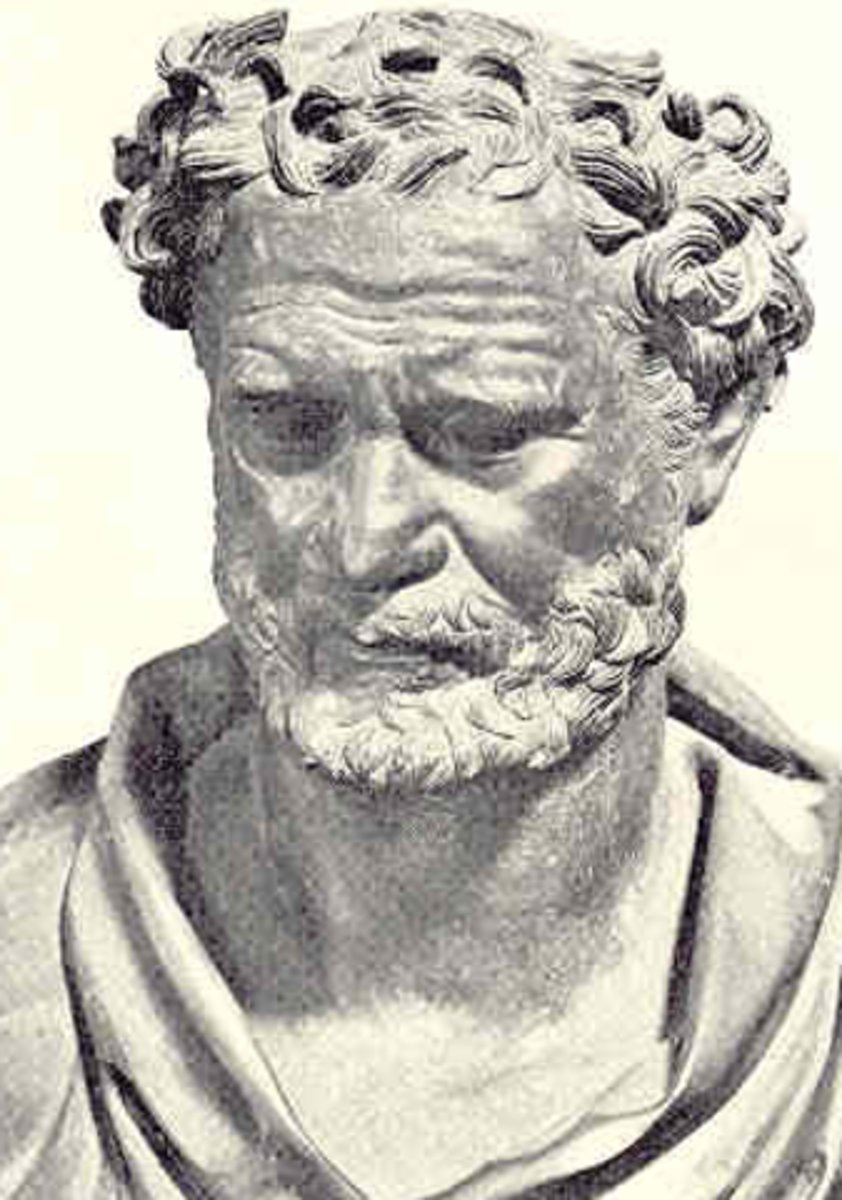
Ancient Greek Polymath
Democritus (Fact 3)
Believed that Matter could be represented with models and in doing so, he created the first atomic model, which was that the texture, mass, and color of a material were a function of the texture, mass, and color of its atoms of which it was made up
Democritus (Fact 2)
Expanding on Leucippus's ideas, he believed that all of matter is composed of a finite number of extremely tiny but discrete units he called "atoms" from the Greek "atomos", meaning "that which is indivisible" or "not cut"
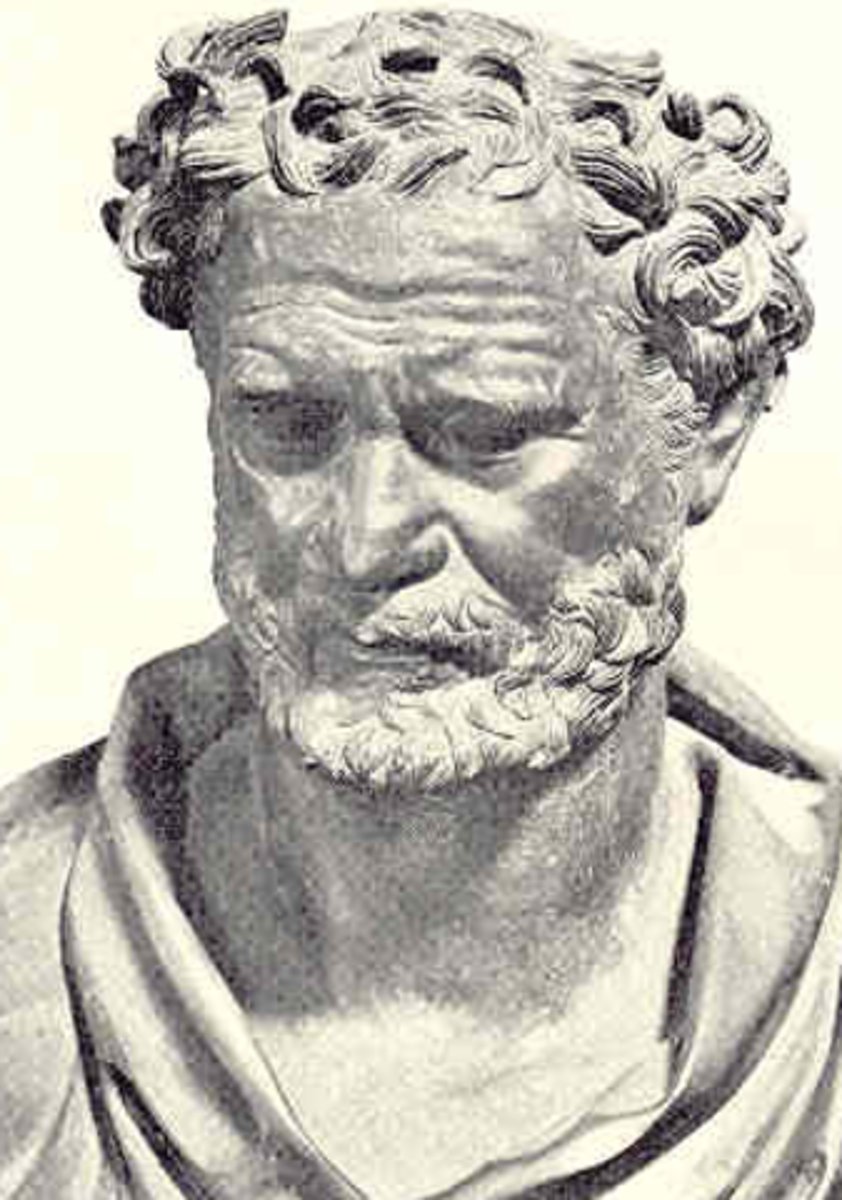
Democritus (Fact 4)
Believed that each kind of atom was distinct in shape and size (what we now call elements) and that real substances were thought to be mixtures of various kinds of atoms
Democritus (Fact 5)
Acknowledged that Iron atoms were shaped like coils, which gave Iron its properties of being rigid, strong, and malleable
Leucippus (Fact 1)
Ancient Greek Polymath, Founder of Modern Atomic Theory
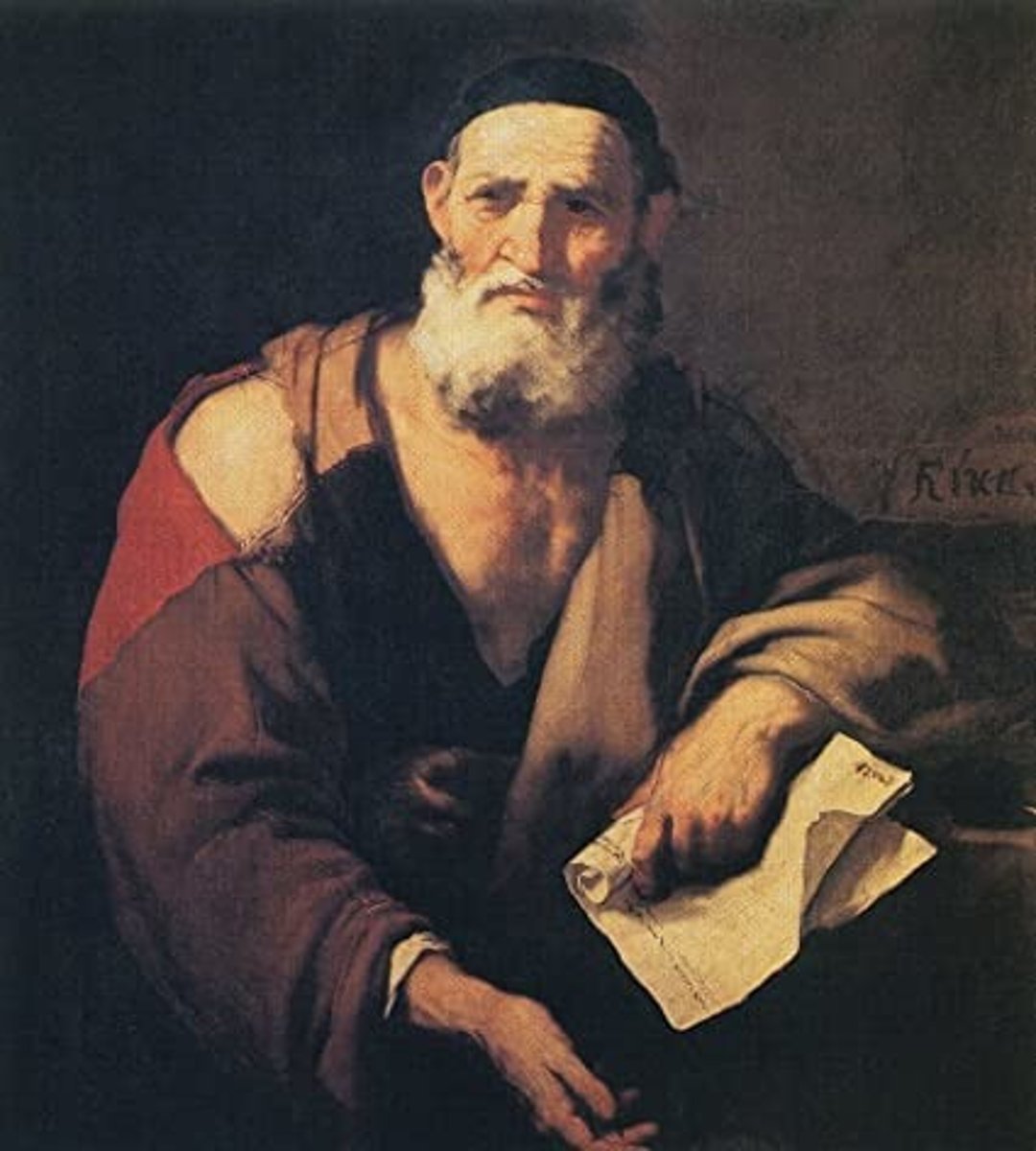
Leucippus (Fact 2)
Compared the idea that the beach (of the Aegean Sea) looked continuous even though upon closer inspection it was made up of tiny grains of sand so likewise the water must be made up of tiny particles as well
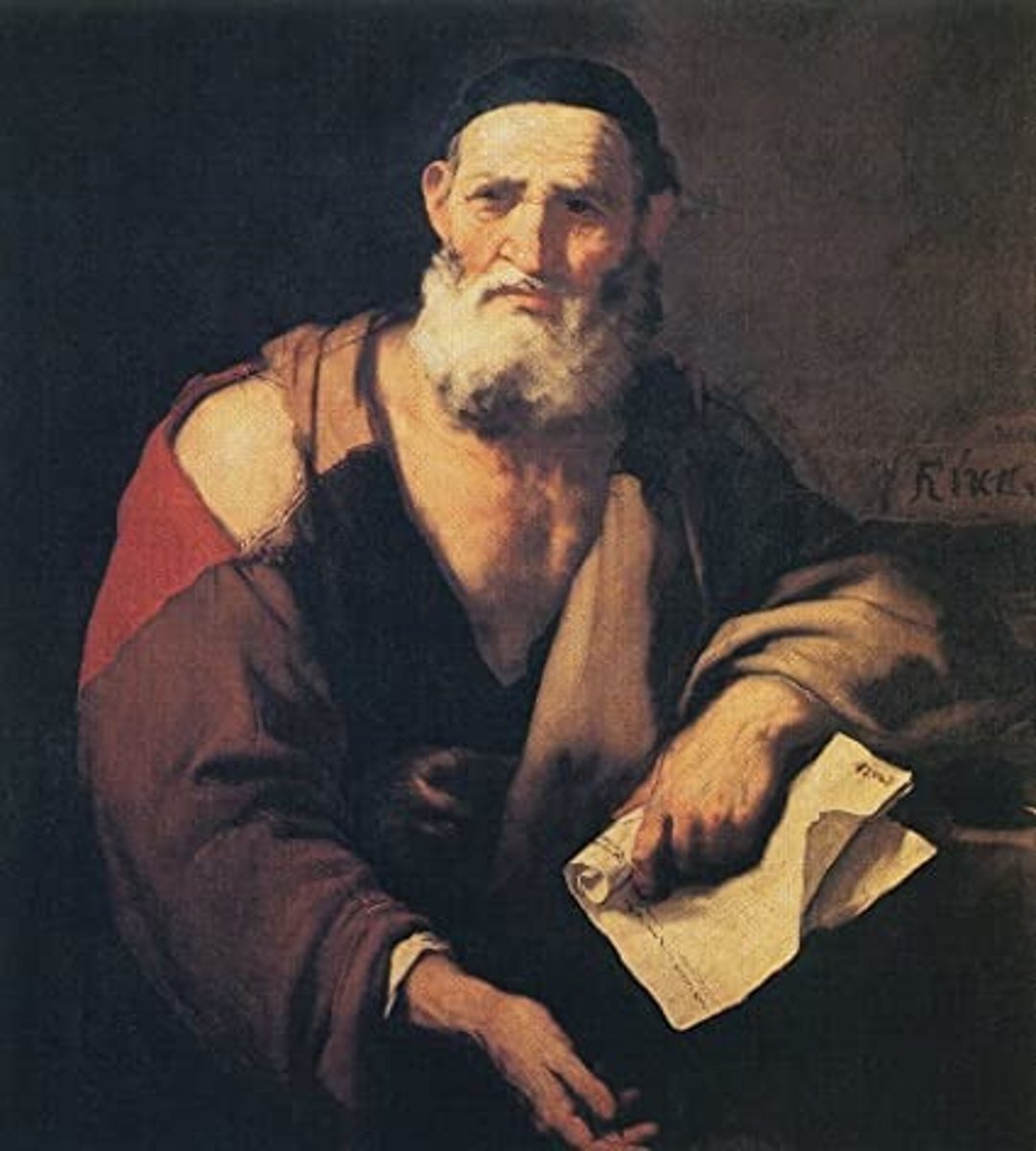
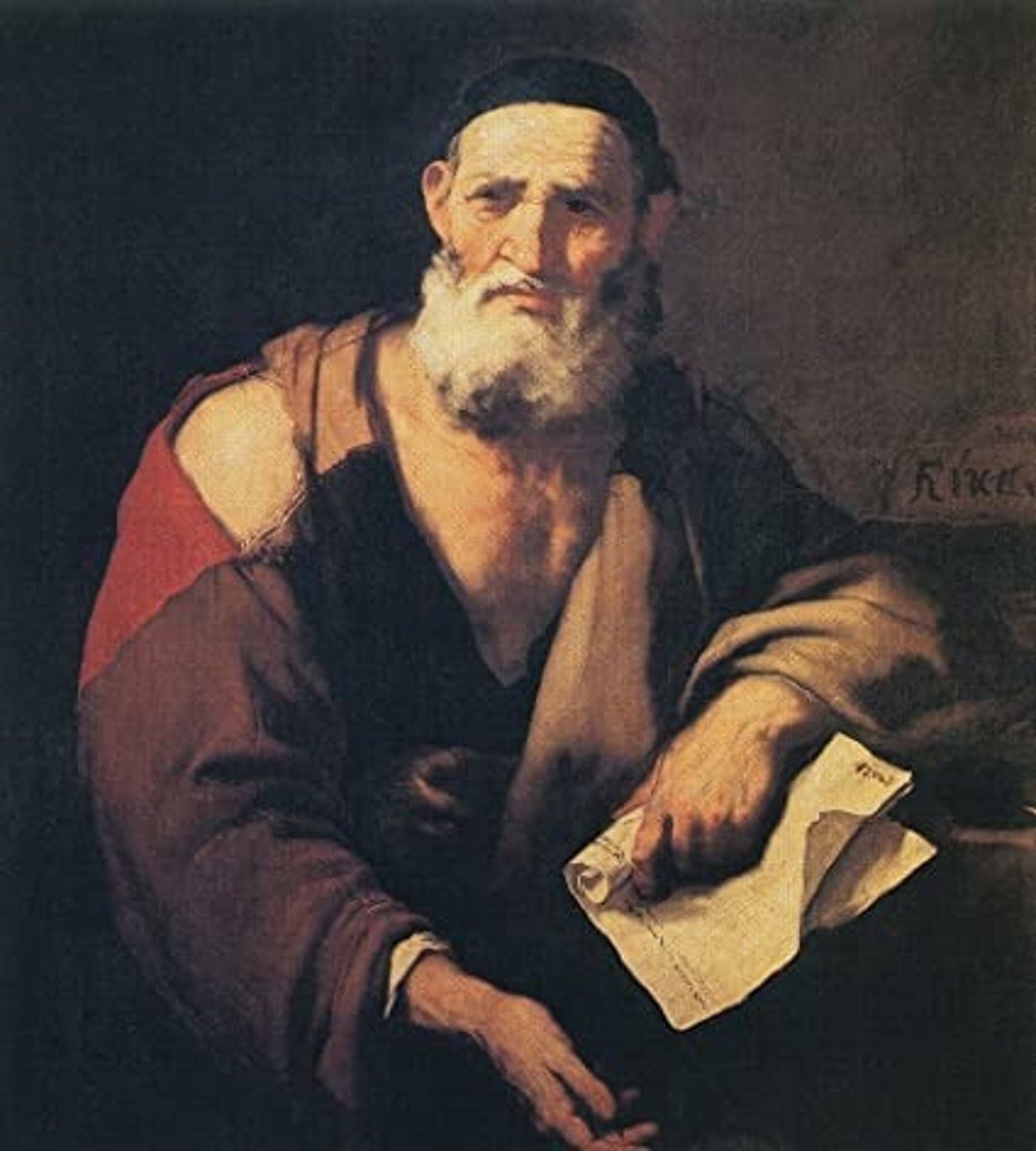
Leucippus (Fact 3)
Considered that if he kept dividing those drops of water that make up the sea into smaller drops, he would ultimately obtain a small particle, what we now know today as a molecule, and which is still, fundamentally, water
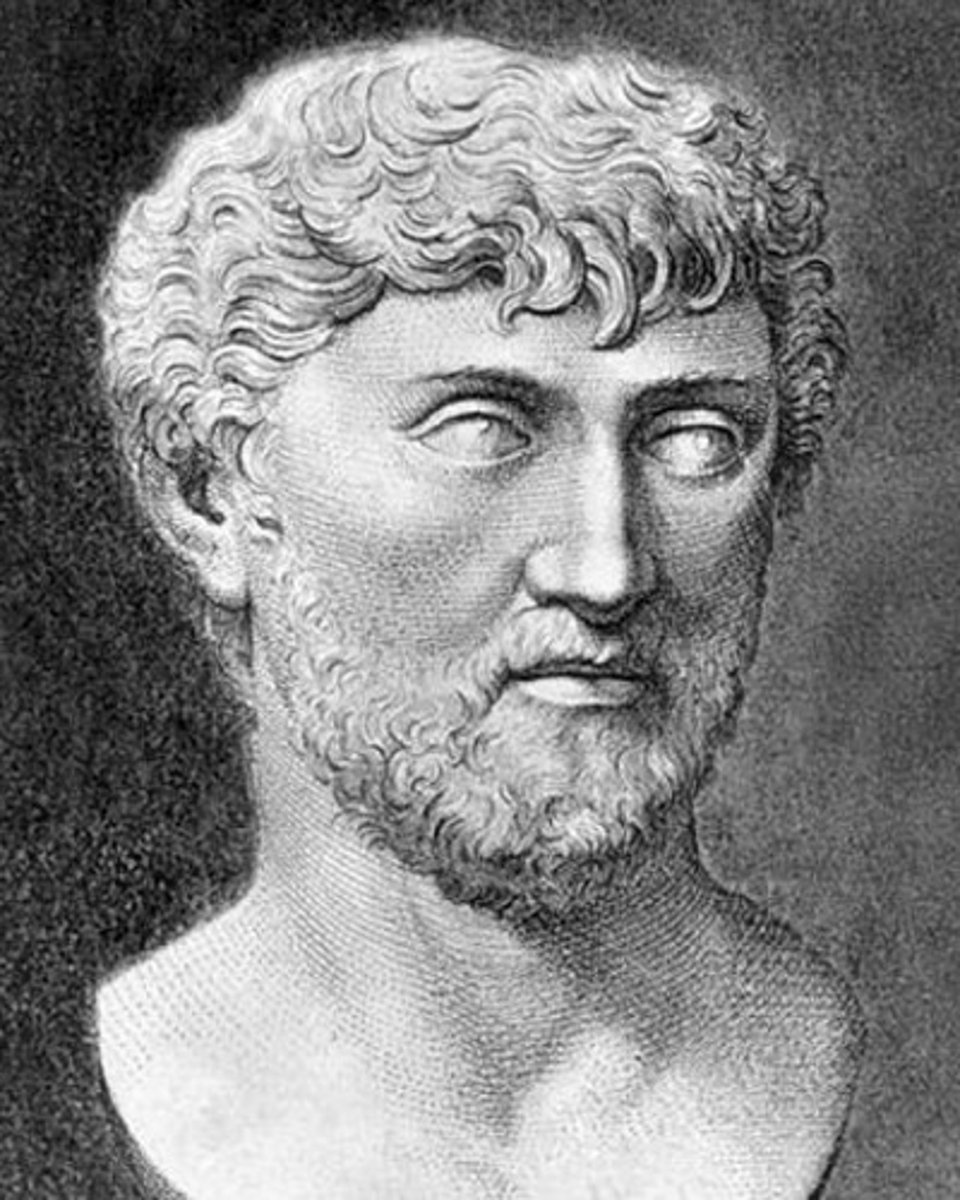
Lucretius (Fact 1)
Ancient Roman Polymath, Poet
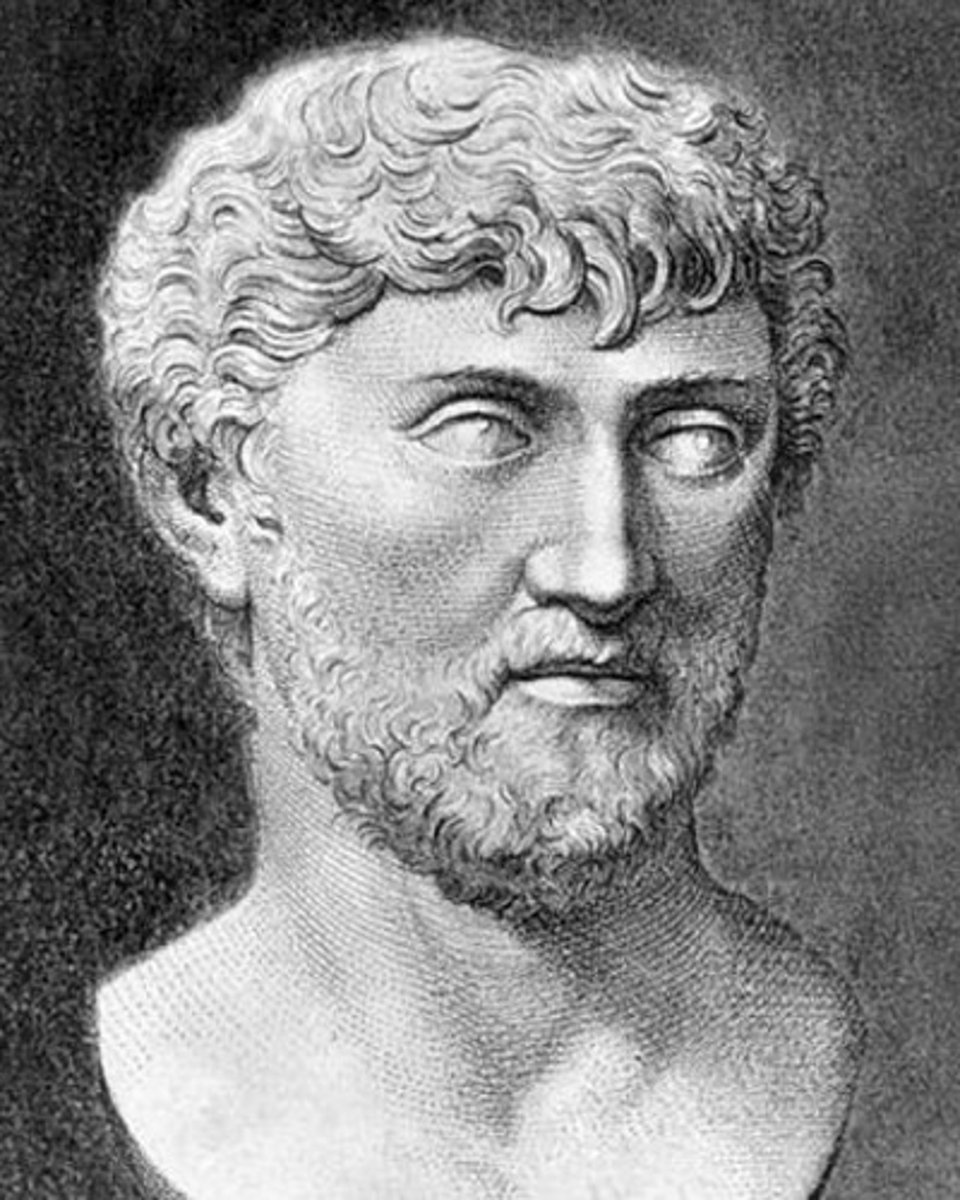
Lucretius: On the Nature of Things (Fact 1)
Long poem in which the namesake author argues for the atomic nature of matter
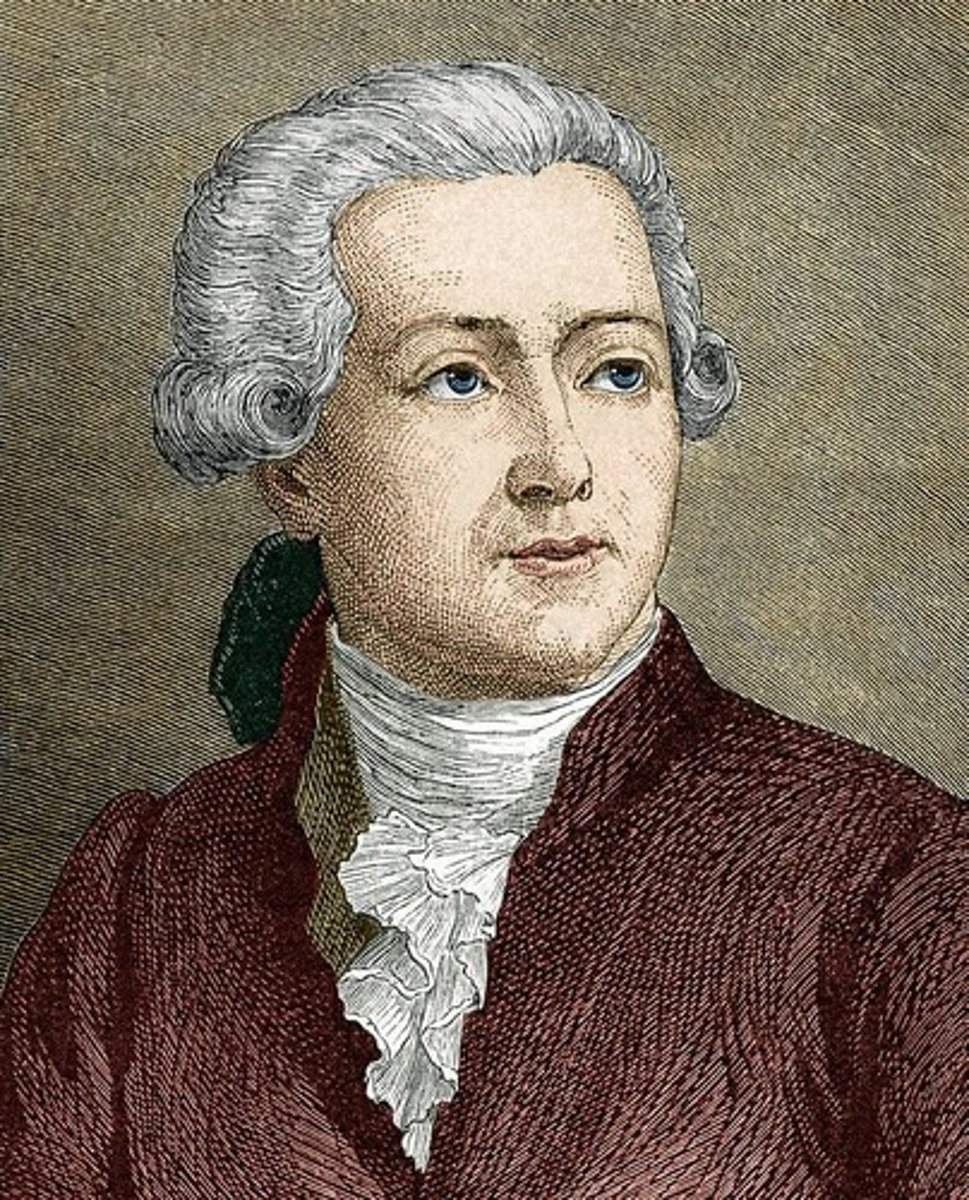
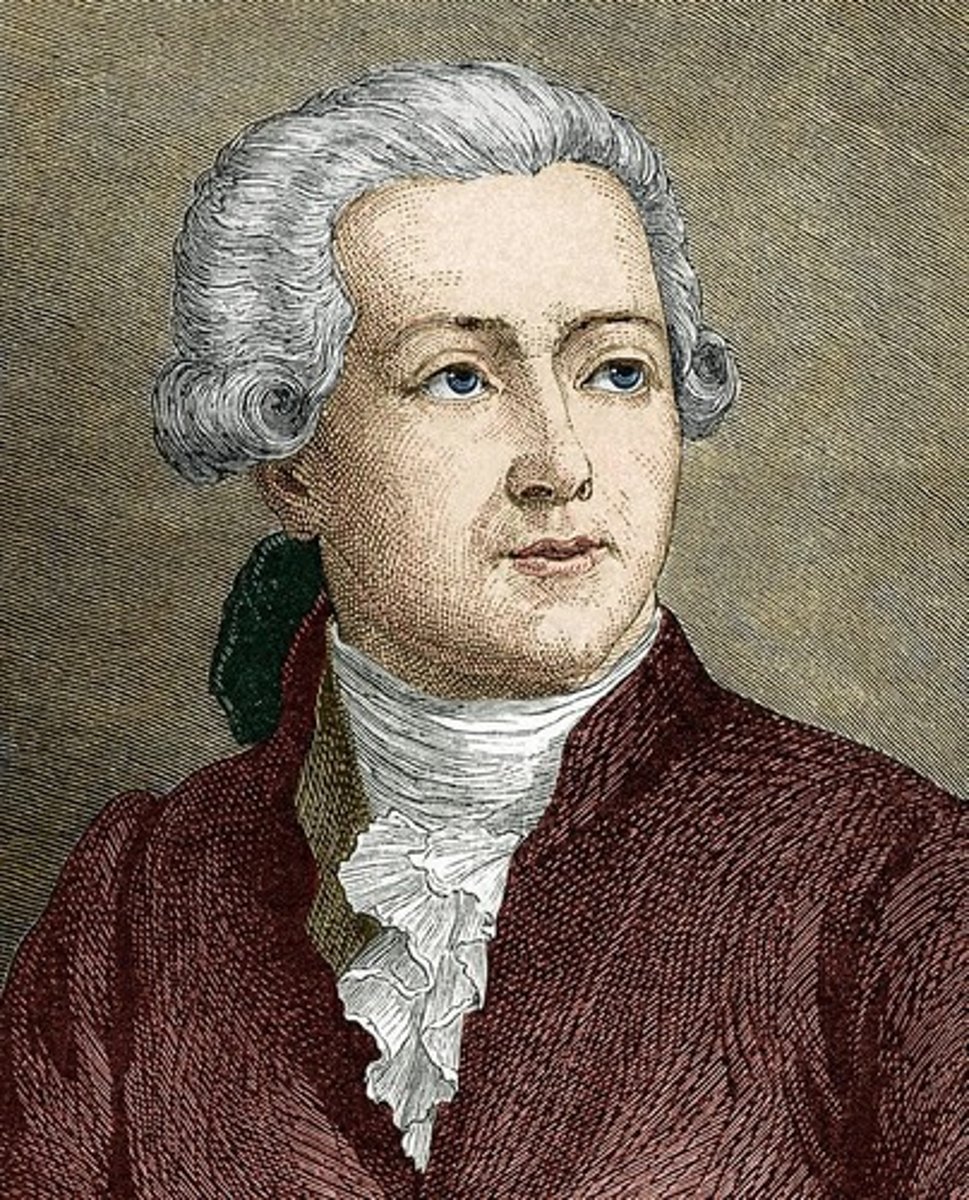
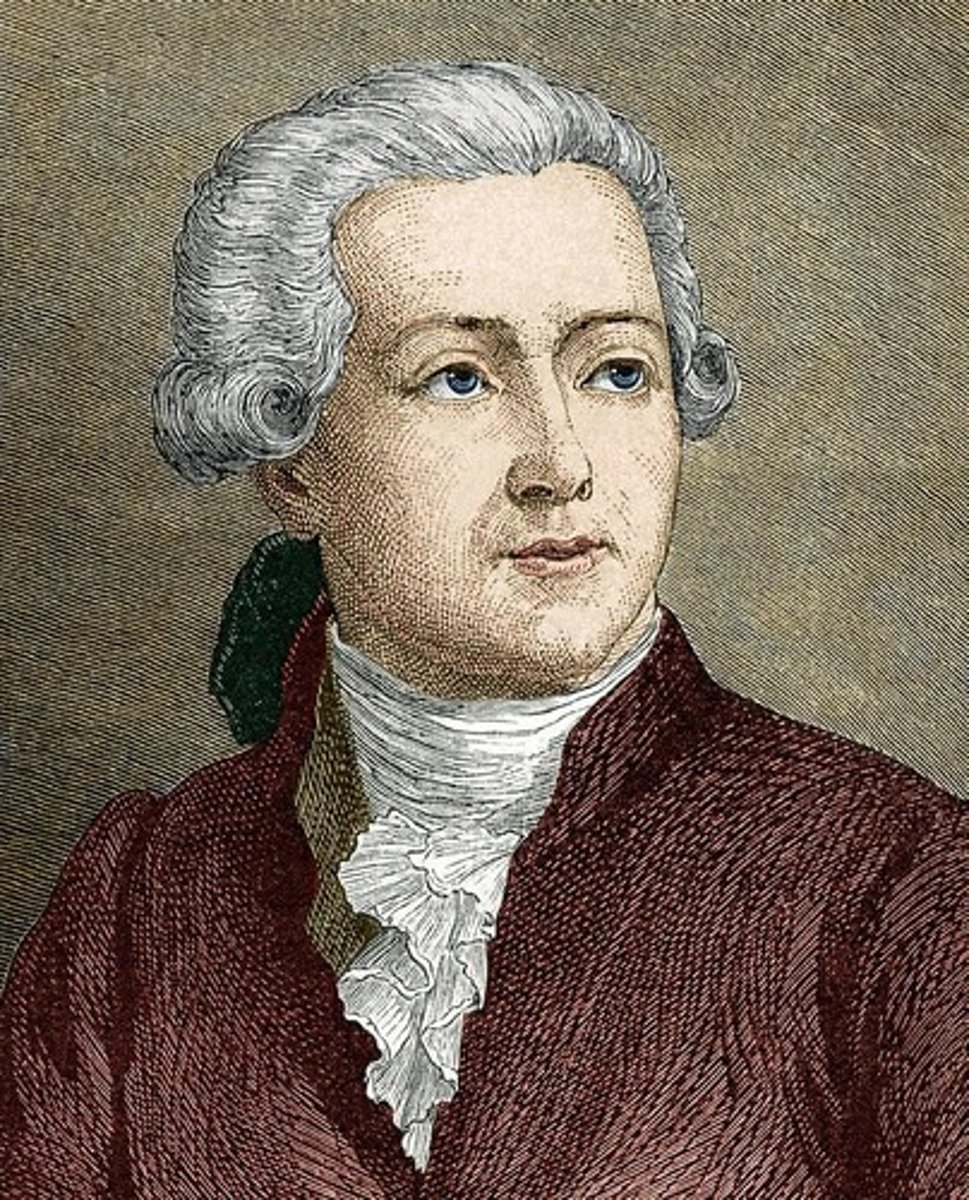
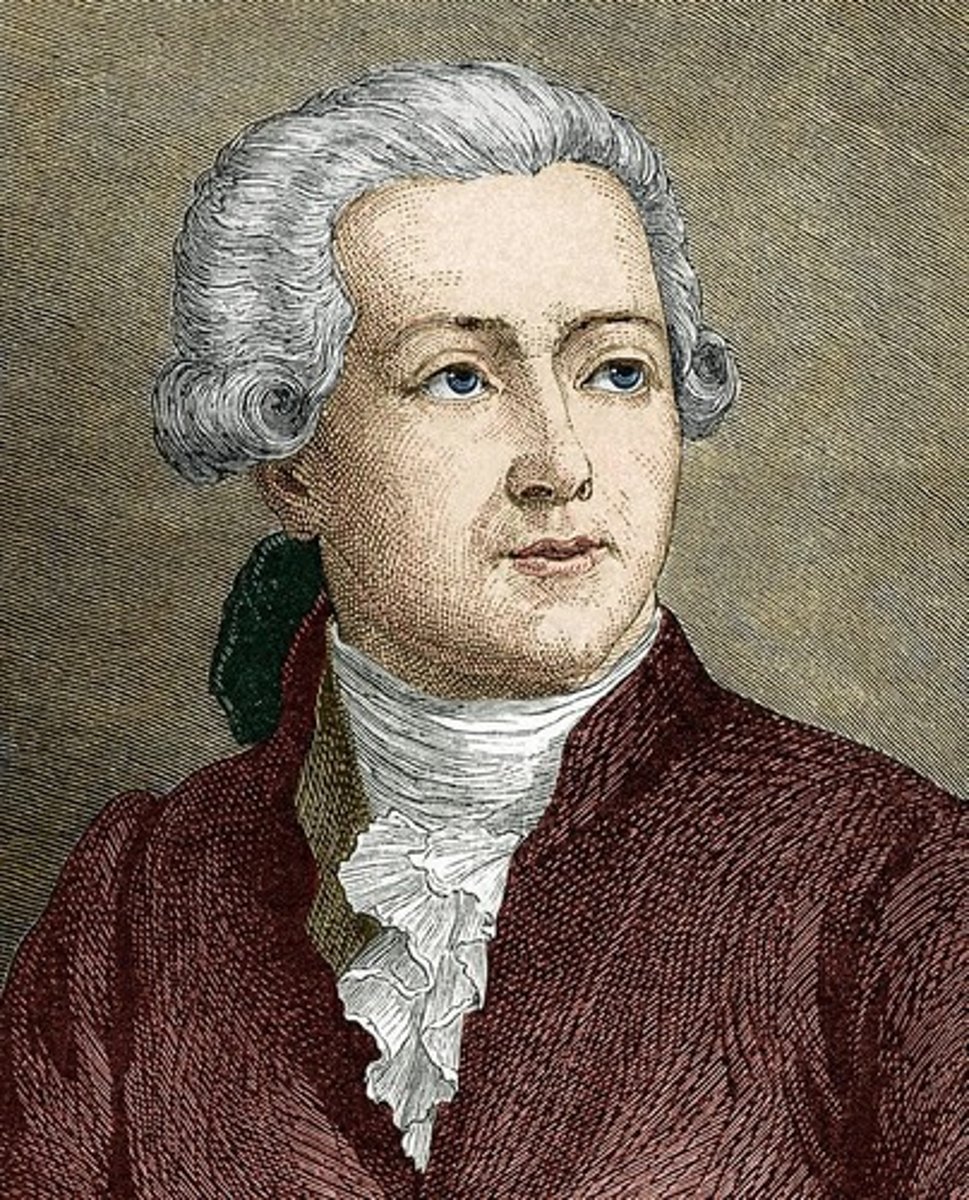
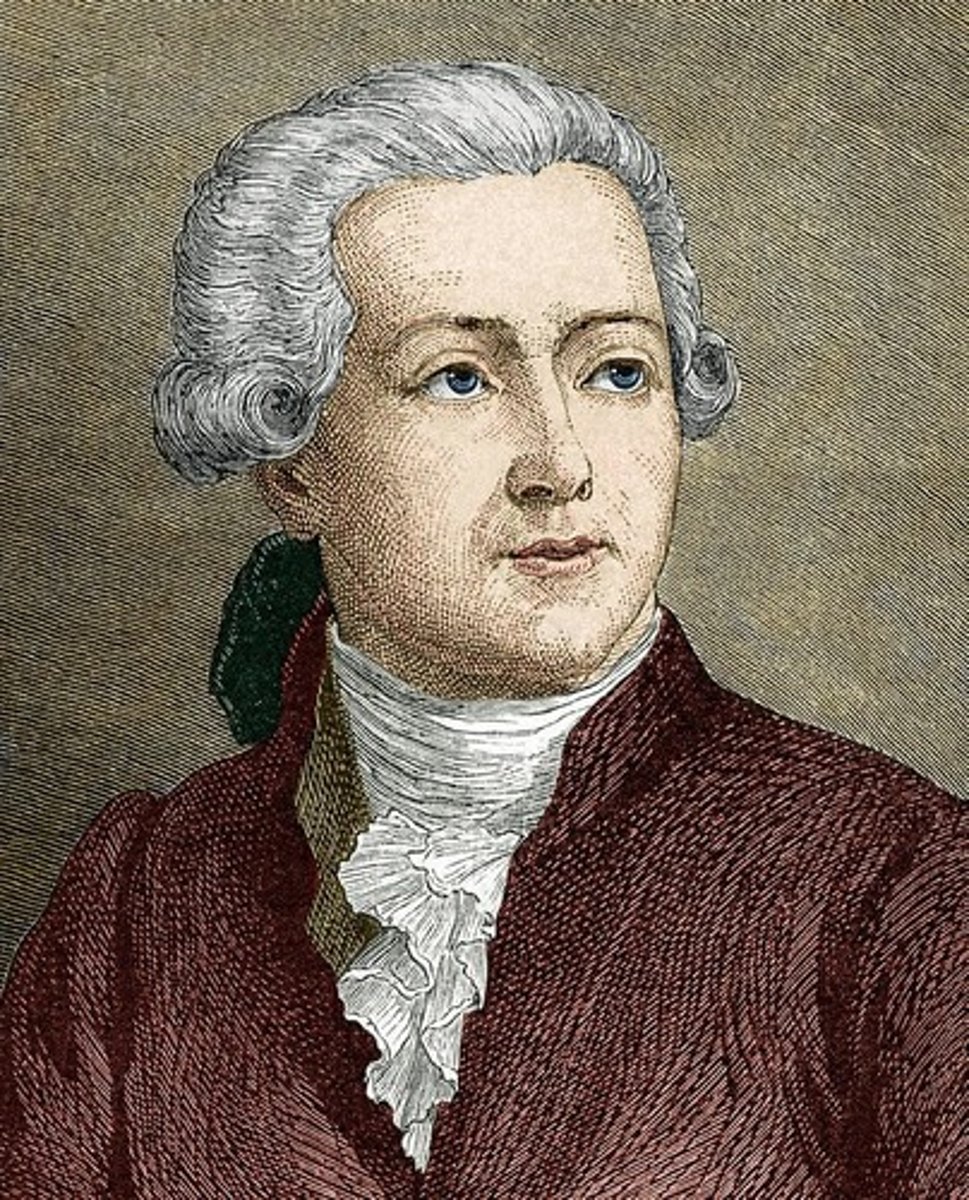
Antoine Lavoisier (Fact 1)
Father of Modern Chemistry because he confirmed his scientific results with experimentation rather than through reason and logic as everyone had done so before him, thus establishing chemistry as a quantitative science for the first time in history
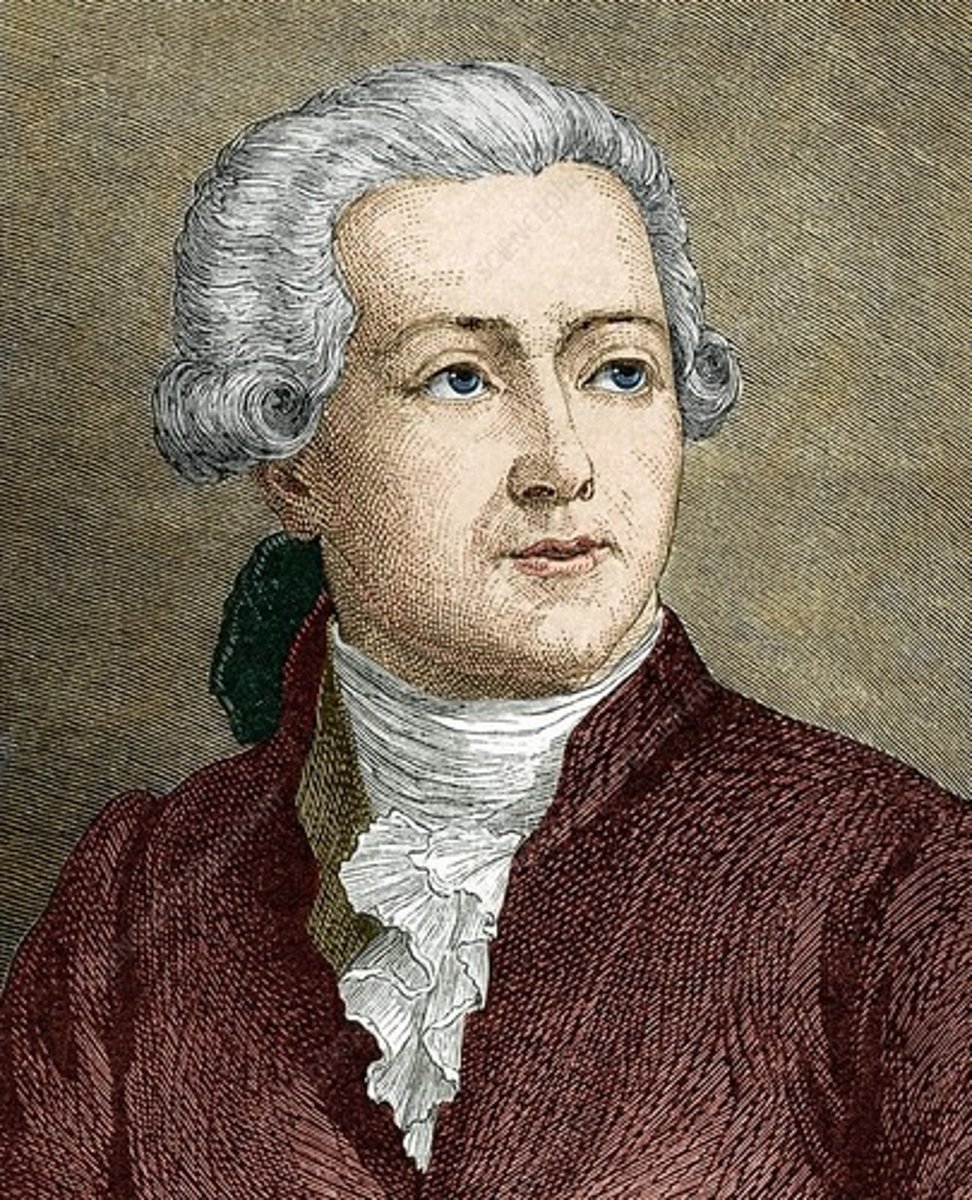
Antoine Lavoisier (Fact 2)
French Chemist, Biologist, Botanist, Geologist and Physicist
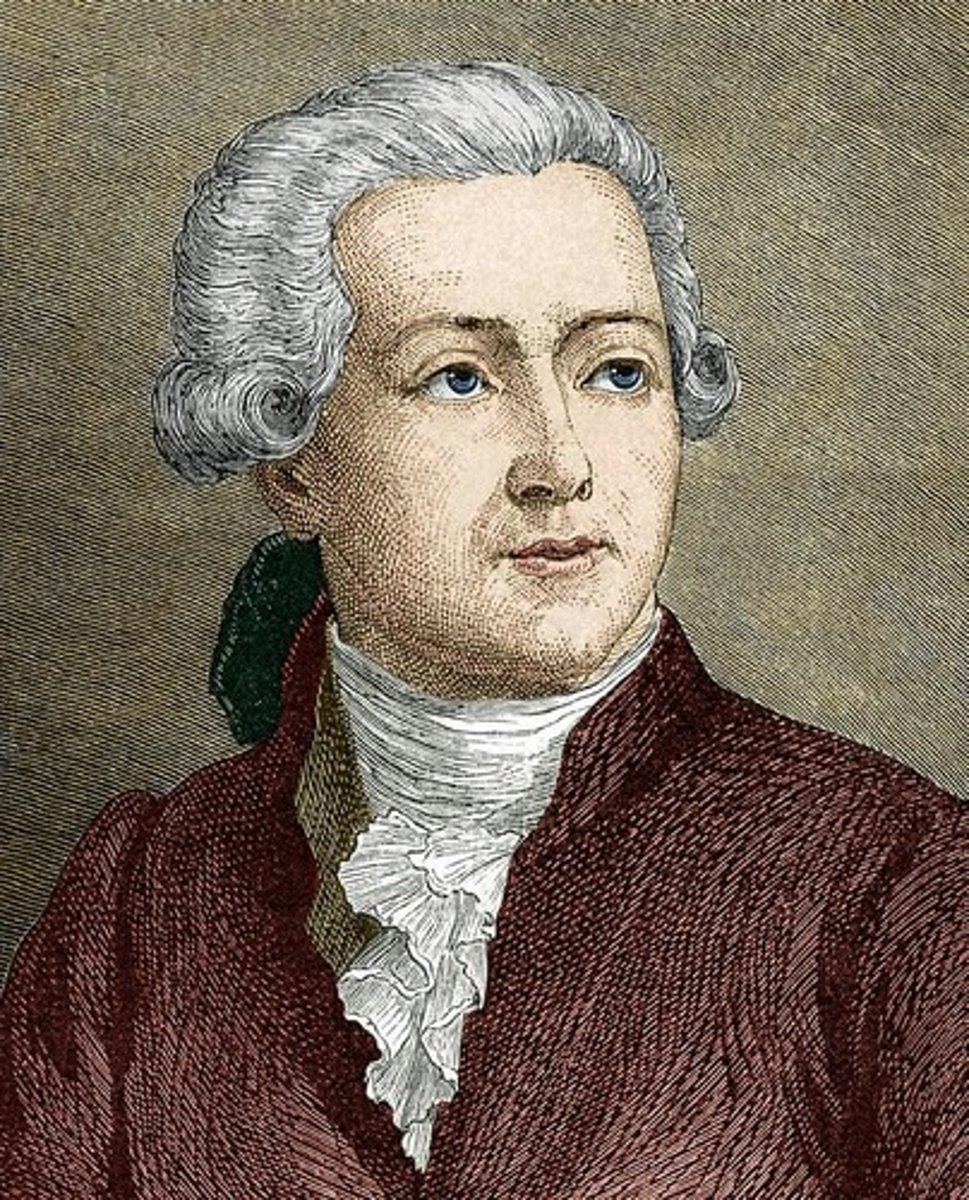
Antoine Lavoisier (Fact 3)
Contribution #1: Developed the Law of the Conservation of Matter/Mass
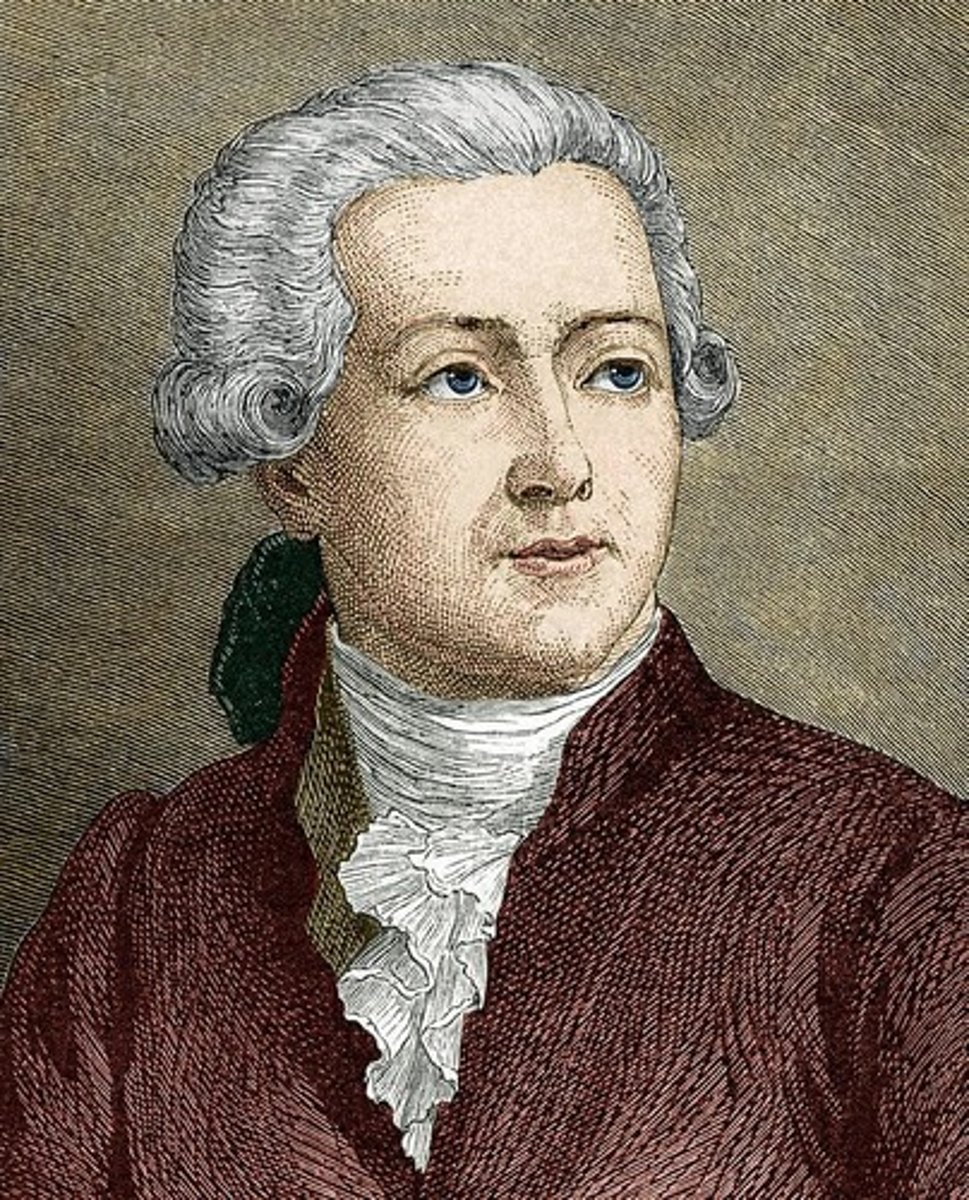
Antoine Lavoisier (Fact 4)
Contribution #5: Determined Hydrogen came from water, not air, thus disproving the "Phlogiston" Theory and thus coined the names for Hydrogen as well as Oxygen, despite not discovering either of the elements
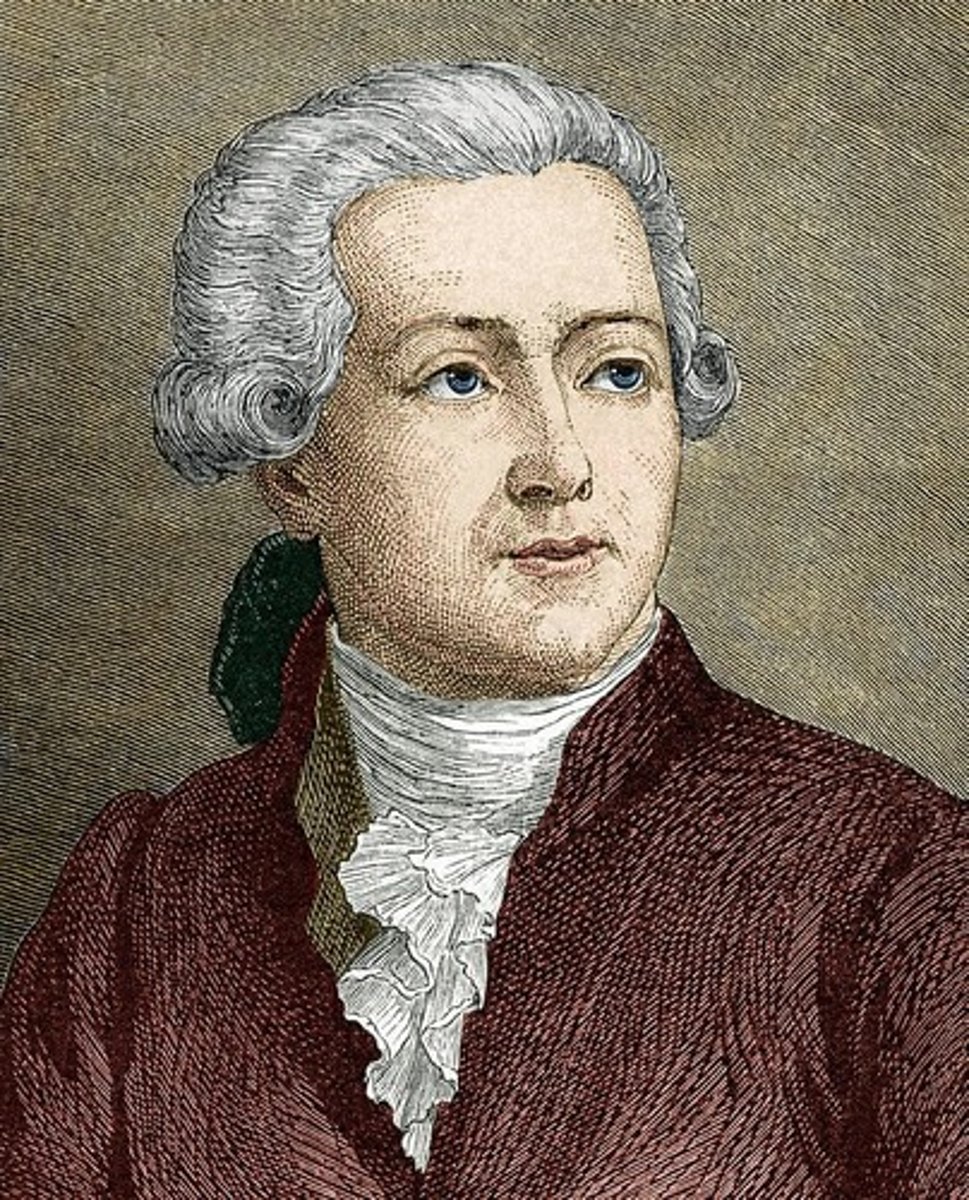
Antoine Lavoisier (Fact 5)
Contribution #2: Discovered the most common allotropes of Carbon being Diamond and Ash
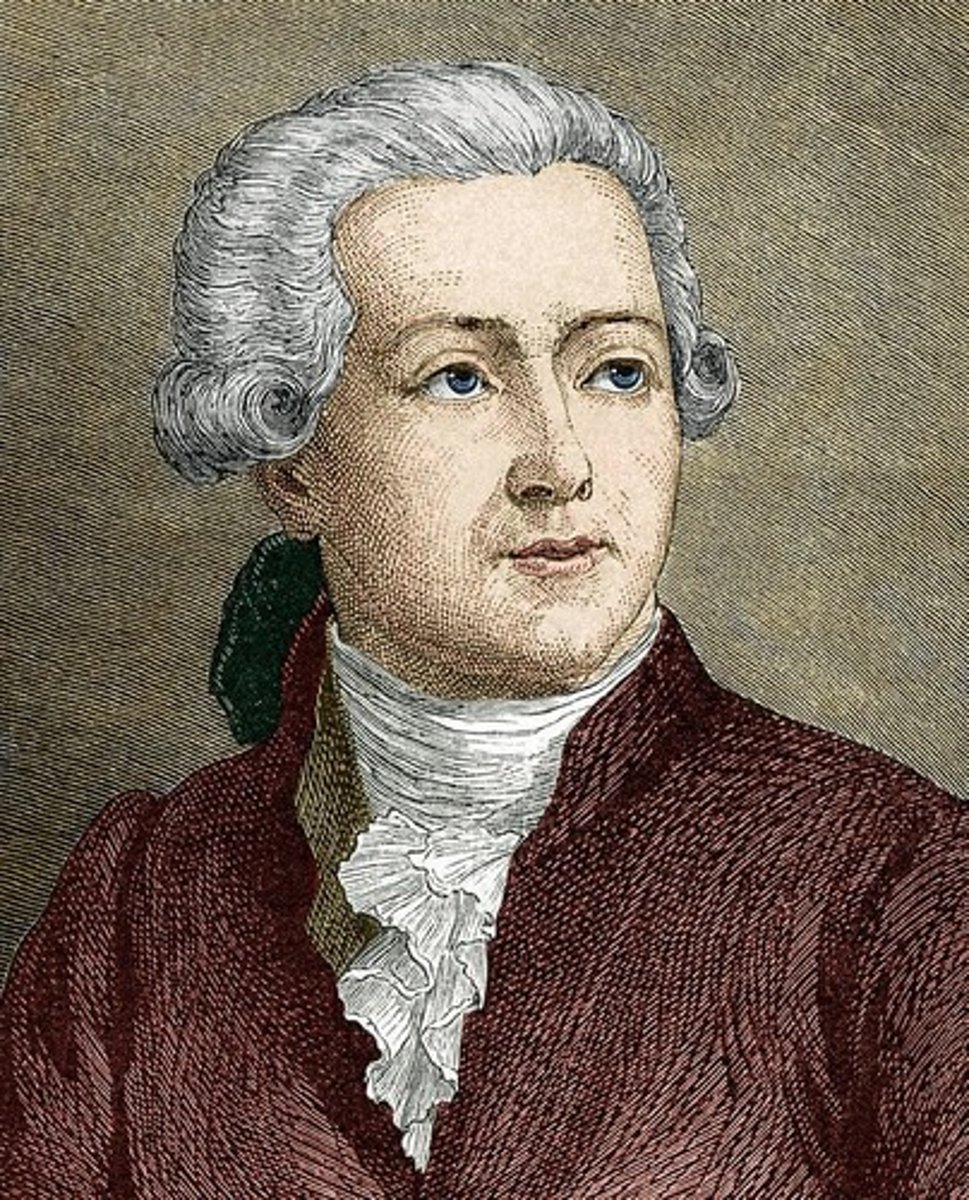
Antoine Lavoisier (Fact 6)
Contribution #3: Discovered Silicon
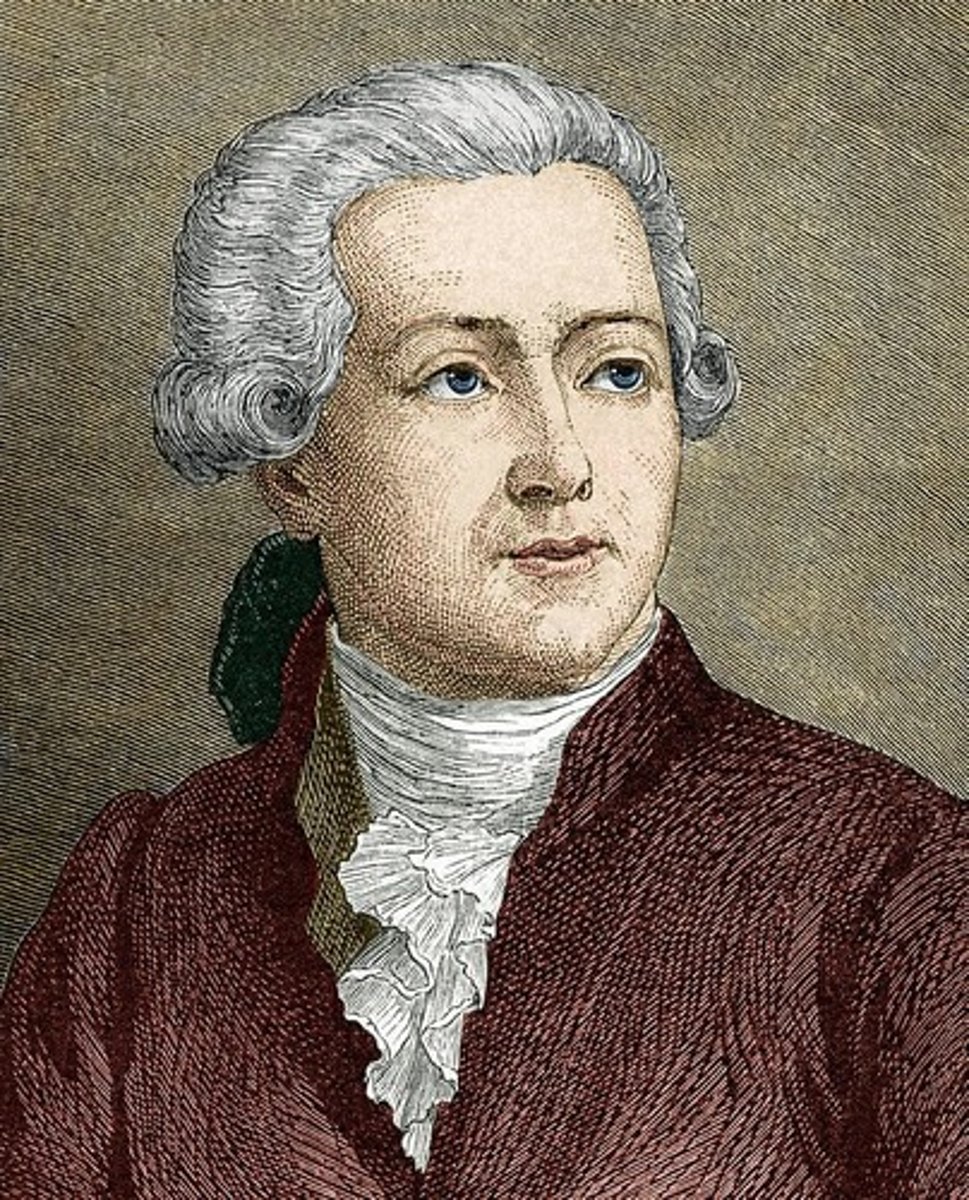
Antoine Lavoisier (Fact 7)
Contribution #6: Found that the processes of combustion and respiration were related via one of his "Law of Conservation of Mass" Experiments
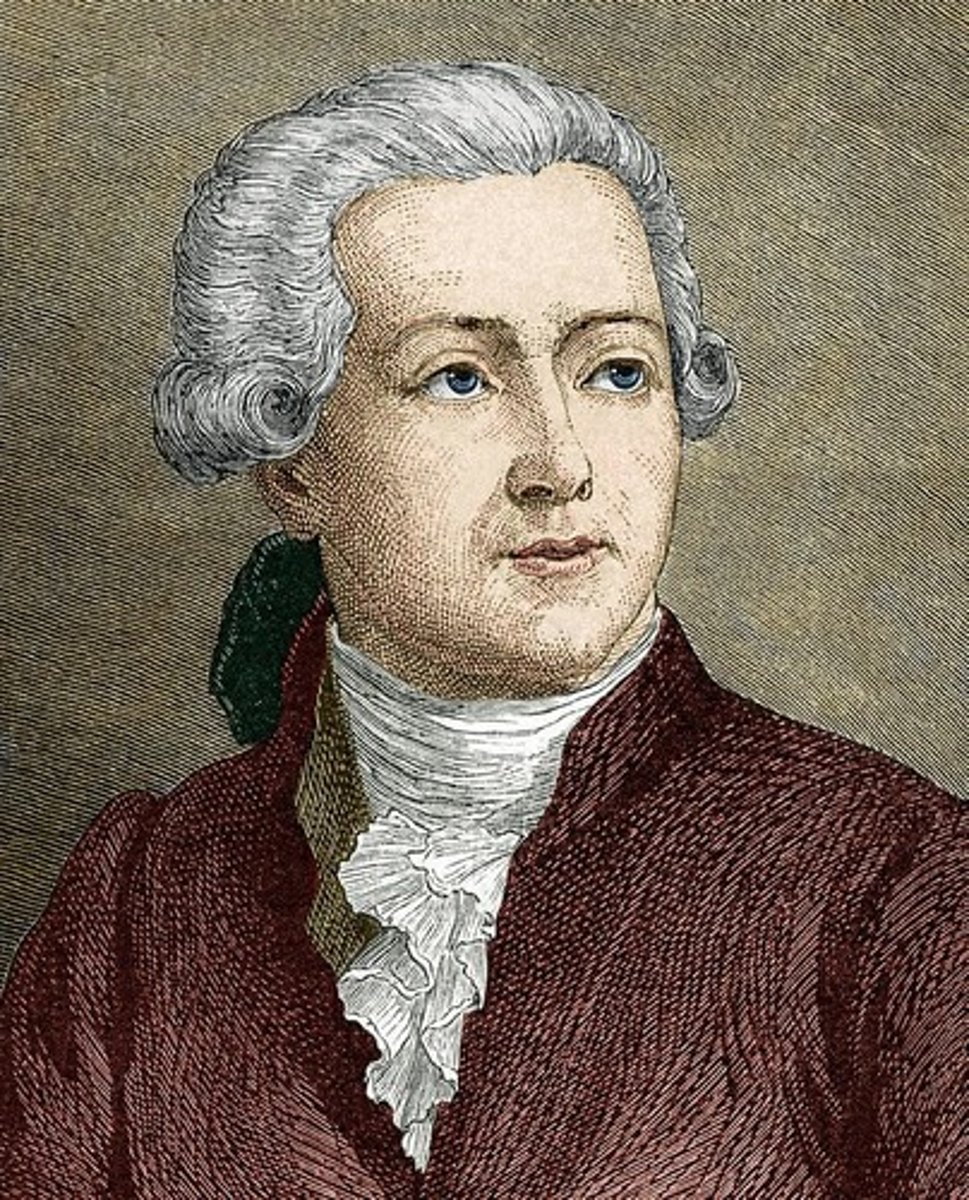
Antoine Lavoisier (Fact 8)
Contribution #4: Created the International Language of Chemistry and Coined the Metric System
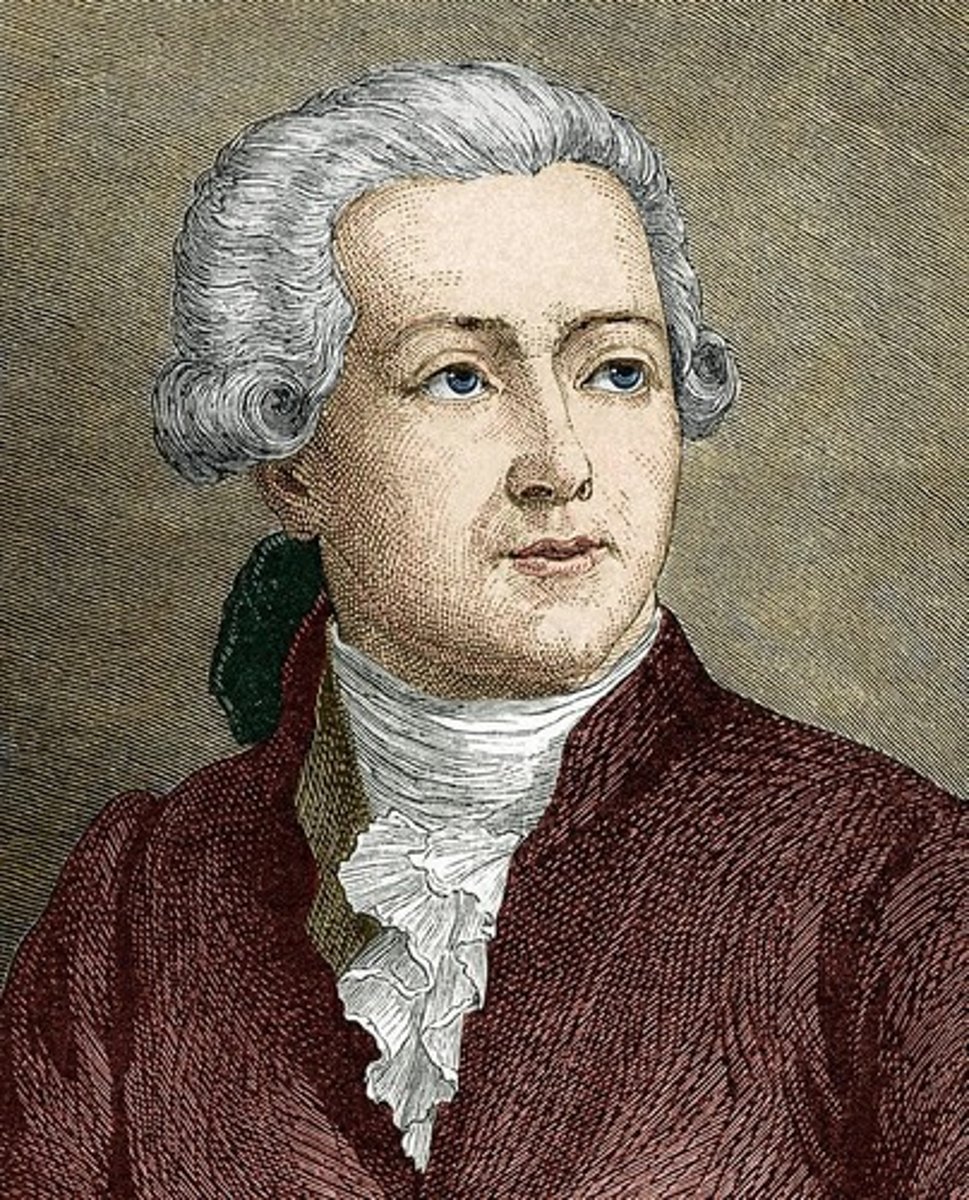
Antoine Lavoisier (Fact 9)
Contribution #7: Found that Mass decreases if something combusts, but is really conserved because it turns into a gas, this was the discovery, although he didn't know it at the time, of Phase Changes or Physical Changes (as opposed to Chemical Changes)
Antoine Lavoisier (Fact 10)
Contribution #8: Discovered how animals digest their food
Antoine Lavoisier (Fact 11)
Contribution #9: Published the first Chemistry textbook ever
Antoine Lavoisier (Fact 12)
Contribution #10: As a citizen of France, he designed street lamps to make travel through urban neighborhoods safer at night
Antoine Lavoisier (Fact 13)
Contribution #11: As a citizen of France, he advocated for the use of fire hydrants
Antoine Lavoisier (Fact 14)
Contribution #12: As a citizen of France, he established free schools
Antoine Lavoisier (Fact 15)
His wife, Marie-Anne, assisted him with many of his experiments; whom he married as a wealthy girl when she was only 13 and he was well over 20, but in which her father collected "passes" from the French Government at the time
Antoine Lavoisier (Fact 16)
A supporter of the French Revolution, he ended up dying by the guillotine because he decided on a part-time career as a tax collector to help fund his scientific projects and experiments before the revolution arose, even though a few years after that, the French Government were erecting statues of him in his honor and for his contributions to Science and to France
Antoine Lavoisier (Fact 17)
Like Amedeo Avogadro, he started out as a lawyer but soon switched to Science
Antoine Lavoisier (Fact 18)
His mother died when he was very young
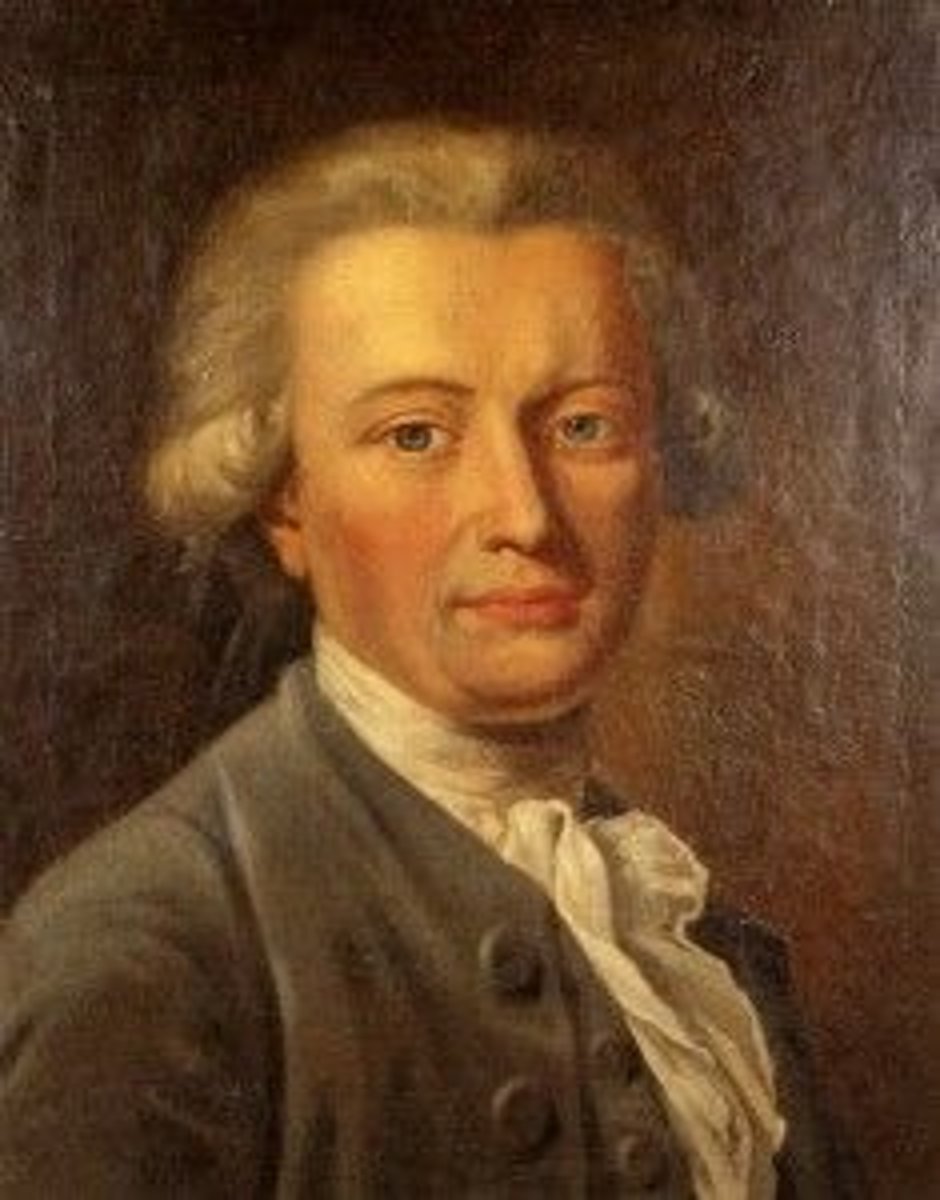
Henry Cavendish (Fact 1)
English Chemist and Physicist
Henry Cavendish (Fact 2)
Discovered Hydrogen (as a gas) in 1783
Henry Cavendish (Fact 3)
Discovered that water was a compound, not an element because water is produced when Hydrogen burns in Oxygen (effectively reversing the Nicholson-Carlisle Experiment)
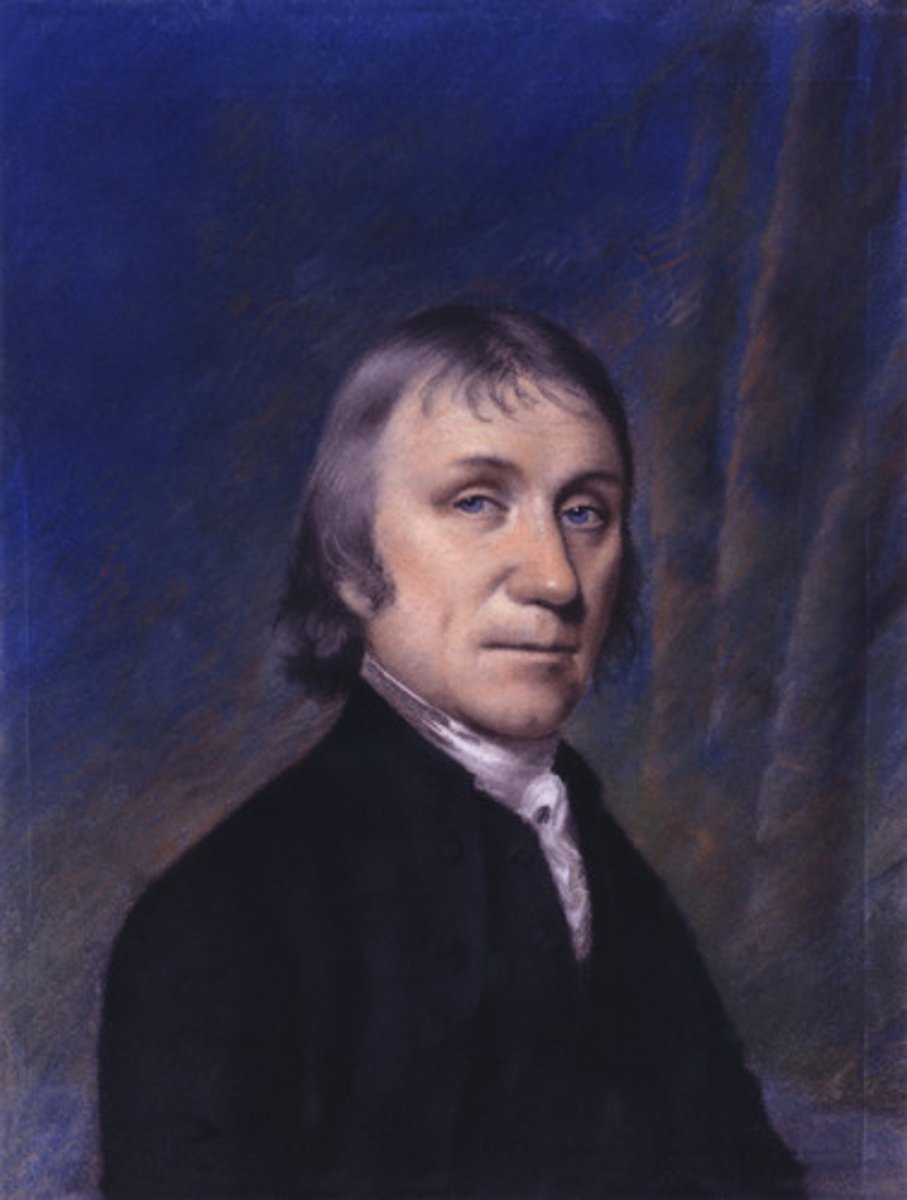
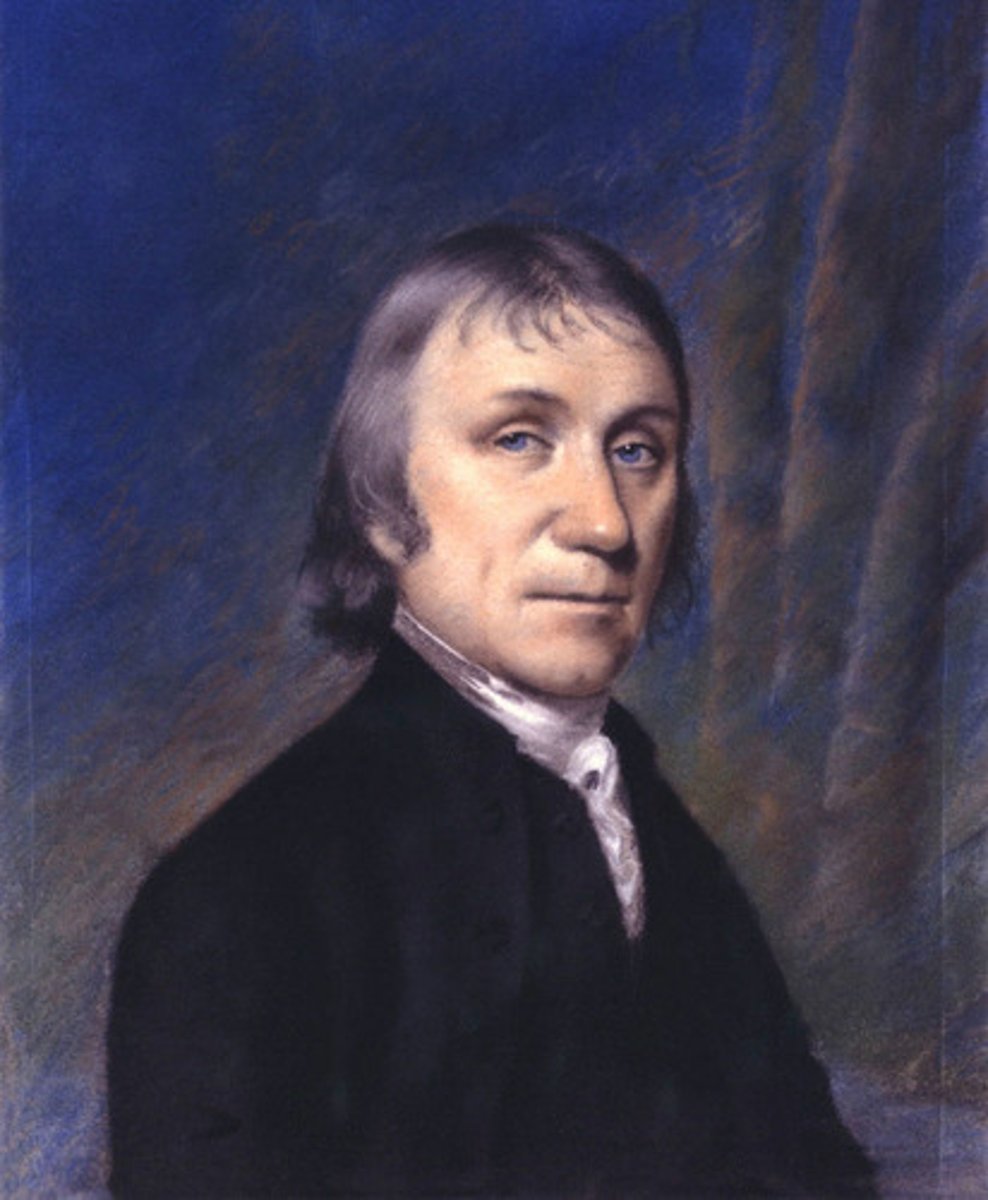
Joseph Priestley (Fact 1)
English Self-Trained Chemist
Joseph Priestley (Fact 2)
Discovered Oxygen (as a gas)
Joseph Priestley (Fact 3)
Was the first to recognize the nature of carbonated beverages
Joseph Priestley (Fact 4)
Was the first to understand the process of Photosynthesis, discovering that plants absorb Carbon Dioxide when exposed to sunlight
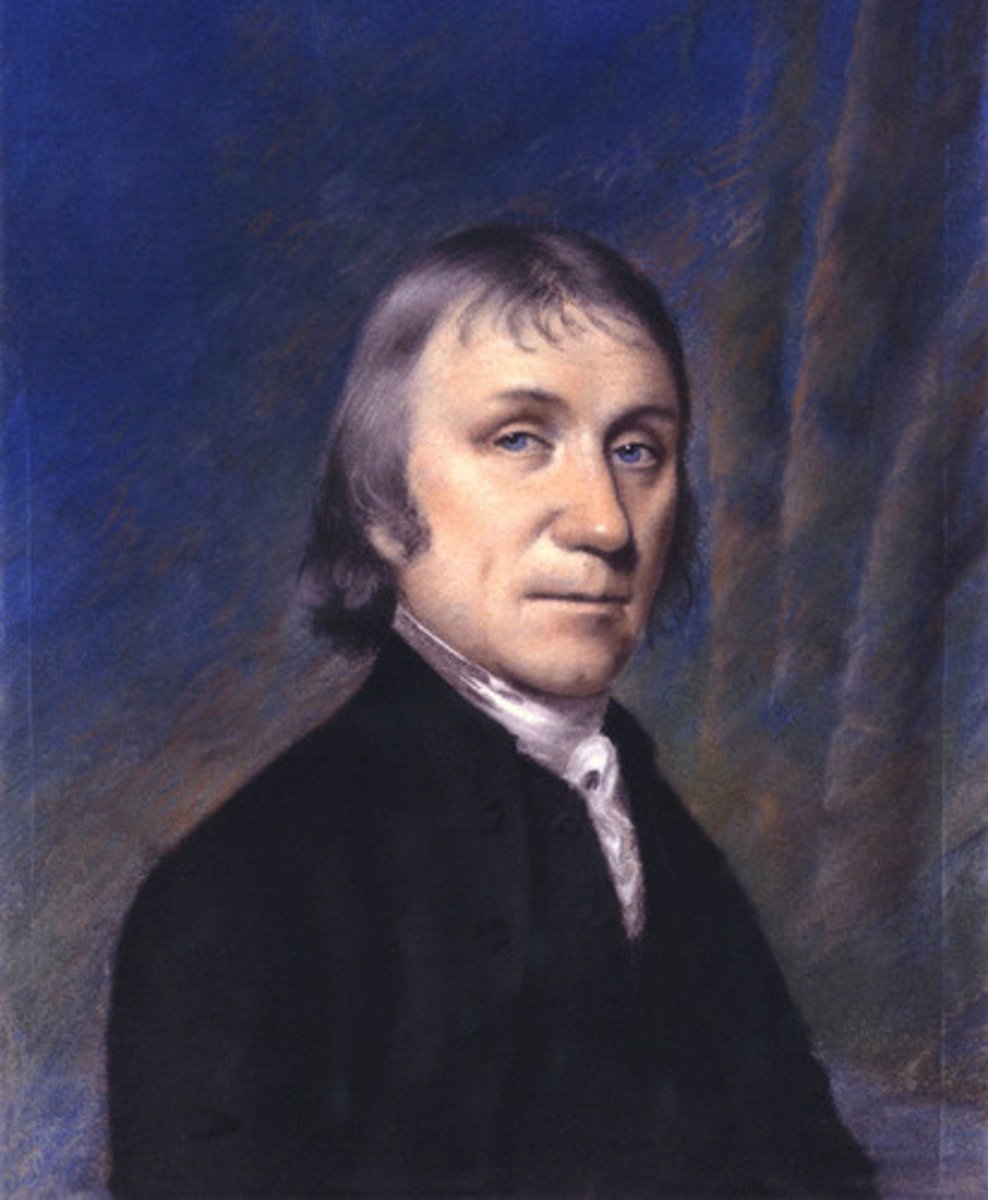
Joseph Priestley (Fact 5)
A strong supporter of the French Revolution, he soon exiled himself to the United States because of the hate he was given in his home country for his support of the Revolution
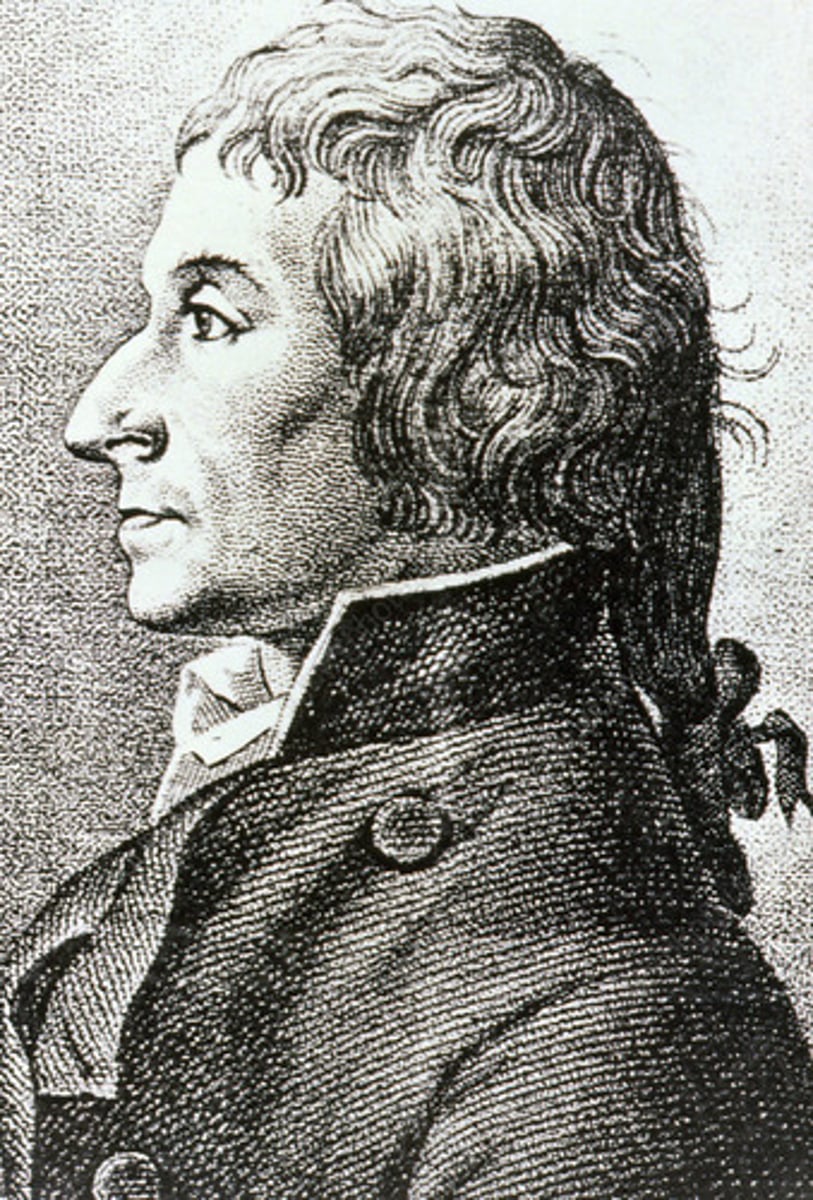
Joseph Proust (Fact 1)
French Chemist
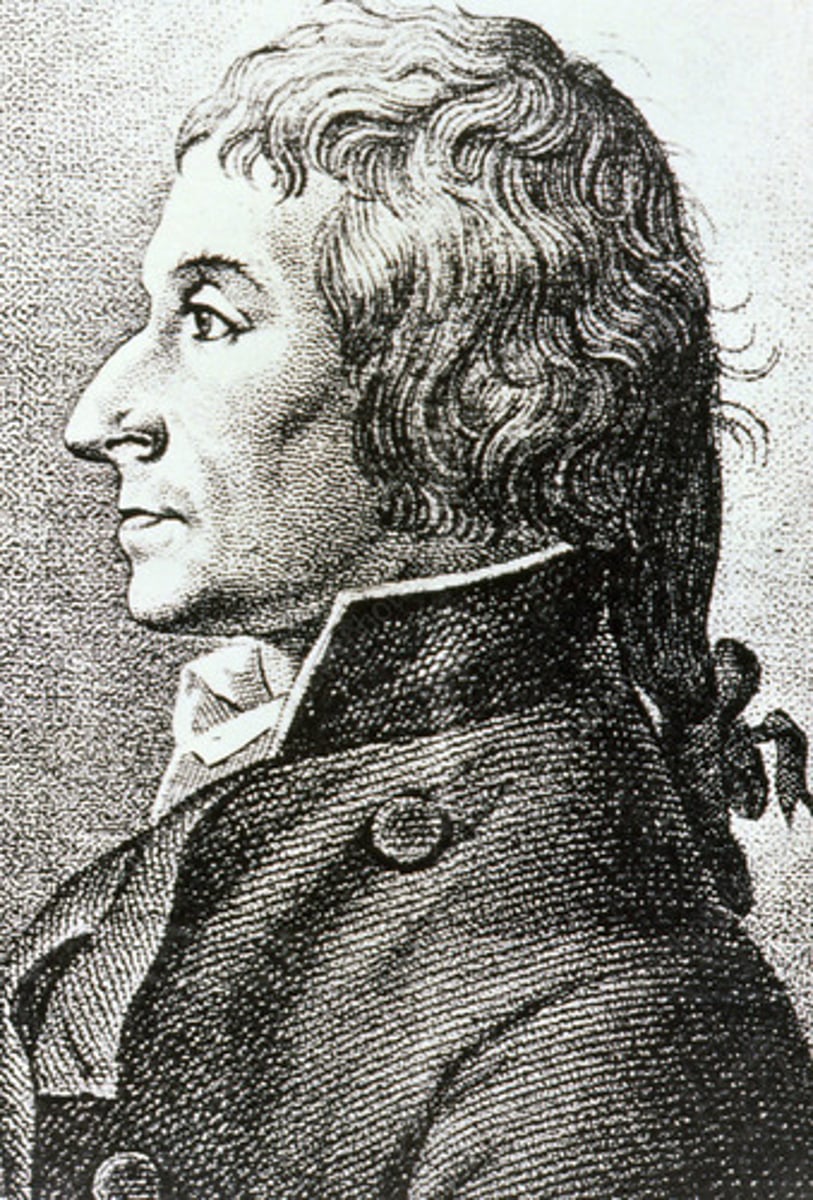
Joseph Proust (Fact 2)
Contribution #1: Used Lavoisier's idea that mass is conserved during a chemical reaction to discover that chemicals always react in whole-number ratios, which he called the "Law of Definite Proportions"
Hieronymus Richter (Fact 1)
Developed the Law of Definite Proportions despite not working as much on it as Proust
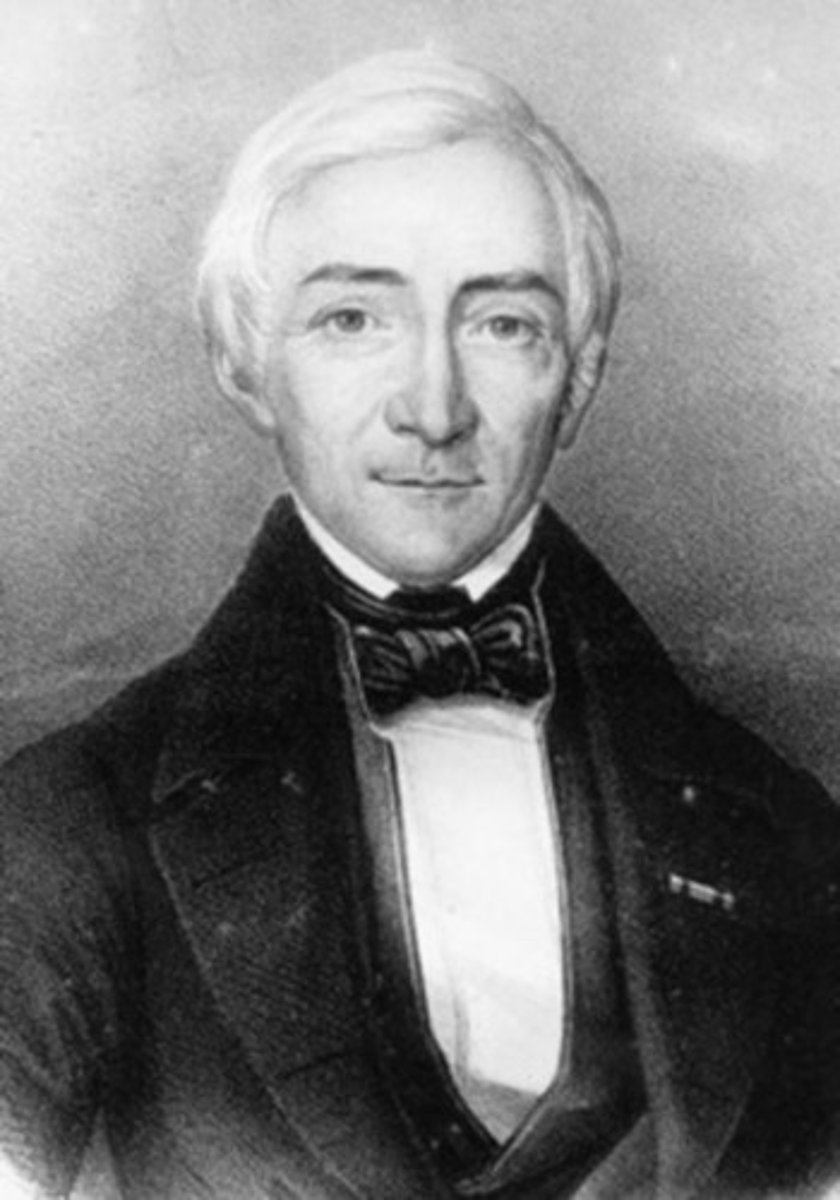
JJ Berzelius (Fact 1)
Swedish Chemist
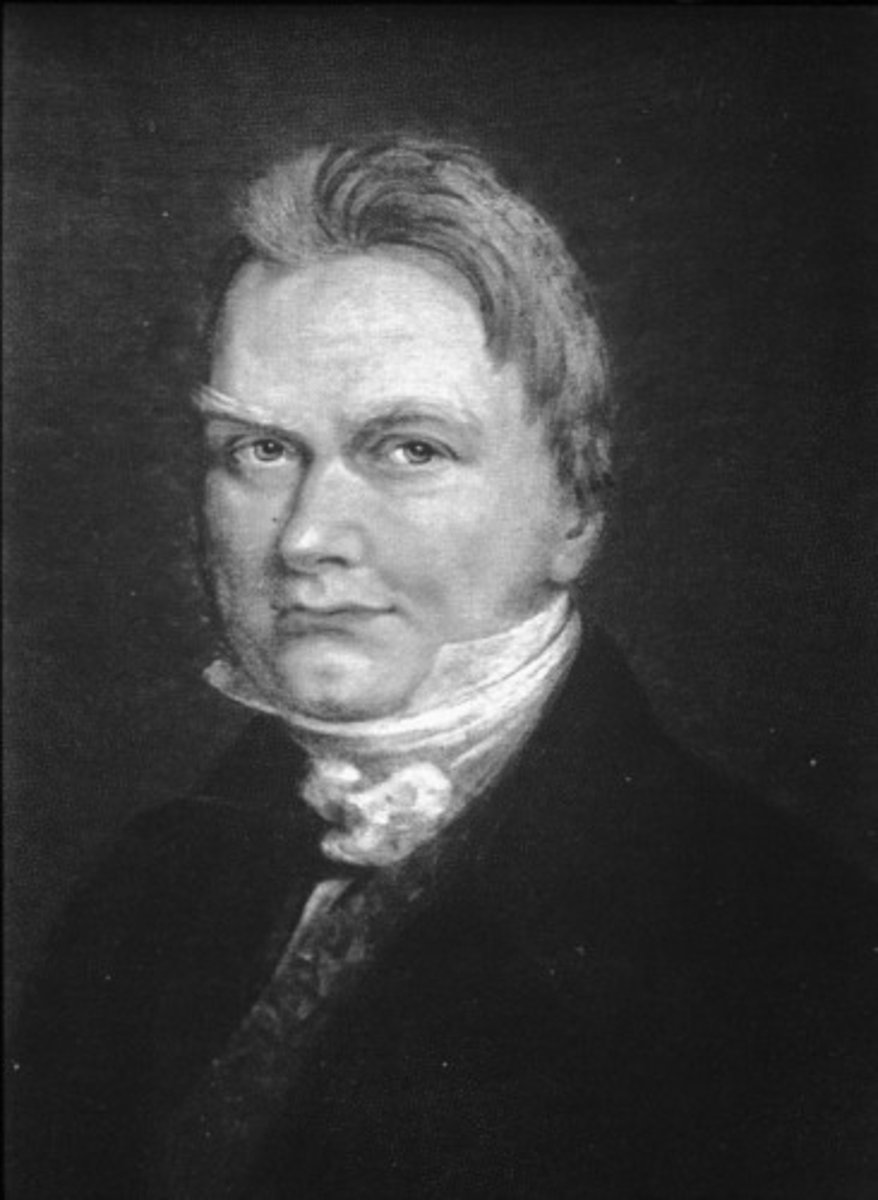
JJ Berzelius (Fact 2)
Coined differentiation between Atomic Mass (mass of atoms overall on periodic table) and Atomic Weight (relative to Oxygen atom on periodic table for the time being until it was defined after his death as the average atomic mass or the sum of all existing isotopes multiplied by their abundances as percentages), Coined AMU's based on Mass
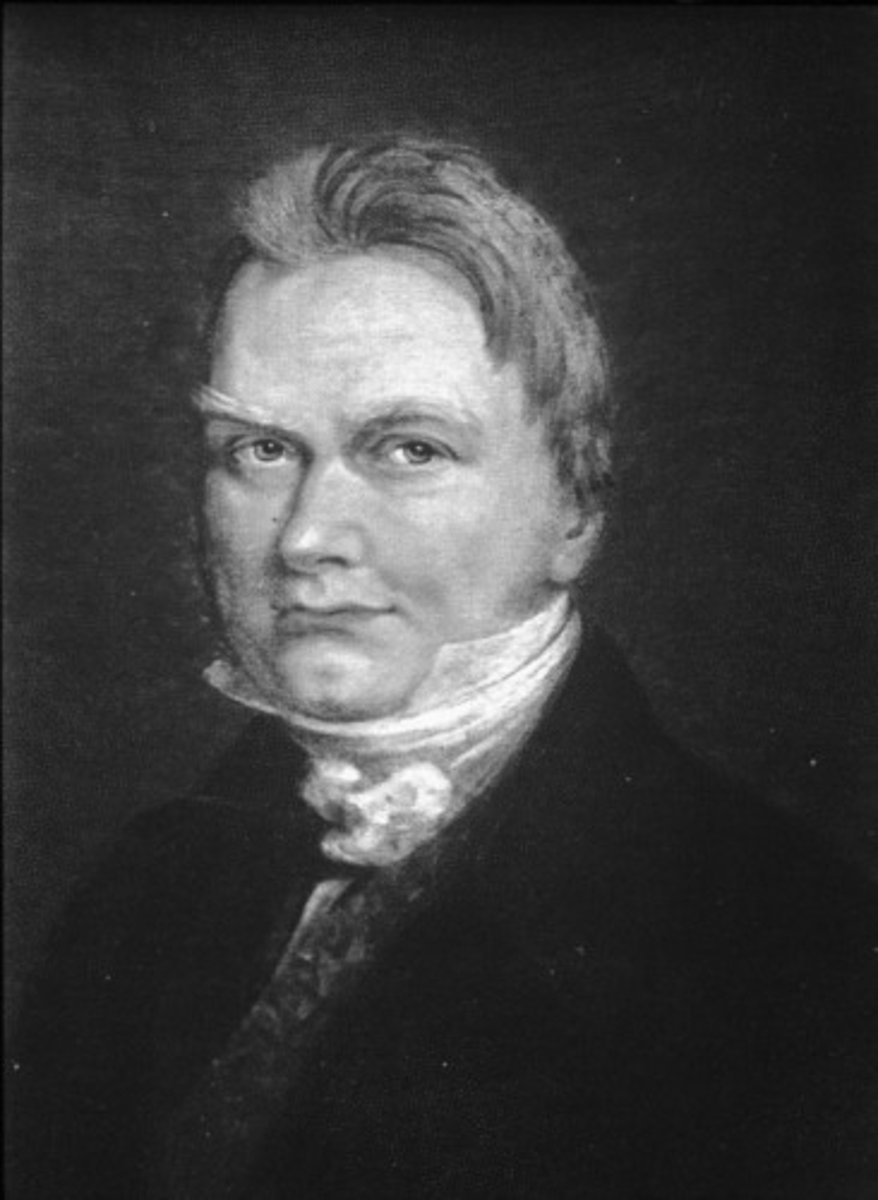
JJ Berzelius (Fact 3)
Prepared an extensive list of atomic weights for the first time (1828) and most of the weights that were on there were as accurate when published as they are today, remarkably
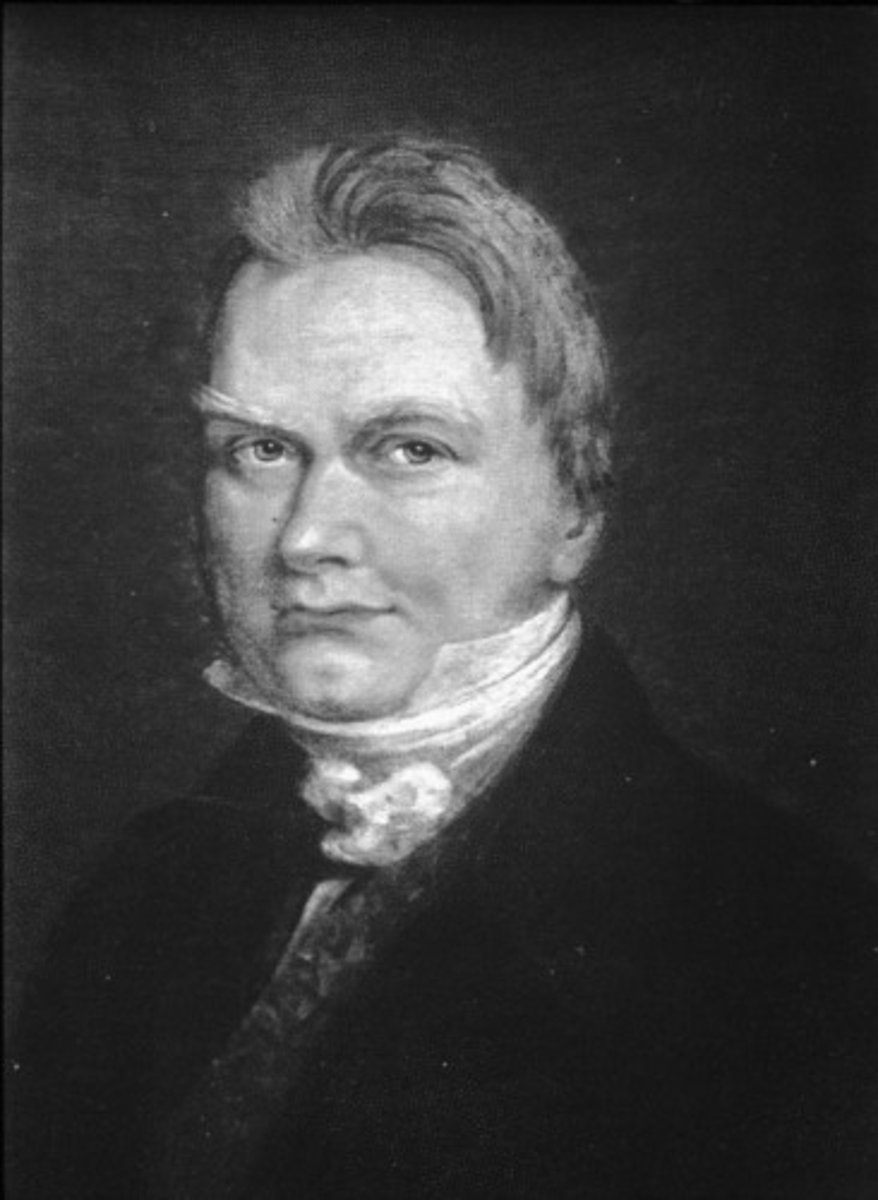
Joseph Proust (Fact 3)
Contribution #2: Measured the grams of Hydrogen Gas (1) and grams of Oxygen Gas (8), determining the Definite Proportion for water production (8:1), and finding the amount, in grams, of produced Water (9)
Joseph Proust (Fact 4)
Contribution #3: Describes the Atomic Masses on a microscopic level justifying JJ Berzelius's Atomic Weights on a macroscopic level
Karl Scheele (Fact 1)
Swedish Apothecary
Karl Scheele (Fact 2)
Discovered Oxygen
Robert Boyle (Fact 1)
English Chemist
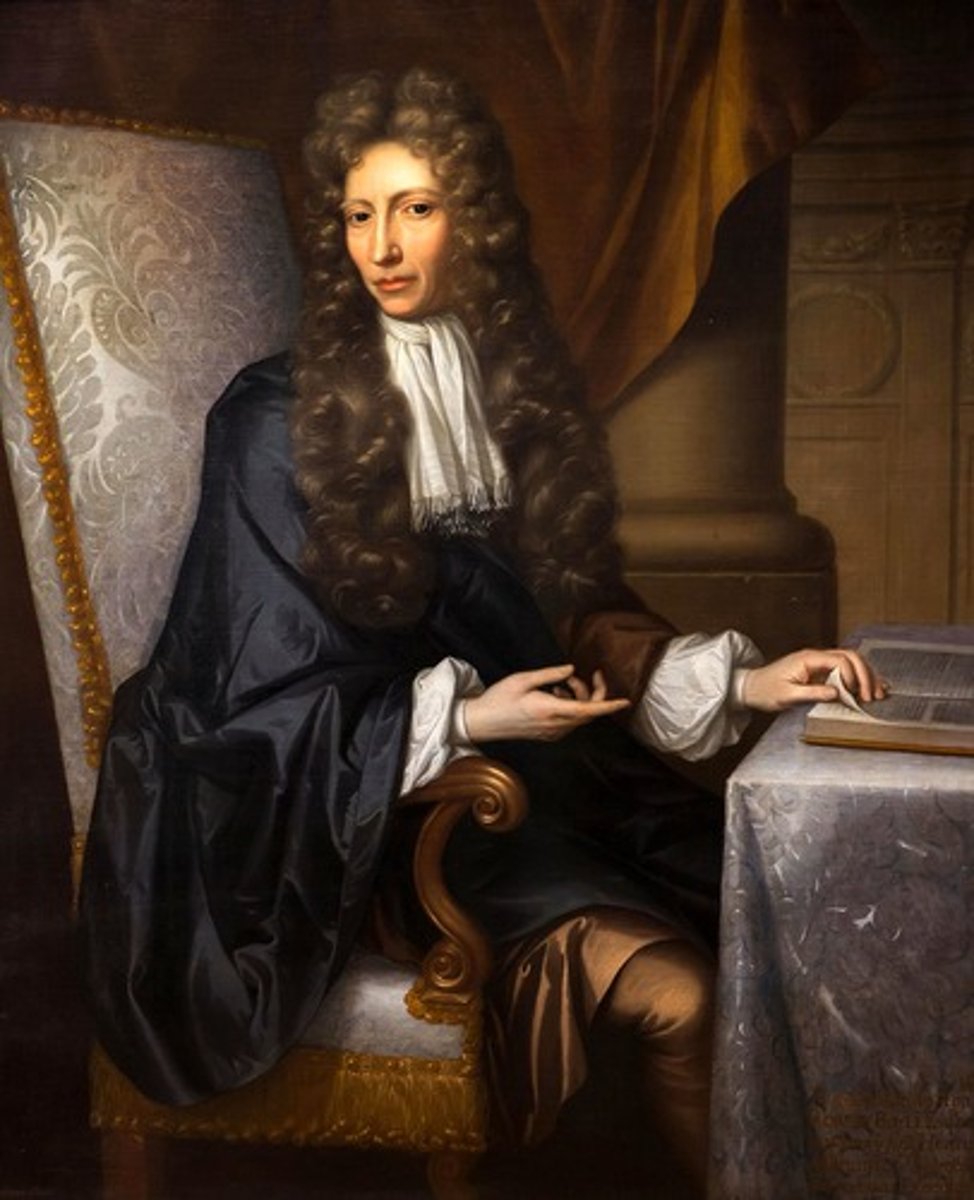
Robert Boyle (Fact 2)
Formulated and Discovered the Inversely Proportional Gas Law relating Volume and Pressure
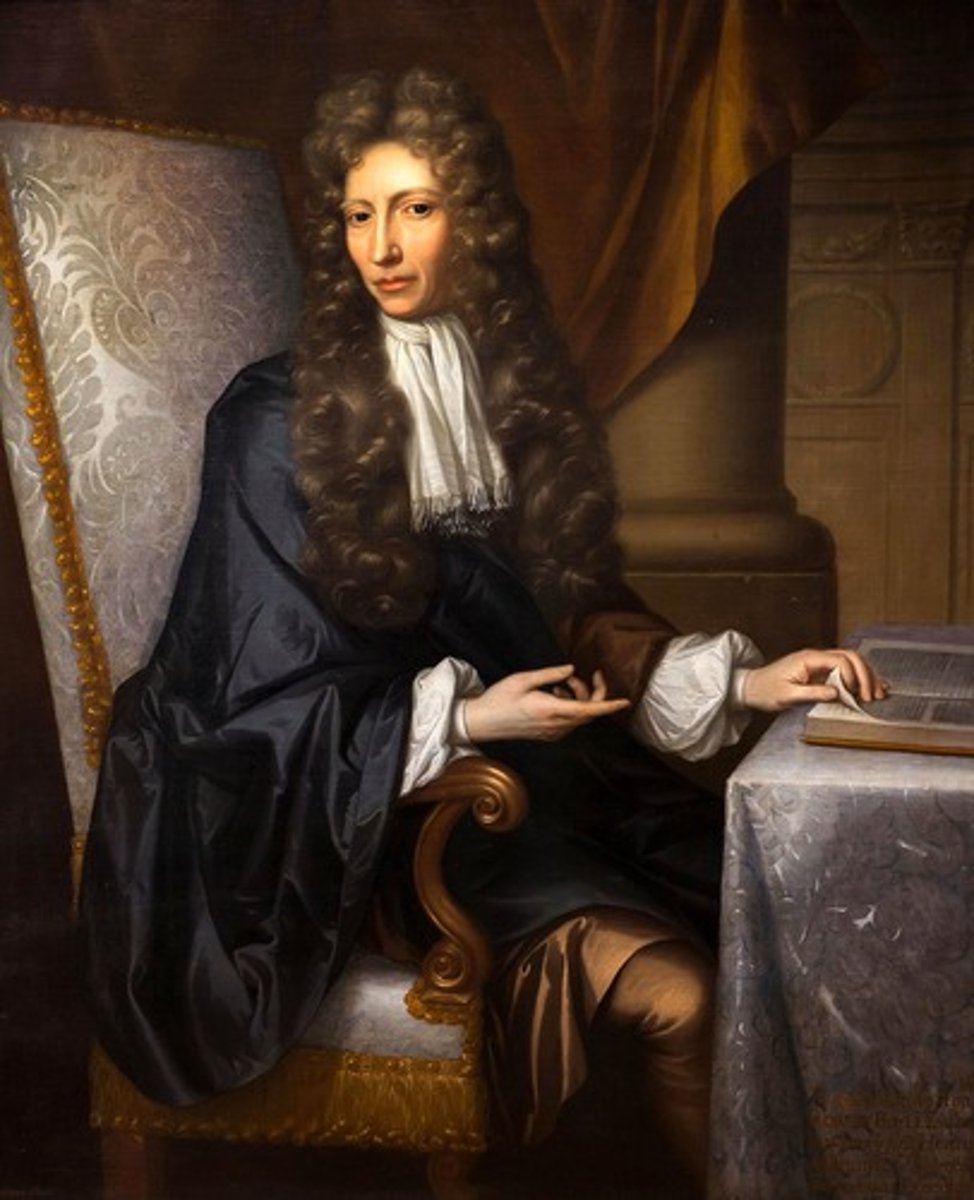
Robert Boyle: The Skeptical Chemist (Fact 1)
Work which discusses that elements must be tested to see if they really were as simple as everyone (at the time) thought they were, and that if a substance could be broken down into simpler substances, it cannot be an element and when they couldn't be broken down anymore they would be considered elements
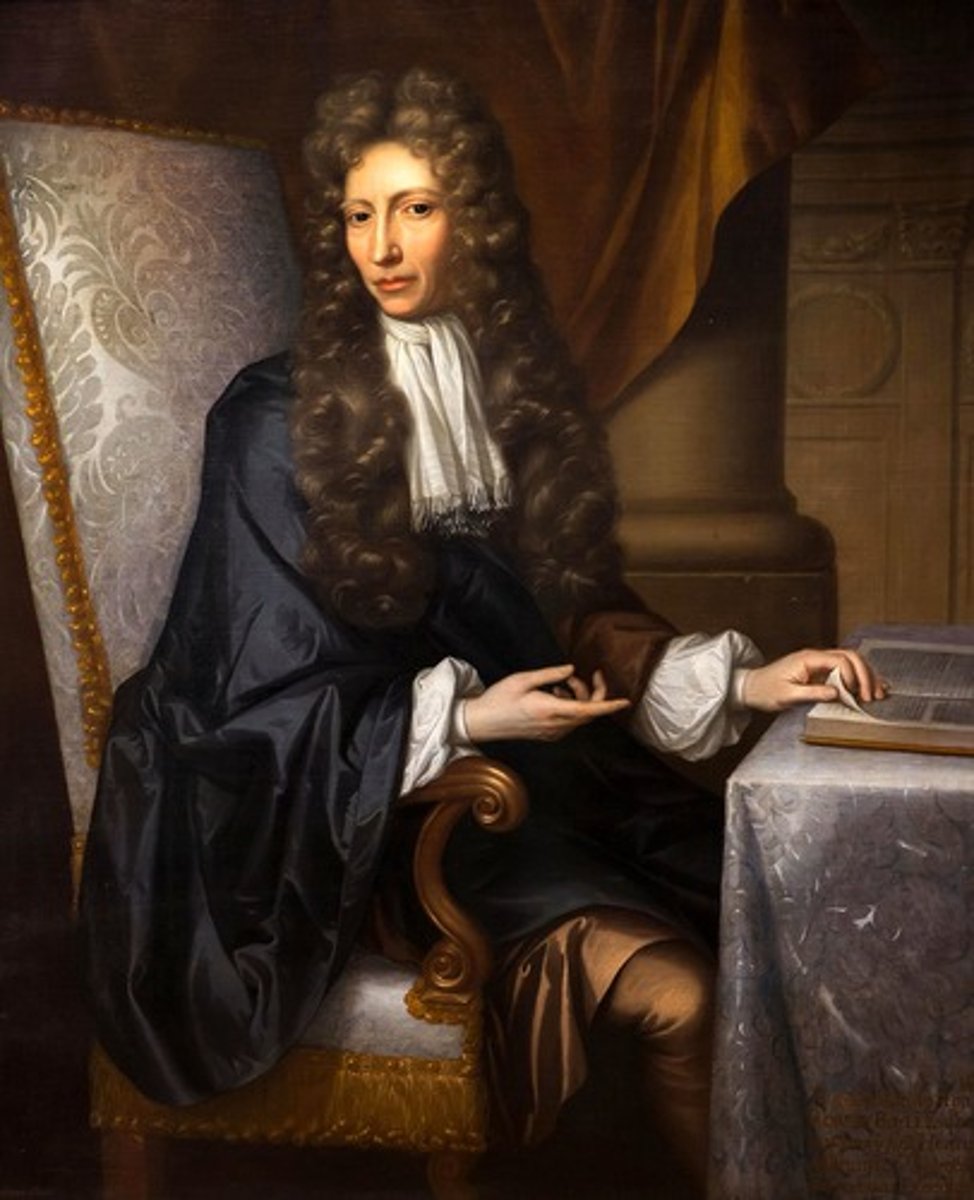
Robert Boyle: The Skeptical Chemist (Fact 2)
Work which discusses that elements can combine to form a complex substance called a compound and disagrees with Aristotle's view by proposing that a substance is not element if it is made of two or more components, rather a substance is an element only if it made up of one component
Antoine Lavoisier: Elementary Treatise on Chemistry (Fact 1)
Regarded as the first chemistry textbook, it contains the earliest systematic list of names for the distinct elements and compounds discovered during his time
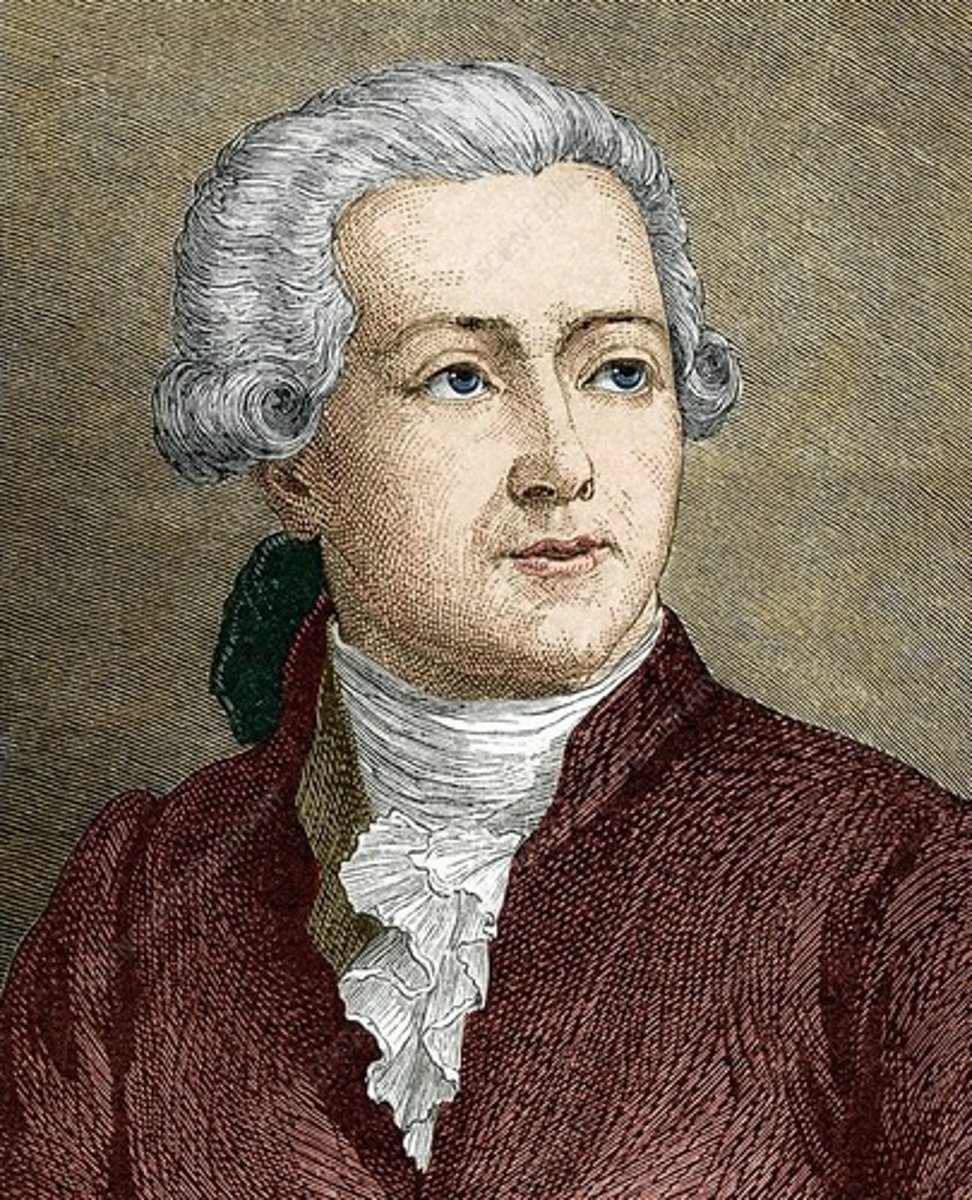
William Nicholson (Fact 1)
English Chemist
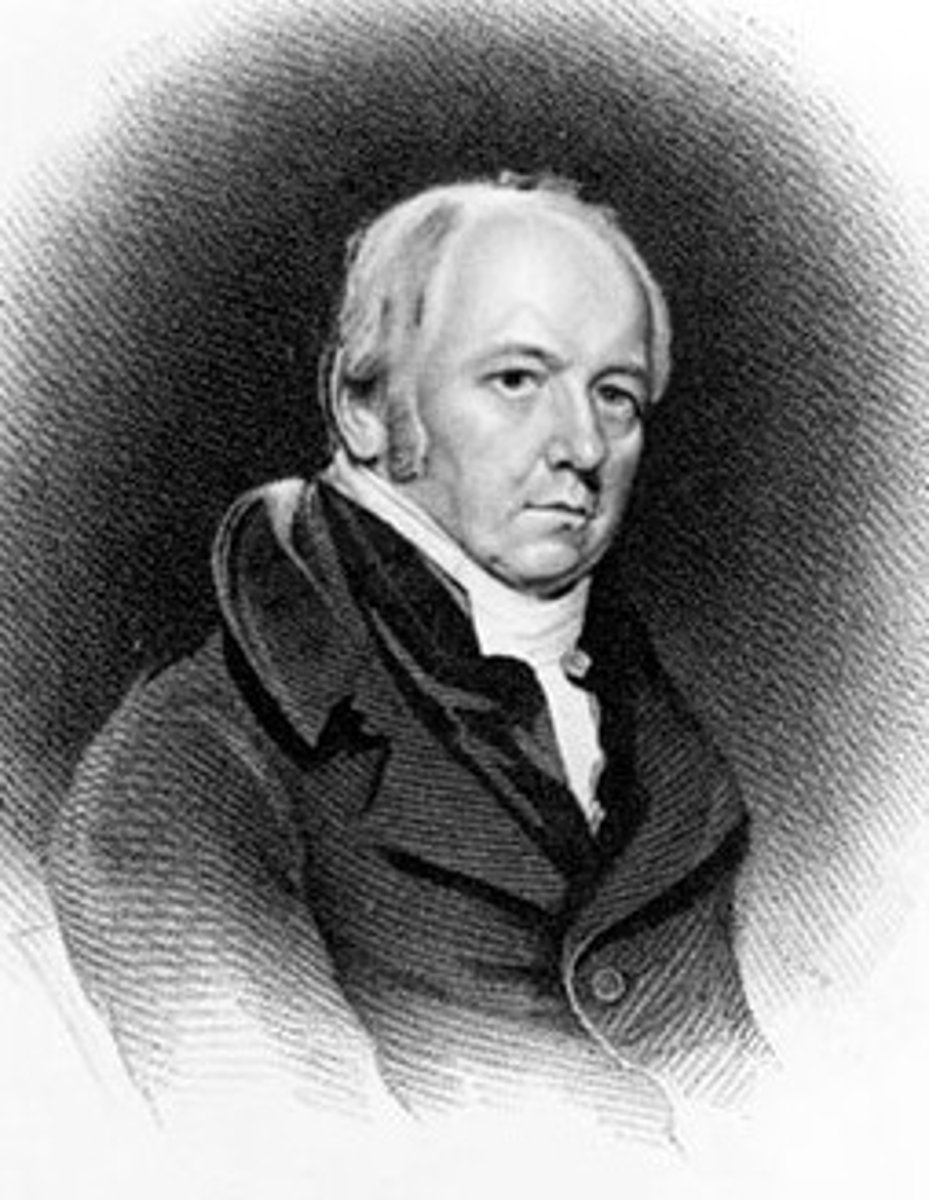
William Nicholson (Fact 2)
Along with Anthony Carlisle, he performed the first electrolysis of water in which he decomposed it into Hydrogen Gas and Oxygen gas by passing an electric current through water set up in a certain apparatus, discovering that water was in fact a compound rather than an element
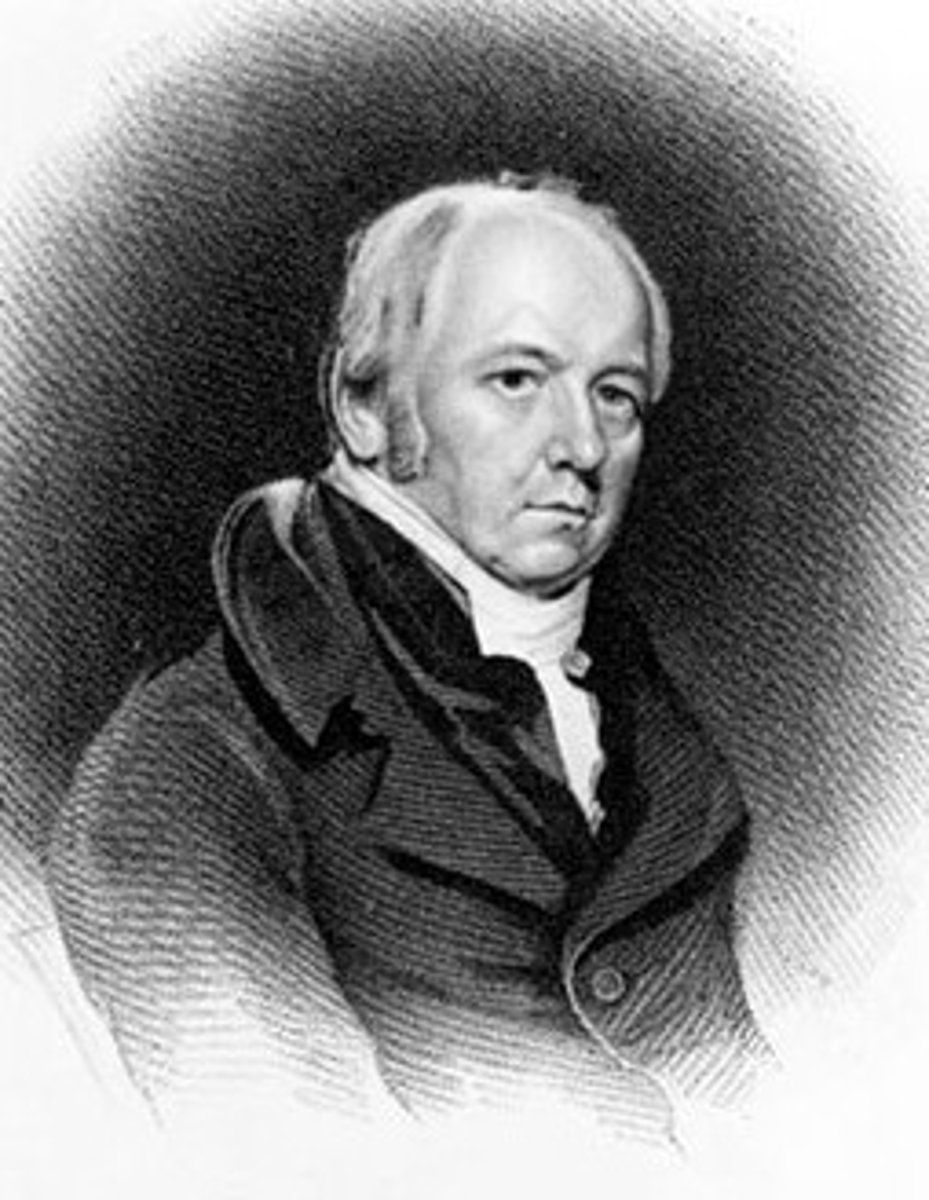
Anthony Carlisle (Fact 1)
English Chemist, Surgeon
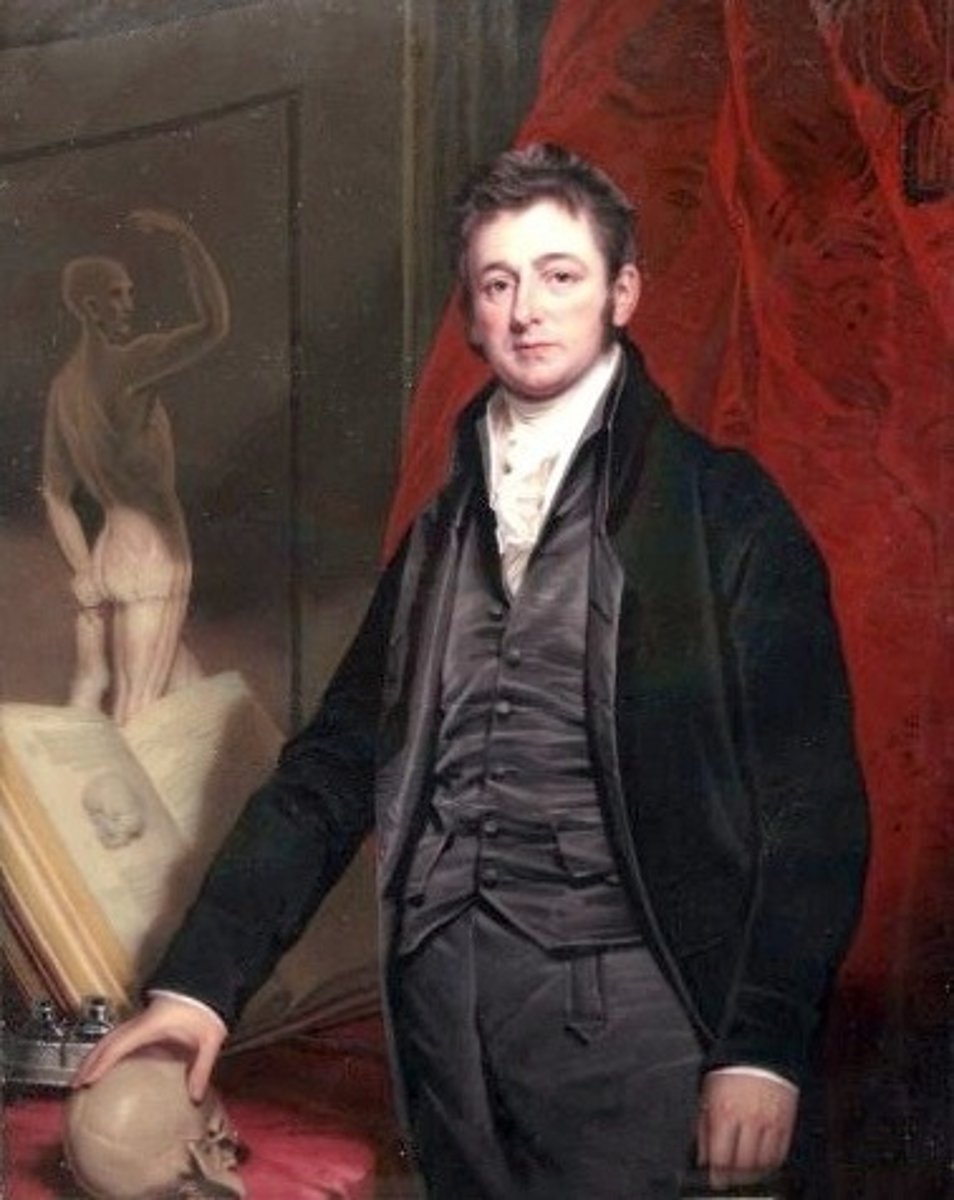
Anthony Carlisle (Fact 2)
Along with William Nicholson, he performed the first electrolysis of water in which he decomposed it into Hydrogen Gas and Oxygen gas by passing an electric current through water set up in a certain apparatus, discovering that water was in fact a compound rather than an element
Alessandro Volta (Fact 1)
Italian Chemist
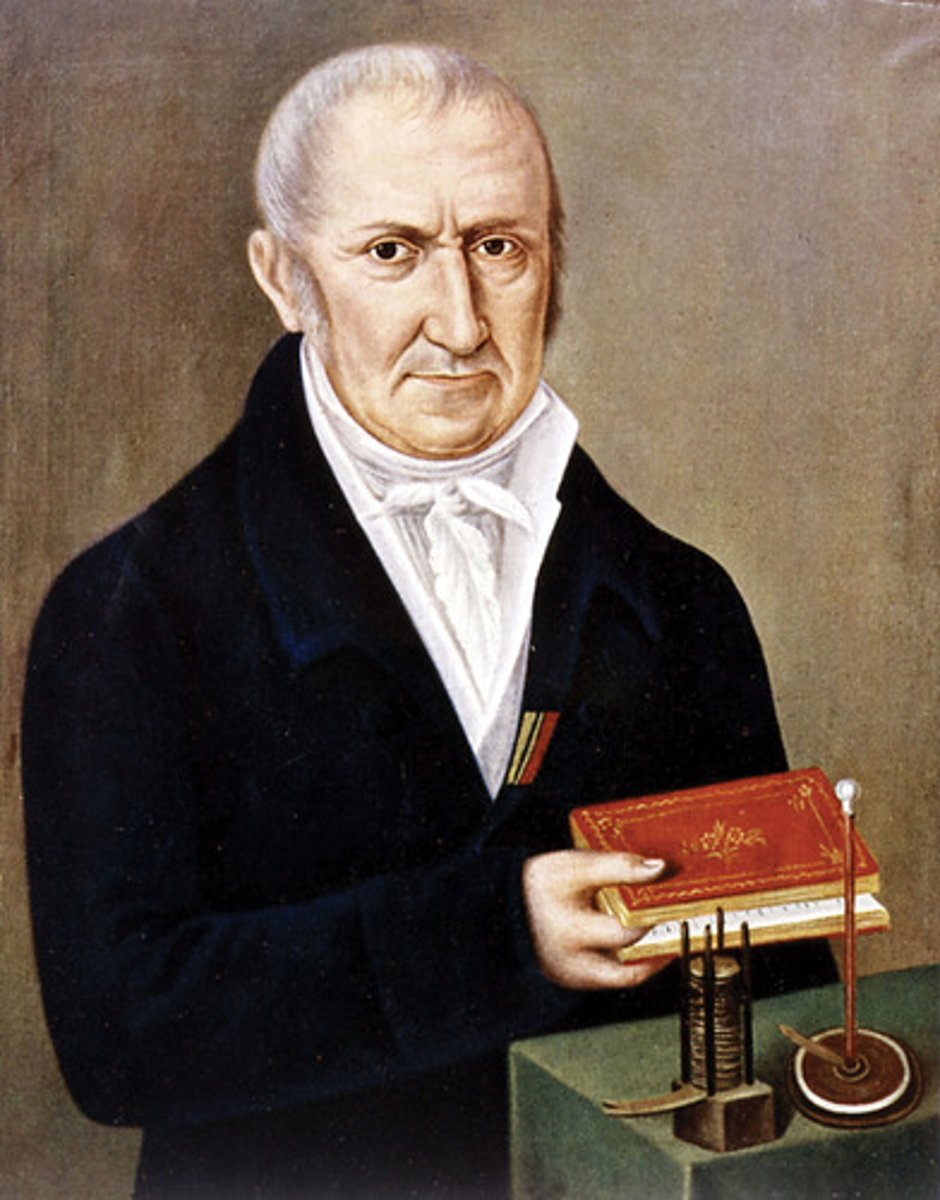
Alessandro Volta (Fact 2)
Invented the first battery or "voltaic" pile named after himself by stacking alternate plates of Copper and Zinc with salt watered cardboard chips in between and connected it to a voltage producer to produce the first ever battery, hence the name "voltaic" pile
John Dalton (Fact 1)
English Chemist, Schoolteacher
John Dalton (Fact 2)
Developed the Law of Multiple Proportions
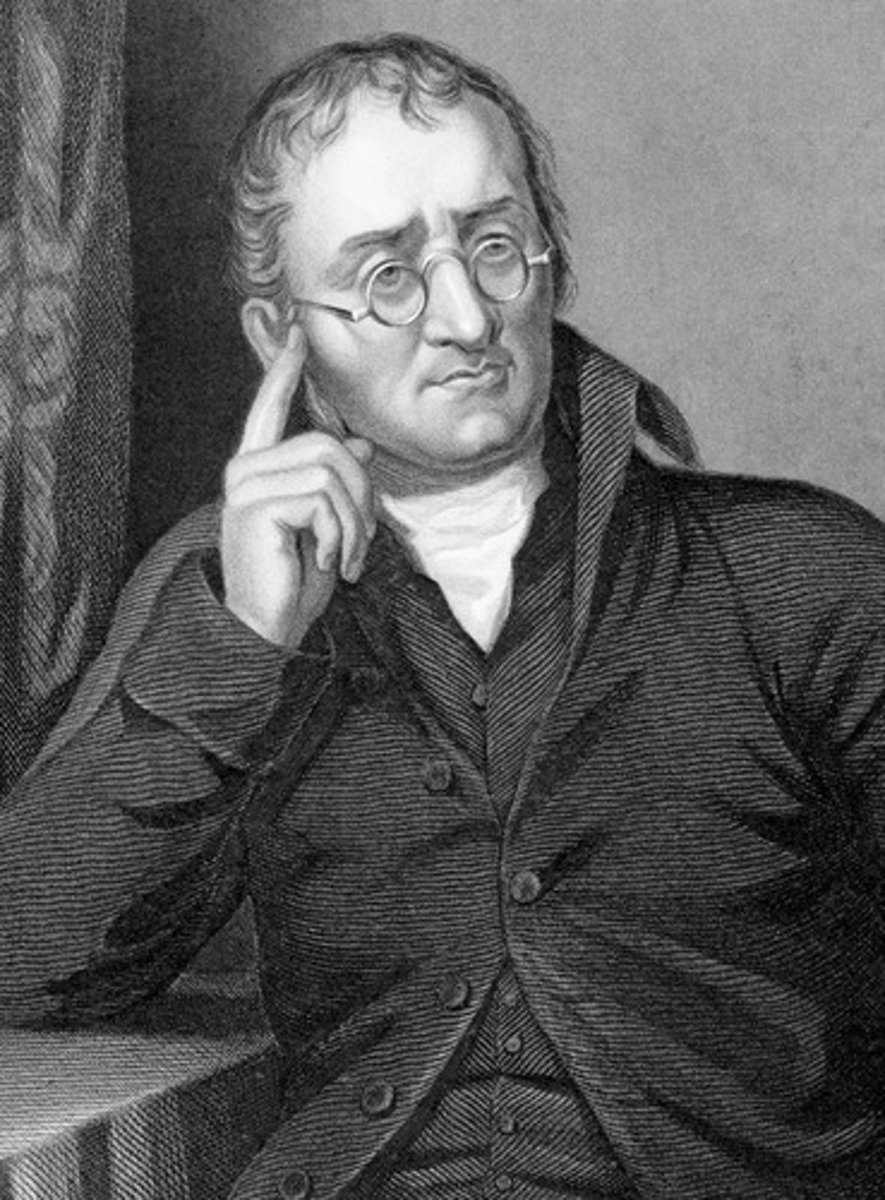
John Dalton (Fact 3)
Experimented with Carbon and Oxygen forming Carbon Monoxide and Carbon Dioxide in different mass ratios to help prove his Law of Multiple Proportions and construct his namesake Atomic Model or Atomic Theory
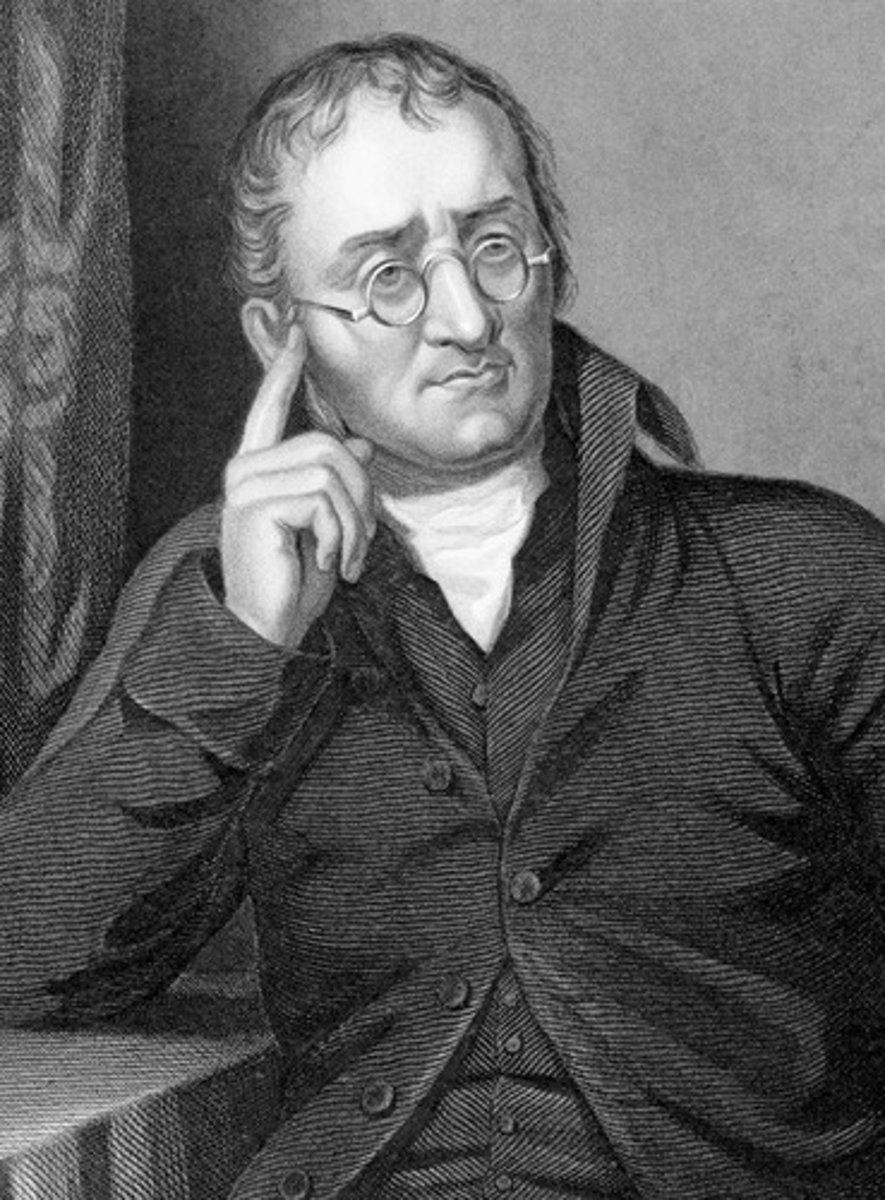
John Dalton (Fact 4)
Developed his namesake gas law and also concluded that since 8 grams of Oxygen always combines with 1 gram of Hydrogen, the Oxygen atom must be 8 times more massive than the Hydrogen atom, thus assuming that a single Oxygen atom joins with a single Hydrogen atom
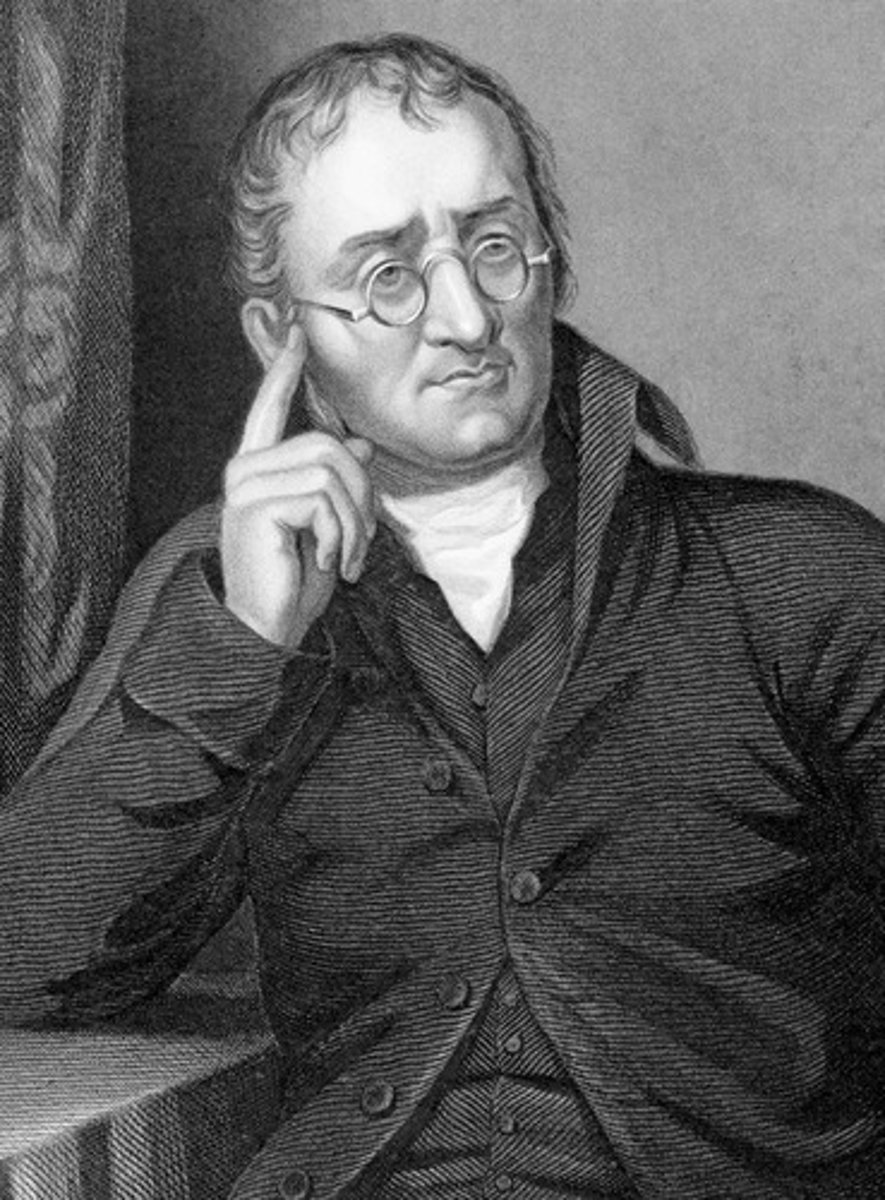
John Dalton (Fact 5)
Used Proust's idea that chemicals react in definite whole -number ratios to propose that elements are made of atoms
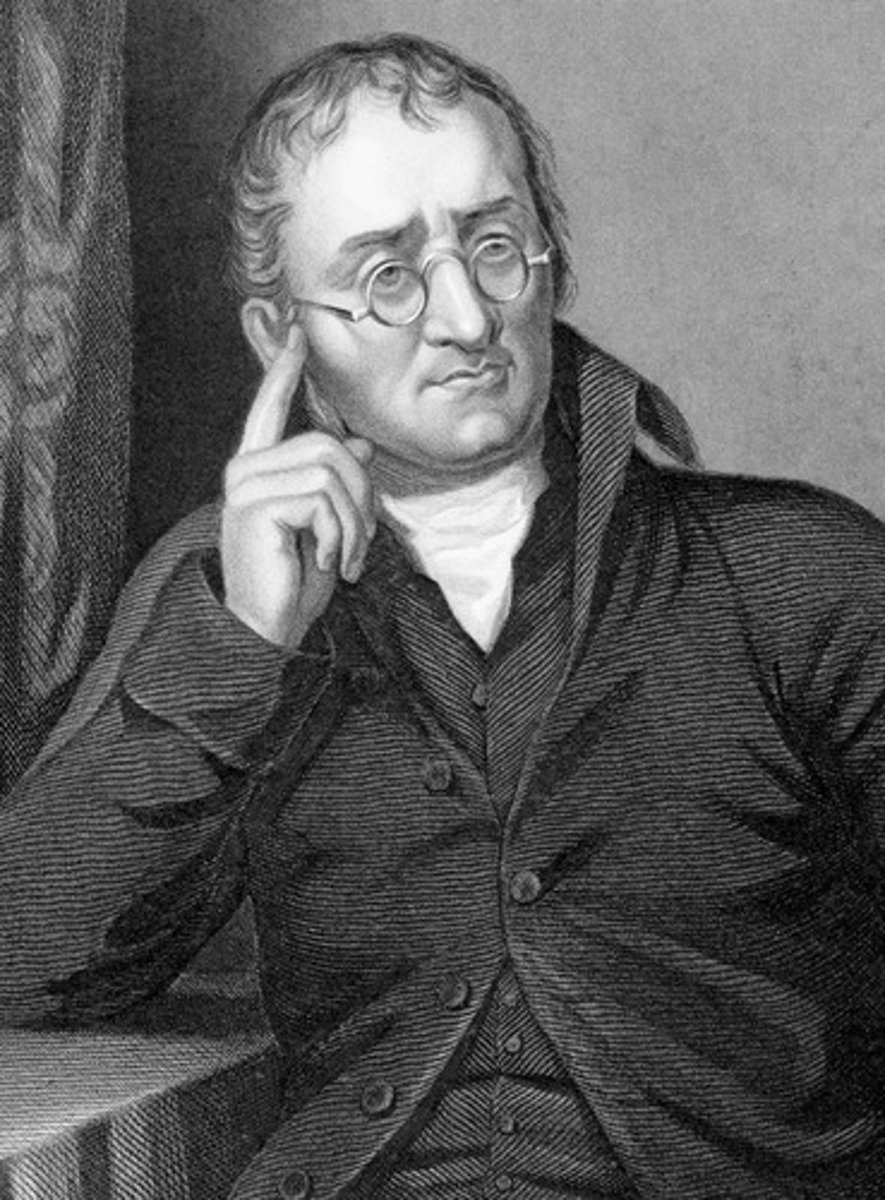
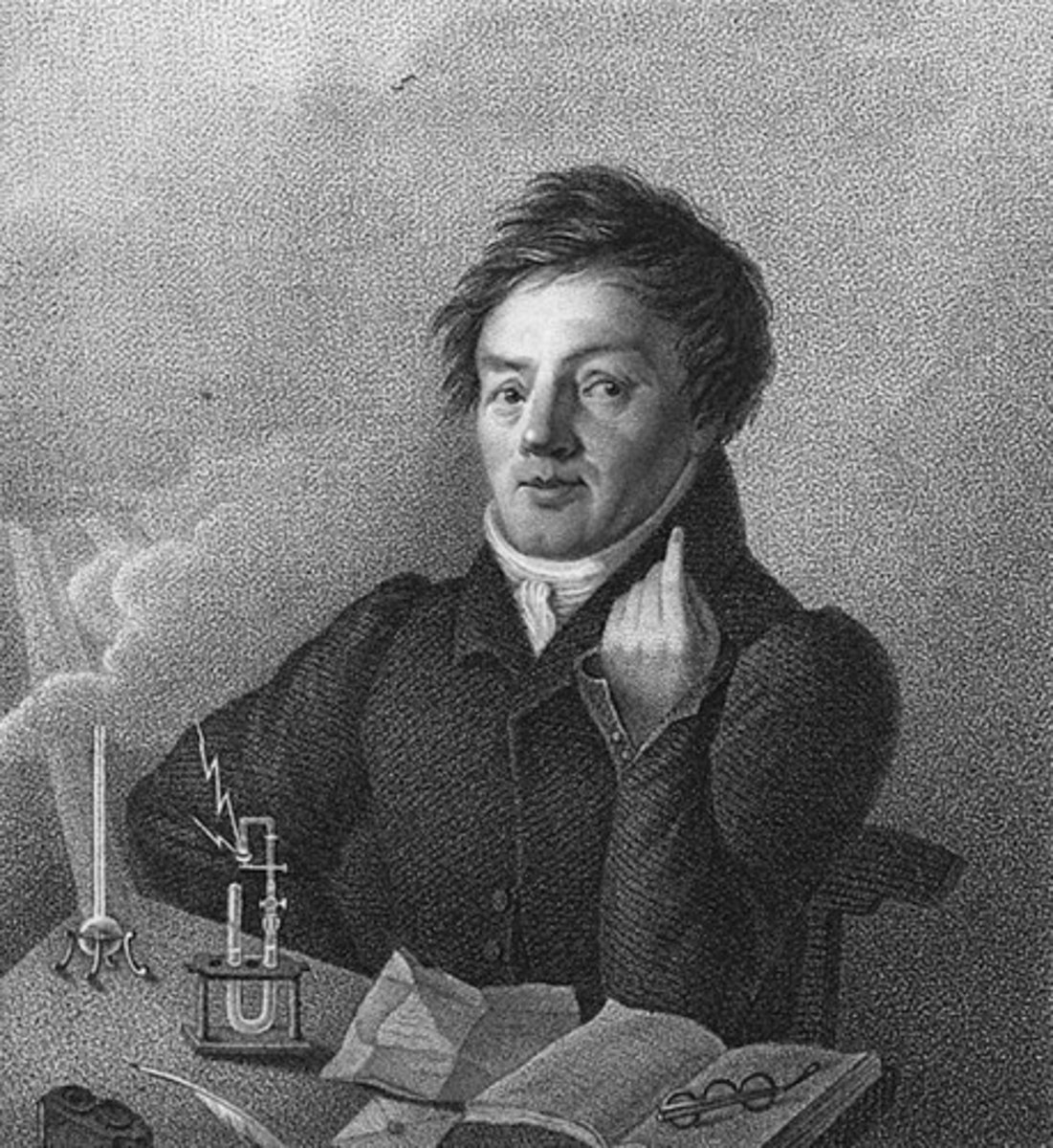
Johann Dobereiner (Fact 1)
German Chemist, Early Organizer of the Periodic Table
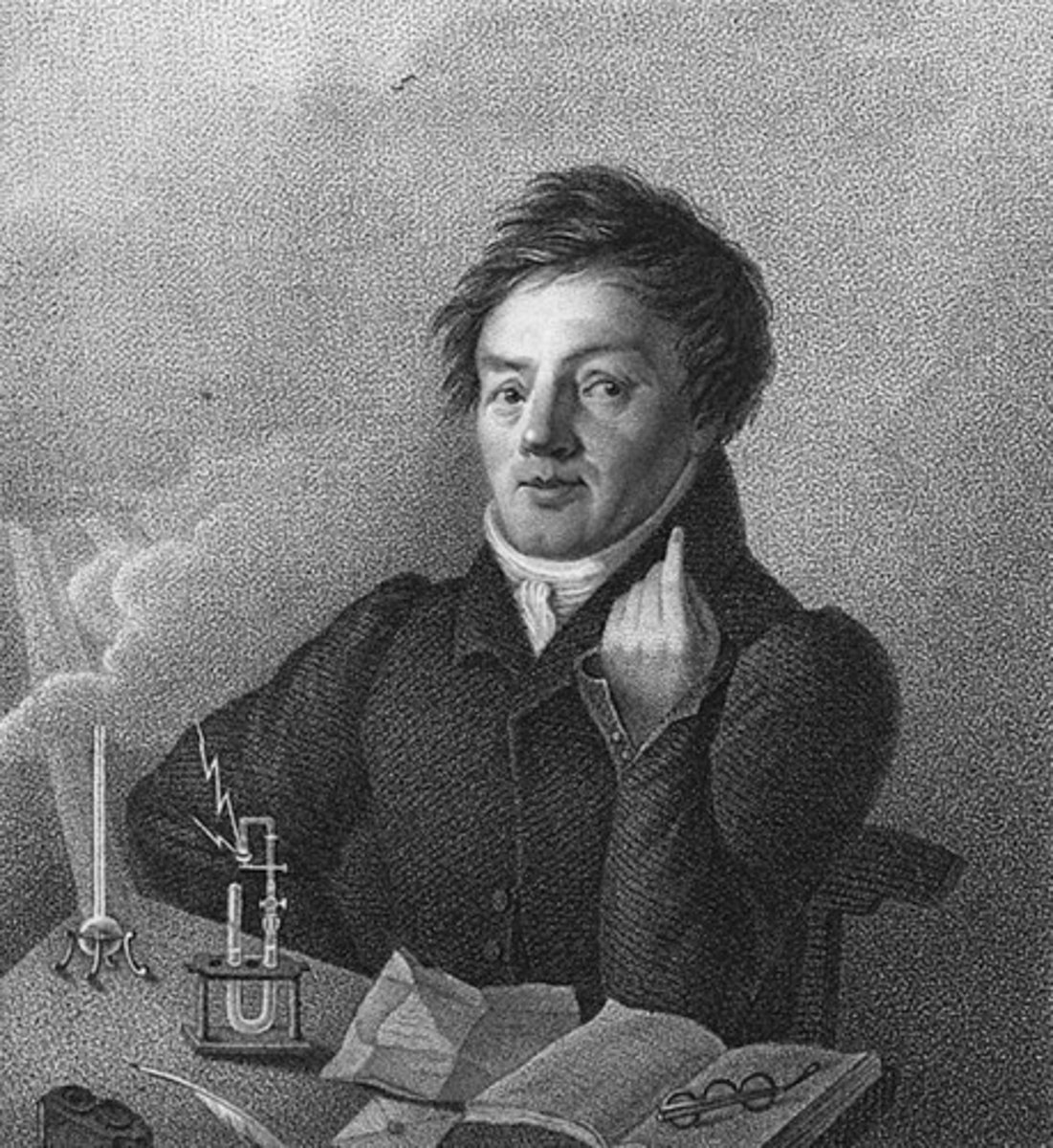
Johann Dobereiner (Fact 2)
Developed the Law of Triads
1808- John Dalton: A New System of Chemical Philosophy (Fact 1)
Developed a table of relative atomic masses, relative to that of Hydrogen as a part of applying his Atomic Theory
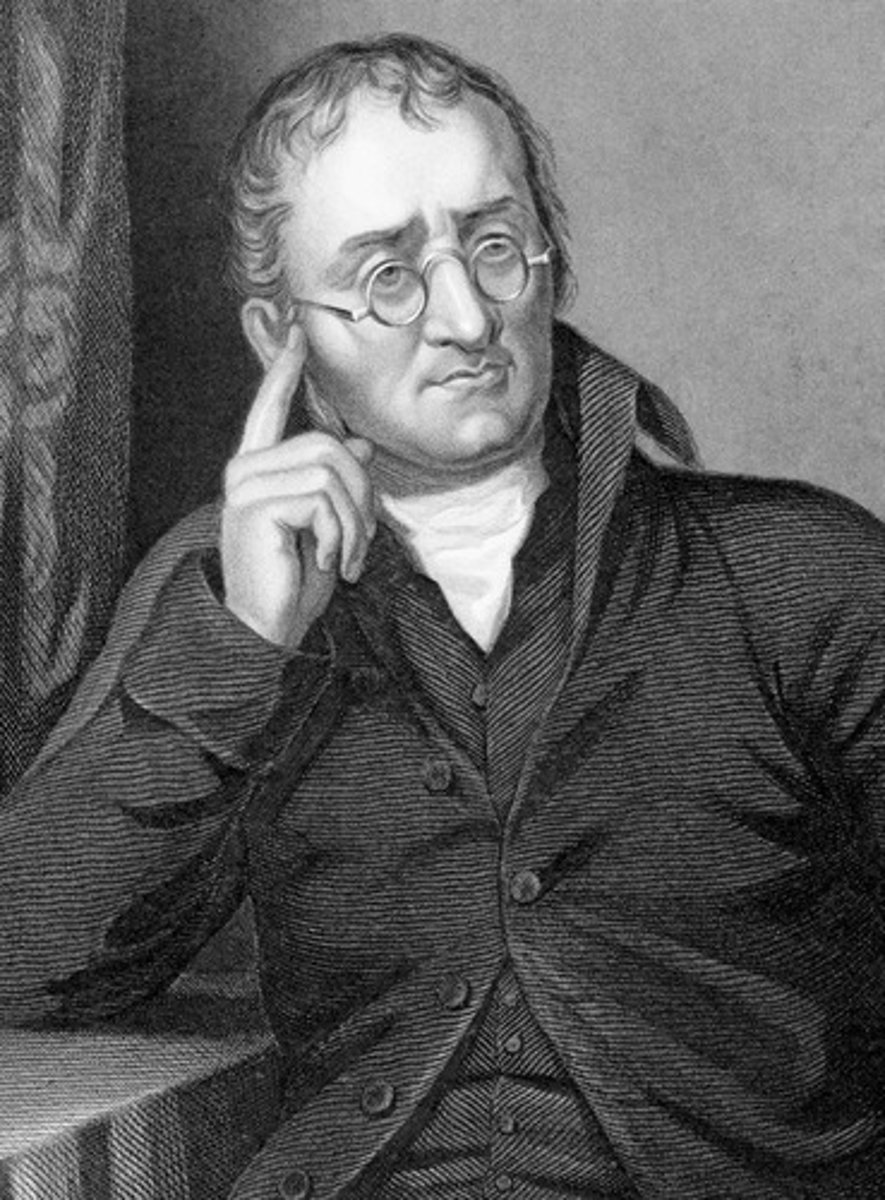
1808- John Dalton: A New System of Chemical Philosophy (Fact 2)
The majority of the relative atomic masses were wrong compared to today's standards, and JJ Berzelius developed after it a table of atomic weights of 54 elements in 1828 that are as close to the relative atomic mass records we hold today
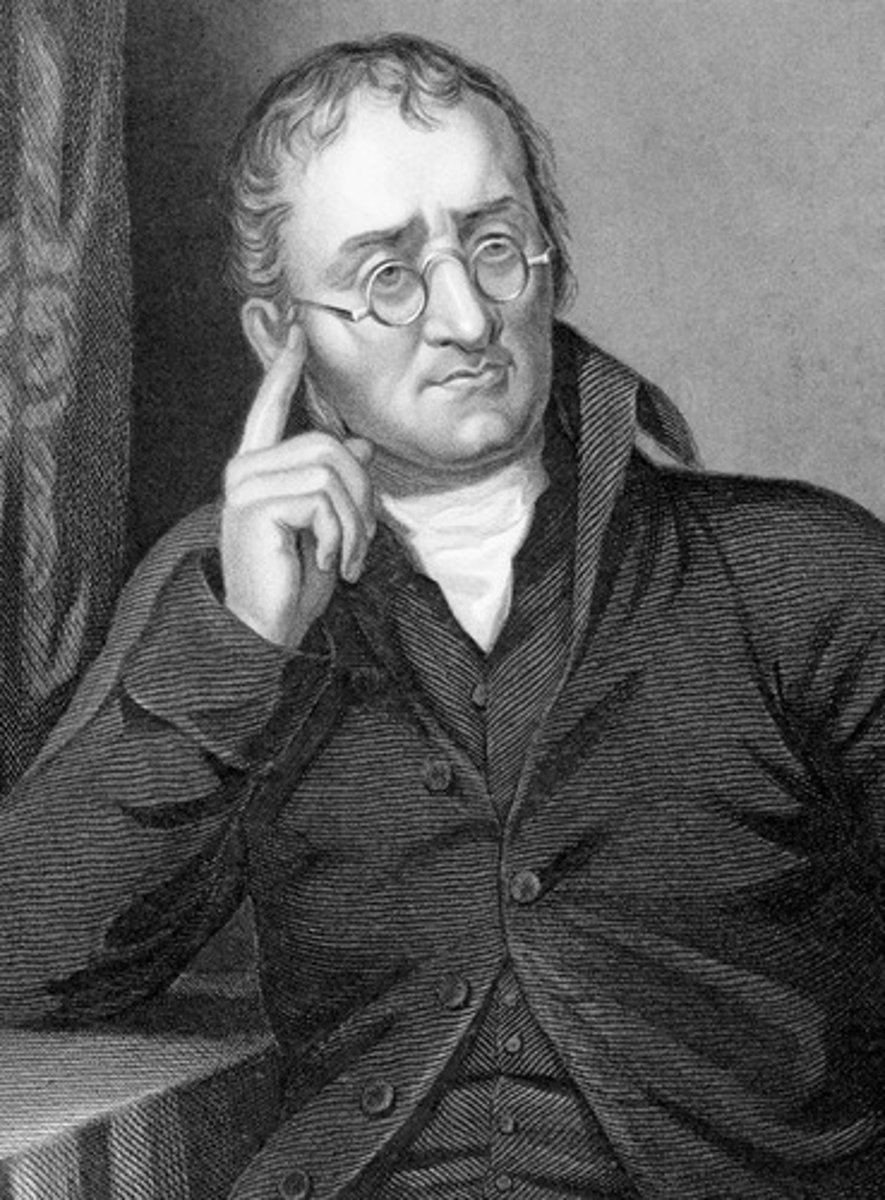
John Dalton (Fact 6)
Born into a poor family, he went from rags to riches to establish the Royal Society of Science in England