ssc 100 week 3
 Call Kai
 Learn
 Practice Test
 Spaced Repetition
 Match
 Flashcards
 Knowt Play
1/83

There's no tags or description
Looks like no tags are added yet.
84 Terms
soil colliods
small and highly reactive soil particles with electrically charged surfaces (negative charge, but some positive) bc of small shape and size, they give soil large surface area
crystalline soil colloids
Layer silicate clays: phyllosilicates , Fe, Al, Mn Oxides: Hematite, Gibbsite, Goethite
non crystalline soil colloids
Short-range ordered minerals:
Allophane, imogolite
organic colloids formed through
decomposition of organic matter
mineral colloids are formed through
the process of weathering primary materials
hydrolysis
feldspar + carbonic acis + H20 = kalonitie (clay) + dissolved K+ (potassium) ion
+ dissolved bicarbonate ion
+ dissolved silica
k ends up oxidized
Iron pyroxene dissolves to release silica and ferrous iron to solution 2. Ferrous iron is oxidized by oxygen molecules to form ferric iron 3. Ferric iron combines with water to precipitate a solid, iron oxide, from solution
property of soil colloids
size, 2. surface area, 3. surface area charges (Adsorption of
water and Adsorption of cations and anions)
colloids size
Very small (less than 1 micron, μm or 0.001mm)*, highly reactive particles
colloids surface area
Small-sized particles result in a larger specific surface area in the soil, also have internal surface
colloids surface charges
External and internal surfaces are charged, negative charges, but positive charges predominate in some cases (very acid soils). Charges result in adsorption or adhesion of molecules to the colloid surfaces
colloid surface charge for water molecules
Water molecules are polar. Colloids attract water molecules. Water forms films around the colloids and it is not available for plants (hygroscopic water
Capillary Movement of Water in Soil
attraction of water in soil particles surronding the pores (adhesion) and surface tension of water (cohesion). smaller pores like in clay soils have more capillary movement
Colloids are responsible for the
retention of ions in the soil, charges attract or repluse other charged eleements in the soil
cations are not strongly absorbed to colloid surface
Continuous exchange of cations from the colloid surface and the soil solution, important exchangeable cations in soil are H+, Al3+, K+, Na+, Ca2+, Mg2+
Factors Determining Binding Force of Cations
Cation charge (valence) 2. Size of cation (size of the hydrated radius) 3. Concentration of charge
cation charge
strength of a cation to exchange surface (energy absoprtion) as a function of valence (charge), trivalent cations Al³+ and divalent cations Ca2+, Mg2+are more strongly attracted than monovalent cations (K+, Na+)

Size of the hydrated radius
Charges attract water molecules forming hydrated ions (cations and anions) and hydrated ions are larger
When the valences of the ions are equal the ion with the smallest hydrated radius is most strongly adsorbed
K+ more strongly adsorbed than Na+ because it has a smaller hydrated radius (0.53 nm) than Na+ (0.79 nm), Ca2+ more strongly adsorbed than Mg2+ because it has a smaller hydrated radius (0.96 nm) than Mg2+ (1.08 nm)

Lyotropic Series
order of strength of adsorption for common cations) Higher charge, stronger attraction Larger hydrated radius, weaker attraction Easier to replace (weaker adsorption) to the right

Concentration of charge
if the concentration of a cation in soil solution is high theres an increased tendency for that cation to be absorbed
importance of cation exchange
resevior of available plants nutrients. partocularly ca, mg, k
cation exchange leads to
reduction in nutrient losses from soil
Cation Exchange Capacity (CEC)
quantifies the capacity of colloids to adsorb cations. Expressed as the number of centimoles of (positive) charge that is adsorbed in the colloid per unit mass

What is a cmolc?
The units of CEC are expressed as cmolc/kg: the number of
cmol of cation charges per kg (cmolc/kg), or meq charge
per 100 g (meq/100 g).
cmol conversion
1 mol (mole)= 6.02 x 10²³ atoms = 1 molC= 6.02 x 10²³ charges = 1 cmolc= 6.02 x 10²¹ charges
Soil Cation Exchange Capacity
Normal range in soils: 0-180 cmolc/ kg Depends on the total amount of negative sites or negative charges: the relative abundance of different
colloids, the CEC of those colloids, and Soil pH
What is the CEC (cmolc/kg) of a soil containing 5% humus, 5%
illite, 10% montmorillonite, 15% vermiculite, and 5% kaolinite?
Humus : 0.05 x 200 cmolc/kg = 10 cmolc/kg,
Principles governing CEC reactions
Reversibility (cations are not permanently bound), Concentration of charge (Ratio law): chemical equilibrium with the soil solution, cation selectivity , Principle of equivalence
Principle of equivalence
Exchange is chemically equivalent, it takes place on a charge-for-charge basis
the charge of a cation is expressed in
cmol and depends on the valence; 1 cmol of K+= 1 cmolc, 1 cmol of Ca2+ = 2 cmolc, 1 cmol of Al3+= 3 cmolc
How many cmol of Ca2+ do we need to neutralize all
the charge in this exchange complex?
• 1 cmol Ca2+: 2 cmolc
• 5
There are 3 different types of parent materials
igneous, metamorphic, sedimentary rocks

main agents of physical weathering
temperature, gravity, abrasion, plants and animals
temperature on physical weathering
differential thermal expansion/contraction of minerals, freeze-thaw cycles and ice
abrasion effects on mechanical weathering
sediment trapped in water, ice or wind can grind down rocks
plants and animals effect on physical weathering
minimal effect- roots and burrowing
chemical weathering
Chemical transformation of the soil minerals through the action of
geological agents and organisms
geological agents on chemical weathering
oxygen, water, geological weathering
organisms effect on chemical weathering
microorganisms, plant roots, biogeochemical weathering
soil minerals according to degree of weathering
weathering is essential in forming soils and releasing nutrients from parent materials that are essential for life
weathering on mafic rock
less resistant to weathering, made out of heavy elements, mg, fe
weathering on felsic rock
more resistant to weathering made out of light elements (Al, Si)
mineral weather ability also depends on grain size
Granite and basalt are formed from molten magma and composed of minerals that haven’t been altered chemically since they formed. Molten lava solidified
The minerals in granite weather differently:
Quartz (SiO2) is resistant to weathering and contains no plant nutrients
Feldspars and muscovite are more easily weathered but contain few nutrients. Soils derived from granitic rock are coarse-textured (sandy) and have low fertility
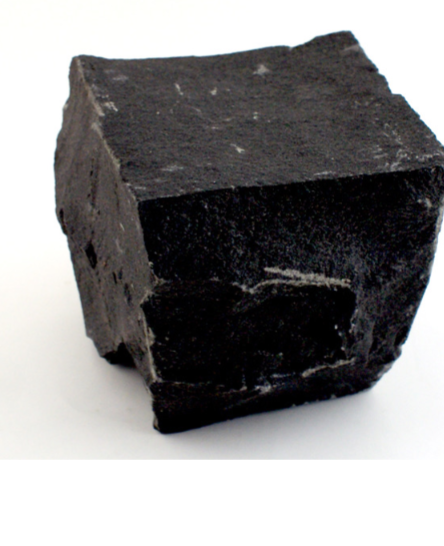
Basalt
Dominated by small-grained, easily weathered, nutrient-rich minerals, Hornblende (Ca, Mg, Fe), Augite (Ca, Mg, Fe), Biotite (K, Mg, Fe), Parent materials and soils derived from basaltic rock are fine-textured and fertile
weathering of sedimentary
Compacted or cemented particles weathered from any type of preexisting rocks,
Resistance to weathering depends on dominant minerals and cementing agent
Silica-high resistance
2. Rocks that contain the mineral calcite (limestone, calcite- cemented sandstone, marble) are the least resistant to chemical weathering
Sandstone
Sand-sized particles translocated and deposited by water. Cemented by pressure and CaCO3 or SiO2. Coarse-textured soils with relatively low
fertility.
Shale
Clay particles are translocated and deposited by water and compacted. Shale rock is susceptible to physical weathering—fine-textured, relatively fertile soils.
Limestone
Mainly formed in shallow oceans where CaCO3 from skeletal fragments of marine organisms such as coral or microscopic foraminifera accumulate and are cemented, Easily weathered, Soil developed from limestone
are fine- textured, have a neutral to basic pH, and high fertility
Metamorphism (change)
Resistance to chemical weathering depends on mineralogy. Usually more resistant to physical weathering.
Soil organic matter (SOM)
Mixture of all plant, animal and microbial organic components of the soil at a given time
SOM depends on inputs and outputs
inputs: photosynthesis and animal materials
outputs: decomposition (Aerobic and aerobic), erosion
crystalline clays ; phyllosilicates or silicate clays
Dominant source of charge in most soils, Layered structure of mainly Si, Al and O atoms, Differ widely in particle shape, intensity of negative charge, stickiness, plasticity, and swelling
Building blocks for Silicate crystalline clays
Silica tetrahedron and Alumina octahedron, Phyllosilicates consist of two kinds of sheets built from tetrahedral and octahedral

blocks form sheets
sheets form layers

1:1 clays
layers made of 1 tetrahedral sheet + 1 octahedral sheet Layers are stacked on top of each other
2:1 clays:
layers made of 2 tetrahedral sheet + 1 octahedral sheet in the middle Layers are stacked on top of each other
The interlayer space
it’s a very important clay property because it is charged negatively (due to
the O2-) and can hold cations and water

Depending on the size, the interlayer space can hold large cations and water molecules
makes the clays expansible. Water is a very large molecule that expands the interlayer space
Sources of (permanent) charges in crystalline clays
In silica tetrahedra and alumina octahedra, during crystallization, the positive and negative charges balance in the mineral structure.
Isomorphous substitution during crystal formation and weathering
often results in a net negative charge on mineral structures, a primary source of cation exchange capacity.
Micas: Isomorphous substitution in tetrahedral sheets
Al3+ for Si4+ in every fourth tetrahedral site, Mod-low CEC 10-40 cmolc/kg
clay, Intermediate surface area 70-100 m2/g, K+ resides in interlayer spaces
strongly bonding adjoining sheets, Relatively stable: Low shrink- swell potential

Chlorite
Isomorphous substitution in the octahedral sheet, Charge is balanced by a
charged (Al, Mg, Fe) hydroxide sheet, Mod-low CEC 15-40 cmolc/kg clay Surface area: 25-150 m2/g, Stable: No shrink-swell

Vermiculites
Formed from weathering of mica replacement of K+ in interlayer, Isomorphous substitution in the tetrahedral sheet Al3+ for Si4+, High CEC: 100-150 cmolc/kg clay, Surface area: 600-800 m2/g, Stability: Low shrink-swell, Potential issues: K fixation

Smectites
A group of expandable clay minerals, Charge is in the octahedral layer
Mg2+ for Al3+. Moderate CEC: 60-100 cmolc/kg clay. Surface area 600-800 m2/g, Stability: High shrink-swell activity
Kaolinite
1 tetrahedral sheet & 1 octahedral sheet, very low isomorphic
substitution, low CEC: 4-10 cmolc/kg clay, surface area: 7-30 m2/g, no shrink swell, layers are held together by hydrogen bonding
Kaolinite and soil fertility
not optimal because it has low charge and cec but pretty stable for construction
crystalline fe and al oxides
gibbsite and geothite made up of fe, al and o (not si), low and variable charge, due to presence or absence of H+ on surface O-/OH- groups, colloids found in highly weathered soils of humid reagions
amorphous or non crystalline si clays
imogolite-allophane mixture common in soils weathered from volcanic ash, positive and negative charge from OH- groups, fixed anions such as PO4^-2 and SO4^-2 (not plant available)
humus
organic matter
decomposed humus made up of
large molecular C chains and ring 40-60% C, 1-5% N, non crystalline organic w large organic molecules of variable composition
humus importance
upper part of soil profile, has great surface area and hydrophilic groups w high water adsorption, does not expand or contract
humus charges
large negative charges from O- to OH-, some positive charges if the O- and OH- groups accept H+
Anion adsorption
when OH- negative sites in the clay minerals and humus become protonated (gain one H+) and surface charge becomes positive
anion exchange
capacity is higher in acid soils and contrivutes to retnetion of importat plant nutrients (PO4-, NO3-)
anion exchange process
Al → OH2 + H2PO4 → Al → OH2 H2PO4 + H2O