HCB 101: Unit 3 study
 Call Kai
 Learn
 Practice Test
 Spaced Repetition
 Match
 Flashcards
 Knowt Play
1/21

Earn XP
Description and Tags
Vocabulary flashcards covering medical prefixes and roots from HCB 101 Unit 3.1.
22 Terms
SUB-
below
CARDI (ROOT)
Heart - relating to the heart
-ITIS
Inflammation of (e.g. dermatitis)
Combining Vowel
Usually an O, connects roots to suffixes and roots to other roots. Vowel not used when connecting a root and a prefix.
Contusion
A bruise typically from impact or force that damages small blood vessels leading to bleeding under the skin
Acute
Signifies a condition that begins abruptly, ranges in severity, and lasts for 4 days or less.
(Chronic lasts 3 months or more)
Intravenous (IV)
Indicates medication or fluid given through the vein
Stat
Immediately
Epithelial
Forms the outer covering of the body known as the free surface of the skin. It also dorms the lining of different body systems; for example: digestive, respiratory, urinary tracts.
Adult human skeleton has how many bones
206, grouped in 2 principal divisions: 80 in axial skeleton (bones of head, neck, chest, back) and 126 in the appendicular skeleton (the limbs).
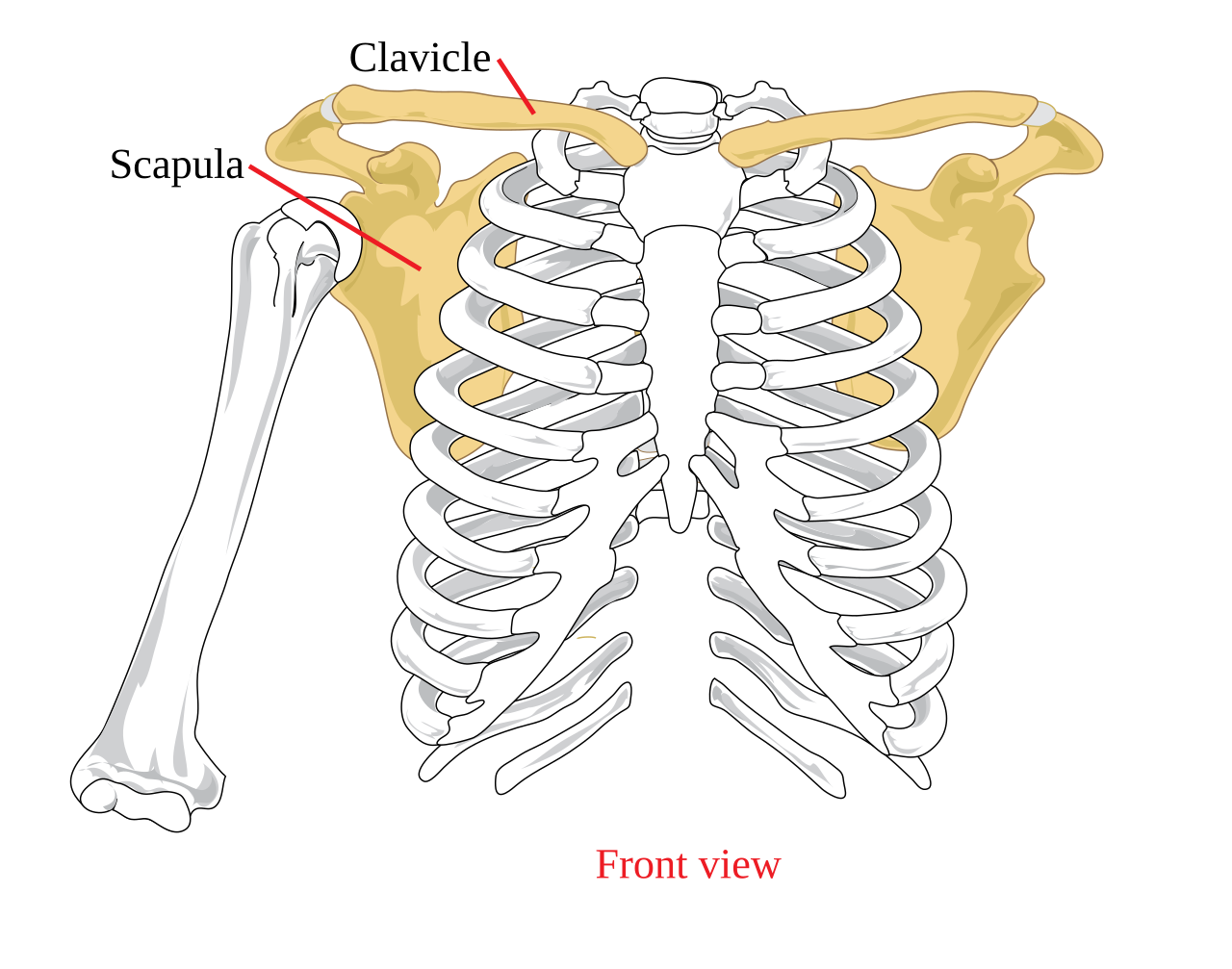
Pectoral Girdle
Bones that attach each upper limb to the axial skeleton form the pectoral girdle (shoulder girdle). The shoulder girdle consists of 2 bones, the scapula and clavicle.
Cardiac Muscle
Only found in the heart, cells contract in wave like pattern so heart can work as a pump
Smooth muscle
involuntary control of muscles, also present in eyes, where it functions to change the size of the iris and alter the shape of the lens
Respiratory function
To provide oxygen to body tissues for cellular respiration, remove the waste product carbon dioxide, and help to maintain acid-base balance
Pharynx
Divided into 3 regions: the nasopharynx, oropharynx, and larygnopharynx

Red blood cells
Responsible for carrying oxygen and carbon diaoxide

Vena cava (Superior and Inferior)
Two major veins return blood from the body to the right atrium

Spleen
Major secondary lymphoid organ. Spleen sometimes called the “filter of the blood” because extensive vascularization and presence of cells that remove microbes and other materials from blood, including dying red blood cells. Spleen also functions as the location if immune responses to blood-borne pathogens
Autonomic Nervous System
Responsible for involuntary control of the body, usually for sake of homeostasis (regulation of internal environment); regular heartbeat, releasing hormones like adrenaline, opening pupil in response to light, regulating digestive system. 2 divisions; the parasympathetic nervous system and the sympathetic nervous system.
Subcutaneous (fat) layer
Deepest layer, directly below the dermis and serves to connect the skin to the underlying fascia (fibrous tissue) of the bones and muscles.
Large intestine
Terminal part of alimentary canal. Primary function is to finish absorption if nutrients and water, synthesize certain vitamins, form feces, and eliminate feces from the body
Liver
Largest gland of body, one of most important organs. Regulates metabolism, produces bile (which is secreted to small intestine to break down fats as well as detoxifies harmful substances like alcohol nicotine and other poisons, stores sugars, assists in production if blood products and storage of vitamins and iron. Lies inferior to the diaphragm in the upper right quadrant of abdominal cavity, receives protection from surrounding ribs