6 - Neurons & Information Flow
 Call Kai
 Learn
 Practice Test
 Spaced Repetition
 Match
 Flashcards
 Knowt Play
1/24

There's no tags or description
Looks like no tags are added yet.
25 Terms
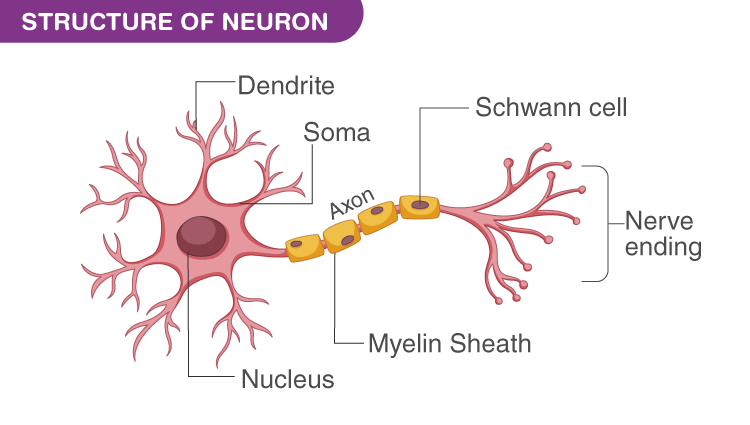
Neurons
Basic signalling units of the nervous system (carry signals)
Glial cells
Support cells (support neurons)
Not just physical supports, they also help with info processing + movement
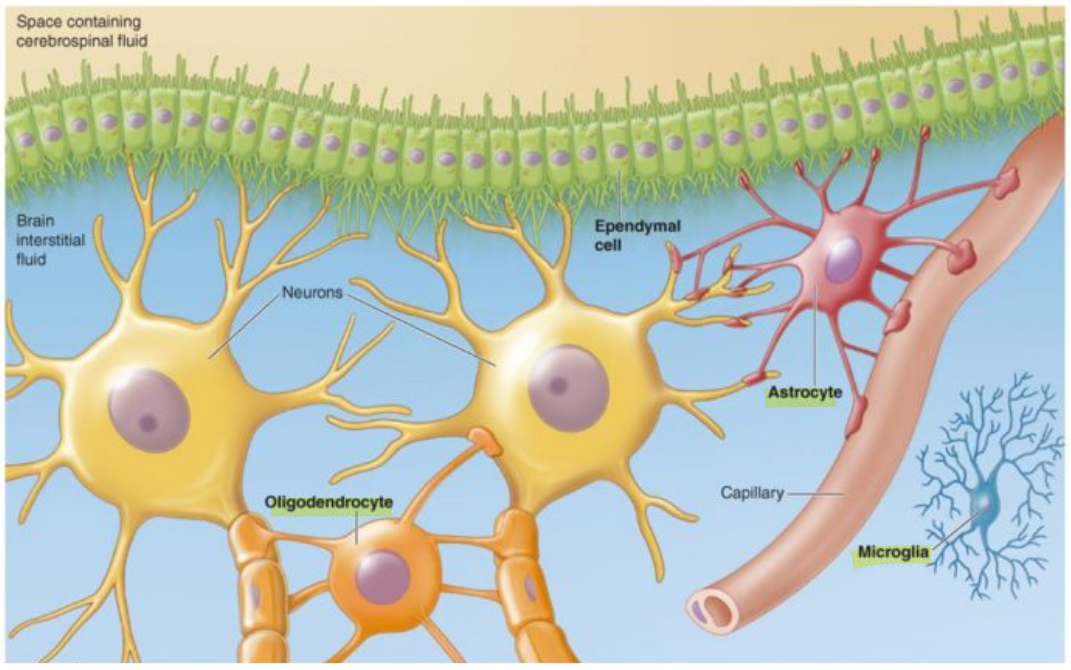
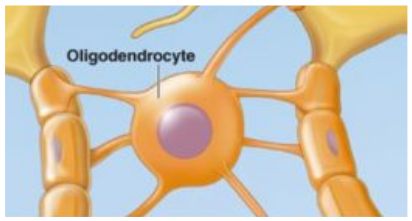
Oligodendrites
Supports + insulates axons by forming myelin
Glial cell part of the CNS
Astrocytes
Large portion of cells in the brain
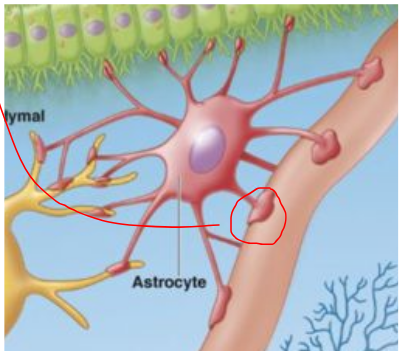
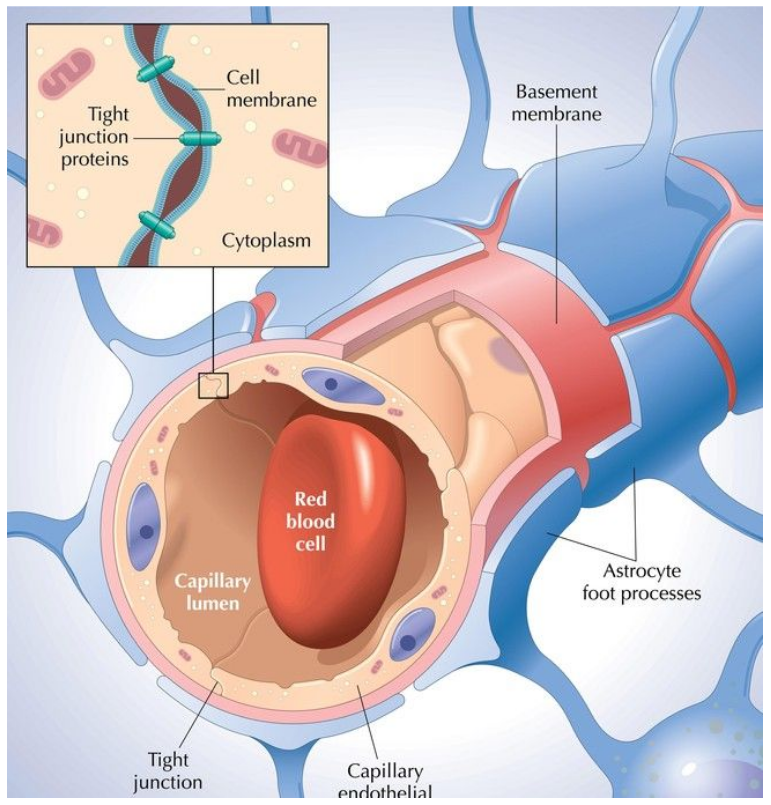
Forms the blood-brain-barrier
Star shaped - lots of branches (has plugs @ their ends to block + monitor movement of molecules)
Provides neuron with substrates for ATP production
Helps maintain homeostasis by taking up H2O + K+
Blood-Brain-Barrier
Highly selective semi-permeable membrane of cells that lines the cells in the brain (heavily moderates what enters brain cells - prevent harmful substances from entering the cells and damaging the brain)
Microglia
specialized immune cells in CNS; remove damaged cells and invaders
Exists in the CNS, but not apart of it
Ependymal Cells
creates the lining of the ventricles and make cerebrospinal fluid
glial cell apart of CNS
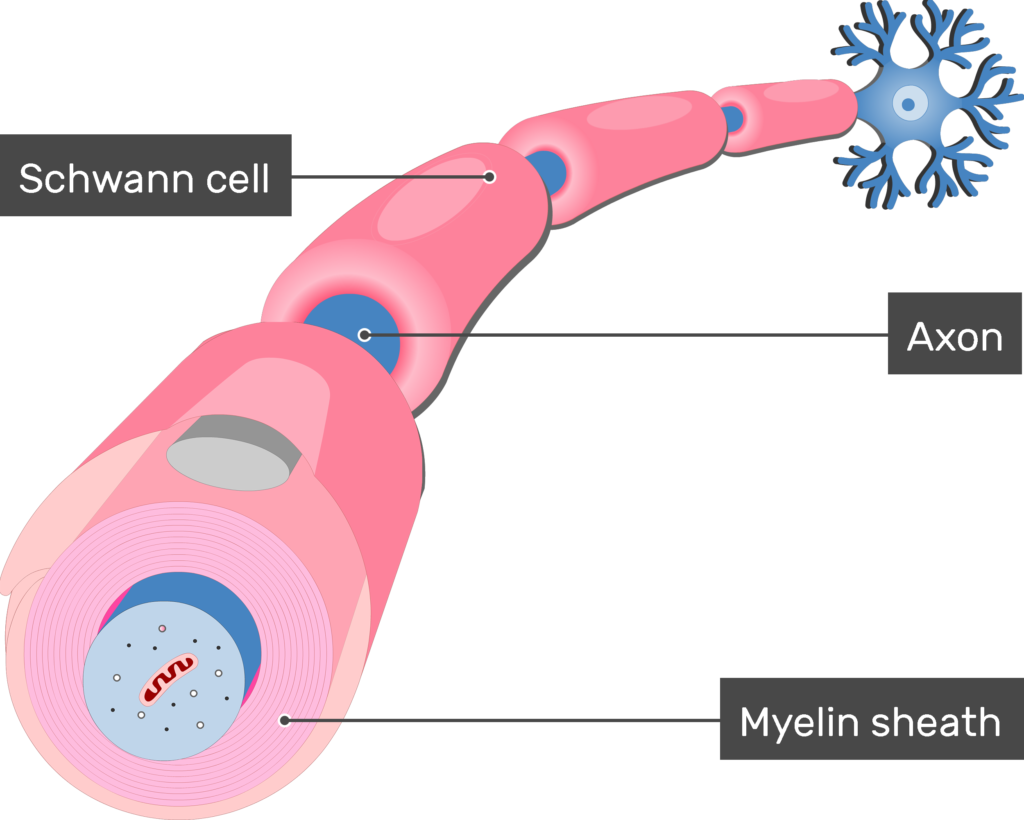
Schwann Cells
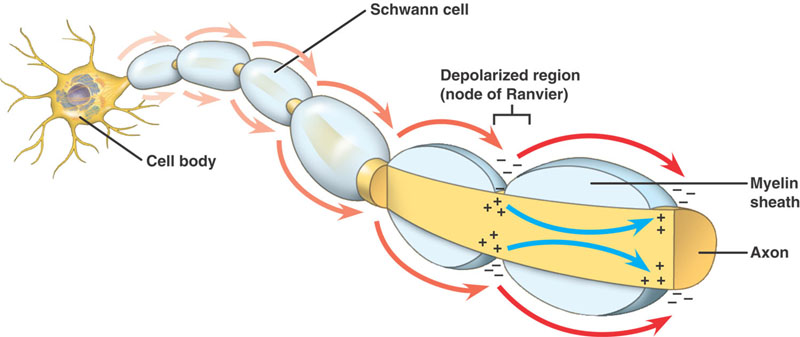
insulates (wraps around) axons by forming myelin (speeds up signals)
Gaps between myelin = Nodes of Ranvier
glial cell apart of PNS
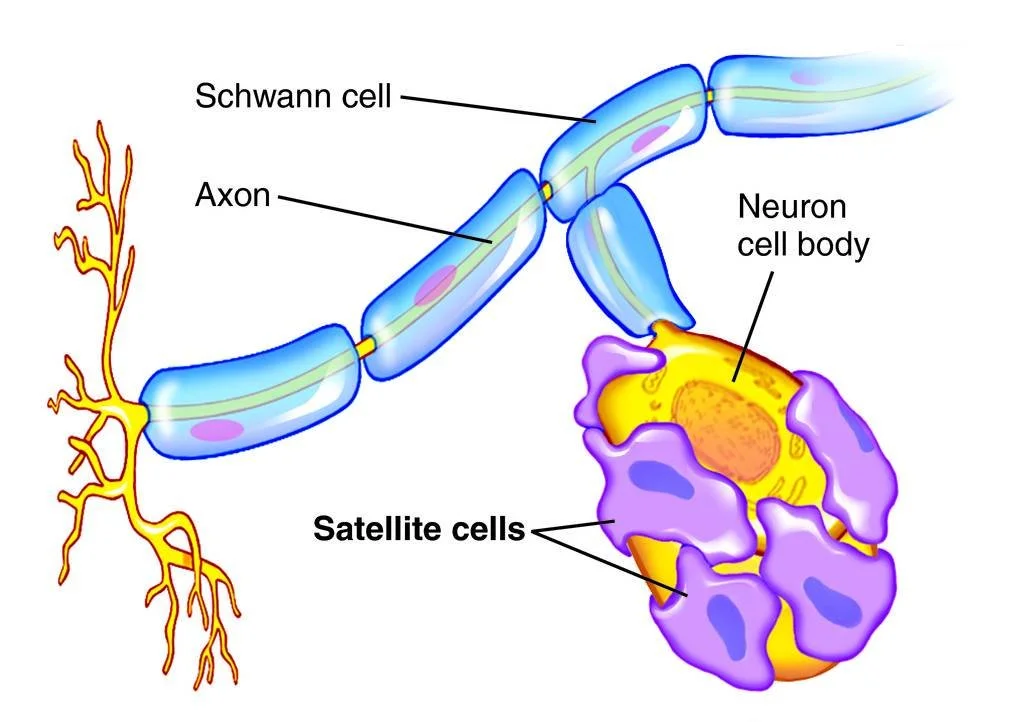
Satellite cells
form supportive capsules around nerve cell bodies in ganglia (collection of nerve cell bodies outside CNS)
Non-myelinating
glial cell apart of PNS
Sensory Neurons
conduct signals/messages to the spinal cord and the brain
Motor Neurons
conduct signals/messages from the brain and spinal cord
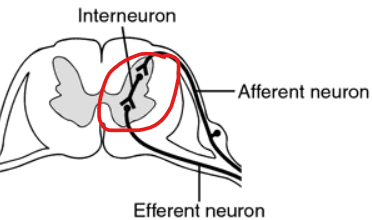
Interneurons
neurons completely contained within the CNS; transmits impulses between other neurons
Part of a reflex arch
Soma (cell body)
contains genetic info and organelles
integrates postsynaptic potentials
Dendrites
receives messages from other neurons or sensory receptors
Axon
conduct electrical signals from the axon hillock to the terminal buttons
Mechanically-gated ion channels
open in response to physical forces (ie. pressure and stretch)
Found in sensory neurons
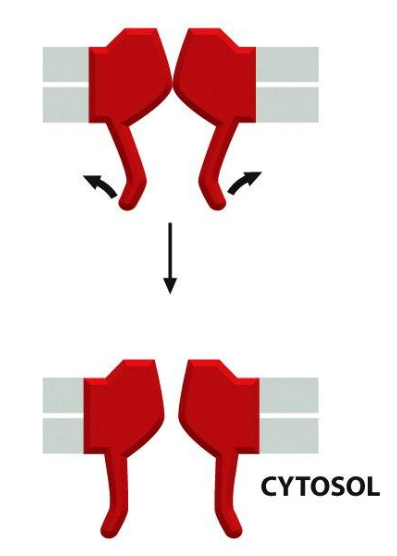
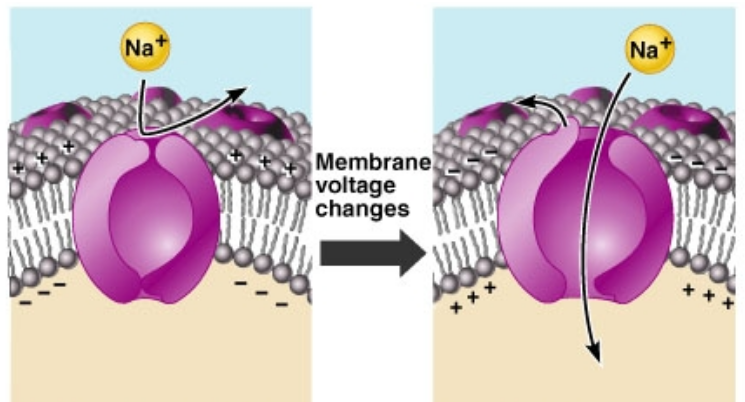
Voltage-gated ion channels
open in response to changes in the cell’s membrane potential
Amount of voltage (potential) to open the channel depends on the channel type
Voltage gated Na+ + K+ channels are important in the initiation and the conduction of electrical signals along the axon
Saltatory Conduction
the process of an action potential jumping to the unmyelinated parts of the axon
Synapse
the region where an axon terminal meets its target cell
Presynaptic cell
the neuron that delivers a cell signal to the synapse
Postsynaptic cell
the cell that receives the signal from the synapse
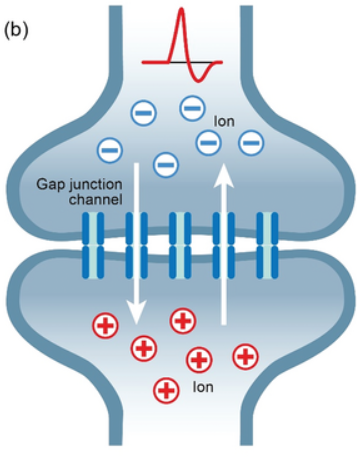
Electrical synapses
Electrical signals passed from the cytoplasm of one cell to another through pores of gap junctions proteins
Synchronizes activity within a network of cells
Found in the CNS, smooth muscle, cardiac muscle + some non-excitable cells
Allows for muscles/organs to work at a similar pace, not randomly (heart beating the same)
Chemical synapses
neurocrine molecules carry signals from one cell to the next; electrical signal of presynaptic cell converted to a chemical signal
Signal molecules cross synaptic cleft + bind to a receptor on the target cell
Majority of synapses
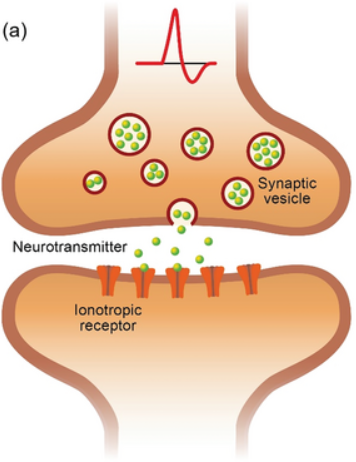
Steps of Synaptic Transmission
Synthesis
Transportation and Storage
Release
Binding
Reuptake
Degreation
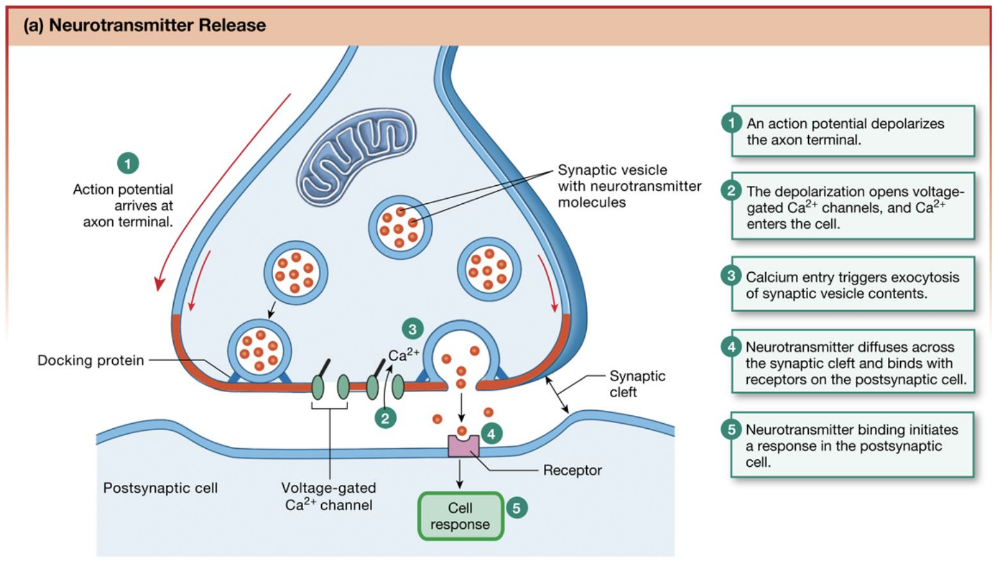
Neurotransmitter
act on receptors in target cells close to the neuron that secretes them
Most can bind to more than just one type of receptor
Can have a different effect depending on the type of tissue