Lesson 106: Commercially Available Feeds
 Call Kai
 Learn
 Practice Test
 Spaced Repetition
 Match
 Flashcards
 Knowt Play
1/39

There's no tags or description
Looks like no tags are added yet.
40 Terms
Organic Diet: Developed and enforced by USDA
Must contain at least 95% organic ingredients
No prohibited substances, antibiotics or growth hormones
No specific regulations for pet foods – follow human rules
Natural Diet: Processed but not chemically synthesized
No artificial flavors, colors, or preservatives
Most food do NOT qualify – synthetically derived supplements
Label contains added vitamins, minerals, and trace nutrients
Holistic Diet: No regulatory definition “human grade”
No meaning regarding quality, safety or healthfulness
Only ingredients that humans can eat; entire food
Transported, stored, handled like human food
Grain Free Diet: Marketing trend; not science based
Made by substituting grains (corn, rice, wheat) with other ingredients: Pulses = lentils, peas, beans, chickpeas, potatoes
Listed as main ingredient/higher amounts
Thought to be helpful for food allergies
Grain Free Diets – Health Concerns
Increased risk for Dilated Cardiomyopathy (DCM) in dogs
Doberman Pinschers, Great Danes, Boxers, Cocker Spaniels
Lack of taurine- cats
Therapeutic Diets: Specially formulated to help manage various medical conditions
1. Reduce symptoms of disease
2. Slow disease progression
3. Lower risk of future disease
Therapeutic diets: Prescription
Veterinary clinics or approved retail stores
Hill's Prescription, Royal Canin Veterinary, Purina Pro Plan Veterinary
Therapeutic diets: OTC
Formulated for mild conditions and maintenance
Adverse Food Reaction (AFR)
Food trial with hydrolyzed protein/novel protein is gold standard because protein component is most likely cause
● Dogs – chicken, beef, dairy
● Cats – beef, fish, dairy
Hydrolyzed Protein Diet
Protein source is broken down into smaller pieces
More difficult for the body to detect and react
Novel Protein Diet
New protein source → Less likely for the body to recognize and cause a reaction
Sources: Rabbit, Kangaroo, Duck, Alligator
Nutrients of concern for different GI diseases
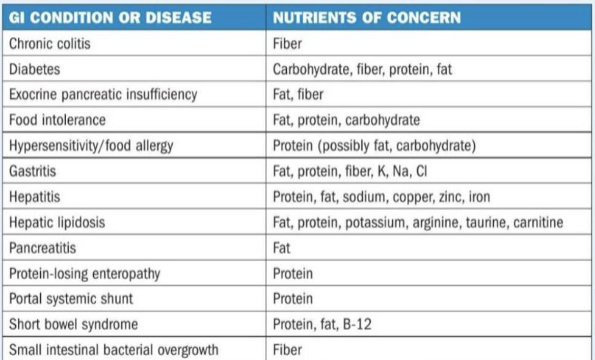
Diabetes Mellitus: Altered glucose metabolism and insulin resistance
High fiber, moderate protein, low fat, low carbohydrates(cats)
Liver Disease
Difficult to detoxify harmful substances
High quality protein, increased antioxidants, moderate fat
Urinary Disease dietary fixes
Prevent urolith formation, support urinary health, reduce inflammation/infection
Increased moisture, moderate protein, increased fiber
renal disease dietary fixes
Decline in kidney function and ability to excrete waste
Lower protein, low Phos, increased fatty acids
Musculoskeletal Disease dietary fixes
Chronic pain, limited mobility, diminished overall health
Increased fatty acids, added glucosamine and chondroitin, weight management, antioxidants
Supplements for Musculoskeletal Disease
MSM (methylsulfonylmethane)
Naturally occurring sulfur compound – reduces inflammation
Neurologic Disease dietary fixes
Add lipoic acid, carnitine
High EPA/DHA
Add antioxidants
Cardiovascular Disease
Controlled sodium
High EPA/DHA, Low protein
Critical Care
Highly digestible, High fat, Increased energy density, Antioxidants
Intended only for intermittent or supplemental feeding
forage
any plant material high in fiber but lower in energy and protein consumed by grazing livestock.
concentrate
feed high in energy and/or protein and low in fiber used to enhance the nutritive value of forage-based diets
Common forages to make animal feed

Common concentrates to make animal feed

Milk Replacers
A liquid or powder product designed to substitute mother’s milk, providing essential nutrients during early suckling stages
Fed immediately after colostrum period (e.g., from day 3 for calves) until weaning.
High in protein (20–26%), fat (10–20%), low fiber, similar to milk composition.
Common uses for milk replacers
Provides digestible energy, protein, vitamins, and minerals when maternal milk is unavailable or insufficient.
Starter Feeds
solid or pelleted highly nutritious feed for young livestock (e.g. calves, chicks, lambs, kids) after birth to stimulate gut development and early growth.
Introduced alongside milk or milk replacer, usually from 1– 2 weeks of age.
High in energy, moderate protein (18–22%), contains fiber and grain-based ingredients.
Common uses for starter feeds
Encourages rumen development, transitions the animal from milk to solid feed, supports growth before weaning.
Often includes added vitamins, minerals, and sometimes antibiotics to prevent early-life infections.
Form of Creep/Starter Feed
Commercial swine producers prefer feed mills to produce pelleted diets for its digestibility, ease of handling feed and reduce feed wastage
Grower/Finisher Feeds Common Uses:
Improves weight gain and muscle development in livestock like pigs, cattle, and poultry.
designed to help manage the transition from milk or starter feeds to a more solid feed
regimen.
Can be supplemented with added minerals to maintain bone and overall health.
High-fiber feed common uses
Promotes healthy rumen function in ruminants(cattle, sheep, goats).
Helps prevent GI issues in monogastrics.
Often used in animals with metabolic or digestive health issues, such as colic in horses or bloating in cattle
Reproductive feeds common uses
Improves conception rates.
Supports fetal development in pregnant animals.
Helps prevent pregnancy-related disorders (like milk fever in dairy cows).
Boosts lactation in post-partum animals
Common commercial supplements used
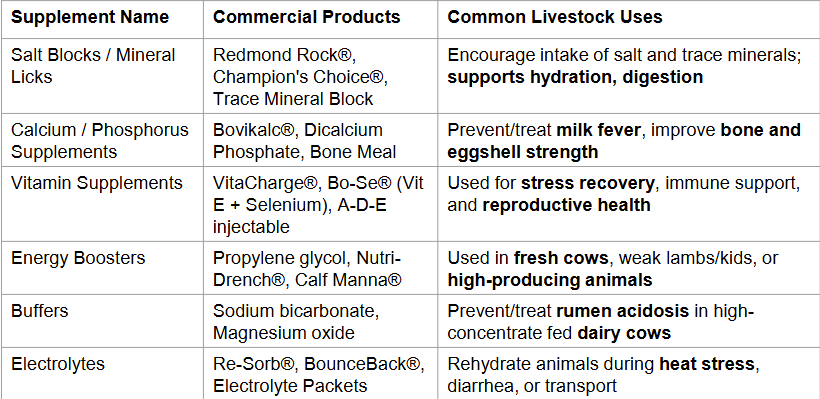
Mineral and Vitamin Premixes: concentrated feeds designed to provide essential minerals and vitamins
Corrects deficiencies (e.g., vitamin E, selenium, calcium, phosphorus).
Supports reproductive health, bone health, and immune system function.
Common in situations where livestock are at risk of deficiencies due to poor-quality forage or other factors
Medicated feeds common uses
Antibiotics: Used to control bacterial infections.
Coccidiostats: Used to control coccidiosis(intestinal parasitic disease).
Anthelmintics: To treat internal parasites like worms.
Probiotics: To support gut health and improve digestion, especially after antibiotic treatments.
Fertility supplements common uses
Promote healthy estrous cycles in dairy cattle, sheep, or pigs.
Improve semen quality and sperm count in male livestock.
Assist in post-partum recovery to support conception
Anti-stress feed common uses
Reduces stress during transportation, weaning, or environmental changes.
Includes additives like electrolytes, amino acids, or herbal extracts that promote calmness and reduce cortisol levels
Electrolyte and rehydration feeds common uses
Used to treat dehydration caused by diarrhea, heat stress, or transport.
Often contains a mix of sugars, salts, and minerals to replenish lost fluids and prevent electrolyte imbalances.
highly specialized feeds/supplements that address certain health conditions, such as metabolic disorders, liver disease, or hoof health.
Ketosis management: For cows, to support metabolism during calving.
Liver support: For animals with fatty liver or liver dysfunction.
Hoof health: Special minerals like biotin and zinc can be included to promote healthy hoof growth