A & P Practical #2
 Call Kai
 Learn
 Practice Test
 Spaced Repetition
 Match
 Flashcards
 Knowt Play
1/98

There's no tags or description
Looks like no tags are added yet.
99 Terms

Identify A
Superior Sagittal Sinus

Identify B
Subdural Space

Identify C
Subarachnoid Space

Identify D
Periosteum

Identify E
Dura Mater
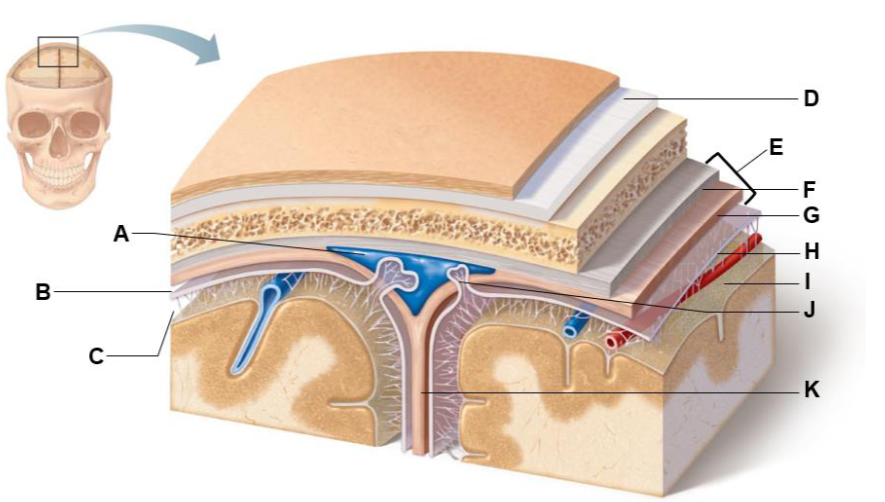
Identify F
Periosteal Layer

Identify G
Meningeal Layer

Identify H
Arachnoid Mater

Identify I
Pia Mater

Identify J
Arachnoid Villus

Identify K
Falx Cerebri (in longitudinal fissure only)
Cerebrospinal fluid (CSF) nourishes and protects our brain and spinal cord. CSF
is produced in the _______1________, special capillary beds of _____2_____ in each
of four ventricles. CSF produced in our two ________3________ joins CSF produced in
the third ventricle by flowing through the __________4_________. From the third
ventricle, CSF flows down the _______5_______ to join the CSF produced in the
_______6_______, the last of our ventricles. CSF then leaves our ventricular system
and enters the ________7________ by exiting through one of two apertures. CSF that
flows through the _______8________ has two options for where it flows next. Some
flows up to nourish the ______9_______, a component of our hindbrain, while the rest
flows down through the ______10_______ of our spinal cord. Meanwhile, the rest of our
CSF exits the fourth ventricle through the ________11________. This CSF flows
forward and up, washing over our _______12_______, or the main component of our
forebrain. Once CSF has washed over our brain and spinal cord, it is absorbed into
dural venous sinuses through ________13________, projections of the arachnoid
mater. Finally, CSF leaves these sinus systems and drains into the lymphatic system to
be cleaned and broken down, as more CSF continues to be produced in the choroid
plexuses.
What is 1?
Choroid Plexuses
Cerebrospinal fluid (CSF) nourishes and protects our brain and spinal cord. CSF
is produced in the _______1________, special capillary beds of _____2_____ in each
of four ventricles. CSF produced in our two ________3________ joins CSF produced in
the third ventricle by flowing through the __________4_________. From the third
ventricle, CSF flows down the _______5_______ to join the CSF produced in the
_______6_______, the last of our ventricles. CSF then leaves our ventricular system
and enters the ________7________ by exiting through one of two apertures. CSF that
flows through the _______8________ has two options for where it flows next. Some
flows up to nourish the ______9_______, a component of our hindbrain, while the rest
flows down through the ______10_______ of our spinal cord. Meanwhile, the rest of our
CSF exits the fourth ventricle through the ________11________. This CSF flows
forward and up, washing over our _______12_______, or the main component of our
forebrain. Once CSF has washed over our brain and spinal cord, it is absorbed into
dural venous sinuses through ________13________, projections of the arachnoid
mater. Finally, CSF leaves these sinus systems and drains into the lymphatic system to
be cleaned and broken down, as more CSF continues to be produced in the choroid
plexuses.
What is 2?
Pia Mater
Cerebrospinal fluid (CSF) nourishes and protects our brain and spinal cord. CSF
is produced in the _______1________, special capillary beds of _____2_____ in each
of four ventricles. CSF produced in our two ________3________ joins CSF produced in
the third ventricle by flowing through the __________4_________. From the third
ventricle, CSF flows down the _______5_______ to join the CSF produced in the
_______6_______, the last of our ventricles. CSF then leaves our ventricular system
and enters the ________7________ by exiting through one of two apertures. CSF that
flows through the _______8________ has two options for where it flows next. Some
flows up to nourish the ______9_______, a component of our hindbrain, while the rest
flows down through the ______10_______ of our spinal cord. Meanwhile, the rest of our
CSF exits the fourth ventricle through the ________11________. This CSF flows
forward and up, washing over our _______12_______, or the main component of our
forebrain. Once CSF has washed over our brain and spinal cord, it is absorbed into
dural venous sinuses through ________13________, projections of the arachnoid
mater. Finally, CSF leaves these sinus systems and drains into the lymphatic system to
be cleaned and broken down, as more CSF continues to be produced in the choroid
plexuses.
What is 3?
Lateral Ventricles
Cerebrospinal fluid (CSF) nourishes and protects our brain and spinal cord. CSF
is produced in the _______1________, special capillary beds of _____2_____ in each
of four ventricles. CSF produced in our two ________3________ joins CSF produced in
the third ventricle by flowing through the __________4_________. From the third
ventricle, CSF flows down the _______5_______ to join the CSF produced in the
_______6_______, the last of our ventricles. CSF then leaves our ventricular system
and enters the ________7________ by exiting through one of two apertures. CSF that
flows through the _______8________ has two options for where it flows next. Some
flows up to nourish the ______9_______, a component of our hindbrain, while the rest
flows down through the ______10_______ of our spinal cord. Meanwhile, the rest of our
CSF exits the fourth ventricle through the ________11________. This CSF flows
forward and up, washing over our _______12_______, or the main component of our
forebrain. Once CSF has washed over our brain and spinal cord, it is absorbed into
dural venous sinuses through ________13________, projections of the arachnoid
mater. Finally, CSF leaves these sinus systems and drains into the lymphatic system to
be cleaned and broken down, as more CSF continues to be produced in the choroid
plexuses.
What is 4?
Interventricular Foremen
Cerebrospinal fluid (CSF) nourishes and protects our brain and spinal cord. CSF
is produced in the _______1________, special capillary beds of _____2_____ in each
of four ventricles. CSF produced in our two ________3________ joins CSF produced in
the third ventricle by flowing through the __________4_________. From the third
ventricle, CSF flows down the _______5_______ to join the CSF produced in the
_______6_______, the last of our ventricles. CSF then leaves our ventricular system
and enters the ________7________ by exiting through one of two apertures. CSF that
flows through the _______8________ has two options for where it flows next. Some
flows up to nourish the ______9_______, a component of our hindbrain, while the rest
flows down through the ______10_______ of our spinal cord. Meanwhile, the rest of our
CSF exits the fourth ventricle through the ________11________. This CSF flows
forward and up, washing over our _______12_______, or the main component of our
forebrain. Once CSF has washed over our brain and spinal cord, it is absorbed into
dural venous sinuses through ________13________, projections of the arachnoid
mater. Finally, CSF leaves these sinus systems and drains into the lymphatic system to
be cleaned and broken down, as more CSF continues to be produced in the choroid
plexuses.
What is 5?
Cerebral Aqueduct
Cerebrospinal fluid (CSF) nourishes and protects our brain and spinal cord. CSF
is produced in the _______1________, special capillary beds of _____2_____ in each
of four ventricles. CSF produced in our two ________3________ joins CSF produced in
the third ventricle by flowing through the __________4_________. From the third
ventricle, CSF flows down the _______5_______ to join the CSF produced in the
_______6_______, the last of our ventricles. CSF then leaves our ventricular system
and enters the ________7________ by exiting through one of two apertures. CSF that
flows through the _______8________ has two options for where it flows next. Some
flows up to nourish the ______9_______, a component of our hindbrain, while the rest
flows down through the ______10_______ of our spinal cord. Meanwhile, the rest of our
CSF exits the fourth ventricle through the ________11________. This CSF flows
forward and up, washing over our _______12_______, or the main component of our
forebrain. Once CSF has washed over our brain and spinal cord, it is absorbed into
dural venous sinuses through ________13________, projections of the arachnoid
mater. Finally, CSF leaves these sinus systems and drains into the lymphatic system to
be cleaned and broken down, as more CSF continues to be produced in the choroid
plexuses.
What is 6?
Fourth Ventricle
Cerebrospinal fluid (CSF) nourishes and protects our brain and spinal cord. CSF
is produced in the _______1________, special capillary beds of _____2_____ in each
of four ventricles. CSF produced in our two ________3________ joins CSF produced in
the third ventricle by flowing through the __________4_________. From the third
ventricle, CSF flows down the _______5_______ to join the CSF produced in the
_______6_______, the last of our ventricles. CSF then leaves our ventricular system
and enters the ________7________ by exiting through one of two apertures. CSF that
flows through the _______8________ has two options for where it flows next. Some
flows up to nourish the ______9_______, a component of our hindbrain, while the rest
flows down through the ______10_______ of our spinal cord. Meanwhile, the rest of our
CSF exits the fourth ventricle through the ________11________. This CSF flows
forward and up, washing over our _______12_______, or the main component of our
forebrain. Once CSF has washed over our brain and spinal cord, it is absorbed into
dural venous sinuses through ________13________, projections of the arachnoid
mater. Finally, CSF leaves these sinus systems and drains into the lymphatic system to
be cleaned and broken down, as more CSF continues to be produced in the choroid
plexuses.
What is 7?
Subarachnoid Space
Cerebrospinal fluid (CSF) nourishes and protects our brain and spinal cord. CSF
is produced in the _______1________, special capillary beds of _____2_____ in each
of four ventricles. CSF produced in our two ________3________ joins CSF produced in
the third ventricle by flowing through the __________4_________. From the third
ventricle, CSF flows down the _______5_______ to join the CSF produced in the
_______6_______, the last of our ventricles. CSF then leaves our ventricular system
and enters the ________7________ by exiting through one of two apertures. CSF that
flows through the _______8________ has two options for where it flows next. Some
flows up to nourish the ______9_______, a component of our hindbrain, while the rest
flows down through the ______10_______ of our spinal cord. Meanwhile, the rest of our
CSF exits the fourth ventricle through the ________11________. This CSF flows
forward and up, washing over our _______12_______, or the main component of our
forebrain. Once CSF has washed over our brain and spinal cord, it is absorbed into
dural venous sinuses through ________13________, projections of the arachnoid
mater. Finally, CSF leaves these sinus systems and drains into the lymphatic system to
be cleaned and broken down, as more CSF continues to be produced in the choroid
plexuses.
What is 8?
Medial Aperture
Cerebrospinal fluid (CSF) nourishes and protects our brain and spinal cord. CSF
is produced in the _______1________, special capillary beds of _____2_____ in each
of four ventricles. CSF produced in our two ________3________ joins CSF produced in
the third ventricle by flowing through the __________4_________. From the third
ventricle, CSF flows down the _______5_______ to join the CSF produced in the
_______6_______, the last of our ventricles. CSF then leaves our ventricular system
and enters the ________7________ by exiting through one of two apertures. CSF that
flows through the _______8________ has two options for where it flows next. Some
flows up to nourish the ______9_______, a component of our hindbrain, while the rest
flows down through the ______10_______ of our spinal cord. Meanwhile, the rest of our
CSF exits the fourth ventricle through the ________11________. This CSF flows
forward and up, washing over our _______12_______, or the main component of our
forebrain. Once CSF has washed over our brain and spinal cord, it is absorbed into
dural venous sinuses through ________13________, projections of the arachnoid
mater. Finally, CSF leaves these sinus systems and drains into the lymphatic system to
be cleaned and broken down, as more CSF continues to be produced in the choroid
plexuses.
What is 9?
Cerebellum
Cerebrospinal fluid (CSF) nourishes and protects our brain and spinal cord. CSF
is produced in the _______1________, special capillary beds of _____2_____ in each
of four ventricles. CSF produced in our two ________3________ joins CSF produced in
the third ventricle by flowing through the __________4_________. From the third
ventricle, CSF flows down the _______5_______ to join the CSF produced in the
_______6_______, the last of our ventricles. CSF then leaves our ventricular system
and enters the ________7________ by exiting through one of two apertures. CSF that
flows through the _______8________ has two options for where it flows next. Some
flows up to nourish the ______9_______, a component of our hindbrain, while the rest
flows down through the ______10_______ of our spinal cord. Meanwhile, the rest of our
CSF exits the fourth ventricle through the ________11________. This CSF flows
forward and up, washing over our _______12_______, or the main component of our
forebrain. Once CSF has washed over our brain and spinal cord, it is absorbed into
dural venous sinuses through ________13________, projections of the arachnoid
mater. Finally, CSF leaves these sinus systems and drains into the lymphatic system to
be cleaned and broken down, as more CSF continues to be produced in the choroid
plexuses.
What is 10?
Central Canal
Cerebrospinal fluid (CSF) nourishes and protects our brain and spinal cord. CSF
is produced in the _______1________, special capillary beds of _____2_____ in each
of four ventricles. CSF produced in our two ________3________ joins CSF produced in
the third ventricle by flowing through the __________4_________. From the third
ventricle, CSF flows down the _______5_______ to join the CSF produced in the
_______6_______, the last of our ventricles. CSF then leaves our ventricular system
and enters the ________7________ by exiting through one of two apertures. CSF that
flows through the _______8________ has two options for where it flows next. Some
flows up to nourish the ______9_______, a component of our hindbrain, while the rest
flows down through the ______10_______ of our spinal cord. Meanwhile, the rest of our
CSF exits the fourth ventricle through the ________11________. This CSF flows
forward and up, washing over our _______12_______, or the main component of our
forebrain. Once CSF has washed over our brain and spinal cord, it is absorbed into
dural venous sinuses through ________13________, projections of the arachnoid
mater. Finally, CSF leaves these sinus systems and drains into the lymphatic system to
be cleaned and broken down, as more CSF continues to be produced in the choroid
plexuses.
What is 11?
Lateral Aperture
Cerebrospinal fluid (CSF) nourishes and protects our brain and spinal cord. CSF
is produced in the _______1________, special capillary beds of _____2_____ in each
of four ventricles. CSF produced in our two ________3________ joins CSF produced in
the third ventricle by flowing through the __________4_________. From the third
ventricle, CSF flows down the _______5_______ to join the CSF produced in the
_______6_______, the last of our ventricles. CSF then leaves our ventricular system
and enters the ________7________ by exiting through one of two apertures. CSF that
flows through the _______8________ has two options for where it flows next. Some
flows up to nourish the ______9_______, a component of our hindbrain, while the rest
flows down through the ______10_______ of our spinal cord. Meanwhile, the rest of our
CSF exits the fourth ventricle through the ________11________. This CSF flows
forward and up, washing over our _______12_______, or the main component of our
forebrain. Once CSF has washed over our brain and spinal cord, it is absorbed into
dural venous sinuses through ________13________, projections of the arachnoid
mater. Finally, CSF leaves these sinus systems and drains into the lymphatic system to
be cleaned and broken down, as more CSF continues to be produced in the choroid
plexuses.
What is 12?
Cerebrum
Cerebrospinal fluid (CSF) nourishes and protects our brain and spinal cord. CSF
is produced in the _______1________, special capillary beds of _____2_____ in each
of four ventricles. CSF produced in our two ________3________ joins CSF produced in
the third ventricle by flowing through the __________4_________. From the third
ventricle, CSF flows down the _______5_______ to join the CSF produced in the
_______6_______, the last of our ventricles. CSF then leaves our ventricular system
and enters the ________7________ by exiting through one of two apertures. CSF that
flows through the _______8________ has two options for where it flows next. Some
flows up to nourish the ______9_______, a component of our hindbrain, while the rest
flows down through the ______10_______ of our spinal cord. Meanwhile, the rest of our
CSF exits the fourth ventricle through the ________11________. This CSF flows
forward and up, washing over our _______12_______, or the main component of our
forebrain. Once CSF has washed over our brain and spinal cord, it is absorbed into
dural venous sinuses through ________13________, projections of the arachnoid
mater. Finally, CSF leaves these sinus systems and drains into the lymphatic system to
be cleaned and broken down, as more CSF continues to be produced in the choroid
plexuses.
What is 13?
Arachnoid Villi

Identify 1
Cerebral Cortex
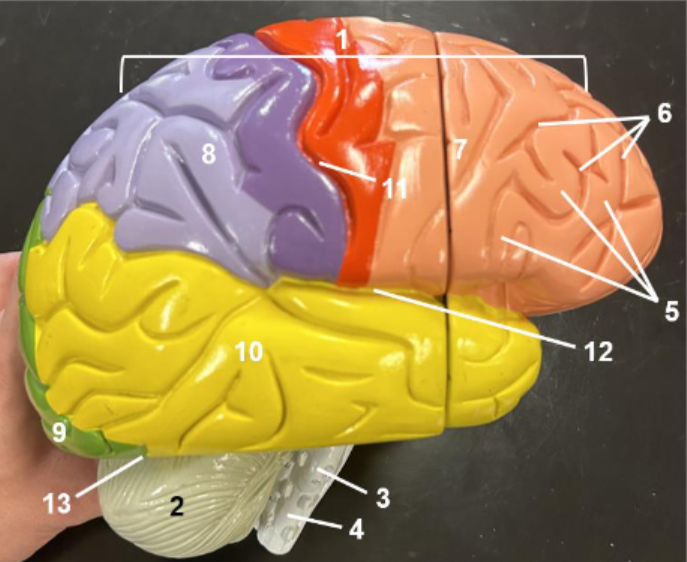
Identify 2
Cerebellum

Identify 3
Medulla Oblongata

Identify 4
Spinal Cord
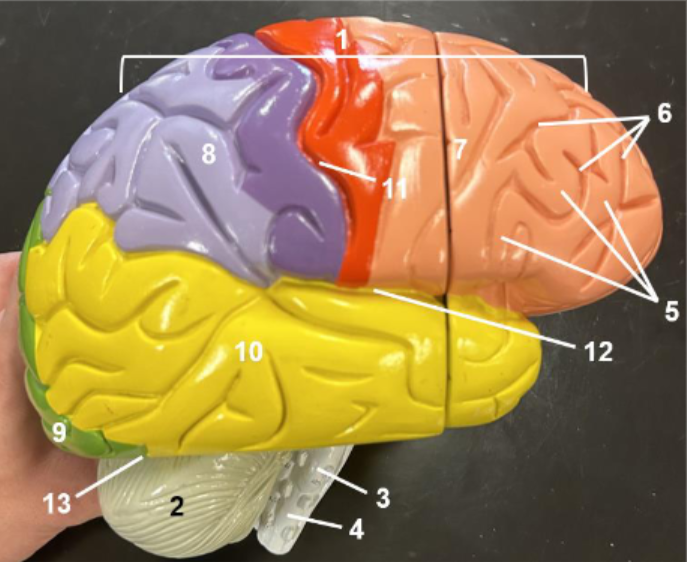
Identify 5
Gyri

Identify 6
Sulci

Identify 7
Frontal Lobe

Identify 8
Parietal Lobe

Identify 9
Occipital Lobe

Identify 10
Temporal Lobe

Identify 11
Central Sulcus or Fissure

Identify 12
Lateral Sulcus or Fissure

Identify 13
Transverse Fissure

Identify 14
Cerebrum

Identify 15
Thalamus

Identify 16
Hypothalamus
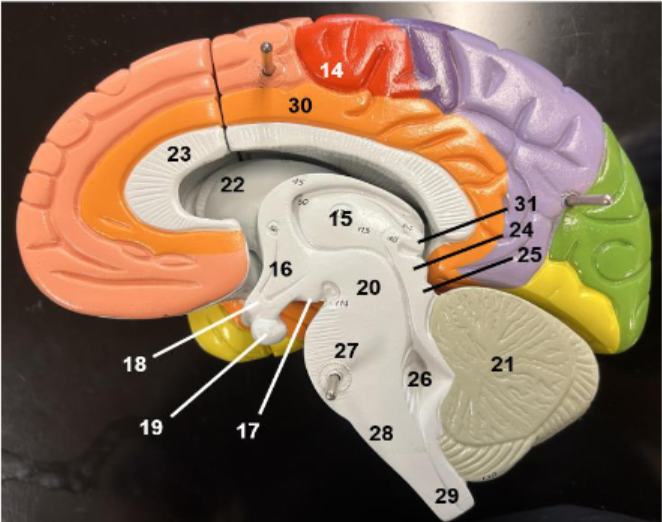
Identify 17
Mamillary Bodies

Identify 18
Infundibulum

Identify 19
Pituitary Gland

Identify 20
Midbrain

Identify 21
Cerebellum
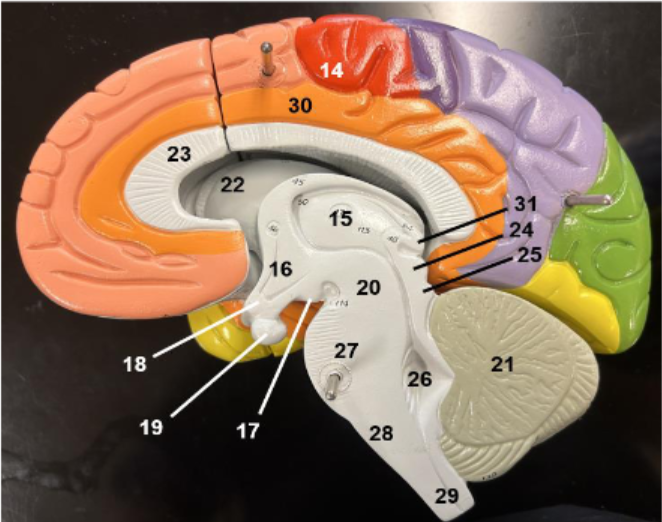
Identify 22
Lateral Ventricle

Identify 23
Corpus Callosum

Identify 24
Superior Colliculus

Identify 25
Inferior Colliculus

Identify 26
Fourth Ventricle
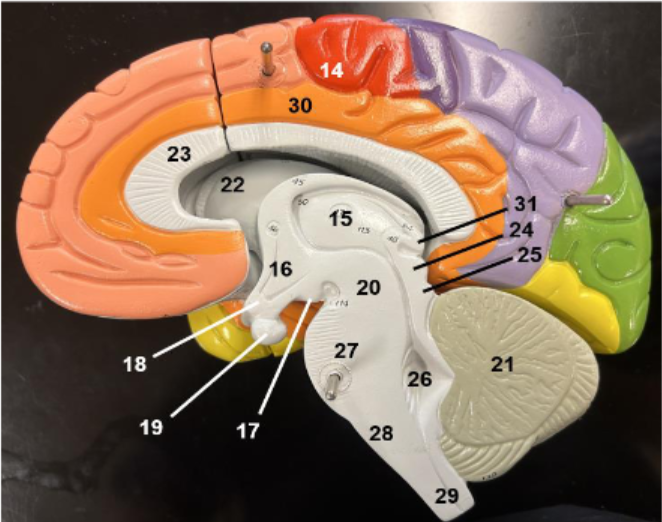
Identify 27
Pons

Identify 28
Medulla Oblongata

Identify 29
Spinal Cord
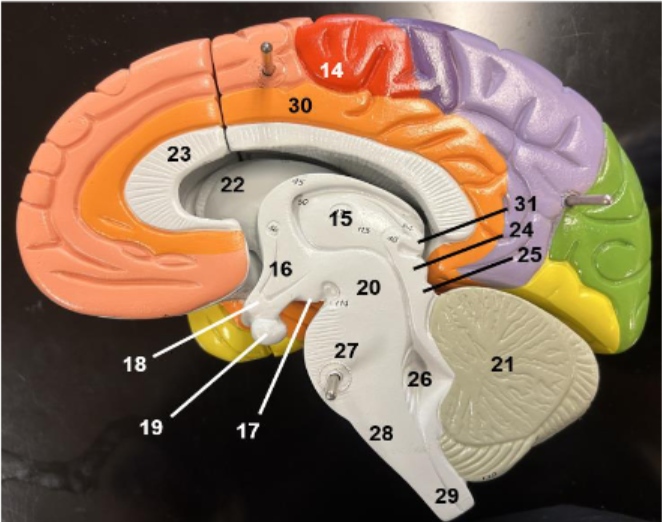
Identify 30
Cingulate Gyrus

Identify 31
Pineal Gland