Classification and Taxonomy of Microorganisms and Parasites
 Call Kai
 Learn
 Practice Test
 Spaced Repetition
 Match
 Flashcards
 Knowt Play
1/91

Earn XP
Description and Tags
Vocabulary practice flashcards covering prokaryotic and eukaryotic taxonomy, morphology, structures, life cycles, and classification criteria from Lecture Classification Part I.
92 Terms
Taxonomy
Classifies organisms into relationship-based hierarchy called Taxa
Currently genetic and evolutionary
Taxonomy - Utilized Classes
Membrane/Wall
• Nucleus
• Organelles
• Reproduction
• Utilization of Energy/Carbon Source
• Morphology
• Thriving Environment
Taxa
Dumb
Kings
Play
Chess
On
Fine
Glass
Sets
Classification
The orderly arrangement of organisms into groups based on established criteria.
Identification
The practical application of classification criteria to distinguish and characterize organisms.
Nomenclature
The naming system by which the characteristics of a species are defined and communicated among scientists.
Taxa
Relationship-based hierarchical categories into which organisms are classified (Domain, Kingdom, Phylum, Class, Order, Family, Genus, Species).
ARCHAEA
common features
Lack true peptidoglycan (PG)
Cell membrane lipids have branched hydrocarbon chains
Not Known to Cause Diseases
ARCHEA
Four phyla
1. Crenarchaeota
2. Euryarchaeota
3. Kor(y)archaeota
4. Nanoarchaeota
• Noted Archaea: Extremophiles (1, 2, 4) and Methanogens (3)
Peptidoglycan (Murein)
A polymer network consisting of alternating repeating sugars (NAG and NAM) cross-linked by four amino acids that provides structural integrity, shape, and osmotic protection to bacterial cell walls.
Lipopolysaccharide (LPS)
An endotoxic molecule located in the outer membrane of Gram-negative bacteria, composed of Lipid A, a core polysaccharide, and an O side chain.
Snapping Division
A form of bacterial asexual reproduction occurring in some Gram-positive species where only the inner wall forms a cross-wall, exerting tension until the outer wall snaps along a hinge to form palisades.
Crenarchaeota
A major phylum of the domain Archaea consisting primarily of hyperthermophiles and psychrophiles.
Euryarchaeota
A major phylum of Archaea comprising halophiles and methanogens, as well as select hyperthermophiles.
Thermophiles
Extremophilic microorganisms whose cellular components (membranes, proteins, nucleic acids) cease to function properly below 45∘C, including hyperthermophiles requiring temperatures exceeding 80∘C.
Halophiles
Extremophiles in the phylum Euryarchaeota that inhabit hypersaline environments, requiring greater than 9% (typically 17–23%) NaCl to maintain cell wall integrity.
Methanogens
The largest group of Archaea; obligate anaerobes that convert CO2, H2, and organic acids into methane gas (CH4).
Aquifex pyrophilus
A hyperthermophilic, anaerobic, chemoautotrophic bacterium in the phylum Aquificae that is considered to represent the earliest deeply branching lineage of bacteria.
Deinococcus radiodurans
A deeply branching, tetrad-forming bacterium exhibiting exceptional radiation resistance, possessing an outer membrane like Gram-negative cells but staining Gram-positive.
Cyanobacteria
Gram-negative, oxygenic phototrophic bacteria utilizing chlorophyll that transformed early Earth's atmosphere; some species fix nitrogen using heterocysts.
Heterocysts
Specialized, thick-walled cells found in certain filamentous cyanobacteria that carry out nitrogen fixation (N2→NH3).
Clostridium
A genus of low G+C Gram-positive, endospore-forming, rod-shaped obligate anaerobes in the phylum Firmicutes, responsible for diseases such as tetanus, botulism, and gas gangrene.
Mycoplasma
A genus of extremely small, pleomorphic, low G+C bacteria in the phylum Tenericutes that naturally lack a peptidoglycan cell wall and can cause atypical pneumonia and UTIs.
Listeria monocytogenes
A low G+C Gram-positive bacillus in the phylum Firmicutes capable of surviving and growing under refrigeration (psychrotolerant) that contaminates milk and meat products.
Corynebacterium
A genus of high G+C Gram-positive, pleomorphic, aerobic or facultatively anaerobic bacteria that reproduce via snapping division to form palisades and contain phosphate-storing metachromatic granules.
Metachromatic Granules
Intracellular inclusion bodies of polymerized inorganic phosphate characteristic of Corynebacterium diphtheriae that stain differently than the rest of the cell.
Mycobacterium
A genus of high G+C aerobic rods with thick, waxy cell walls rich in mycolic acids that confer resistance to desiccation and staining, requiring the acid-fast staining procedure.
Streptomyces
A genus of high G+C soil-dwelling actinomycetes that forms vegetative filaments and reproductive spores, crucial for nutrient recycling and the commercial synthesis of medical antibiotics like chloramphenicol, erythromycin, and tetracycline.
Prosthecae
Cellular appendages composed of cytoplasmic and cell wall extensions in alphaproteobacteria that function in attaching to substrates and expanding surface area for nutrient absorption.

Rhizobium
An alphaproteobacterium that associates with leguminous plant roots, inducing the formation of root nodules where it fixes atmospheric nitrogen into ammonia.
Nitrification
The biological oxidation of ammonia or ammonium (NH3 or NH4+) into nitrate (NO3−) by chemoautotrophic bacteria such as Nitrobacter, providing a form of nitrogen readily absorbed by plants.
Rickettsia
An obligate intracellular pathogenic alphaproteobacterium that cannot metabolize glucose independently, replicates inside mammalian host cells, and causes typhus.
Agrobacterium
A genus of plant-associated alphaproteobacteria that transfers a tumor-inducing (Ti) plasmid into plant genomes to induce gall tumors, widely used as a vector in plant bioengineering.
Gammaproteobacteria
The largest and most diverse class of the phylum Proteobacteria, comprising purple sulfur phototrophs, intracellular parasites, methane oxidizers, pseudomonads, and glycolytic facultative anaerobes.
Bdellovibrio
A small, motile, predatory deltaproteobacterium that attacks, bores into the periplasmic space of, and reproduces within other Gram-negative bacteria.
Myxobacteria
Soil-dwelling deltaproteobacteria that glide on slime trails and aggregate under nutrient depletion to construct multicellular fruiting bodies producing resistant myxospores.
Chlamydias
Tiny (≈0.2μm) Gram-negative intracellular parasites that naturally lack peptidoglycan cell walls and cause neonatal blindness, pneumonia, and lymphogranuloma venereum.
Spirochetes
Helical, corkscrew-shaped Gram-negative bacteria with axial filaments that drive corkscrew motility; includes Treponema pallidum (syphilis) and Borrelia burgdorferi (Lyme disease).
Trophozoite
The active, motile, feeding and vegetative stage of a protozoan life cycle.
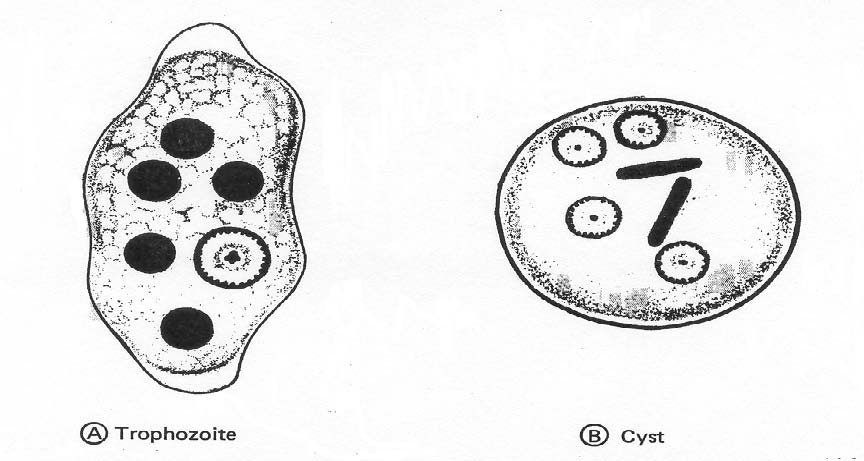
Cyst (Protozoan)
The dormant, resting survival form of a protozoan characterized by a thick protective capsule that resists desiccation and adverse environmental conditions.

Parabasal
A protozoan phylum characterized by the absence of classic mitochondria and the presence of a Golgi-like parabasal body
including Trichonympha and Trichomonas vaginalis.
Alveolata
A protozoan phylum defined by flattened, membrane-bound cavities (alveoli) beneath the plasma membrane and tubular mitochondrial cristae, encompassing ciliates, apicomplexans, and dinoflagellates.
Apicomplexans
A group of parasitic alveolates featuring an apical complex of organelles (apicoplast) for invading host animal cells; includes Plasmodium, Cryptosporidium, and Toxoplasma.
Dinoflagellates
Biflagellated, predominantly photosynthetic alveolates that form a major component of marine plankton; some produce bioluminescence or red-tide neurotoxins (Gymnodinium, Gonyaulax).
Cercozoa
An amoeboid and flagellated eukaryotic group with thread-like pseudopodia, commonly forming calcium carbonate (CaCO3) shells, exemplified by Foraminifera.
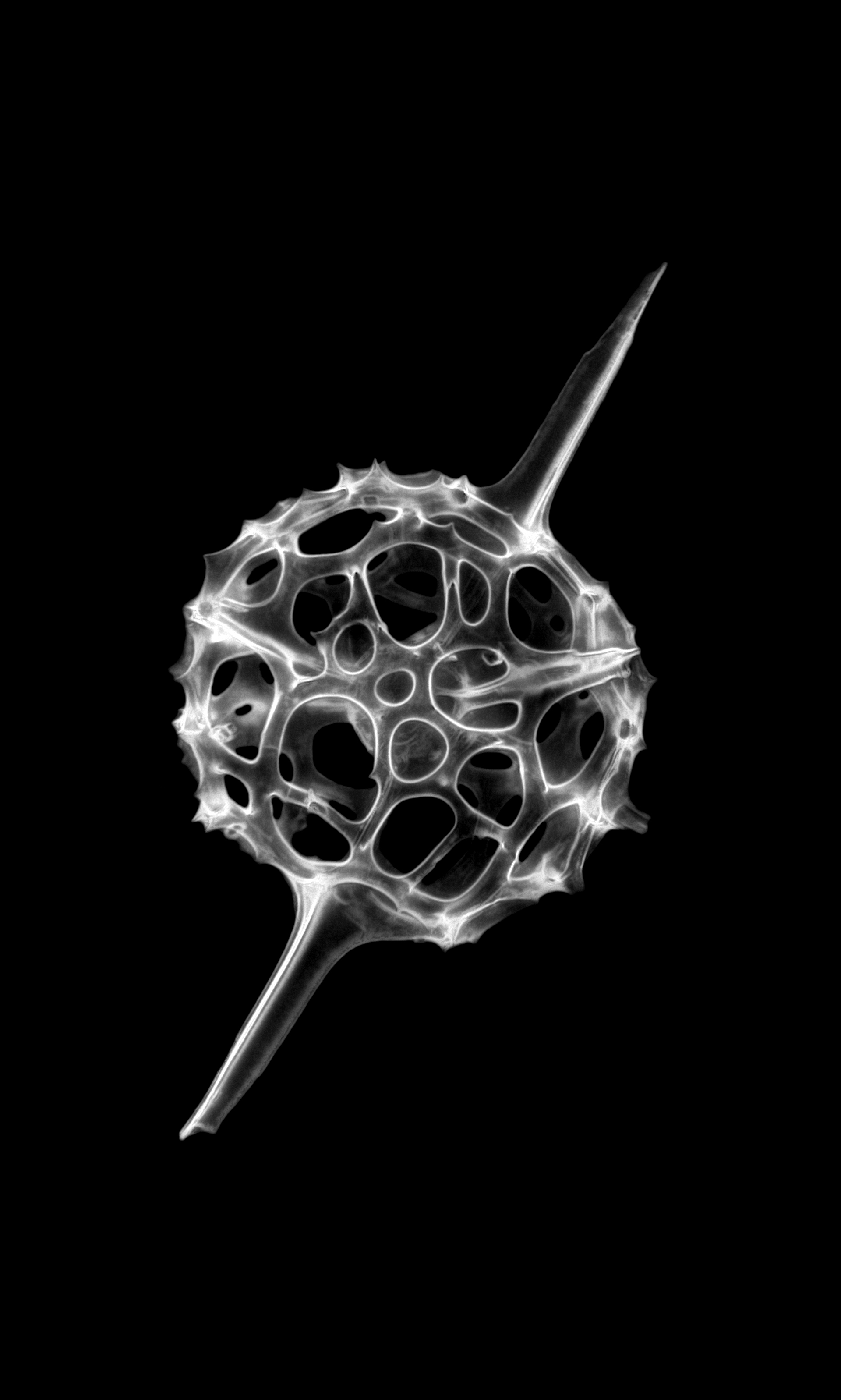
Radiolaria
Amoeboid protozoan zooplankton possessing radially organized, thread-like pseudopodia and ornate mineral skeletons composed of silica (SiO2).
Coenocytic Plasmodium
The multinucleated, undivided, streaming mass of diploid cytoplasm that constitutes the vegetative feeding stage of plasmodial (acellular) slime molds.
Dictyosteliida (Cellular Slime Molds)
Slime molds that exist as solitary haploid myxamoebae during food abundance, but aggregate via chemoattractant signaling into a migrating slug (pseudoplasmodium) and fruiting body during scarcity.

Euglenids
Unicellular, flagellated euglenozoans lacking cell walls that feature a proteinaceous interior pellicle,
a photoreceptive red eyespot, and carbohydrate storage via paramylon granules.

Kinetoplastids
single large mitochondrion
(specialized kinetoplastid at the end of mitochondria)
Parasitic
Pathogenic
Reps + Diseases
Trypanosoma spp.
causing sleeping sickness
Neishmania spp.
Causing Leimaniasis

Diplomonadida
Lack classic —> Mitochondira Ribosomes and Peroxisomes
Binucleated
Multiflagellated
Reps
Giardia lambila —> Giardiasis
Definitive Host
The host organism in which a parasite reaches sexual maturity and undergoes sexual reproduction.
Intermediate Host
A host organism that supports the larval, immature, or asexual developmental stages of a parasite.
Scolex
The specialized anterior attachment organ of a tapeworm (cestode) equipped with suckers or hooks for anchoring into the host intestinal mucosa, lacking a mouth.
Proglottid
An individual body segment of a tapeworm containing complete male and female reproductive organs; distal segments filled with fertilized eggs become gravid and detach.
Strobila
The long, segmented body chain of a tapeworm composed of a continuous series of proglottids extending backward from the scolex and neck.

Cysticercus
The encysted, fluid-filled larval bladder stage of a tapeworm (such as Taenia solium or Taenia saginata) embedded within the muscle tissue of an intermediate host.
Trematoda (Flukes)
A class of flatworms (phylum Platyhelminthes) that are flat and leaf-shaped, lack a complete digestive tract (no anus), and anchor to host tissues with an oral and a ventral sucker.
Miracidium
The ciliated, free-swimming larval stage that hatches from a trematode egg in water and infects a freshwater snail host.
Cercaria
The motile, free-swimming larval stage released from a snail host during the trematode life cycle that either directly penetrates a definitive host or encysts as a metacercaria.
Schistosoma
A genus of dioecious blood flukes whose free-swimming cercariae directly penetrate unbroken human skin in contaminated water, causing schistosomiasis (snail fever).

Turbellaria
A class of predominantly free-living, non-parasitic flatworms (planarians) possessing bilateral symmetry, primitive eyespots, and exceptional regenerative capabilities.
Ascaris lumbricoides
A large intestinal roundworm and the most common human nematode infection globally; transmission occurs via ingestion of embryonated eggs, followed by larval migration through lungs and pharynx to the small intestine.
Hookworms (Ancylostoma duodenale and Necator americanus)
Intestinal nematodes whose microscopic filariform larvae actively penetrate human skin, travel via the circulatory system to the lungs and gut, and attach to the intestinal wall, leading to chronic anemia.
Enterobius vermicularis
The human pinworm; a nematode whose adult females migrate at night from the colon to lay eggs in the perianal folds, leading to intense pruritus and diagnosed via the cellophane tape test.
Wuchereria bancrofti
A mosquito-transmitted filarial nematode whose adult worms inhabit human lymphatic vessels for years, impeding lymphatic drainage and causing filariasis that can progress to elephantiasis.
Trichinella spiralis
A microscopic nematode (pork worm) acquired by ingesting encysted larvae in undercooked meat, which mature in the intestine before larvae migrate and encyst within skeletal muscle cells.
Hirudo medicinalis
The European medicinal leech; a segmented, hermaphroditic, freshwater annelid (subclass Hirudinea) bearing a clitellum that feeds on blood (hematophagous).

Chelicerae
Pincer- or fang-like mouthpart appendages found in arachnids used for piercing host skin, injecting venom, or holding prey.
Dermacentor variabilis
The American dog tick; a hard-bodied arachnid tick characterized by a dorsal scutum and exposed mouthparts, serving as a primary vector for spotted fevers and tularemia.

Sarcoptes scabiei
The human itch mite; a microscopic arachnid whose mated females burrow into the stratum corneum of the skin to lay eggs, producing the intense pruritic rash known as scabies.
Dermatophagoides farinae
The house dust mite; a free-living microscopic arachnid that feeds on shed flakes of human epithelial detritus and whose feces represent a widespread allergen associated with asthma.
Pulex irritans
The human flea; a wingless, laterally flattened insect equipped with jumping legs that feeds on blood and acts as a vector for pathogens like Yersinia pestis and the tapeworm Dipylidium.

Pediculus humanus corporis
The human body louse; an insect adapted to inhabit and deposit eggs (nits) in clothing seams, requiring regular blood meals to survive.
Pthirus pubis
The crab louse; an insect with robust tarsal claws adapted for grasping coarse pubic hair, transmitted almost exclusively by sexual or close contact.
Hyphae
Long, tubular, branching fungal filaments (2–10μm in diameter) that constitute the primary vegetative structure of molds and macrofungi.
Mycelium (Thallus)
The tangled, diffuse, vegetative mass formed by an extensive collective network of fungal hyphae.
Haustoria
Specialized, modified hyphae formed by parasitic fungi that penetrate living host cells to absorb nutrients directly.
Sporangiospores
Asexual fungal spores produced and enclosed within a sac-like sporangium elevated on an aerial stalk called a sporangiophore.
Conidiospores (Conidia)
Asexual fungal spores produced naked (not enclosed in a sac) at the tips or sides of specialized hyphal stalks called conidiophores.
Dikaryon
A distinctive fungal cellular stage (n+n) where two compatible haploid nuclei coexist within each vegetative cell following plasmogamy, prior to karyogamy.
Candida albicans
An opportunistic dimorphic ascomycete yeast of the normal microbiota that forms budding cells, pseudohyphae, and chlamydospores, causing thrush, vaginitis, and candidiasis.
Saccharomyces cerevisiae
Baker's and brewer's yeast; a unicellular ascomycete that reproduces asexually by blastoconidia and sexually via ascospores within an ascus, vital in baking, brewing, and human genetics research.
Aspergillus
A genus of hyaline, septate molds characterized by a conidial head composed of a swollen vesicle bearing phialides that produce radiating chains of conidiospores.
Penicillium
A genus of hyaline, septate molds producing brush-like branched conidiophores (bearing metulae and phialides) that generate chains of conidiospores, famous for producing penicillin.
Lichen
A stable symbiotic association composed of a photosynthetic photobiont (green alga and/or cyanobacteria) and a protective fungal partner (mycobiont, typically an ascomycete or basidiomycete).
Mycobiont
The fungal component of a lichen, responsible for anchoring the thallus, gathering inorganic nutrients, and protecting the photobiont against desiccation and extreme sunlight.
Phycobiont (Photobiont)
The photosynthetic algal or cyanobacterial partner within a lichen that synthesizes organic carbohydrates through photosynthesis to nourish the symbiotic thallus.
Fruticose Lichen
A lichen morphological growth form characterized by an upright, branched, shrubby tuft or a pendulous, string-like tassel hanging from trees or rocks.

Foliose Lichen
A lichen growth form characterized by flattened, leaf-like lobes that loosely attach to the substrate and lift upward at the edges.
Crustose Lichen
A lichen growth form characterized by a flat, crust-like crust that adheres firmly and immovably across rock or bark surfaces like a thick coat of paint.
Parasitology 101
Live, feed, develop, grow IN or ON another organism
At organism’s expense
Medically, socially, economically important