synpatic transmission
 Call Kai
 Learn
 Practice Test
 Spaced Repetition
 Match
 Flashcards
 Knowt Play
1/14

There's no tags or description
Looks like no tags are added yet.
15 Terms
what does neurotransmitters
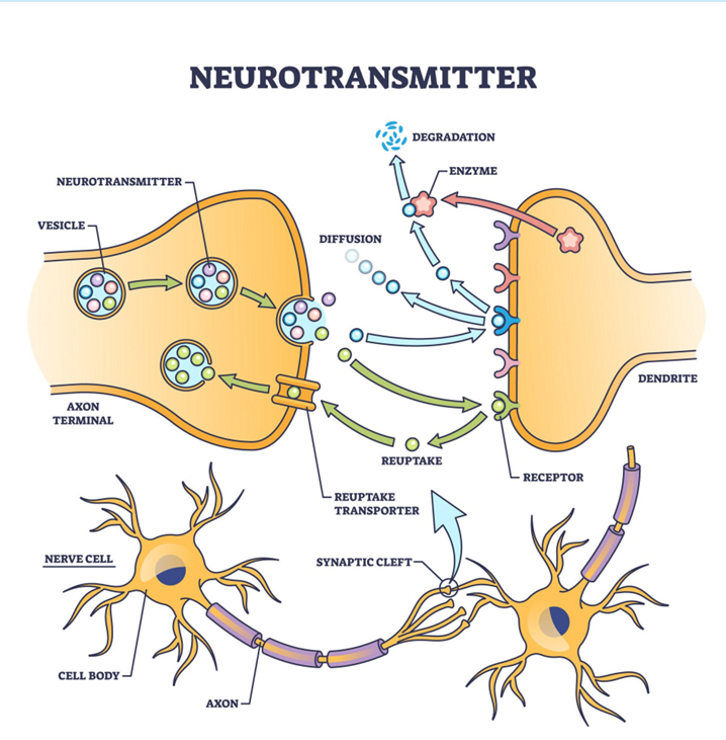
what does the axon do in a neurotransmitter
carries nerve impulse away from the cell body down the length neuron
neurtransmitters
chemical substance that transmits nerve impulse across a synapse
receptor
where the neurotransmitter binds to which recognises it and is activated by.
once activated they produce excitary of inhibitory effects on postsynaptic neuron
dendrites
carries nerve impulses from neighbouring neurons towards the cell body
synaptic vesicles
these vesicles contain chemical messengers that assist in the transfer of the impulse by the neurotransmitters
synaptic gap
the physical gap between pre and post synaptic membranes
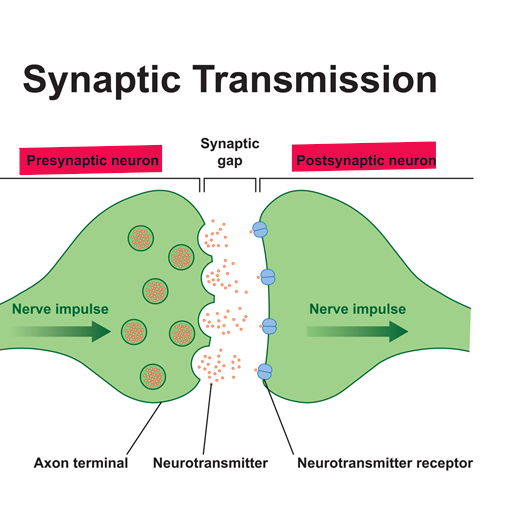
synaptic transmission
each neuron is seperated by synapses
signals between neurons are transmitted chemically
electrical impulse (action potential) travels to the end of the presynaptic neuron (terminal bouton)
action potential causes release of neurotransmitters
when it crosses the synapse it binds to a receptor site on the dendrite of another neuron
chemical message converted back into electrical impulse and process of transmission begins again
one-way processes as neurotransmitters released from the presynaptic terminal bouton received by postsynaptic neuron
excitatory effect on postsynaptic neuron
switches on the nervous system/ excites it
stimulates a neuron- increases likelihood of neuron firing
increases likelihood of a new action potential forming ni postsynaptic cell
make the electricla charge more positive + more likely to fire (depolarisation)
adrenaline, dopamine
inhibitory effect of postsynaptic neuron
the nervous system switches off
eg serotonin + GABA
decreases likelihood of neuron firing (hyperpolarisation)
generally calms mind + body
support sleep + filter out unnecessary excitary signals
summation
when a neuron adds up all the signals it receives to decide whether to fire
temporal summation
the same neuron sends signals quickly one after another so they build up
spatial summation
different neurons send signals at the same time and these add together
temporal summation 2
each signal adds a bit more neurotransmitter because the signals arrive so fast, the neurotransmitter doesn’t have enough time to fade away.
so the effects build up, making it more likely the post synaptic neuron reaches threshold and fires
spatial summation 2
each neuron may send only a small signal but when these signals arrive together, they add up
if combined effect is strong enough, the post synaptic neuron can reach threshold and fire.