Type 1 Diabetes and Metabolism
 Call Kai
 Learn
 Practice Test
 Spaced Repetition
 Match
 Flashcards
 Knowt Play
1/27

There's no tags or description
Looks like no tags are added yet.
28 Terms
What are the defining diagnostic characteristics of DM?
Elevated plasma glucose levels, excess of 126mg in fasting, excess of 200mg in GTT, or random glucose of >200
What is T1DM?
Pancreatic beta-cell destruction, immune-mediated, idiopathic
What is T2DM?
Insulin resistance with relative insulin deficiency to predominantly secretory defect with insulin resistance
What are the associated clinical features of T1DM?
Ketoacidosis, abnormal alpha-cell secretion of glucagon
What are the steps in insulin response and secretion?
1) Blood glucose rises after a meal
2) Glucose enters beta cell through GLUT2 transporter
3) Glucokinase phosphorylates glucose and is metabolized
4) ATP : ADP ratio increases
5) ATP-dependent potassium channel closes
6) Change in membrane potential opens calcium channel
7) Calcium stimulates fusion of insulin vesicles for release
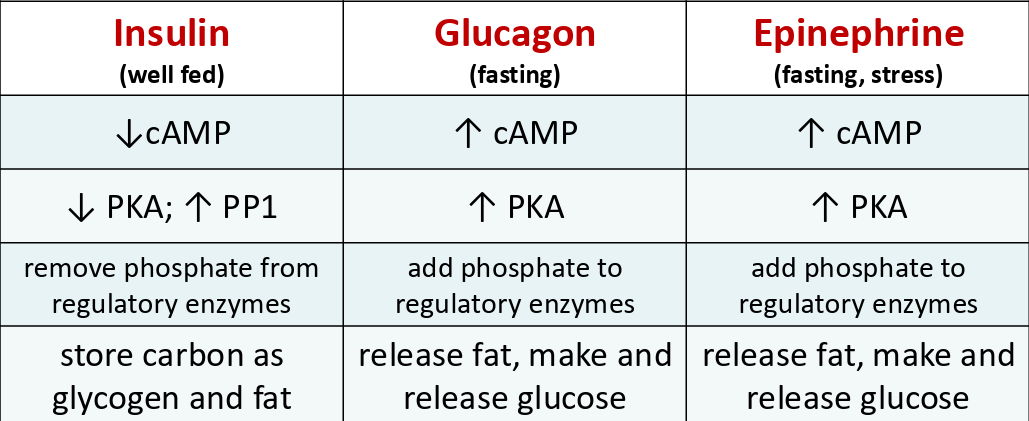
What is the function of insulin?
Hormone and growth factor, binds to receptor with tyrosine kinase activity; stimulates cells to store carbon
What is the function of glucagon?
Promotes release of stored carbon for hepatic glucose synthesis and delivery to blood; binds to GPCR
What is the function of epinephrine?
Fasting, stress (fight-or-flight); binds to adrenergic receptors

Know this table
Know this table
What causes active glycolysis?
Phosphate removal from hepatic PFK-2 and pyruvate kinase
What inhibits gluconeogenesis?
Removal of phosphate from hepatic PFK-2
What activates glycogen synthesis?
Phosphate removal from glycogen synthase
What causes reduced glucose release from glycogen?
Phosphate removal from glycogen phosphorylase
How does T1DM result in hyperglycemia?
Elevates glucagon:insulin ratio initiates liver glycogen breakdown, insulin cannot direct glucose metabolism
What activates fatty acid synthesis?
Phosphate removal from acetyl-CoA carboxylase (ACC)
What decreases fatty acid oxidation?
Activated ACC increases malonyl-CoA levels, inhibiting fat entry into mitochondria
What increases cholesterol synthesis?
Phosphate removal from HMB-CoA reductase

Know this table too
Know this table too

How does T1DM affect protein metabolism?
Protein catabolism occurs; resulting amino acids are used for gluconeogenesis by liver and renal medulla
What are the major complications of T1DM?
Hyperglycemia, sorbitol accumulation in eye, glomerulus damage, polydipsia, polyphagia, hyperlipoproteinemia, ketoacidosis
When does ketoacidosis occur?
When fatty acid oxidation is not constrained by insulin regulation and generates an excess of acetyl-CoA, which is then converted to ketone bodies
What are the typical values of DKA?
Hyperglycemia, low serum bicarbonate, acidosis, and ketonuria W
What controls acid-base balance in the blood?
Blood bicarbonate buffering system
What is the bicarbonate buffering system equation?
CO2 + H2O ←→ Carbonic acid ←→ HCO3 + H
Patients in ketoacidosis or lactic acidosis have…?
Low CO2 and low HCO3
How is anion gap calculated?
(Na) - (Cl + HCO3)
What is a normal anion gap value?
8-16 mEq
In what form is insulin secreted from the pancreas?
Hexamers