cell membrane function & structure
 Call Kai
 Learn
 Practice Test
 Spaced Repetition
 Match
 Flashcards
 Knowt Play
1/22

There's no tags or description
Looks like no tags are added yet.
23 Terms
cell membrane
allows some substances to pass through easily
tonicity
ability of extracellular solution to make water passively move into or out of the cell by diffusion or osmosis
compares the total solute concentration of cytoplasm to total solute concentration of extracellular liquid outside
cells in extracellular solution
cell is surrounded by solute
cell has solutes within its cytoplasm with different concentrations
extracellular solution has total solute concentration, cytoplasm has own total solute concentraction
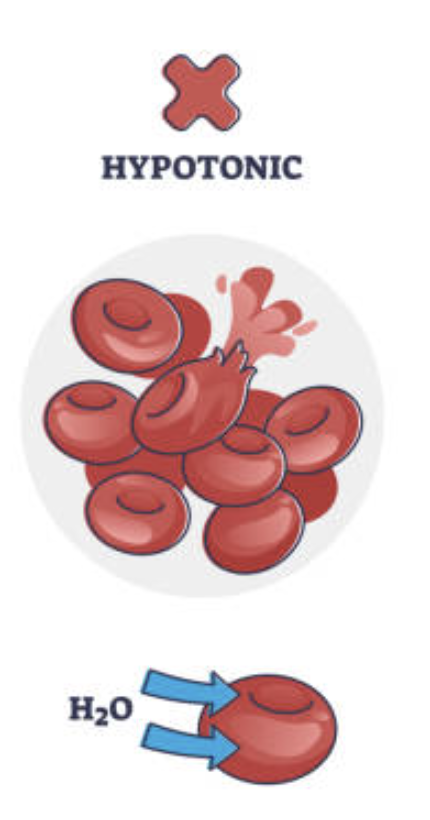
hypotonic
concentration of solute outside cell is lower than in cytoplasm
net diffusion of water moves into cell
cell expands and eventually lyses
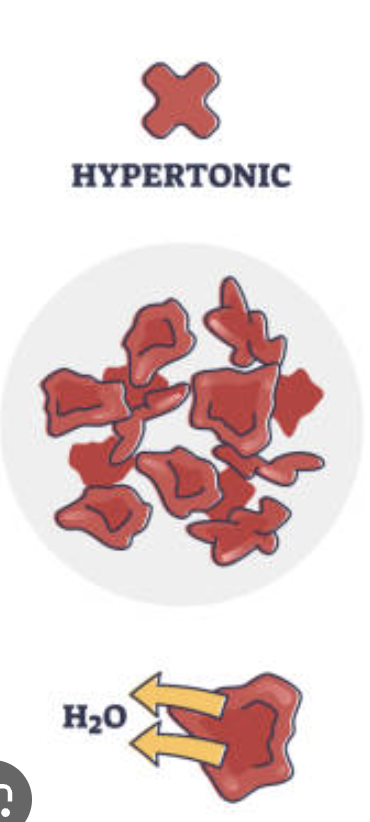
hypertonic
concentration of solute outside cell is higher than inside cytoplasm concentration
net diffusion of water moves out of cell
cell shrivels

isotonic
concentration of solute outside cell is the same concentration as inside the cytoplasm
no net movement of water (equilibrium of water concentration on both sides of membrane")
no general change to cell shape
diffusion
movement of any molecule from high to low concentration (down its concentration gradient) across a lipid bilayer
small non-polar molecules most permeable
passive and doesn’t need ATP
osmosis
diffusion of water (solvent) across a semipermeable membrane from high to low water concentration (low to high solute concentration)
passive and doesn’t need ATP
placing a cell in slightly hypertonic solution: if the membrane of a cell is impermeable to all solutes, how would you describe the tonicity
cell would become isotonic
only water moves out of cell as cell is impermeable to other solutes
internal solute concentration increases
net water movement stops once solute concentration in cell matches outside of cell
red blood cells
has internal cytoplasm concentration of 0.3M
has a pure phospholipid bilayer
membrane is permeable to some solutes
will make solution look initially opaque and then more transparent as more RBC lyse
solutes diffuse according to their own concentrations, water diffuses according to the tonicity of the solution as a whole
scenario: placing a cell in 0.3M of a solution that is highly permeable
there will be higher concentration solute outside cell
membrane is very permeable so solute diffuses into cell
water follows solute and diffuses into cell, making the cell hypotonic
cell bursts and lyse
scenario: which would make a cell lyse faster?
same concentration but one is more permeable across the membrane
solute will diffuse into cell at faster rate, increasing internal concentration
water will follow, causing lysis faster
how does chemical characteristics of a solute affect membrane permeability
solute that are more nonpolar cause faster lysis time because the membrane is more permeable to them
polar molecules are repelled by hydrophobic lipid bilayer
nonpolar molecules that are small pass freely
faster a molecule moves, faster it impacts total internal cytoplasm solute concentration. faster the movement of water to cause lysis
why does solute concentration have to be standardized to 0.3M
acts as the control variable
ensures all the solutes are isotonic with the cytoplasm of RBC, so membrane permeability is the only variable causing lysis
a hypotonic solution, >0.3M, causes immediate rush of water into cell and cause fast lysis
if a solution is impermeable, the solution would remain isotonic and no RBC lysis
if a solution is permeable, it diffuses down the concentration gradient, causing the internal concentration to be greater than 0.3M and causing lysis
time for lysis to occur directly correlates to higher membrane permeability due to polarity
relative nonpolarity of solutes: partition coefficient
value closer to 1:solute has high solubility in oil, low solubility in water (nonpolar)
value closer to 0:solute has low solubility in oil, high solubility in water(polar or charged)
what concentration of a compound like NaCl would be needed for the experiment so we start with cells in an isotonic solution?
initial concentration of NaCl would be 0.15M as they will dissociate into 2 species as 0.15M each, making their total concentration 0.3M
what effect does temperature have on membrane permeability?
as temperature increases, RBC membrane permeability will increase
higher temp increase the kinetic energy of the cell membrane to move more fluidly and leave gaps that allow solutes to cross the membrane
permeability to different solutes
NaCl: no, charged ions are repelled by bilayer
ethylene glycol: polar, but able to permeate as its small and can passively diffuse
distilled water: polar, most permeable as RBC have lots of aquaporins
rbc in solutes
NaCl: blood stays opaque, RBC look the same at 0.3M, RBC look shriveled at 0.8M
distilled water: solution turns immediately transparent as there is no solute present for water to follow, rushing into the hypotonic cell immediately
ethylene glycol: turns from opaque to clear after 3min as ethylene glycol diffuses into cell first
control group: temperature experiment
all tubes will have the same solution so that temperature is the only variable causing lysis
RBC’s can denature at high temps and lyse (confounding variable)
negative control: contains solution which doesn’t cause cell lysis due to membrane permeability and will lyse due to high temperature
positive control: contains a solution that always causes lysis
which solution will only cause lysis by osmosis?
ethylene glycol only lysis by osmosis and has a measurable time (treatment group to different temperatures)
water only lysis by osmosis but is too rapid to be measurable
NaCl won’t be permeate no matter the temperature (control group)
drawing conclusions about temperature causing lysis
if control group lysed, we lose baseline comparison if the treatment group is bursting due to osmosis or temperature