PSYC1002 - Learning and Motivation: Instumental Conditioning
 Call Kai
 Learn
Learn Practice Test
 Spaced Repetition
 Match
Match Flashcards
 Knowt Play
1/31

Earn XP
Description and Tags
1. What is Thorndike's law of effect? 2. What is shaping? 3. What is instrumental conditioning? 4. Name and describe different types of instrumental conditioning and their effects on behaviour. 5. Name and describe different schedules of reinforcement and their effects on behaviour.
Name | Mastery | Learn | Test | Matching | Spaced | Call with Kai | Chat |
|---|
No analytics yet
Send a link to your students to track their progress
32 Terms
Who pioneered Instrumental Conditioning?
Edward Thorndike (1874 - 1949)
What were the 4 main observations of Thorndikes Puzzle Box?
Cats demonstrated:
Progressive improvement over many trials
Probabilistic improvement - escape time goes up and down
No sudden “insight”
Trial and error learning
What is Thorndikes Law of Effect?
Given a particular situation, if an action is met with satisfaction, the organism will be more likely to make the same action the next time it finds itself in that situation.
What is Radical Behaviourism?
The study of changes in bahaviour with the rejection of any conclusions which are not observable (eg satisfaction).
What are Reinforcers?
Reinforcers are events/outcomes/consequences that result in an increase in a particular behaviour.
What are Primary Reinforcers?
Something that is intrinsically valuable like food.
What are Secondary Reinforcers?
Something that acquires its reinforcing property through experience like money or clicker training.
What is an example of social Reinforcement?
Praise
What is Behaviour Shaping?
Breaking down a goal into smaller steps with each being reinforced as you progress.
What is an example of Behaviour Shaping?
Goal: Pig closing a door on command.
Step 1: Touch the door
Step 2: Push the door
Step 3: Close the door
Reinforcer: Praise and food.
What is a cool thing about Behaviour Shaping?
Can generate entirely novel behaviours.
In Behaviour Shaping, do the conditions or reinforcement become more or less stringent as you progress?
More stringent.
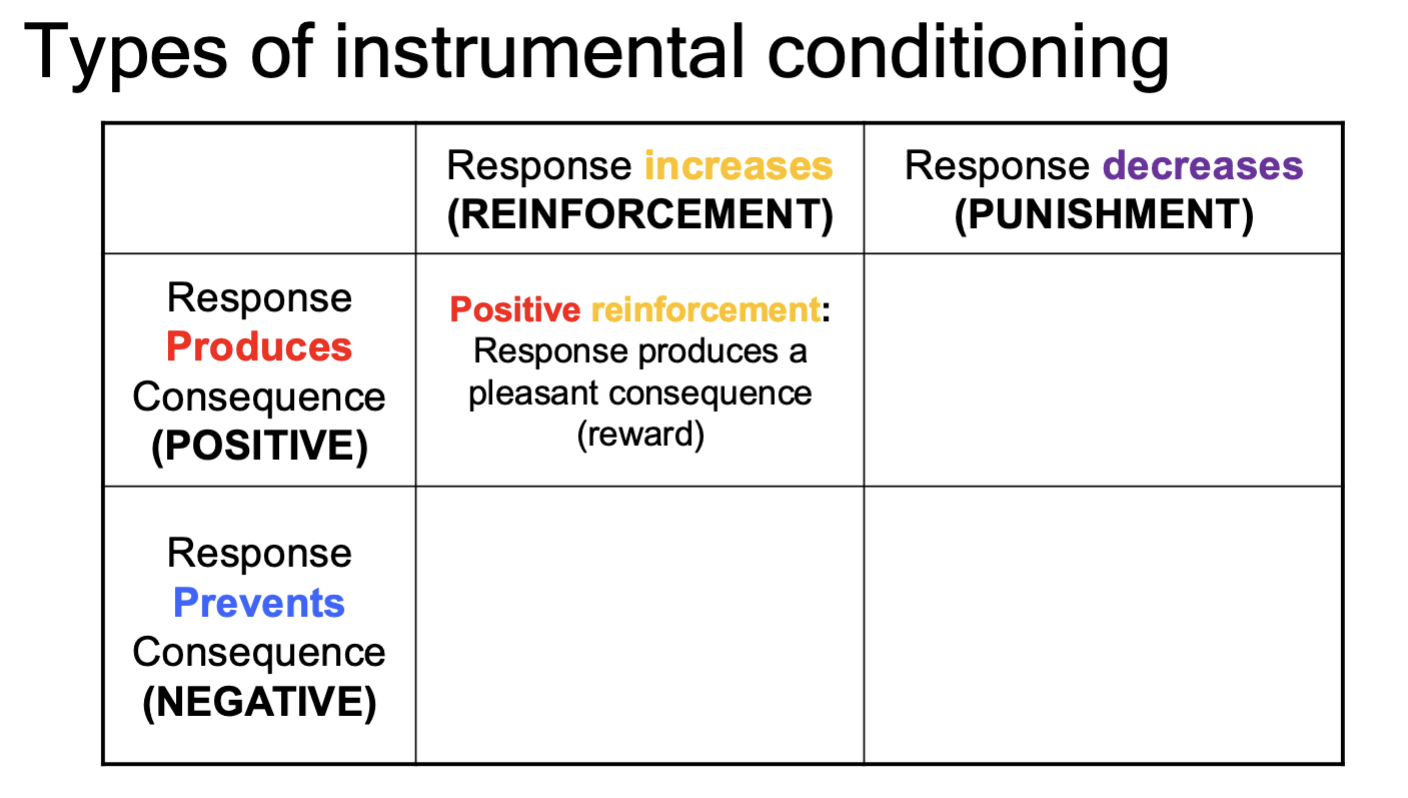
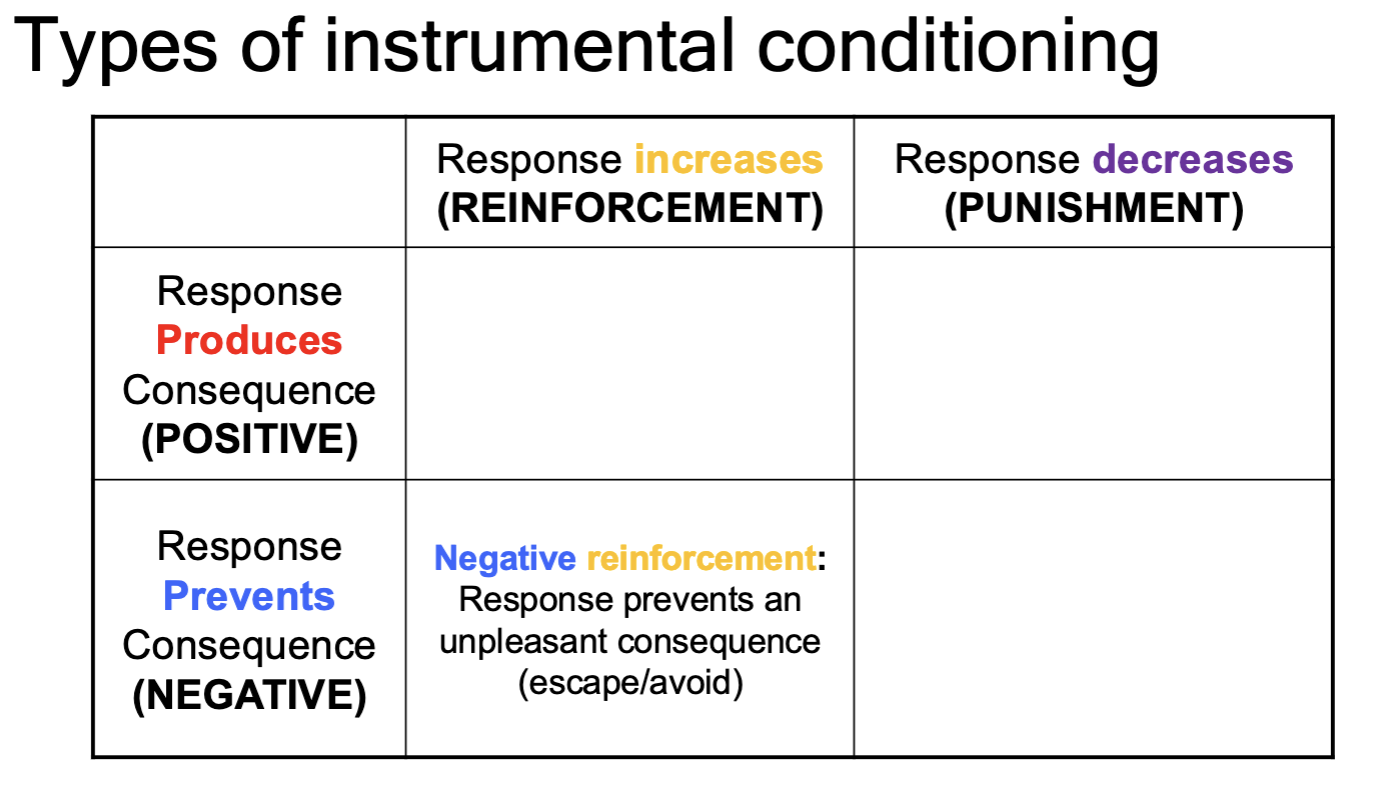
What are the 4 types of Instrumental Conditioning?
Positive reinforcement
Negative reinforcement
Positive punishment
Negative Punishment
What does Positive refer to?
Positive = Response produces a consequence
What does Negative refer to?
Negative = Response prevents a consequence.
What is Reinforcement?
Behaviour increases in frequency/likelihood
What is Punishment?
Behaviour decreases in frequency/likelihood.
What is Positive Reinforcement?
Response produces a pleasant consequence (reward) and behaviour will increase.
What is Negative Reinforcement?
Response prevents an unpleasant consequence (escape/avoid) and behaviour will increase.
What is Positive Punishment?
Response produces an unpleasant consequence (punishment) and behaviour will reduce.

What is Negative Punishment?
Response takes away a pleasant consequence (omission) and behaviour will reduce.
What is an example of Positive Reinforcement?
Dog receives praise for following a command. Dog follows command more in future.
What is an example of Negative Reinforcement?
Person with a phobia of small spaces avoids the elevator and their anxiety reduces. Person avoids elevators more in future.
What is an example of Positive Punishment
Dog is told off for eating a shoe. Dog eats less shoes in future.
What is an example of Negative Punishment?
Child is put in time out for hitting another kid. Child hits others less in future.
Is the amount of reinforcement (eg number of treats) or the schedule of reinforcement more important for learning?
Schedule of reinforcement
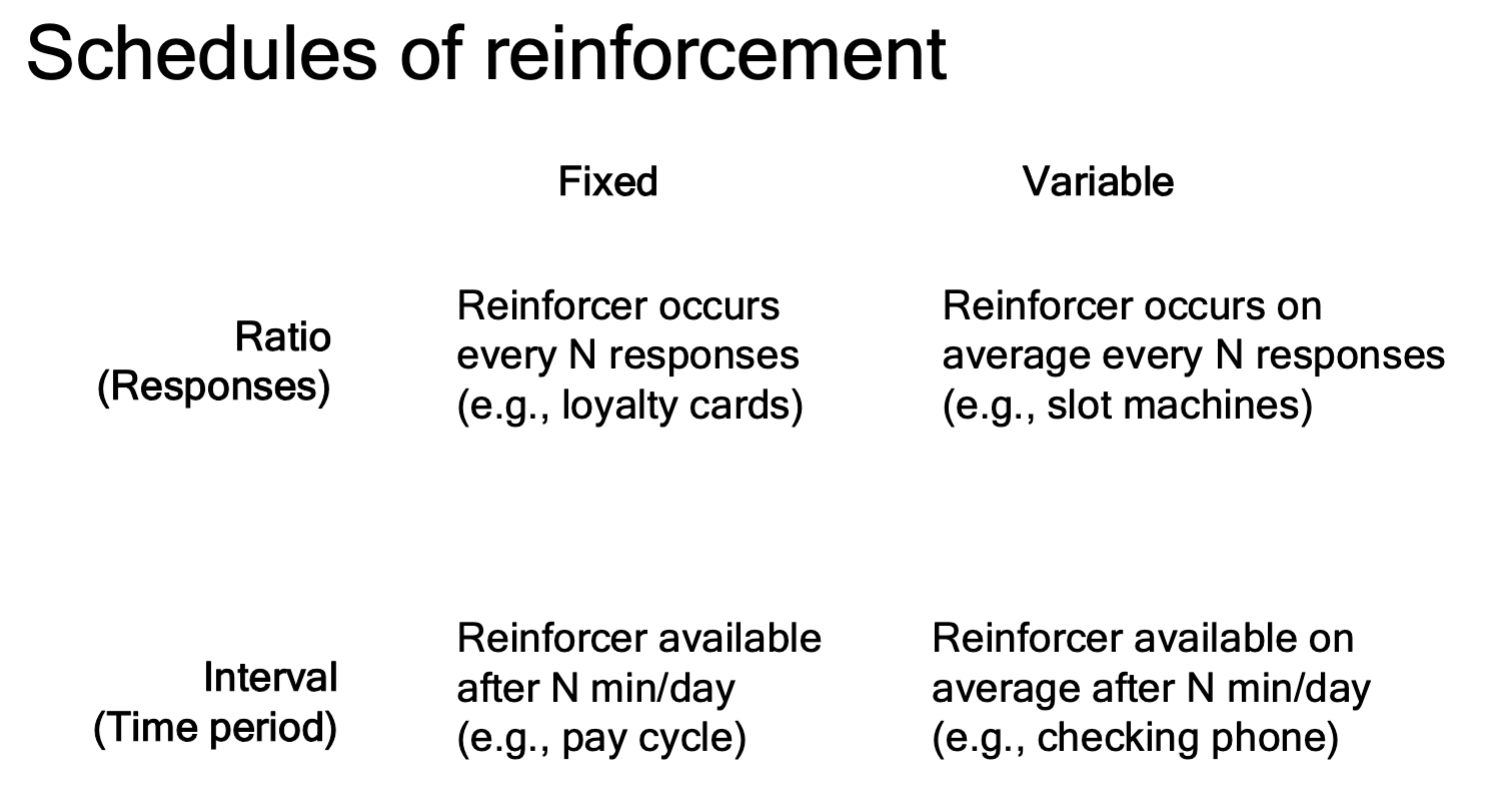
What is Ratio Schedules of Reinforcement?
Obtaining reinforcement is dictated by performing a certain amount of responses.
What is Interval Schedules of Reinforcement?
Reinforcement is dictated by a specific time period.
What is a Fixed Ratio Schedule?
Reinforcement occurs every N responses.
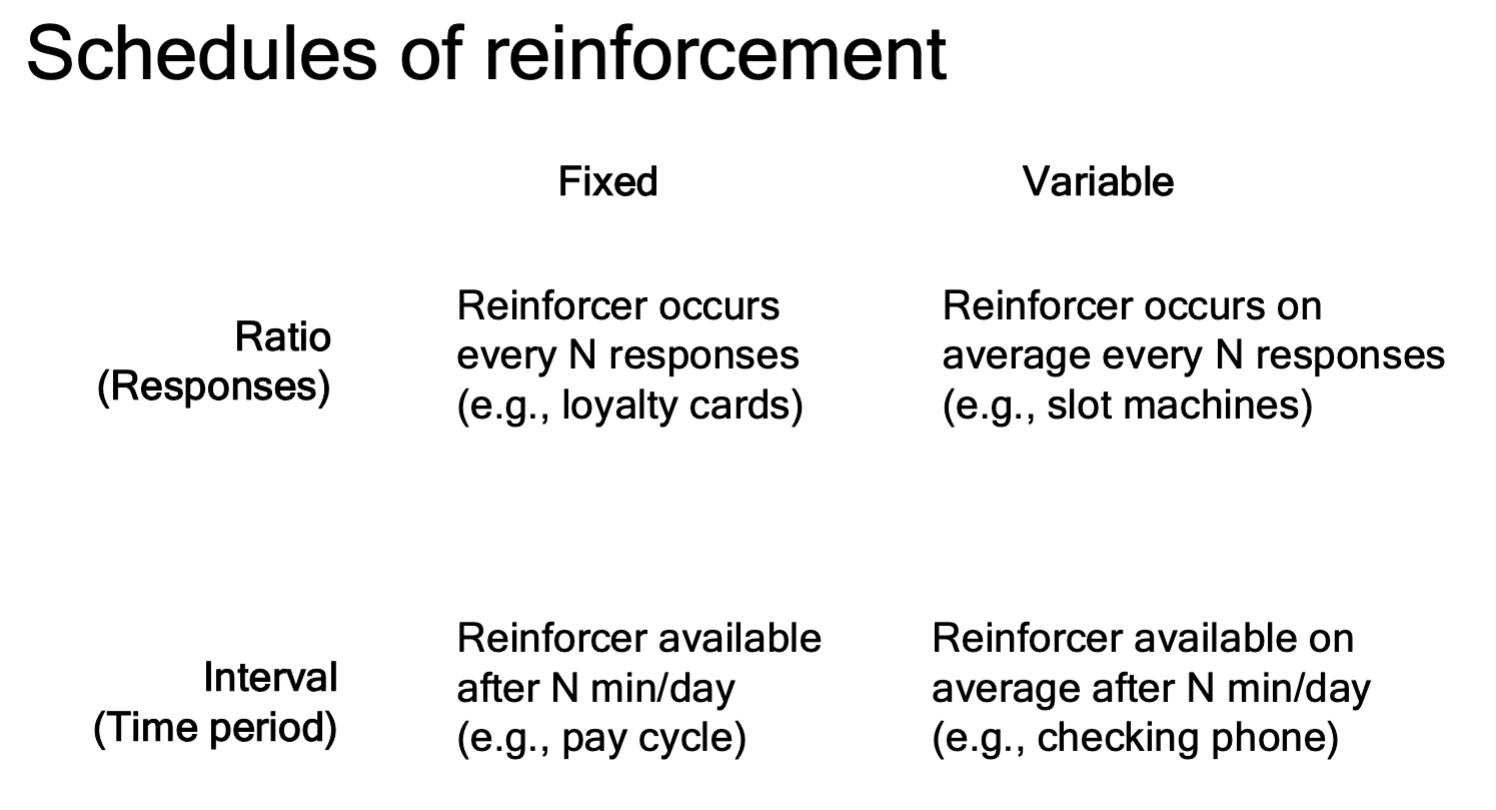
What is a Variable Ratio Schedule?
The number of responses required to obtain reinforcement varies each time.

What is Fixed Interval Reinforcement?
Reinforcement is only available after a specific fixed amount of time.
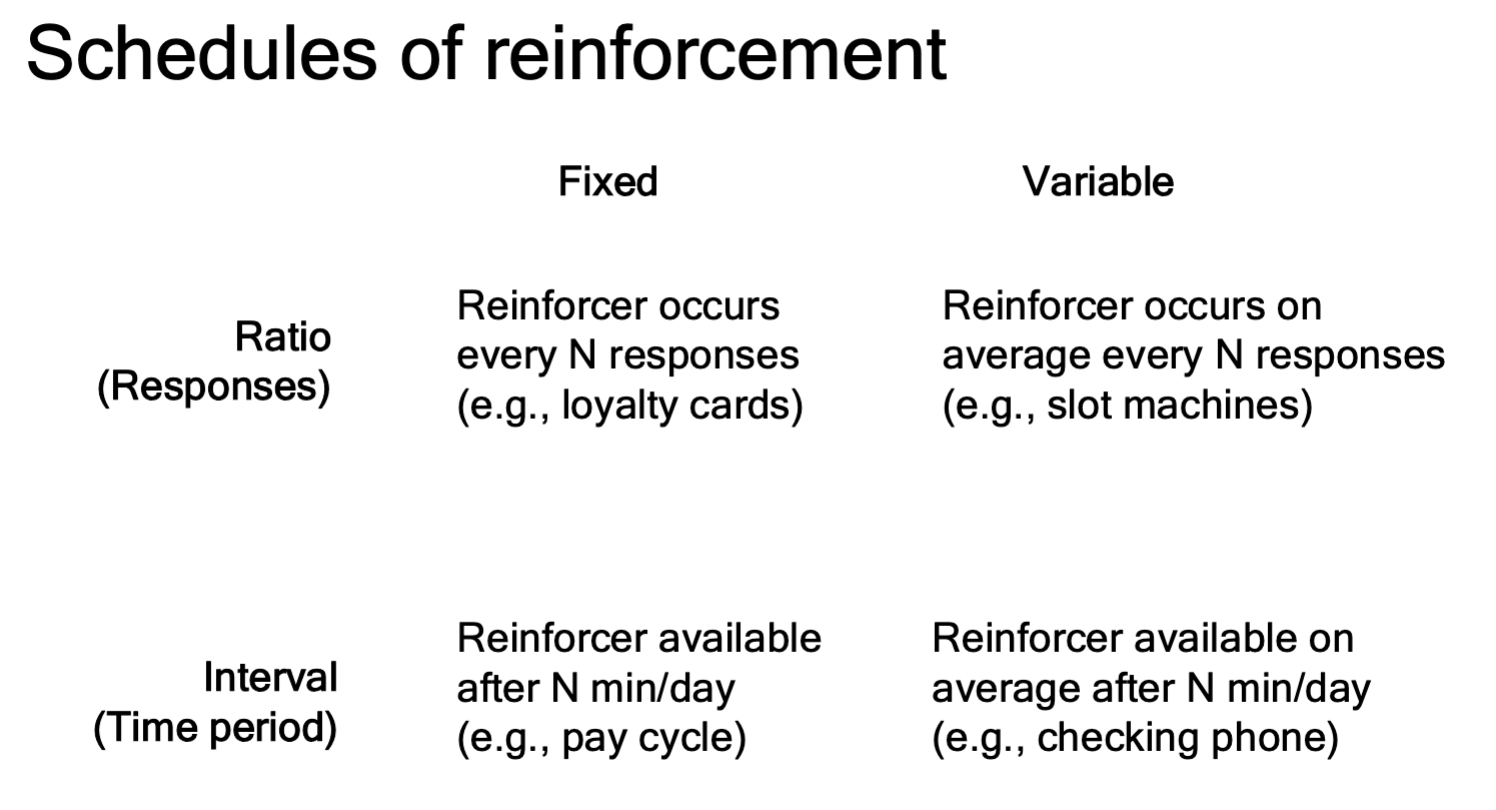
What is Variable Interval Reinforcement?
Reinforcement is only available after a specific fixed amount of time, but this amount varies each point.