BISC205 Topic 10
 Call Kai
 Learn
 Practice Test
 Spaced Repetition
 Match
 Flashcards
 Knowt Play
1/22

There's no tags or description
Looks like no tags are added yet.
23 Terms
What is the difference between cohesion and adhesion?
cohesion:
water molecules are attracted to each other (because of hydrogen bonding), keeping the molecules together at the liquid-gas (water-air) interface
allows for surface tension
pulls the rest of the water column up with it as one molecule is pulled up
adhesion
water molecules are attracted to different molecules
makes the water molecules stick to the sides of the xylem

how does water evaporation happen
heat makes the water molecules move, breaking hydrogen bonds between water molecules in liquid water so they move to a gaseous state
factors that enhance water evaporation
1.) temperatures increases, typically from sunlight
2.) SA of liquid is large
A large SA (by spreading water out) means more molecules positioned directly at the surface to increase their chances of escaping into air
3.) humidity in the air is low (dry)
low humidity means the air is dry and contains fewer vapour molecules, creating a steep vapour pressure gradient between the water surface and the surrounding air results in a higher rate of evaporation
4.) wind speed
wind sweeps away any water vapour that has just escaped from the liquid surface, and replaces it with drier air.
this maintains a steep vapour pressure gradient that encourages more water molecules to break free from its surface

factors that enhance water evaporation and transpiration rate
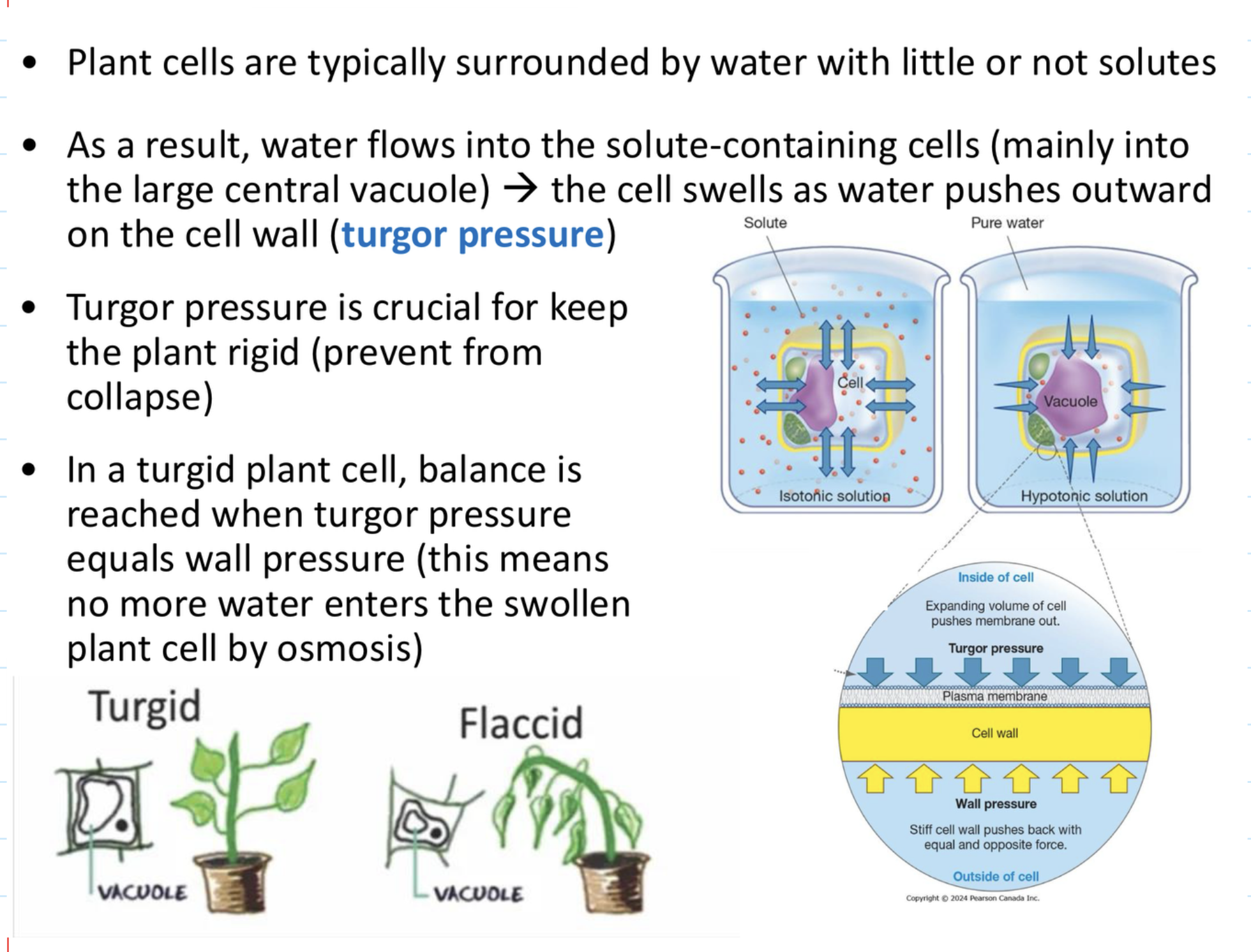
how does solute and water levels affect plant cells (tonicity). explain cell shape and water movement
isotonic solution
water moves in and out of the plant cell at an equal rate, so there is no net change in size
the plant cell stays normal (FLACCID)
hypertonic solution
water moves out of the cell, causing it to lose water and shrink. this is a process called plasmolysis where the cell membrane pulls away from the cell wall
the plant cell is PLASMOLYSED
hypotonic solution
water moves into the cell, causing it to swell due to the pressure against the rigid cell wall, which prevents it from bursting
the plant cell is TURGID

turgor pressure vs wall pressure
turgor pressure
pressure from when water flows into the plant cells’ vacuole, causing the cell to swell as water pushes on the cell wall
happens because plant cells have solutes and are surrounded by water with little/no solutes
crucial to keep the plant rigid (not collapse)
wall pressure
the inward force that works against the outward force of the turgor pressure

what happens when turgor pressure equals wall pressure?
balance is reached when turgor pressure equals wall pressure. this means net movement of water by osmosis is zero
what is water potential?
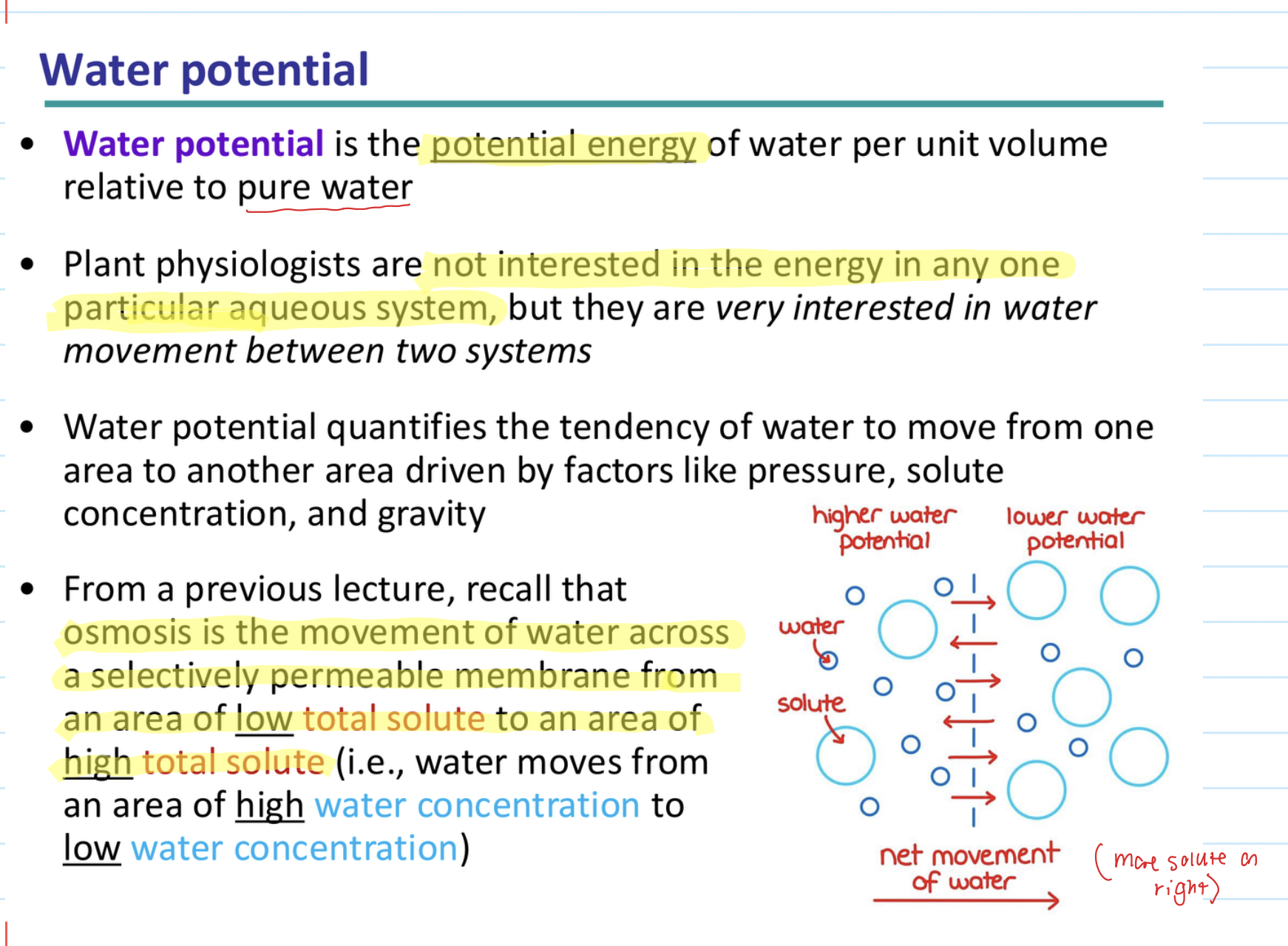
the potential energy of water per unit volume relative to pure water
it quantifies the tendency of water to move from one area to another area driven by factors like pressure, solute concentration, and gravity
it is represented by psi, measured in megapascals (MPa) or bars
water potential in terms of solute concentration
osmosis is the movement of water from an area of low total solute to an area of high total solute
=
osmosis the movement of water from an area of high water potential/concentration to an area of low water potential/concentration

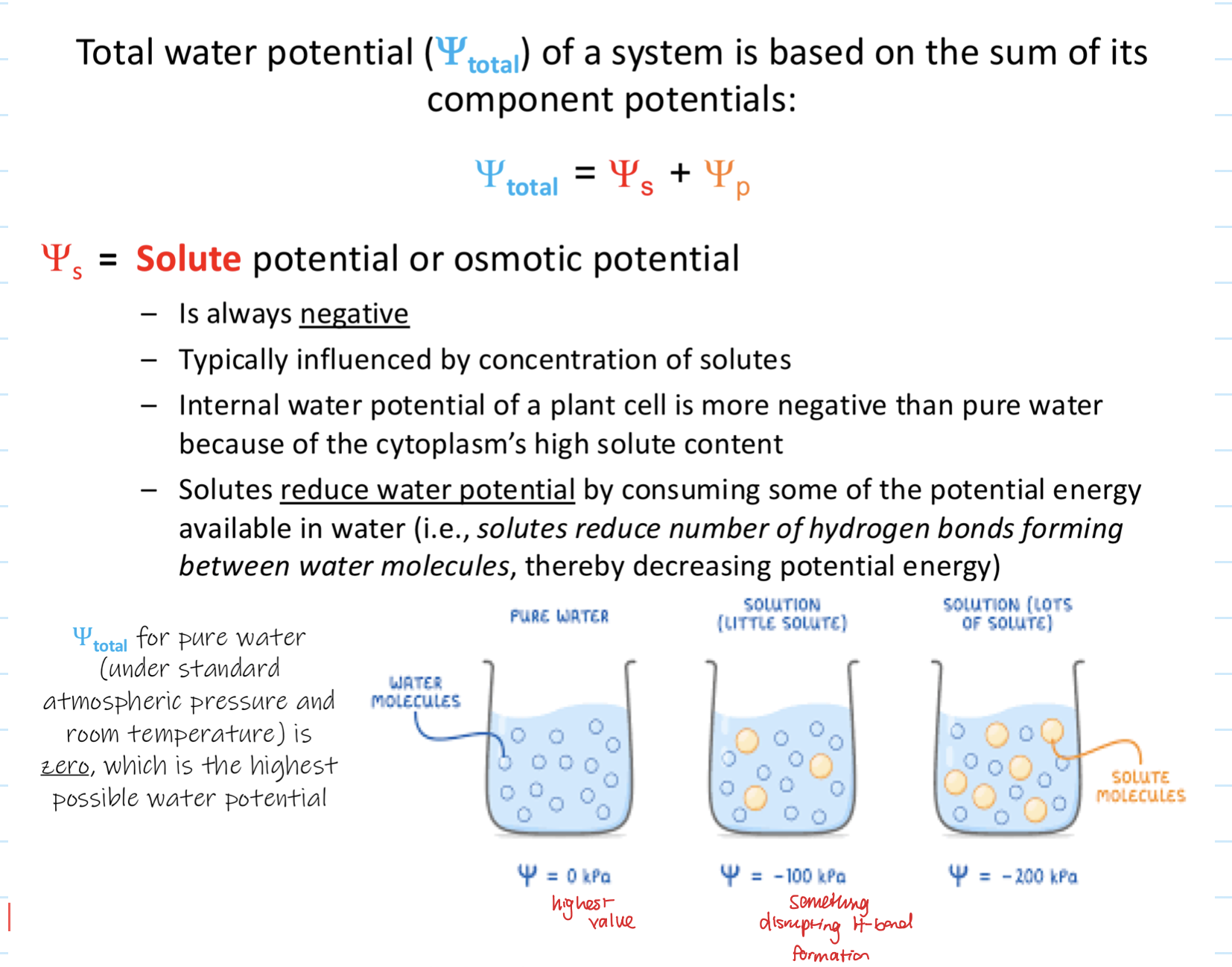
total water potential equation
total water potential = solute potential + pressure potential
**plants can control total water potential by controlling solute or pressure potential

4 attributes of solute potential/osmotic potential
1.) always negative
2.) typically influenced by concentration of solutes
3.) internal water potential of a plant cell is more negative than pure water because of the cytoplasm’s high solute content
4.) solutes reduce water potential by consuming some of the potential energy available in water (ex/ solutes reduce number of hydrogen bonds forming between water molecules, decreasing potential energy)
how does pressure/turgor potential increase or decrease
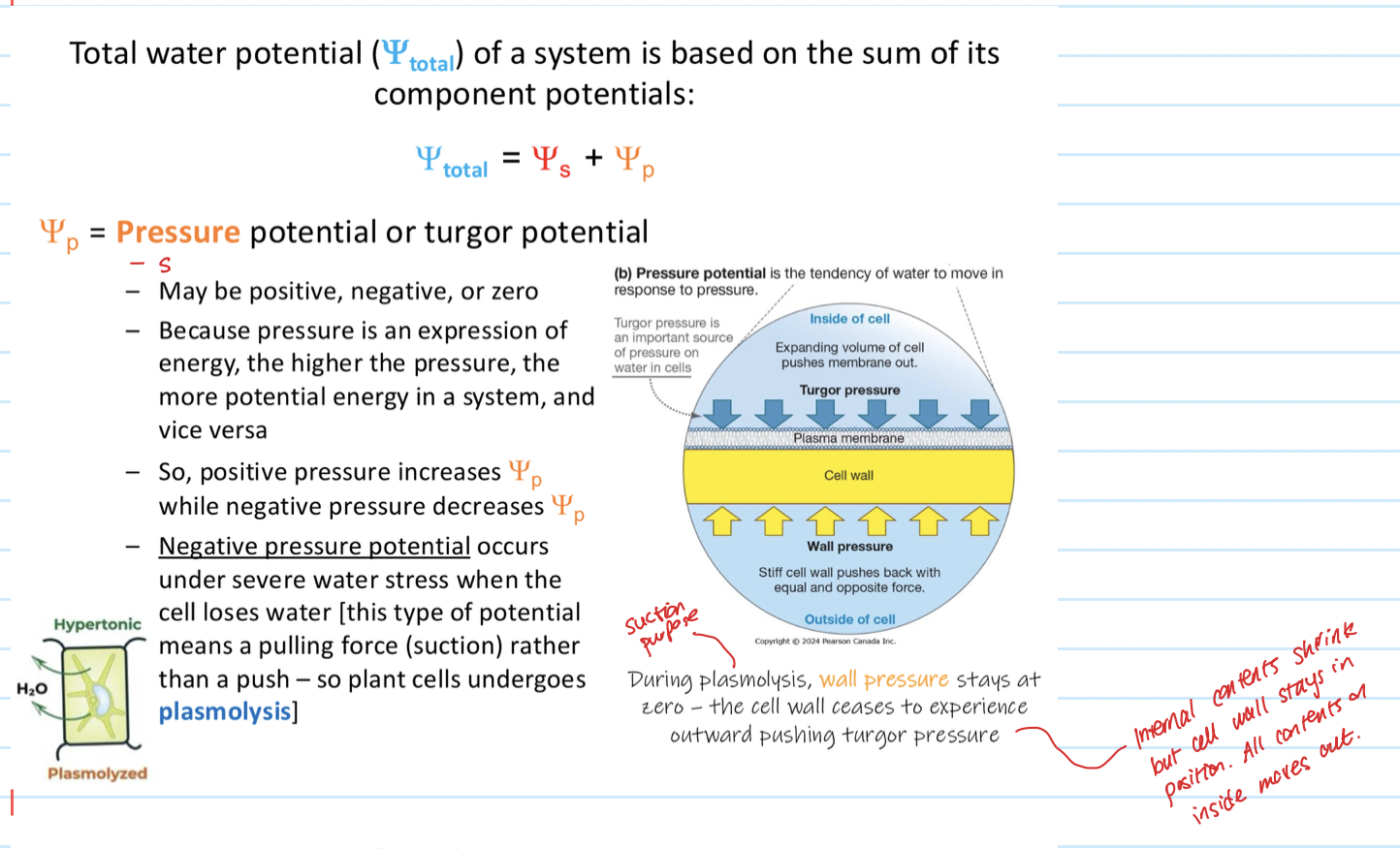
-can be positive, negative, or zero
-positive pressure increases pressure potential whereas negative pressure decreases pressure potential
positive pressure potential inside a plant cell
created when water enters via osmosis, pushing the plasma membrane outward against the rigid cell wall (plant becomes turgid)
zero pressure potential in a plant cell
when there is no net movement of water into or out of the cell. the plasma membrane does not push against the rigid cell wall (plant cell is flaccid)
negative pressure potential
occurs under sever water stress when the cell loses water
this type of potential is a pulling force (suction) rather than a push (plant cell is plasmolyzed)
solute potential equation, and meaning of variables
i = ionization constant (number of ions a solute dissociates into when dissolved in water)
NaCl = 2
glucose or sucrose = 1
C = molar concentration of solute in solution (mol/L)
R = pressure constant
0.00831 LMPa/molK
0.0831 Lbars/molK
T = absolute temperature (in Kelvin)


fill in the blanks: identify the 4 components of the root system

components of a root system and their functions
1.) epidermis
outermost protective layer
forms root hairs to increase water and mineral absorption
2.) cortex
a layer of ground tissue in the epidermis
composed of parenchyma cells that stores food and transports substances inward
3.) endodermis
innermost layer of the cortex
acts as a gatekeeper to force water and dissolved minerals to pass through its cell membranes before entering the stele
4.) stele (vascular cylinder)
water and dissolved minerals pass through here
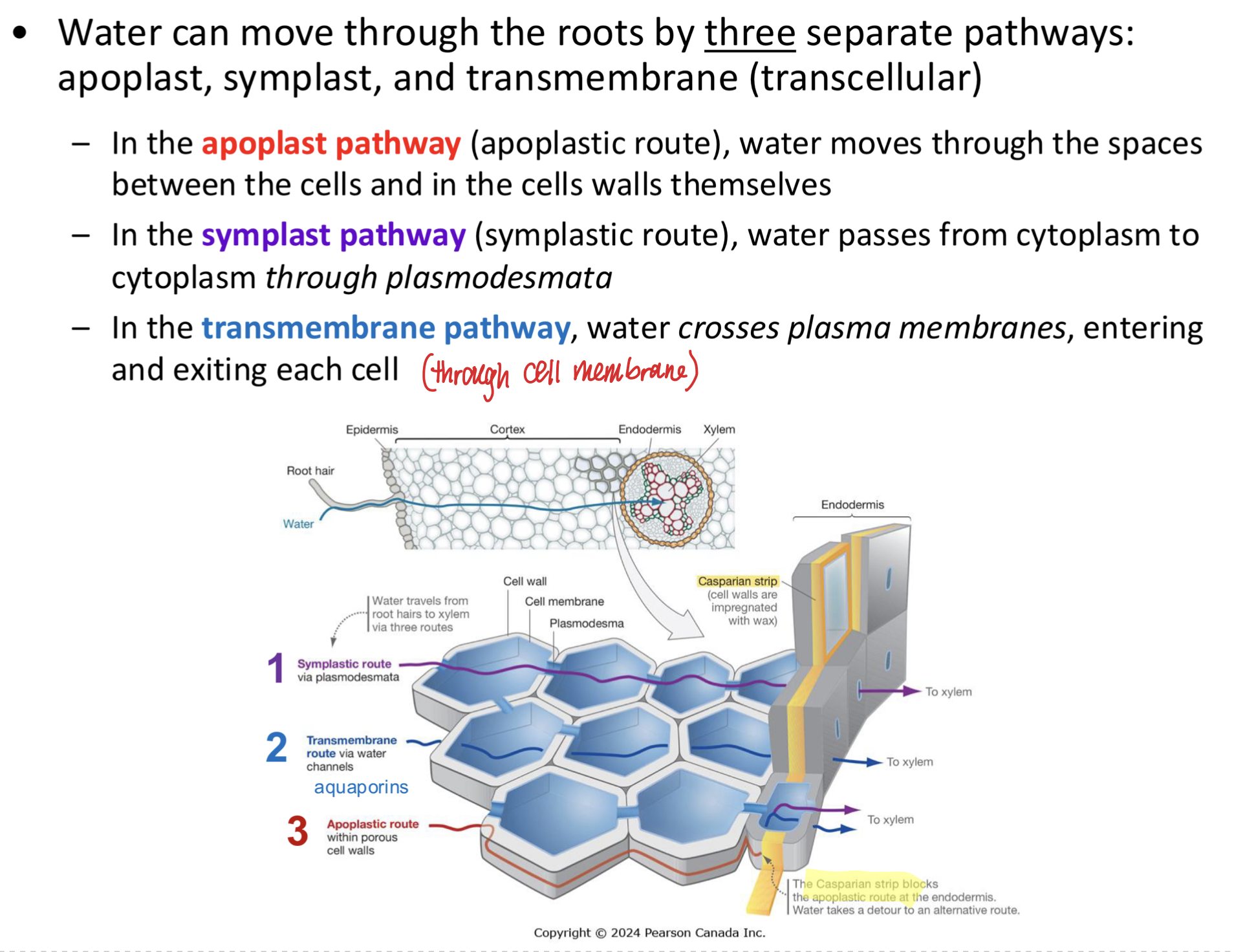
3 pathways in which water (and its dissolved solutes) can move through the root system
1.) apoplast pathway (apoplastic route)
water moves through the spaces between the cells and in the cell walls themselves
2.) symplast pathway (symplastic route)
water passes from cytoplasm to cytoplasm through plasmodesmata
3.) transmembrane pathway
water crosses plasma membranes, entering and exiting each cell
location, main function, and purpose of the casparian strip
location: a band of waterproof material (Suberin) in the cell walls at the inner boundary of the cortex
function: acts as a barrier, forcing water and dissolved nutrients to pass through the membrane of endodermal cells instead of diffusing freely through the apoplast pathway
purpose: this prevents non-selective absorption and protects plants from pathogens and harmful substances (excess salt, pollutants)

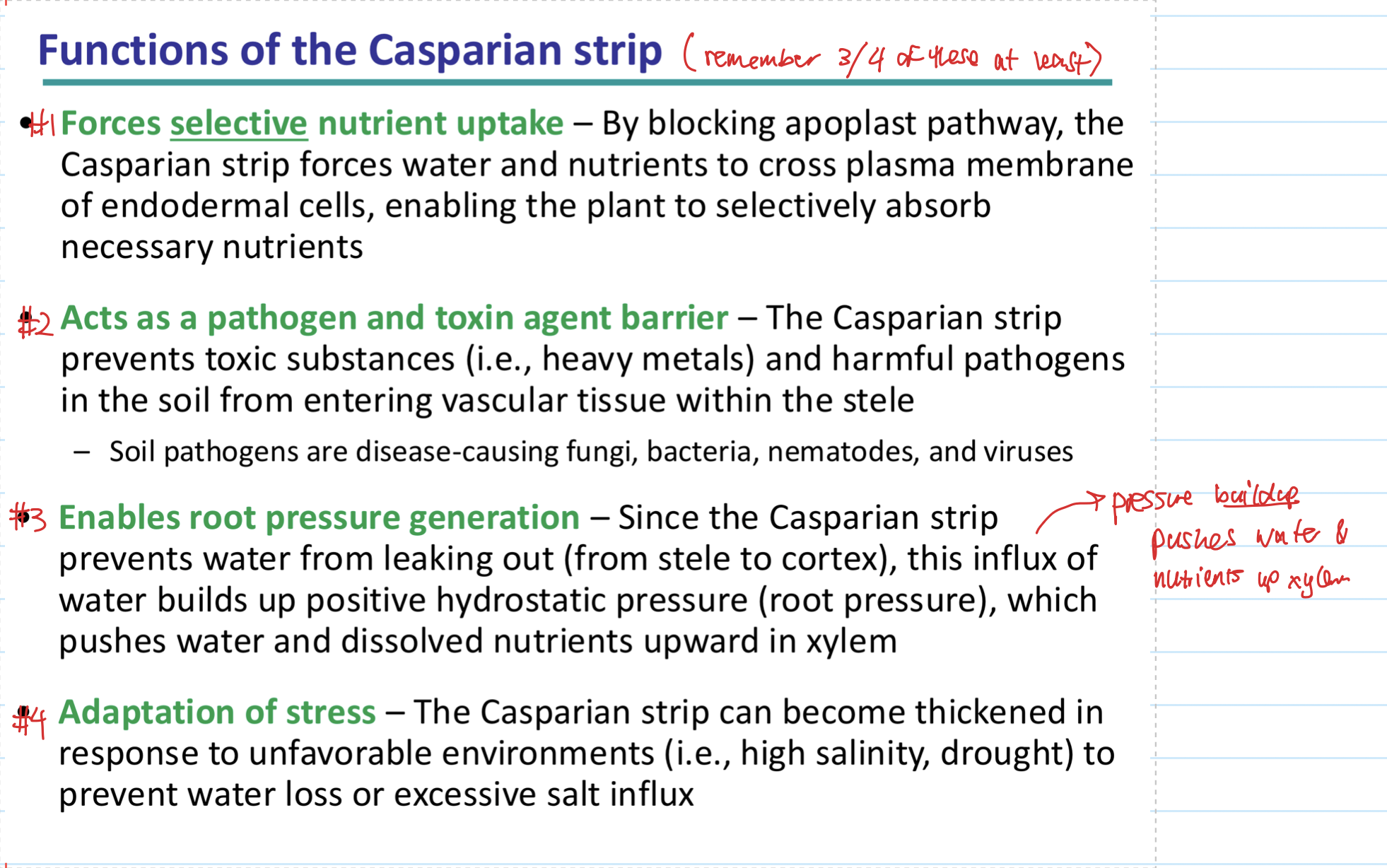
4 functions of the casparian strip
1.) forces selective nutrient uptake
by blocking the apoplast pathway, it forces water and nutrients to cross plasma membrane of endodermal cells, enabling the plant to selectively absorb necessary nutrients
2.) acts as a pathogen and toxin agent barrier
prevents toxic substances (ex/ heavy metals) and harmful pathogens in the soil from entering vascular tissue within the stele
3.) enables root pressure generation
since it prevents water from leaking out from stele to cortex, this influx of water builds up positive hydrostatic pressure (root pressure), which pushes water and dissolved nutrients upward in xylem
4.) adaptation of stress
becomes thickened in response to unfavourable environments (ex/ high salinity, drought) to prevent water loss and excessive salt influx
what are the three parts needed for cohesion-tension theory to happen?
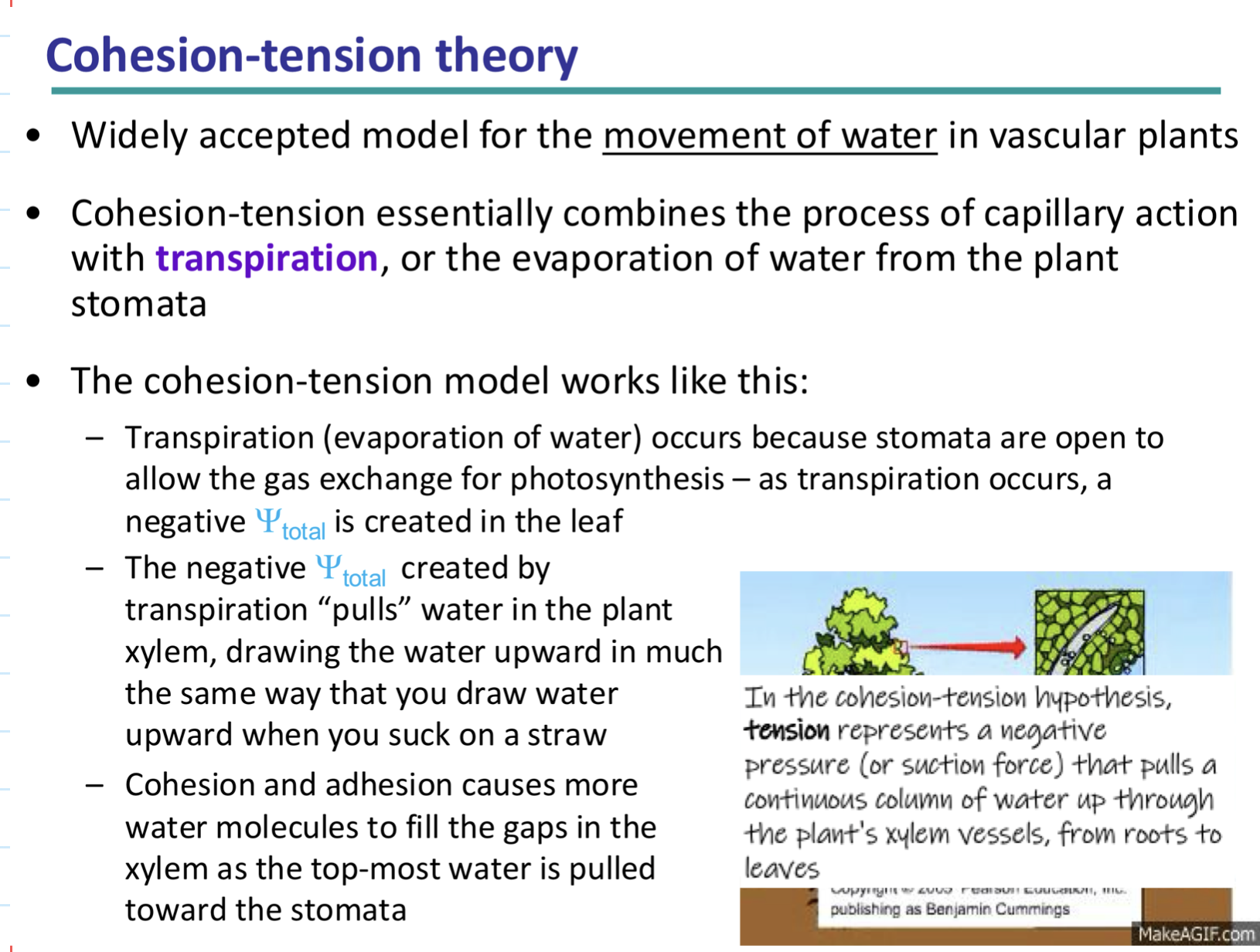
1.) stomata create negative water potential
transpiration occurs because stomata are open to allow gas exchange for photosynthesis
as transpiration occurs, negative water potential is created in the leaf
2.) negative water potential pulls water in the plant xylem
negative water potential or “tension” from transpiration pulls water up the plants xylem vessels from roots to leaves
3.) cohesion and adhesion helps water climb up plant
cohesion and adhesion causes more water molecules to fill the gaps in the xylem as the top-most water is pulled toward the stomata
transpiration vs transpirational pull in cohesion-tension theory
transpiration: the process of water evaporation from a plant (the cause)
transpirational pull: the resulting suction force that pulls water up through the xylem (the effect)

6 steps of cohesion-tension theory
1.) water vapour diffuses out of the leaf
through the stoma to the atmosphere
2.) water evaporates inside leaf
as water exits the lead, the humidity of the spaces inside the leaf drops, causing water to evaporate from the menisci that exists at the air-water interfaces
3.) water is pulled out of xylem
tension at the menisci pulls water that surrounds nearby cells, which pulls water out the xylem
4.) water is pulled up xylem
tension is transmitted from water in leaf xylem through the stem all the way to the root xylem by cohesion (continuous hydrogen bonding)
5.) water is pulled out of root cortex
water moves by osmosis as a result of the active transport of ions into the xylem
6.) water is pulled from the soil into root
water enters the root by osmosis as a result of the active uptake of ions into root cells

ranking of total water potentials between: soil, root, stem, leaf, and atmosphere
soil > root > stem > leaf > atmosphere

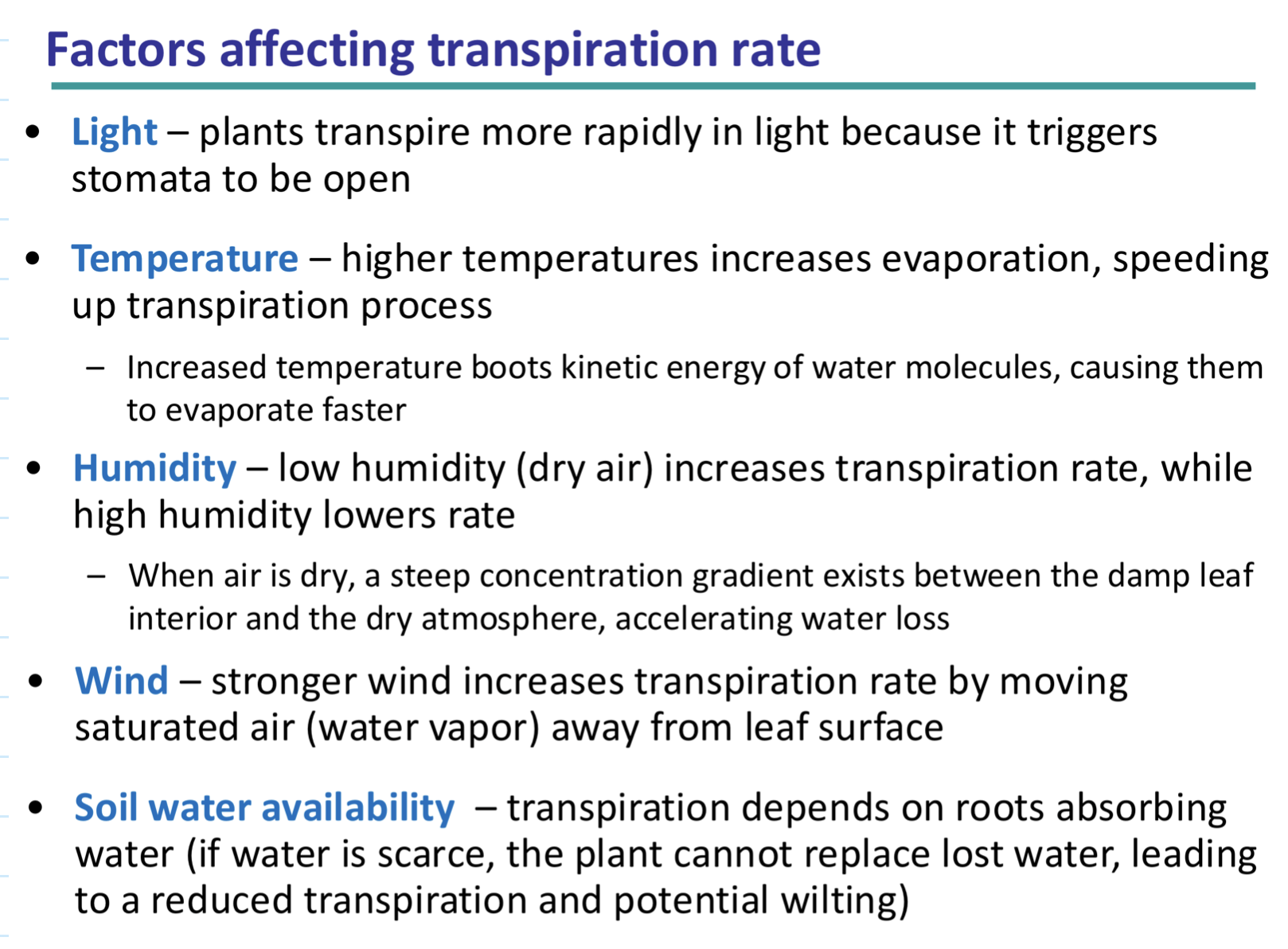
5 factors affecting transpiration rate
1.) light
plants transpire more rapidly in light because it triggers stomata to open
2.) temperature
higher temperatures increases evaporation, speeding up transpiration process
increased temperature boost kinetic energy of water molecules, causing them to evaporate faster
3.) humidity
low humidity (dry air) increases transpiration rate, while high humidity lowers rate
when air is dry, a steep concentration gradient exists between the damp leaf interior and dry atmosphere, accelerating water loss
4.) wind
stronger wind increase transpiration by moving saturated air (water vapour) away from leaf surface
5.) soil water availability
transpiration depends on roots absorbing water (if water is scarce, the plant cannot replace lost water, leading to a reduced transpiration and potential wilting)