Lecture 2: Pathogenic Effects of Repeat Expansions
 Call Kai
 Learn
 Practice Test
 Spaced Repetition
 Match
 Flashcards
 Knowt Play
1/36

There's no tags or description
Looks like no tags are added yet.
37 Terms
***********What are the 4 mechanisms causing the PATHOGENICITY of Repeat expansions
Gene silencing
RNA mediated RNA binding protein sequestration
Gain of function → translation of expanded repeats
RAN translation → toxic repeat peptides

*****Which two Microsatellite repeat diseases that we have talked about have pathogenicity caused by GENE silencing
Which GENE is affected for each?
Fragile X = FMR-1
Friedrich’s Ataxia = Frataxin (FXN)
****For Fragile X + Friedrich’s Ataxia HOW is the gene Silenced
fragile X (Function of protein with many cellular roles)= Silencing by DNA methylation
Friedrich’s Ataxia = Silencing by interfering with transcription
*****Expand upon FMR-1 CGG repeat expansion - silencing by DNA methylation
what are the 2 mechanism?
LONG REPEATS = 2 outcomes that lead to transcriptional gene silencing
Outcome 1 (The Left Side - DNA Structure): The massive, unstable stretch of long DNA repeats is physically recognized by the cell. This physical shape alone directly causes the recruitment of CpG-binding proteins and DNA methylases. They begin adding the abnormal methylation to the CpG island.
Outcome 2 (The Right Side - RNA Transcription): Simultaneously, the cell tries to transcribe these long repeats into mRNA get stuck = DNA/RNA hybrids (R-loops). These hybrids triggers RNA mediated epigenetic silencing
Both outcomes result in abnormally Methylated CpG islands that cause transcriptional gene silencing
********What is the Impact on Neural function for transcriptional silencing resulting in NO FMR protein?
Fragile X
FMRP as an RNA binding protein modulates the expression of many genes,
typically by down regulation
Affects genes with roles in synapse, receptors
Cell signaling
Transcription factors etc.
It results in Weakened/Slowed neural transmission and plasticity of response (in full mutation carriers of FMR1)
Affects NSC proliferation
Impaired white matter development + myelination
Reduces synapses between neurons

****What are the PHENOTYPIC consequences of a full mutation ?
Both Males and Females with full mutations and not expressing FMR1 experience delays in learning, motor skills, language, executive functioning (things with multiple steps).
ELC (Early learning composite) = scoring of gross motor, fine motor, receptive language, expressive language, and visual reception = lower in those with full mutation

*****Friedrich Ataxia
inheritance pattern
occurrence
Phenotypic characteristics
What is the repeated sequence
WHICH GENE is affects + WHERE it LOCATED
Autosomal Recessive, 1-2/50,000
Progressive gait and limb ataxia, dysarthria,
Loss of sense of position and vibration
Cardiomyopathy, diabetes
ATROPHY in CORTEX + Cerebellum
Loss of sensory neurons in spinal cord and dorsal root ganglia
95% = GAA repeat expansion
in Intron 1 Of the Frataxin gene (FXN)
66-1800 repeats
*****They say the role of FRATAXIN is well studied. What is the role it plays?
Involved in IRON homeostasis/transport
= shown to be homologous to yeast mitochondrial protein that plays the same role with iron
*****Expand upon FXN GGA repeat - silencing by interfering with transcription
what is the mechanism?
Friedrichs Ataxia = formation of abnormal DNA/RNA structures due to long GGA repeats
One strand from transcription bubble can fold back and create triple helix
Leaves transcript free to pair with other strand of the transcription bubble = RNA/DNA hybrid. Transcription is paused. Protein synthesis is impeded
additionally FAST (antisense transcript) is increased and CTCF cannot bind (because of methylated promoter) = decreases transcription?

******What is the consequence of Reduced FXN protein
symptoms?
Iron accumulation = damages DNA, proteins and lipids
CELL DAMAGE + DEATH
Some symptoms mimic Hemochromatosis a common iron overload disorder (HFE
gene), also mimic symptoms of mitochondrial disorders

*******Which of the Microsatellite disorders is RNA mediated RNA-binding protein sequestration the mechanism behind its pathogenicity?
Fragile X Premutation Carriers
gene silencing was full mutation
******Compare and contrast the between MALE vs. FEMALE fragile X PREMUTATION CARRIES
How common for each sex
PHENOTYPE differences
Phenotype = very different from FULL MUT
Both get FXTAS; women don’t really get neurological issues as much
Severe loss of Parietal volume + Increased signal intensity in CEREBELLAR white matter
Male premutation carriers***(1/800)
>70 repeats, 20-30% unique LATE ONSET of neurodegenerative syndrome progressive intention tremor and ataxia (FXTAS = Fragile X-Associated Tremor/Ataxia Syndrome)
memory and executive function deficits
parkinsonism, peripheral neuropathy, dementia, autonomic dysfunction, essential tremor
Female premutation carriers (1/250)
20% premature ovarian failure (early menopause)
Cognitive function generally normal, however can exhibit learning disabilities, and emotional problems, lability and anxiety
FXTAS seen as well

******What is the MECHANISM behind FMR-1 Premutation carrier RNA mediated RNA-binding protein sequestration?
How does it work to create the disease phenotype?
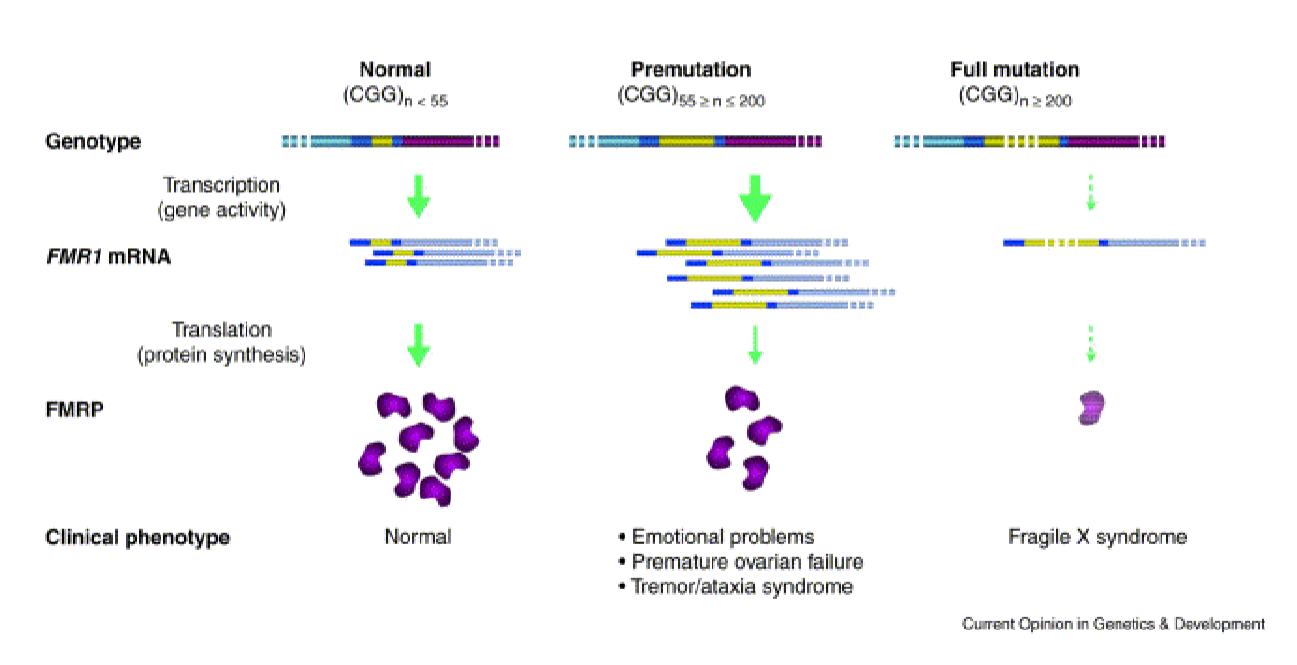
the Region of the FMR1 gene has 3 transcriptional start sites
In pre mutational carriers transcription shifts from starting on site 1 → site 3
Shift to site 3 causes: FMR1 mRNA OVEREXPRESSION + Less effective TRANSLATION (less protein generated)
Because there is now SO MUCH of the mRNA transcript there is a lot of CGG repeat regions. These mRNA CGG regions sequester rCGG binding proteins(these are critical regulatory proteins playing roles in other cell functions)
Sequestering of rCGG binding proteins =
Abnormal regulation of other cell functions = neurological dysfunction FXTAS
trapped proteins and toxic RNA aggregates clump together →FORMATION OF INCLUSION BODIES (in nucleus = common in neurological)
Additionally the large Hairpin loop inhibits ribosome translation = low FMRP levels
this causes a FEED BACK LOOP: The cell attempts to correct for a lack of protein by making more RNA = MORE sequestration = even less translation


FMR region gene layout (supplement pathogenicity mechanism)
flip card to see distribution of start site 1 2 + 3

What are 2 ways to see/stain Intranuclear inclusion in premutation carriers?
H + E stain
Anti-ubiquitin Ab
SUMMARY for Fragile X + FXTAS
Overview of the patterns of expression of the FMR1 gene in normal, premutation + full mutation individuals
ONE GENE 2 CONDITIONS
*****What are diseases that have repeats in noncoding regions?
Which of the 4 mechanisms are involved in their pathogenicity?
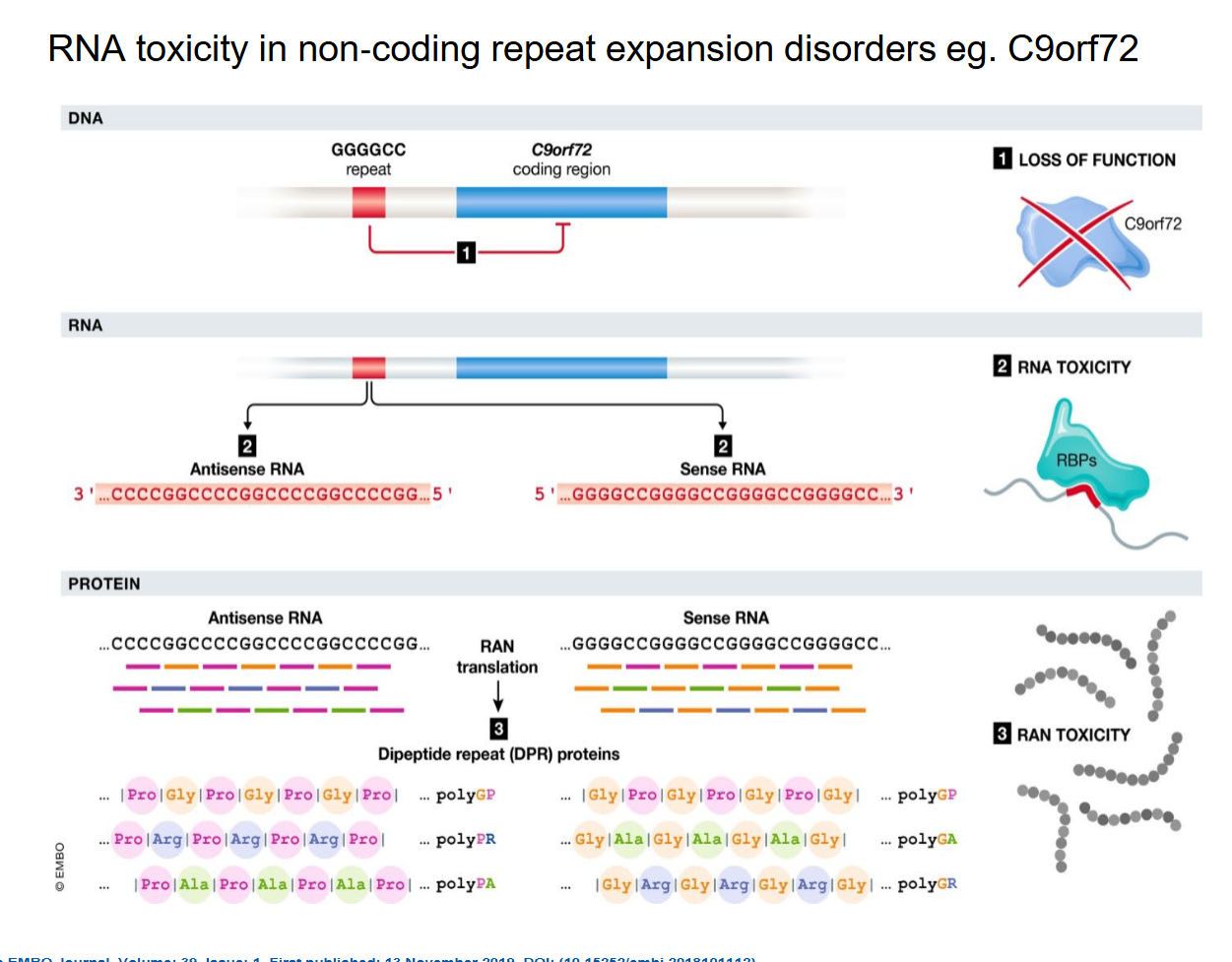
C9orf72 – ALS (Amyotrophic Lateral Sclerosis) and Frontotemporal Dementia (FTD)
#1 = gene silencing (LOSS OF EXPRESSION
#2 = RNA mediated RNA binding protein sequestration
#4 = RAN protein translation (toxic repeat peptides)
*****What are diseases that have repeats in coding regions?
Which of the 4 mechanisms are involved in their pathogenicity?
Huntington’s (HTT)
#3 = AUG mediated or “Canonical” Protein Translation (gain of function)
#4 = RAN protein translation
What does RAN stand for?
Repeat Associated Non-ATG
*How are C9ORF72 in ALS + Frontotemporal Dementia related?
They are a CONTINUUM
ALS = motor issues
Dementia = Cognitive
All affect the nervous system

What are the most common C9ORF72 repeat categories?
Most common
= SHORT (2-20 repeats): in healthy
= LARGE (couple hundred): pathogenic
Rare = intermediate (neither healthy nor pathogenic, confer uncertain risks)

*****RAN mechanism - How does repeat associated non-AUG translation occur? What is the result?
Panel a: Canonical Translation Initiation (Normal)
Ribosome starts translation at the normal AUG start codon = translates a single, traditional Open Reading Frame (ORF) to produce one specific, well-folded protein.
Panel b: Non canonical RAN Translation (Pathological)
Instead AUG sequence, the ribosome initiates translation non-canonically at an alternative near-cognate CUG start codon located in the +1 reading frame.
As the ribosome translates it runs into the large repeat sequence
Because repetitive nucleotide tracts form dense secondary RNA structures (like hairpins or G-quadruplexes), the ribosome frequently stalls and slips.
This physical shift allows it to read the exact same genetic sequence in three completely different reading frames:
Repeats generate multiple unique, highly toxic dipeptide repeat (DPR) proteins without needing a traditional start signal.
abnormal protein aggregates accumulate inside neurons, disrupting vital cellular operations and ultimately causing cellular damage.

*****What are the three primary Mechanisms of Toxicity of C9ORF72
Loss of Function (Haploinsufficiency):
The massive repeat expansion physically disrupts the normal C9orf72 gene structure.
Methylation blocks transcription
RNA sequestration (Bidirectional Transcription):
The mutated DNA segment is aberrantly transcribed in both directions: generating repetitive RNA sequencesThese toxic strands bunch up into structural clumps called RNA foci, which act like molecular magnets—SEQUESTERING crucial RNA-Binding Proteins (RBPs) so they can no longer do their normal jobs.
RAN Toxicity (Dipeptide Repeat Production):
As covered in the previous slide, both the sense and antisense strands undergo RAN translation across all three reading frames. This generates toxic Dipeptide Repeat (DPR) proteins

*****What are the 2 mechanisms by which Huntington’s repeats cause Pathogenicity
Since the Repeat is within the CODING region for Huntington’s:
Gain of function = Translation of the EXPANDED repeats
The Protein itself is affected by the long repeats generating toxic proteins
Expanded HTT as a “Conformationopathy”
Expansion causes alteration in protein folding = Misfolding promotes aggregation = Aggregation recruits proteins involved in cell death
RAN translation occurs


A conformationopathy is a disease caused by proteins that lose their normal three-dimensional shape and misfold into toxic, non-functional structures.
What is the fundamental relationship between CAG repeat length and the age of disease onset in Huntington’s Disease?
Inverse Relationship: As the CAG repeat length increases, the age of onset decreases (symptoms appear much earlier in life).
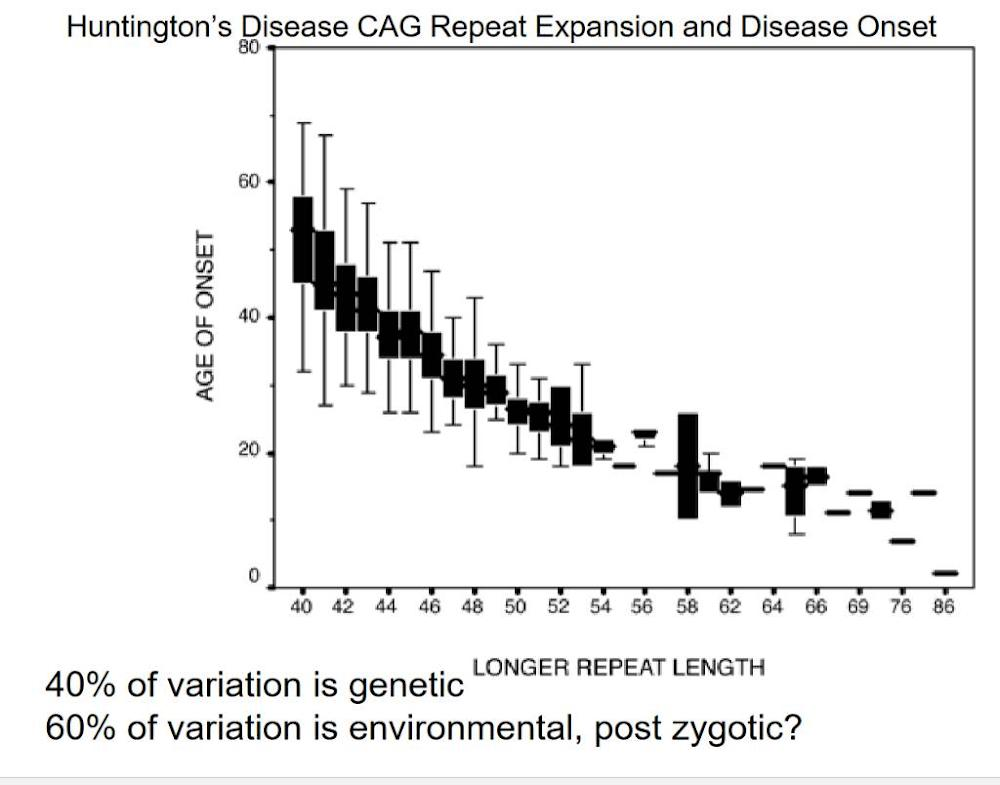
*****What drives the variation in age of onset in Huntington’s?

****What is the consequence if the wild-type HTT gene is entirely missing during development? WHY?
Embryonic Lethal: Complete absence of the HTT protein is completely incompatible with life during embryonic development.
HTT protein involved in multiple cellular pathways and impacted by CAG repeat expansion
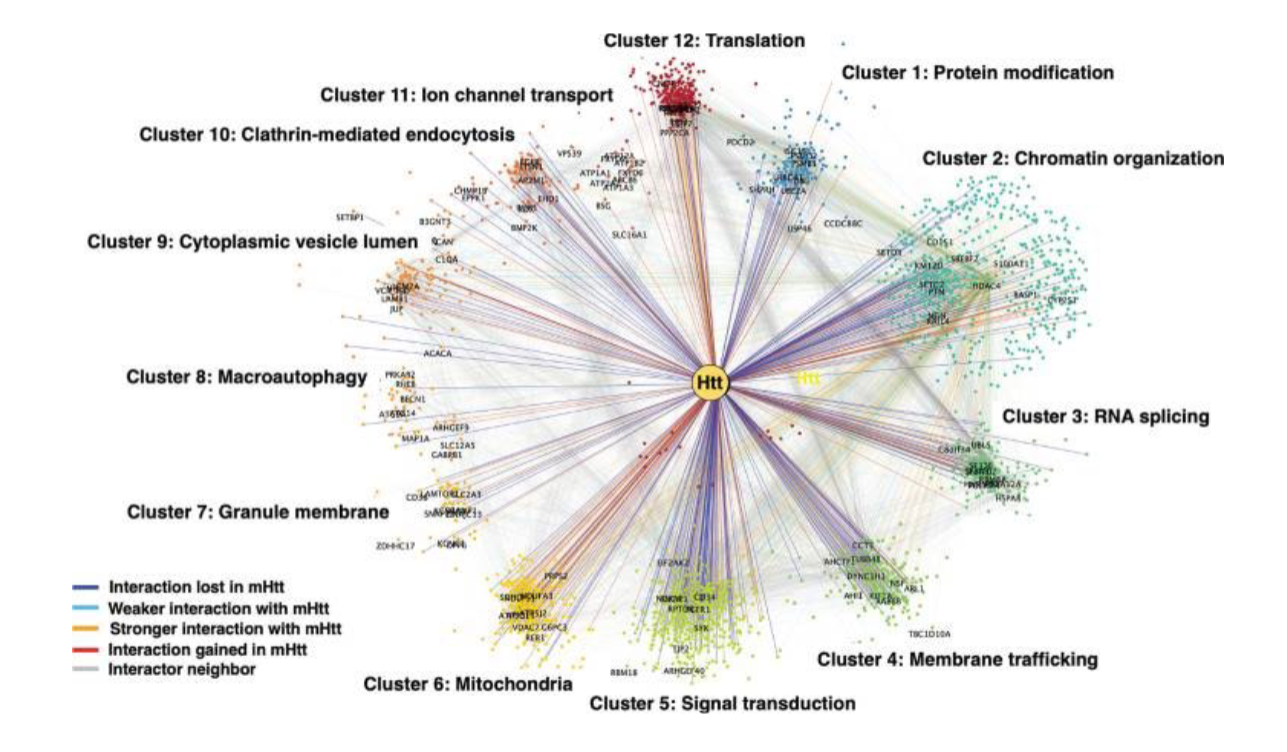


Phases of Huntingtons
*****What is a Promising treatment of HUNTINGTONS
What can it do?
Downsides
AMT-130
DELAY progression of disease: Delay of even a few years would impact quality of life in 3 rd-5th decades.
Issues
Ethical: Would ideally need treatment in early life, before clinical symptoms, as neurodegeneration starts long before.
Would need to offer predictive testing to children.
Cost: approx. $1 million
Highly invasive

****AMT-130: Mechanism of Action in Huntington’s
Modified AAV5 viral vector containing an exon-1 HTT targeting miRNA
Broad Target Destruction: Because it specifically targets exon 1, it binds to and triggers the mRNA degradation of both major toxic transcripts:
Full-length HTT mRNA
Alternative splicing exon 1 HTT mRNA fragments (which are highly prone to misfolding).
destroys mutant huntingtin mRNA before it can ever be translated into toxic, misfolding proteins.
***Questions we should be taking into consideration with the new AMT-130 treatment
Long term effects of reduced HTT in brain?
effects in non neural cells?
effects of living longer past expected lifespan with disease? (new issues popping up due to extended life?)
***True or false: Common pathways to pathology exist for inherited neurological
diseases
What is the advantage if true?
TRUE
Because they share a mechanism, once you figure out how to treat 1 = can treat them all

