OTA 115 - Ch 7 Nervous System (11/10)
 Call Kai
 Learn
 Practice Test
 Spaced Repetition
 Match
 Flashcards
 Knowt Play
1/70

There's no tags or description
Looks like no tags are added yet.
71 Terms
cerebral hemispheres (cerebrum)
diencephalon
brain stem
cerebellum
what are the four major regions of the brain?
cerebrum
what is the largest part of the brain; responsible for thinking, memory, sensation, and voluntary movement?
diencephalon
what part of the brain helps regulate sensory information, hormones, body temp, and hunger?
brainstem
what part of the brain controls essential automatic functions like breathing, heart rate, and blood pressure?
cerebellum
which part of the brain coordinates movement, balance, and posture?
frontal
parietal
temporal
occipital
what are the four main lobes of the cerebrum?
frontal
what lobe of the cerebrum is responsible for thinking, planning, and voluntary movement?
parietal
which lobe of the cerebrum is responsible for touch and sensory processing?
temporal
which lobe of the cerebrum is responsible for hearing and memory?
occipital
which lobe of the cerebrum is responsible for vision?
gyri (raised ridges or bumps)
sulci (shallow grooves between ridges)
fissures (deeper grooves that separate major brain regions)
what are the folds of the cerebrum called?
central sulcus (separates frontal & parietal lobes)

lateral sulcus (separates temporal lobe from frontal & parietal lobes)

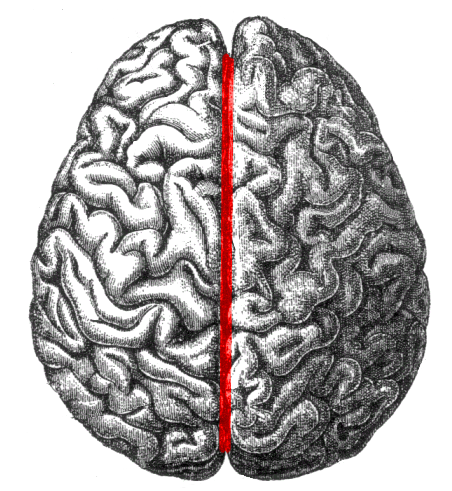
longitudinal fissure (deep groove separating left and right cerebral hemispheres
cortex
white matter
basal nuclei
what are the three main regions of the cerebral hemisphere?
cerebral cortex (gray matter)
which region of the cerebral hemisphere is the outer layer of the brain, responsible for thinking, memory, sensation, and voluntary movement?
white matter
which region of the cerebral hemisphere is located beneath the cortex; contains myelinated nerve fibers that carry messages between different brain regions?
basal nuclei
which region of the cerebral hemisphere is clusters of gray matter deep inside the brain that help control & coordinate movement?
primary somatic sensory area (postcentral)
what part of the cerebral cortex is located in parietal lobe posterior to central sulcus; receives impulses from the body’s sensory receptors?
primary motor area (precentral)
what part of the cerebral cortex allows us to consciously move skeletal muscles; motor neurons form pyramidal (corticospinal) tract, which descends to spinal cord?
hands, lips, tongue
what parts of the body require precise movement or have high sensitivity?
broca’s area (motor speech area)
which part of the cerebral cortex is involved in our ability to speak; usually in left frontal lobe?
anterior association area
what part of the cerebral cortex is located in the frontal lobe; responsible for planning, decision-making, reasoning, and appropriate social behavior?
posterior association area (posterior cortex)
which part of the cerebral cortex helps us interpret sensory information and recognize familiar objects, patterns, and faces?
speech & langauge areas
which parts of the cerebral cortex works together to help us understand language and produce spoken words?
cerebral white matter
what is located beneath the gray matter of the cerebral cortex; made mostly of myelinated axons that carry messages between different parts of the nervous system?
corpus callosum
what part of the cerebral white matter connects the left & right hemispheres to they can communicate?
association fibers
what part of the cerebral white matter connects different areas within the same hemisphere?
projection fibers
what part of the cerebral white matter carries messages between the cerebrum & lower parts of the CNS, including the spinal cord?
basal nuclei (basal ganglia)
what regulated voluntary motor activities by modifying instructions sent to skeletal muscles by the primary motor cortex; dysfunction causes syndromes like Huntington’s and Parkinson’s disease?
parkinson’s disease
what is the dysfunction in basal nuclei movement circuits that can cause tremors, stiffness, and slow movements?
Huntington’s disease
what is when damage to the basal nuclei can cause involuntary, uncontrolled movements?
diencephalon (interbrain)
what structure sits on top of the brain stem and is enclosed by the cerebral hemispheres?
thalamus
hypothalamus
epithalamus
what are the three main structures of the diencephalon?
thalamus
what part of the diencephalon acts as a relay station, sending most sensory information to the appropriate areas of the cerebral cortex?
hypothalamus
which part of the diencephalon regulates body temperature, water balance, and metabolism; houses the limbic system?
epithalamus
which part of the diencephalon contains the pineal gland, which produces melatonin to help regulate our sleep-wake cycle?
brain stem
what connects the brain to the spinal cord and controls many automatic functions needed for survival?
midbrain
pons
medulla oblongata
reticular formation
what are the four parts of the brain stem?
midbrain
what part of the brain stem is the reflex center involved with vision and hearing?
pons
what part of the brain stem controls breathing?
medulla oblongata
what part of the brain contains centers responsible for heart rate, blood pressure, breathing, swallowing, and vomiting?
reticular formation
what part of the brain is the motor control of visceral organs, consciousness, and wake'/sleep cycle?
ascending sensory tracts
what carry information about touch, pain, and temperature from the body up toward the brain?
visual and auditory impulses
what carry information about what we see and hear to different areas of the brain for processing?
radiations to the cerebral cortex
what carries information to different areas of the brain?
descending motor pathways
what carry movement commands from the brain down to the spinal cord?
cerebellum
what part of the brain has two hemispheres; controls balance, timing and coordination?
meninges
cerebrospinal fluid
blood-brain barrier
what three structures work together to protect the brain & spinal cord from injury and harmful substances?
meninges
what is three layers of protective membranes that surround the brain & spinal cord?
cerebrospinal fluid (CSF)
what is the fluid that cushions the brain and spinal cord, acting like a shock absorber?
blood-brain barrier
what is a protective filter that prevents many harmful substances in the blood from entering the brain?
dura mater
what is the outermost leathery layer of the meninges; has a double layered external covering?
periosteum (inner surface of skull)
meningeal layer (outer covering of brain)
what are the two parts of the double-layered external covering of the dura mater?
arachnoid layer
which meninges is the middle layer; subarachnoid space filled with cerebrospinal fluid?
pia mater
which meninges is the internal layer; clings to the surface of the brain and spinal cord?
cerebrospinal fluid
what forms a watery cushion to protect the brain and spinal cord; continuously flows through spaces in the brain (ventricles), the central canal of the spinal cord, and the subarachnoid space?
protection
circulation
waste removal
what are the three main functions of cerebrospinal fluid?
blood-brain barrier
what acts like a security filter, controlling what substances can enter the brain from the bloodstream; includes the least permeable capillaries of the body?
water
glucose
amino acids
some substances (alcohol & certain drugs)
what does the blood-brain barrier allow to pass through the capillary walls?
cerebrum

cerebellum

broca’s area

thalamus

pineal gland

hypothalamus

pons

medulla oblangata

midbrain
