Lecture 9 -BIO OCE - Benthic Habitats
 Call Kai
 Learn
 Practice Test
 Spaced Repetition
 Match
 Flashcards
 Knowt Play
1/93

There's no tags or description
Looks like no tags are added yet.
94 Terms
what are the two main habitats in benthic habitats
rocky shores and sandy beaches
habitat
physical/environmental area that surrounds an organism
biome
climatic/geographic area that includes organism living in it
ecological niche
specific role and function relationship an organism occupies in an ecosystem
what happens if two organisms have the same niche
they cannot live in the same area or there will be major competition
population
group of individuals of one species
community
group of interacting species
example of community
coral reefs
richness
total number of species in a community
synonym for richness
alpha diversity
what is richness rarefaction curve
number of species/ number of plots (samples)
what doe a good asymptote of richness mean
sufficient sampling area
predation (normal)
short term interaction in which one individual feeds on another
predation (ecological)
interaction between two organisms (predator and prey) where energy flow goes to predator and prey suffers a loss in energy and fitness
what are the three types of predation
herbivory, carnivory, and parasitism
mutualism
benefit benefit
commensalism
no effect, benefit
parasitism
benefit, harm
neutralism
no effect, no effect
amensalism
no effect, harm
competition
harm, harm
carrying capacity
theoretical max number of individuals in a biome given a particular resource level
trophic groups
grouping species based on position in food web
guilds
group of organisms that use same type of resource
examples of guilds
suspension feeders or predators or scavengers
succession
transition from one species composition with another, sometimes with complete replacement
community assembly rules
rules that determine which combinations can exist of species in a local pool
what are community assembly rule examples
niche overlap, “island” size and body size
what does island biogeography do
lays fundamental framework of explaining differences in species richness based on habitat size and distance from source population
how is equilibrium established for island biogeography
balancing immigration and extinction
what populations are more susceptible to extinction
smaller rather than larger
what islands are harder to find and immigrate to
smaller rather than larger
what is the argument for few larger protected areas in island biogeography
more species richness
what is the argument for more smaller protected areas in island biogeography
more habitat diversity
where are life history strategies derived from
different parts of logistic growth curve
what is the main solution of the logistic growth equation
Nt = K/ (1+ (e^(-r(-b+t)))
what does Nt = K/ (1+ (e^(-r(-b+t))) give us
resident species at any point in time
what is K in logistic equation
carrying capacity
what is b in logistic equation
time of inflection point to show steepness of curve
what are r selected species
opportunistic species, fast growing
what are k selected species
equilibrium species, slow growing
climate of r selected species
variable/unpredictable
adult size of r selected species
small
growth rate of r selected species
fast
time of sexual maturity of r selected species
early
reproductive periods of r selected species
many
number ofyoung of r selected species
many
dispersal ability of r selected species
high
population size of r selected species
variable, below carrying capacity
competitive ability of r selected species
low
mortality rate of r selected species
high, independent on population density
life span of r selected species
short
pelagic/benthic ratio of r selected species
high
climate of k selected species
constant/predictable
adult size of k selected species
large
growth rate of k selected species
slow
time of sexual maturity of k selected species
late
reproduction periods of k selected species
few
number of young of k selected species
few
dispersal ability of k selected species
low
population size of k selected species
relatively constant, at or near carrying capacity
competitive ability of k selected species
high
mortality rate of k selected species
lower, density dependent
life span of k selected species
long
pelagic/benthic ratio of k selected species
low
what are the components of rocky shores
exposure to wave action, desiccation, light
what strong environmental gradients are rocky shores structured along
exposure to wave action, desiccation, light
what physical factors control tidal ponds
salinity, temperature, oxygen, pH
what is special of postelia
highly exposed to wave sites, convergent evolution to palm trees
what is special of fucus
gas filled pockets to hold it up in water
what is special of nucella
dog whelks that use radula to drill holes into barnacles and mussels and release digestive enzymes into the shell
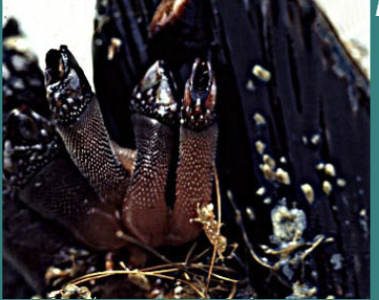
pollicipes stalked barnacle

ulva

phyllospadix
what is the importance between balanus and chthamalus
chthamalus moved higher to avoid niche overlap, balanus won by having faster growing larvae
what are the two trophic cascade removal experiments
removal limpets and urchin
what happened when limpets were removed
different species of algae appear with more cover
what happened when urchins were removed
increase of diversity of algae, transition from r to K, then diversity lowered again due to competition for light and space
what is a keystone species
species which an ecosystem largely depends on
what are examples of keystone species
pisaster starfish
how does pisaster work as a keystone species
increases diversity by keeping mussels (strong competitors of space) in check
what are the limits of distribution that species depend on
environmental gradients, competition, and predation
what are physical factors that limits the distribution of species
environmental gradients like dessication, wave action, and light
what are biological factors that limits the distribution of species
competition for resources and space and predation
what organisms live on sandy shores
meiofauna
synonyms of meiofauna
mesopsammon, interstitial fauna
what are meiofauna
organisms that live in water between sand grains
example of convergent evolution
worm shaped organisms
what is convergent evolution
process where unrelated organisms independently evolve similar traits because they adapt to similar environments
what are characteristics of meiofauna
size convergence (small metazoan and large protist), organs for temporary attachment, motile, armor, k strategist, blind, chemosensory bristle, statocysts, symbiosis with microorganisms
what are statocysts
knowing where sediment surface is
what does the nematode have a mutualistic relationship with
H2S oxidizing bacteria
how do nematods and H2S bacteria work together
nematode nibbles on bacteria and goes in and out of sulfide zone for bacteria