NEUR30080 L19/L2 OB cannabinoids
 Call Kai
 Learn
 Practice Test
 Spaced Repetition
 Match
 Flashcards
 Knowt Play
1/36

There's no tags or description
Looks like no tags are added yet.
37 Terms
learning objectives

history of cannabinoid discovery image
not in invertebrates only vertebrates? (in whichever is more complex)

cannabinoid receptors general structure
canonical 7 transmembrane helical fold characteristic of the GPCR family (rhodopsin-like)
ligand-binding pockets (CB1 and CB2) nestled withing the transmemb domain, further shaped by EC loops
IC face of helical bundle forms the interface for the G-prot coupling and downstream signalling
emerging evidence: EC regions are not merely structural connectors, but actively contribute to receptor function (ECL2)
cannabinoid receptor structure image
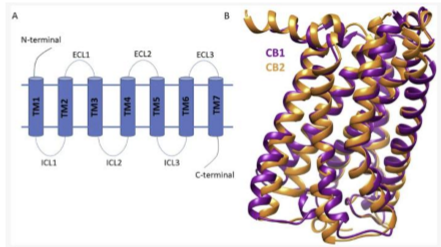
CB1 receptors
predominantly neuronal, localised to presynaptic nerve terminals
regulate NT release
CB2 receptors
expressed predominantly in immune cells and peripheral tissues
also found in CNS-assoc. immune populations (microglia)
expression and functional importance can change during neuroinflammation
cannabinoid binding and receptor expression
one of most abundant GPCRs in the CNS
mapped originally with CP-55940 (CB1 agonist) autoradiography, then with mRNA
high density of any G-protein coupled receptor
basal ganglia and cerebellum among the highest labelling, also cortical/hippocampal areas
presynaptic localisation (predominantly axonal)
cannabinoid binding and receptor expression:
mouse brain transverse section

cannabinoid binding and receptor expression:
human partial coronal section

GPCR activity of CB1 receptor
CB1 receptors predominantly couple Gi/o proteins
following recepto activation:
inhib of adenylyl cyclase
reduced IC cAMP
modulation of protein kinase A (PKA) activity
inhib of presyn. voltage-gated calcium channels
activation of G-prot-regulated inwardly rectifying potassium (GIRK) channels in approp. neuronal populations
GPCR activity of CB1 receptor image

cannabinoid ligand classes
endocannabinoids
phytocannabinoids
synthetic CB-receptor agonsits
endocannabinoids
endogenous in vertebrates (produced within body)
anandamide & 2-AG
phytocannabinoids
produced by cannabis plant
(triangle)9-THC & cannabidiol (CBD)
synthetic CB-receptor agonists
WIN55212,2 & CPP55940

endocannabinoid synthesis
principal components:
receptors
endogenous ligands
metabolic enzymes
plasma membs contain phospholipid bilayer, containing hydrophillic phosphate-containing head groups and hydrophobic fatty acid chains
memb phospholipids are not simply structural components, also precursors for IC signalling molecules
endocannabinoids are synthesised from memb.-assoc. lipid precursors
endocannabinoid synthesis image

endocannabinoid synthesis: anandamide (AEA)
derived from N-arachidonoyl phosphatidylethanolaime (NAPE)
prod through enzymatic pathways, incl. NAPE-PLD-dependent and alternative pathways

endocannabinoid synthesis: 2-AG
2-arachidonoylglycerol
derived from arachidonic acid-containing memb. phospholipids
prod from memb phospholipid-derived diacylglycerol (DAG)
prod canonically through enzymatic activity of phospholipase C and disacylglycerol lipase (DAGL)
*recall phospholipase C and DAG lipase
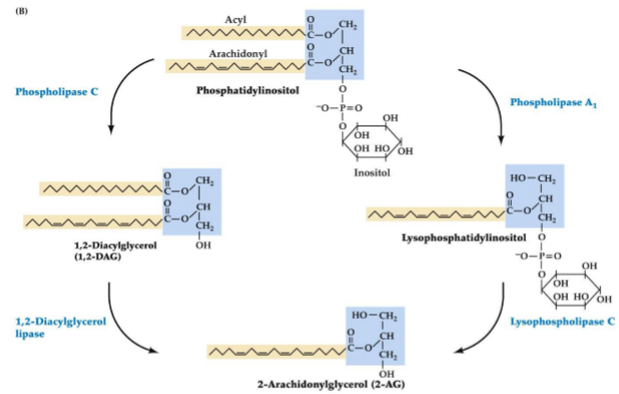
endocannabinoid metabolism
transport and degradation
anandamide and 2-AG transport (facil diffusion), AM404 inhibitor (metabolite of paracetamol)
anandamide is degraded by fatty acid amide hydrolase (FAAH)
hydrolysis produces arachidonic acid and ethanolamine
2-AG is also degraded to arachidonic acid (AA) by monoacylglycerol lipase (MAGL) in presynaptic terminal
endocannabinoid metabolism image

retrograde cannabinoid signalling
post-syn neuronal activity increases IC Ca or activates Gq-coupled Rs
stimulates the enzymatic syn of endocannabinoids from memb lipid precursors
endocannabinoids (mainly 2-AG) move to presyn terminal → activate CB1 Rs → inhib NT release
endocannabinoids subsequently metabolised by enzymes (e.g. MAGL and FAAH)
retrograde cannabinoid signalling image

endocannabinoid (eCB)-mediated short-term depression (eCB-STD)
Ca2+-driven eCB-STD usually induced by strong depolarisation was originally termed: depolarisation-induced suppression of inhibition (DSI) of inhib synapses
DS of excitation (DSE) of excit synapses
DSI image

eCB-mediated DSE and DSI
Ca2+ influx or glut R activation stimulates the prod of DAG
DAG converted to 2-AG by DAG lipase-alpha
2-AG then released from postsyn. neurons
activates CB1 on presyn terminals to transiently suppress NT release
the released 2-AG can act on CB1 Rs that are located on homo- or heterosynaptic terminals
presynaptic electrical activity can akso play a part in the induction of eCB-LTD
eCB-mediated DSE and DSI image
*recall DCI mechanism

functional role of eCB in nervous sytem
learning and memory: reg of syn plasticity (hippocampus)
motor control: modulation of neurotransmission (basal ganglia and cerebellar circuits)
pain processing: reg of nociceptive transmission in peripheral and central pathways
appetite: modulation of hypothalamic and reward-related pathways
stress and emotional reg: modulation of neuronal activity in limbic circuits
neuroinflammation: reg of immune and glial activity
appetite stimulation
THC pharmaco. stimulates appetite via CB1
in hypothalamic feeding circuits, CB1 Rs on both:
GABAergic presyn terminals (reduces GABA release, can disinhibit orexigenic neurons promoting feeding)
Glutamatergic presyn terminals (reduces Glut release, can suppress excit drive on anorexigenic neurons and favour feeding)

epilepsy and CBD

TPRV1 agonism
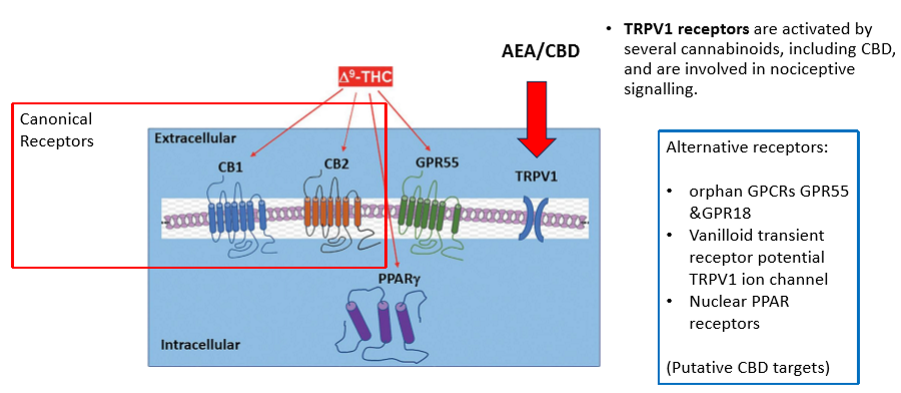
analgesia
CB1 R activation inhibs presyn voltage gated Ca channels, reduces NT release & can enhance postsyn K conductance
most evidence relates to chronic pain (neuropathic) average analgesic benefits are generally modest and vary between studies
THC containing medicines: may provide short-term pain relief in some cases, psychoactive effects limit tolerability
CBD: does not produce THC-like intoxication, CBD alone provides clinically meaningful analgesia remains insufficient evidence BUT has anti-inflam effects
analgesia: image
potentially strengthen descending pathways
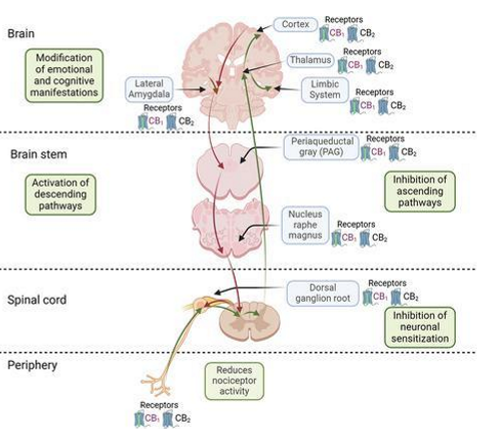
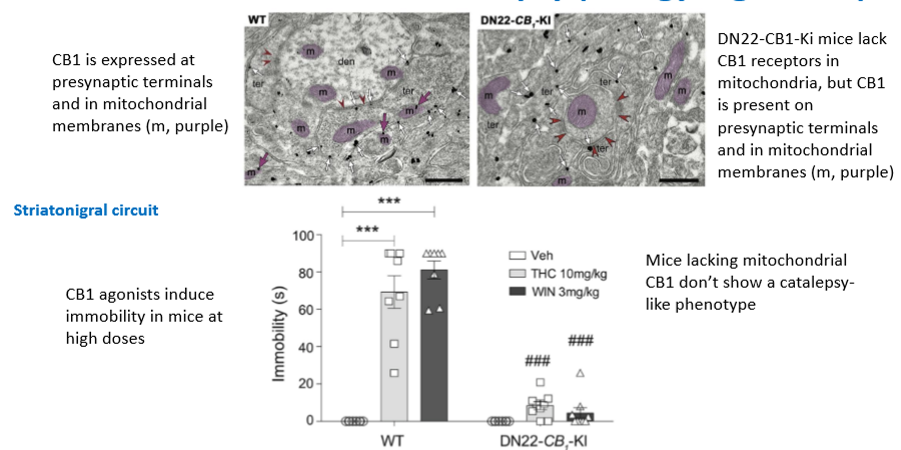
mitochondrial CB1 in catalepsy (energy reg)
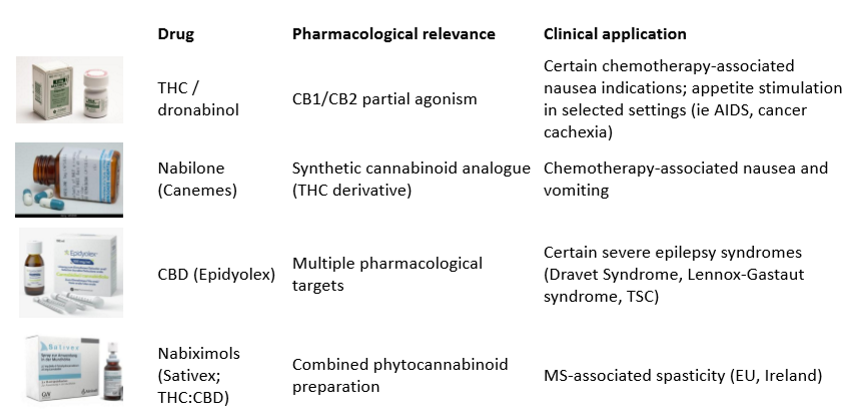
therapeutic application of cannabinoids
limitations and adverse effects

cannabis use may trigger underlying predisposition to psychiatric illness
