Chapter 11.4: Transcription Can Be Regulated by Epigenetic Changes to DNA and Histones
 Call Kai
 Learn
 Practice Test
 Spaced Repetition
 Match
 Flashcards
 Knowt Play
1/7

8 Terms
Epigenetic changes
Reversible changes in DNA that involve varying levels of chromatin packaging, resulting from histone chemical modification or DNA methylation
Seen through identical twins growing differently as a result of the environment
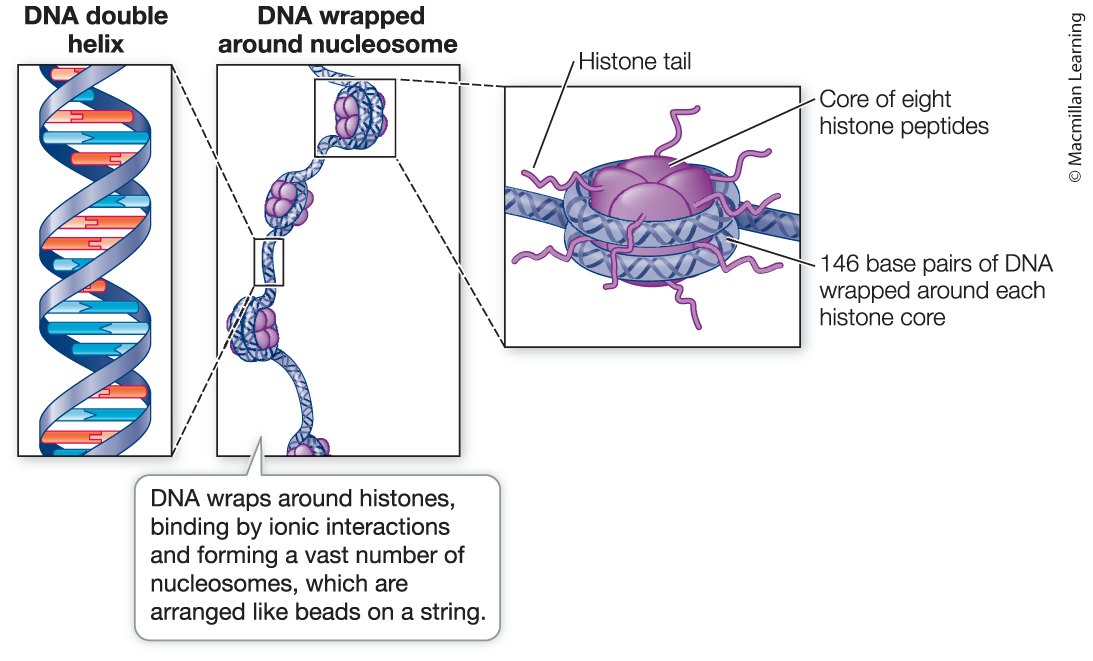
Nucleosome
A core of eight positively charged histones around which DNA is wound, forming closed chromatin

Acetylation
Performed by histone acetyltransferases, this neutralizes the charges of the amino acid tails on histones and loosens the compact nucleosome for regulatory protein binding
Can be recruited by transcription factors
May be reversed by histone deacetylases
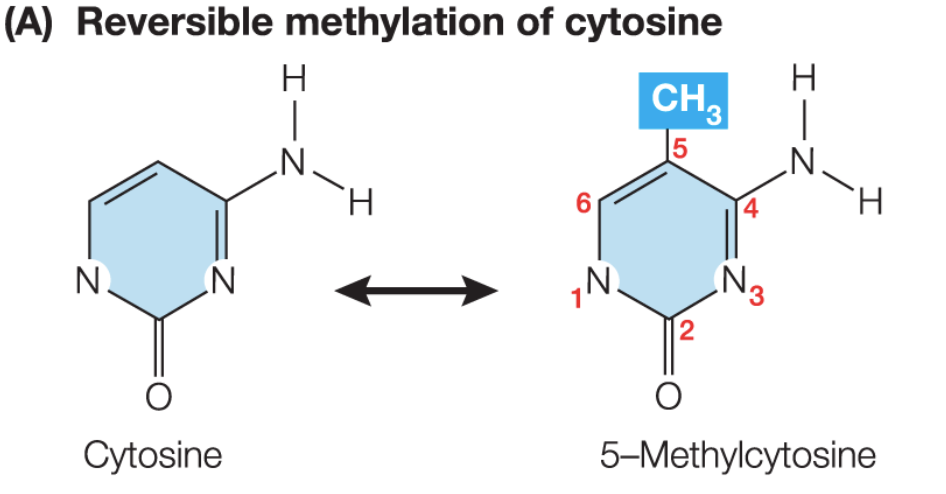
Methylation
Performed by DNA methyltransferase, this typically occurs to cytosine bases adjacent to guanines, giving rise to the name CpG sites
Results in the binding of repressing transcription factors in stable, long-term bonds
Can be maintained by maintenance methyltransferase or reversed by demethylase for replication needs

CpG islands
Regions of DNA that are rich in CpG sites, typically found in promoters that are not expressed
Euchromatin
DNA that is transcribed into mRNA with lower DNA methylation rates; this stains lightly under a microscope
Heterochromatin
DNA that is more condensed with little transcription and heavy methylation rates; this stains darkly under a microscope
Seen with female mammals’ X inactivation, resulting in differently expressed traits as one X chromosome is methylated to prevent aneuploidy
Genomic imprinting
The passing down of specific methylated genes from each parent resulting in some transcriptionally active and inactive genes