PHAR:8136 Pellets and Capsules
 Call Kai
 Learn
 Practice Test
 Spaced Repetition
 Match
 Flashcards
 Knowt Play
1/35

There's no tags or description
Looks like no tags are added yet.
36 Terms
while pills are an outdated dosage form, there is another dosage form that is prepared in a manner that is very similar
pellets
pellets
form of multi-particulate dosage form → consists of many small, discrete particles (ie multi-particulates)
types of multi-particulates
drug crystals
granules
pellets
mini tablets
multi-particulate dosage forms
filled into capsules
compressed into tablets
packaged in sachets

why choose multi-particulate dosage forms?
for the patients and for product functionality
why choose multi-particulate dosage forms for patients?
maximize absorption
more predictable gastric emptying
reduce inter-/intra- subject variability
minimize local irritation
decrease risk of dose dumping
why choose multi-particulate dosage forms for product functionality?
improve therapeutic options / flexibility
customization of overall drug release pattern
drug delivery to the same site or different sites in the GI tract
combine chemically incompatible drugs into single dosage form
pelletization techniques
direct pelletization
pelletization through extrusion step: extrusion-spheronization
pelletization by layering onto starter seeds: solution layering + suspension layering
pelletization through formation of droplets
extrusion-spheronization
multistep process
dry blending of materials (api + excipients)
wet massing
spheronization
drying

changes in extrudate shape with spheronization time
more round

formulation consideration for pelletization
specific requirement for extrusion
cohesive plastic, wet mass with inherent fluidity and self-lubricating properties
specific requirement for spheronization
extrudates with sufficient plasticity
pelletization aid
microcrystalline cellulose
pros of extrusion-spheronization
high throughput with low wastage
produces highly spherical particles with a narrow size distribution
produces pellets with smooth surface
produces pellets with low friability
cons of extrusion-spheronization
requires 2 specialized equipment (extruder and spheronizer)
may not be suitable for moisture/heat sensitive APIs (wetting and drying steps involved)
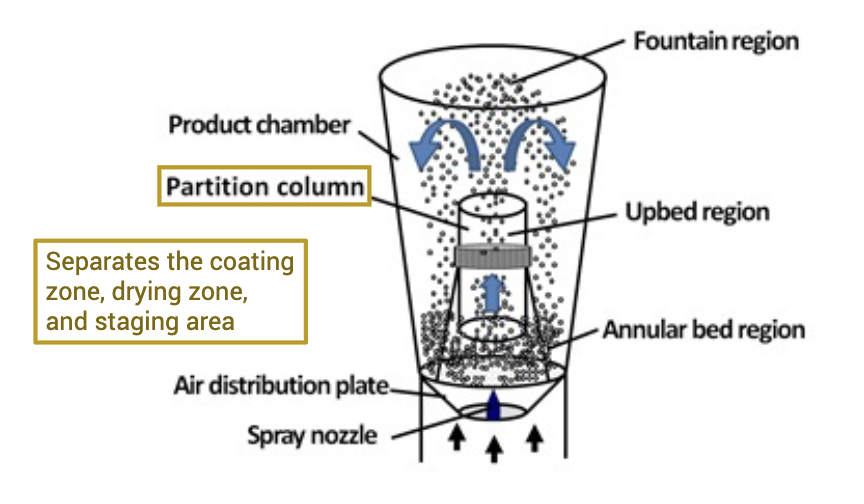
fluidized bed coating
pellets (drug-containing core, or inert sugar/MCC sphere with a drug layer) are coated in a Wurster-type fluidized bed coater, which separates the coating zone, drying zone and staging area
spherical pellets coat very evenly
multi-particulates oftened coated with polymers using this
polymers used in film coating
cellulosics
hypromellose (hpmc)
ethylcellulose
vinyls
polyvinyl alcohol (PVA)
glycols
acrylics — methacrylic acid copolymers
what was gelatin first used for?
as a taste masking material for obnoxious medicines
types of capsules
hard gelatin capsules
soft gelatin capsules
hard gelatin capsule
shell
rigid, composed of gelatin, sugar, and water; not intentionally plasticized
content
mostly solids (powders, granules, pellets or mini tablets); semisolids and thixotropic fluids possible but rare
closure
2 parts — cap and body, sealed by banding or mechanical interlocking
soft gelatin capsules
shell
flexible, plasticized gelatin (common are glycerin or propylene glycol)
content
mostly liquids (soln, suspensions, or semisolids); dry powder are possible but rare
closure
hermetically sealed
hard capsule sizes
provide a greater flexibility in formulation partly because of range of available sizes
smaller # → larger volume

concerns with gelatin capsules
an animal protein (bovine, fish)
derived from animal collagen
may have religious objections
may be associated with animal diseases
moisture sensitive
properties may change with adsorbed constituents (eg aldehydes)
usual concern is cross-linking
gelatin cross-linking
gelatin structure: protein with some potentially reactive side chains
cross-linking refers to the formation of strong chemical linkages beyond simple hydrogen and ionic bonding between gelatin chains
rxn is generally irreversible
renders gelatin insoluble
rxn catalyzed by several chemical and environmental factors
what are the factors that cause cross-linking in gelatin?
aldehydes and ketones
API with carbonyl grps
oxidizing agents
sugars
light
heat
humidity
metal ions
concern with cross-linking: pellicle formation
capsule shell opening is delayed or stopped by pellicle formation on the internal or external gelatin surface

plant-based hard capsules
made from hypromellose (HPMC), pullulan, or red seaweed
low moisture content and water permeability compared to gelatin
physically stable, less brittle than gelatin capsules
chemically stable and does not undergo cross-linking reactions
gelatin vs HPMC capsules
gelatin higher moisture content
gelatin has maillard reaction with fillings
gelatin degradation by light and heat (above 60C for denaturation)
formulation consideration for capsules
drug, filler/diluent, glidant, lubricant, disintegrant, surfactant
all formulations must:
be capable of being filled uniformly to give a stable product
must release their active contents in a form that is available for dissolution and subsequent absorption thru GI tract
must comply with requirements of usp and government regulatory authorities
the type and concentration of disintegrant added can impact dissolution
enteric coated capsules
acid resistant (will not dissolve in stomach)
will quickly dissolve in the intestinal environment
usually combines a neutral polymer (hypromellose) with an enteric polymer (hypromellose acetate succinate, hypromellose phthalate)
pros of hard gelatin capsules
great formulation flexibility
able to mask bitter taste and pleasant odor of drugs
slippery when wetted and aids with swallowing
convenient to carry/transport
can be used for modified drug release
cons of hard gelatin capsules
requires powder blending, homogeneity of powder blend, adequate powder flow, and lubrication
slower filling
not suitable for highly-soluble salts — rapid release will cause GI irritation
high moisture content/humidity can promote microbial growth, affect in vitro dissolution, and increase chemical instability for moisture-sensitive drugs
soft gelatin capsules
aka soft elastic gelatin capsule or softgel
formed, filled, and sealed in one operation and may be of different shapes and sizes
flexible and can be formulated as:
oral softgels - containing soln/susp for release in stomach
chewable softgels - flavored and can be chewed prior to swallowing
twist-off softgels - tag to be snapped off to release contents (mostly for topicals and cosmetics)
softgel capsule sizes
opposite of hard capsules
size number positively correlates with physical size
larger number → larger volume
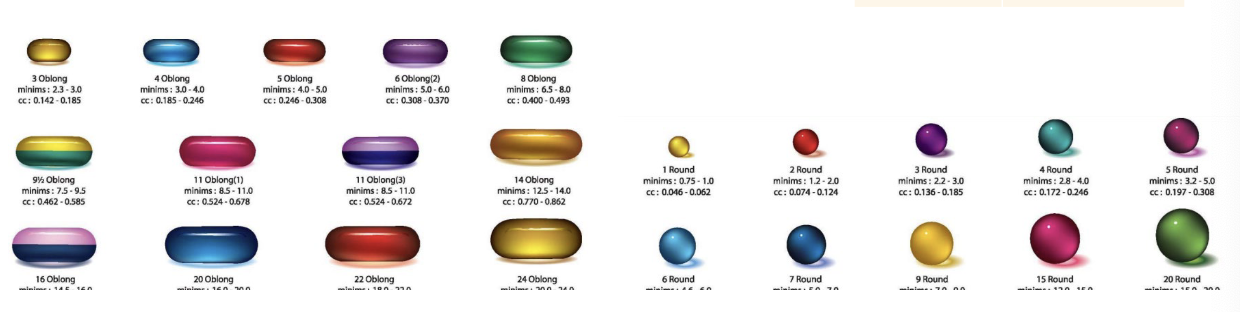
formulation considerations for softgels
fill materials
water-immiscible oils (volatile and non-volatile oils)
water-misicble liquids (hydrophilic liquids)
pros of softgels
accurate and precise (content uniformity)
rapid filling
rapid dissolution with potentially enhanced bioavailability (largely stems from softgels delivering lq cargo)
lq fill avoids powder flow and mixing problems
no dust problem during manufacturing
cons of softgels
need specialized equipment (cannot be extemporaneously compounded)
migration of drug into shell is possible