Biology Vocabulary Cell cycle
 Call Kai
 Learn
 Practice Test
 Spaced Repetition
 Match
 Flashcards
 Knowt Play
1/16

There's no tags or description
Looks like no tags are added yet.
17 Terms
Genome:
The complete set of DNA; Every cell has a full copy.
Gene:
A section of DNA that codes for one specific protein.
Chromosome:
A single long DNA molecule, tightly wound up w/ helper molecules.
23 pairs of chromosomes (46 in total).
Chromatin:
DNA that’s loose and partially unwound.
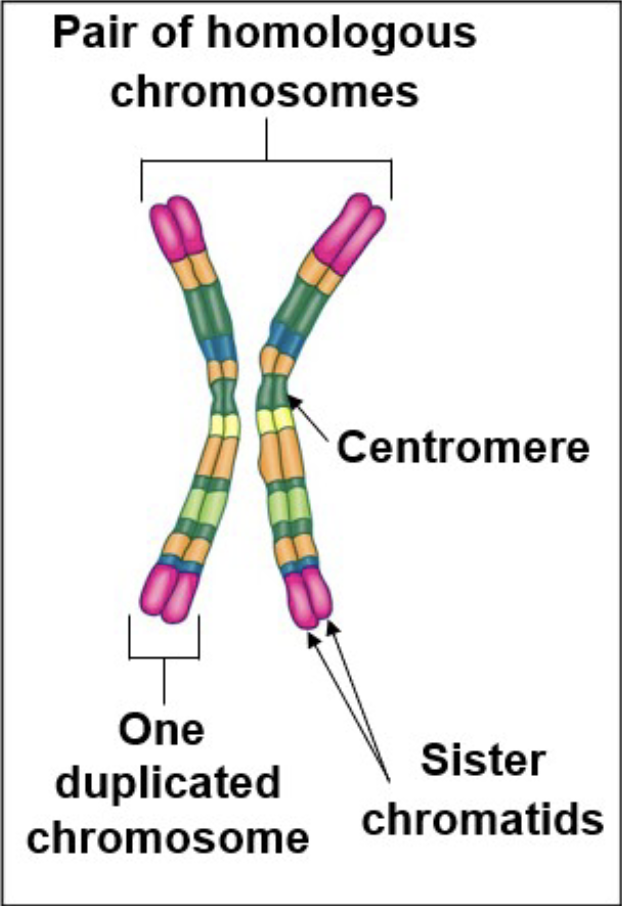
Homologous chromosomes:
Each pair (two chromosomes) one came from each parent. They’re not identical, but they carry the same genes.
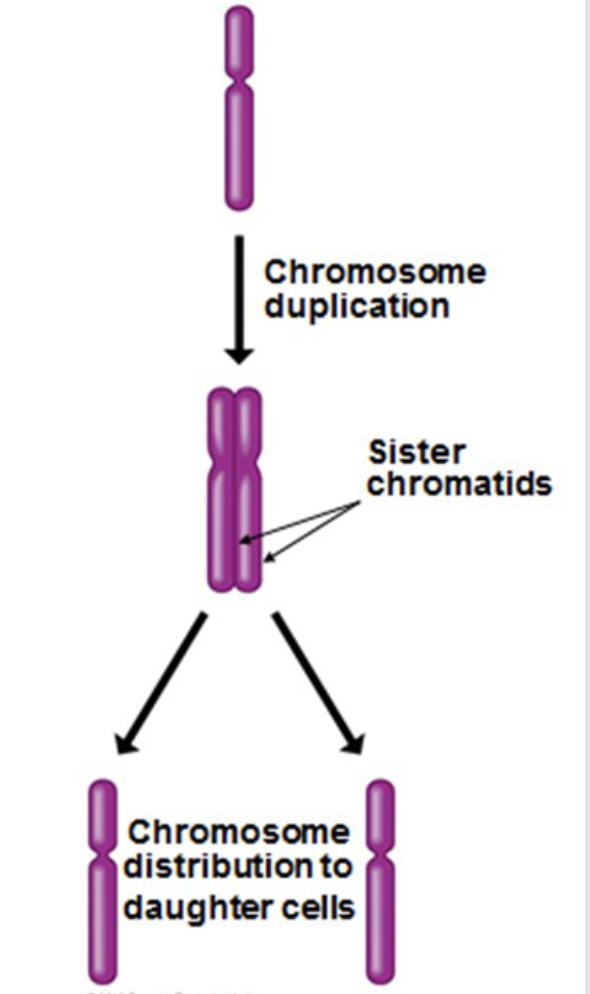
Sister chromatids:
Two identical copies (one parent).
Centromere:
The pinch point in the middle that holds them together.
Homologous:
A pair of chromosomes from different parts.
Mitosis:
The division of the nucleus, in eukaryotic cells. It produces 2 genetically identical “daughter nuclei”. Identical meaning the new cells get an exact copy of the DNA.
Used for growth, repair, and regeneration.
The Cell Cycle:
Interface (“getting ready”), longest time
G1: The cell grows and prepares
S: DNA replication, the “S” stands for synthesis.
G2: more growth and prep for division
no visible chromosomes, in chromatin form, nuclear membrane intact.
Mitosis & Cytokinesis
Mitosis: division of nucleus
Cytokinesis: division of cytoplasm
G0: some cells leave the cycle and never divide again.
Ex: Neutrons, muscle cells, and red blood cells.

Pro-Phase: “pack up”
Chromatin condenses into visible chromosomes.
The nuclear membrane breaks down.
Spindle fibers attach to centromeres.

Metaphase: “middle”
Spindle fibers pull the chromosomes to line up at the cell equator.

Anaphase: “apart”
The spindle fibers (microtubules) pull the sister chromatids apart.
Each chromatid now counts as it’s own chromosomes, moving towards opposite ends of the cell.
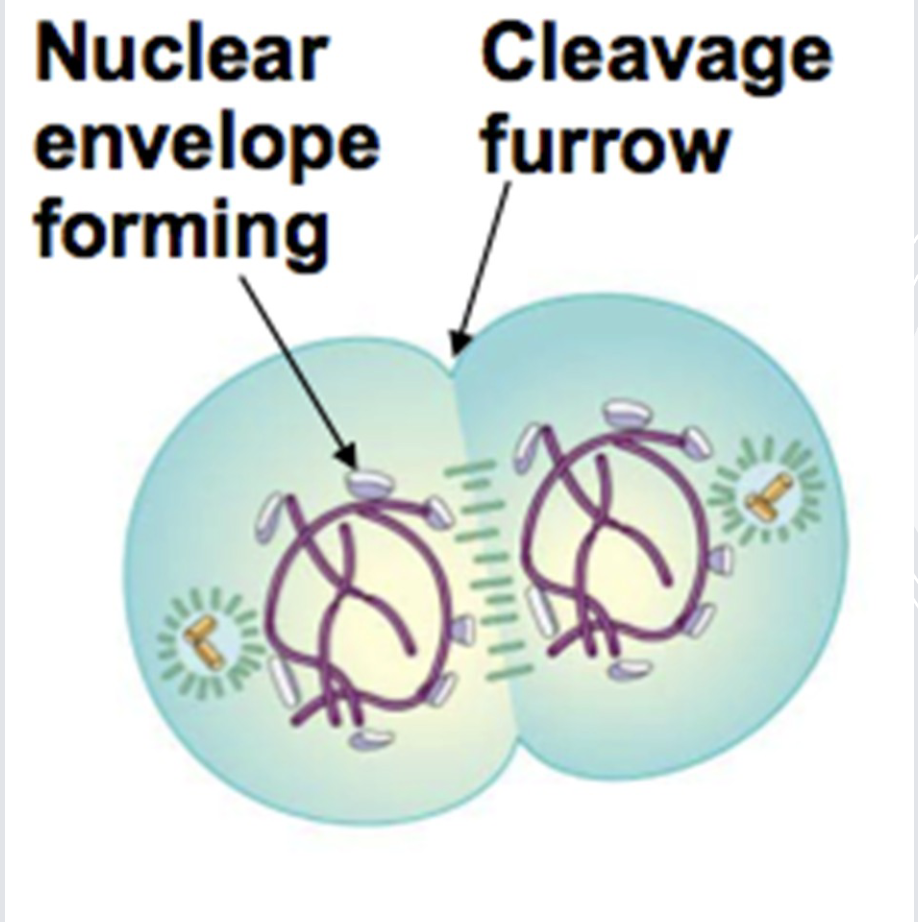
Telophase: “two nuclei”
Two new nuclear membranes form, one at each end.
Chromosomes unwind back into chromatin.
Opposite of prophase

Cytokinesis:
Cytokinesis divides the rest of the cell. It begins during telophase.
Cleavage:
Filaments tighten around the middle, pinching the cell in two.

Cell Plate:
Plants have a rigid cell wall, so they can’t pinch. Instead, a cell plate forms in the middle and develops into new cell walls that split the cell.