S-130 Exam Review
 Call Kai
 Learn
 Practice Test
 Spaced Repetition
 Match
 Flashcards
 Knowt Play
1/34

There's no tags or description
Looks like no tags are added yet.
35 Terms
Weight limitations
Individual total gear weight: 65 lbs
Personal gear weight: 45 lbs
A common fire assignment is how many days?
14 days (16 hours a day maximum)
Required Fireline PPE
Wildland fire boot (8 inches high, leather), flame res. shirt, helmet, safety glasses, belt pack, chest pack, fire shelter
IAP (Incident Action Report)
Written document produced to guide actions/plans over a day
AAR (After Action Review)
Discussing what happened during a fire post-fire
- Correct weaknesses and sustain strengths
CFLOP (ICS)
The incident command system is comprised of CFLOP
- Command, planning, logistics, finance, and operations
Who does a FFT2 report to in a hand crew chain of command?
FFT1 / Squad Boss
Handcrew Chain of Command
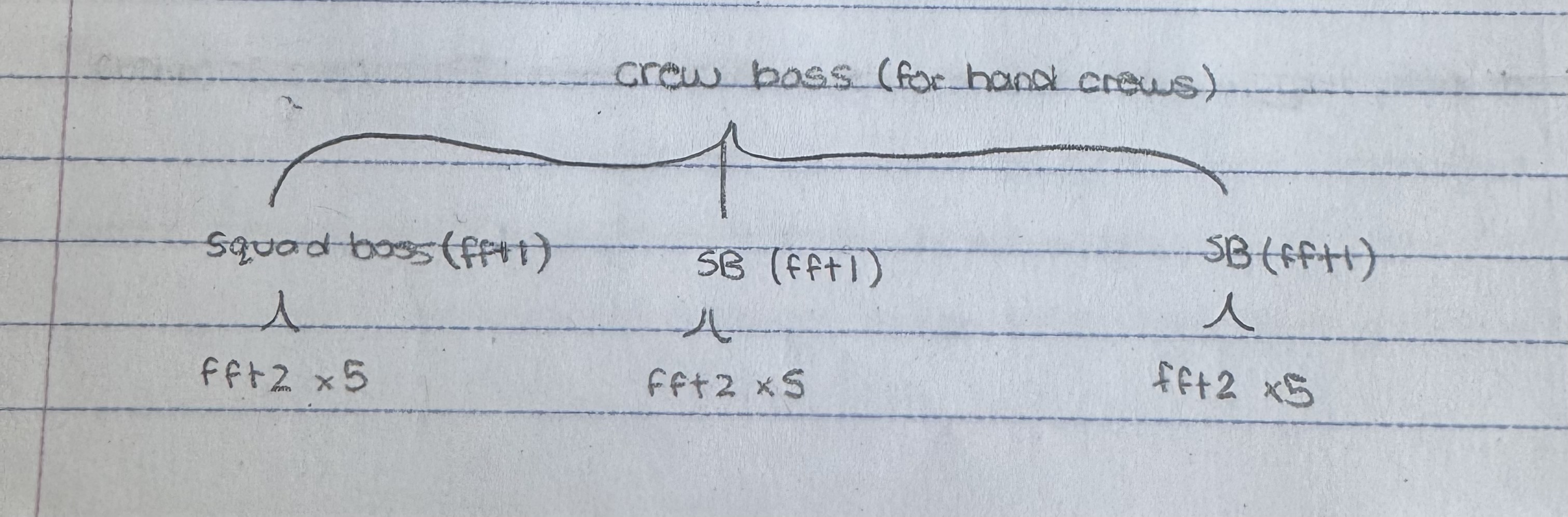
Span of Control
Supervisory ratio within a handful (5:1)
- How many people you are supervising
What does LCES stand for?
Lookouts, communications, escape routes, and safety zones
- Everyone should be aware of established LCES before engaging a fire
Deployment Zone vs Safety Zone
Deployment zone: Area where you need a fire shelter
Safety zone: Somewhere safe where you dont have to use a fire shelter
- Typically, a burned area where all fuel is already burned up
How far must a fireline be from the fire?
1 ½ times the flame length
Fireline vs. Control line
Fireline: Part of a containment or control line that is scraped or dug to mineral soil
Control line: All constructed/natural barriers and treated edges used to control a fire
- Threatened by spotting, rolling debris (cup trench), creeping, radiant heat
Suppression strategies for attack
Direct: Going immediately to the edge of the fire to begin suppression and constructing line
Indirect: Suppression backing off the edge of the fire and creating a control line further away from the fire
How far away from machines should you be when in use?
1 ½ times the fuel length
Suppression Techniques
Cold trailing: Inspecting fire edges or mop-up areas for heat with the back of your hand
Burning out: Setting fire inside the control line to consume fuel between the fire and the line
Blackline: Preburning fuels adjacent to a control line before igniting a prescribed burn
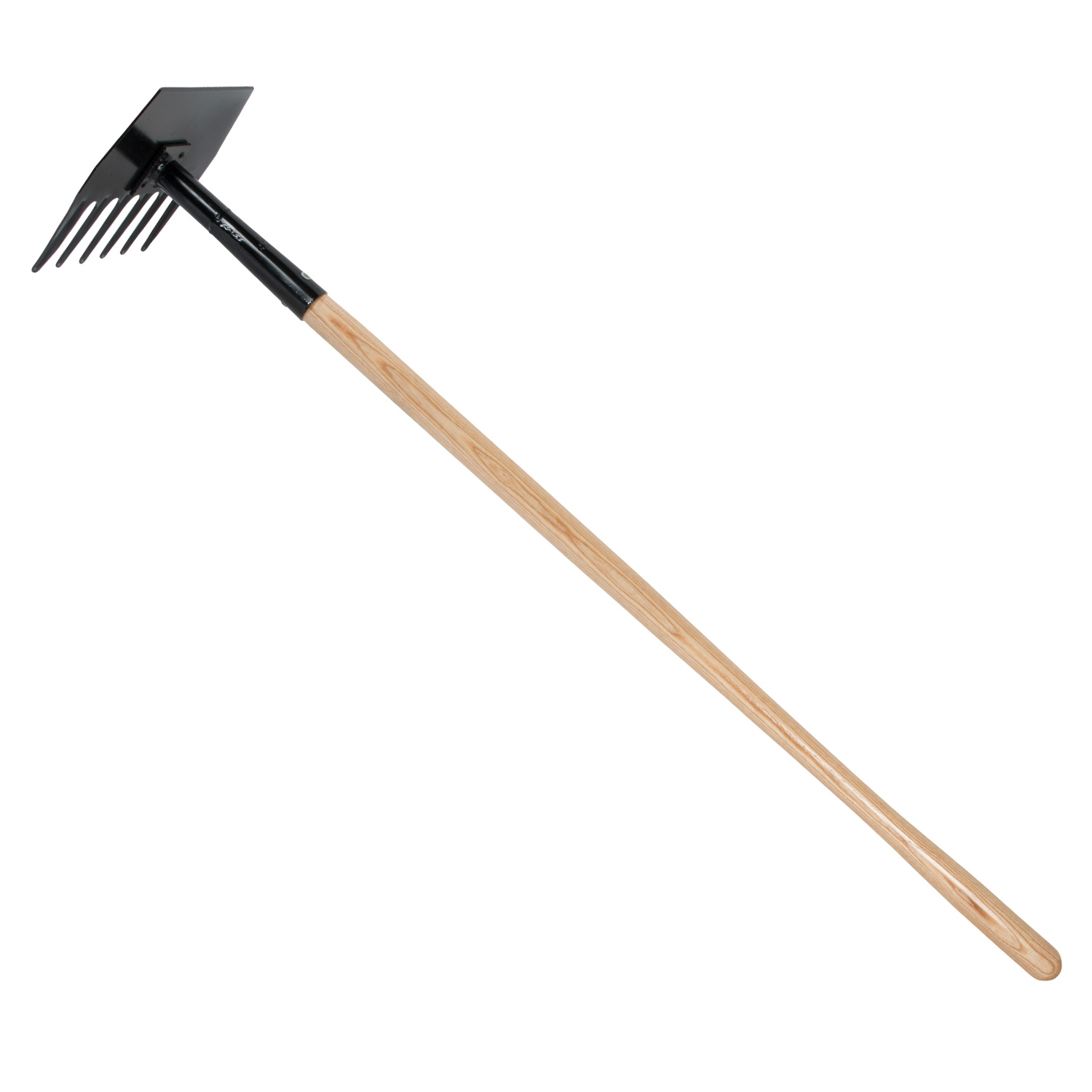
Cutting Tools
Used for fireline construction (brush cutting, removal of ground cover, etc)
- Pulaski, hazelhoe

Scraping Tools
Used for fireline construction and mopup (digging, loose debris removal, etc)
- Shovel
- Mcleod
- Combi tool
Coordinated Crew Techniques
Progressive Line Construction: Building line without changing relative line position
Leapfrog: Crews do a line segment before bumping ahead of unfished crews to build another line (swapping tasks or locations)
Straight Streams vs. Spray Streams
Straight streams are used for reaching and penetrating (most commonly used)
Spray streams are used for everything else
How is water delivered on a fire?
Engines (ability to move with the fire) and portable pumps (from static water sources)
Hoselays
Arrangement of connected lengths of a fire hose and accessories from the first pumping unit to the ending point of water delivery
- Simple or progressive
Simple Hoselay

Progressive Hoselay

Common firing devices
Fusee, driptorch, hand launched flares

Why are firing operations used?
For backfire, burnout, prescribed burning (burning slash), bone piling (burning heavy fuels), making lines better, broadcast burning
Dry Mopping vs. Wet Mopping
Dry Mopping: Mopup without a cooling agent (typically with a dirt mixture)
Wet Mopping: Mopup using a cooling agent and foam
Gridding
Getting into a line and working over burned areas finding hot spots
Mopup Techniques
Zigzag Mopup: Used on small fires
Bullseye Mopup: Mopping up fire head and outer edges, working your way inside
MIST
Minimum impact suppression tactics
- Using environmentally friendly tactics to suppress a fire
WUI
Wildland Urban Interface
- Area where human development meets wildland fire fuels
Structure size up
Gathering information to sort a structure into a triage category (black, red, yellow, or green)
Considers house materials, potential fuels, location, and topography
Why is fire smoke a hazard?
It can contain many different chemicals that are toxic and dangerous to humans
Types of radio frequencies
Simplex
Radio to radio
Close together / line of sight
= tactical frequency, fire ground frequency
On the fire
Duplex
Repeater tower between radios
Huge range
= repeated frequency, dispatch frequency
To the fire, long distance radios
Fire shelters deflect ___ heat and absorb ___ heat
Radiant, convected