Biology TopHat questions exam 2
 Call Kai
 Learn
Learn Practice Test
 Spaced Repetition
 Match
Match Flashcards
 Knowt Play
1/96

There's no tags or description
Looks like no tags are added yet.
Name | Mastery | Learn | Test | Matching | Spaced | Call with Kai | Chat |
|---|
No analytics yet
Send a link to your students to track their progress
97 Terms
5.1-5.3 Membrane structure: Which is not a component of an animal cell membrane?
Polynucleotide
5.1-5.3: What is not a typically function in the plasma membrane?
Permanence in composition
5.1-5.3: What is not true of membrane phospholipids?
Only the saturated fatty acids are always present
5.1-5.3: Houseplants adapted to indoor temperatures may die if they are left outdoors, because in a cold environment their..
membranes lack adequate fluidity
5.1-5.3: If you were to replace the phosphate group of a phospholipid with a fatty acid chain, you would have..
a triglyceride
5.1-5.3: Draw a picture of a fat (triglyceride) and an oil (glycerol)

5.1-5.3: Draw a picture of the most commonly found lipid in membranes

5.1-5.3: Draw a picture of the cell membrane
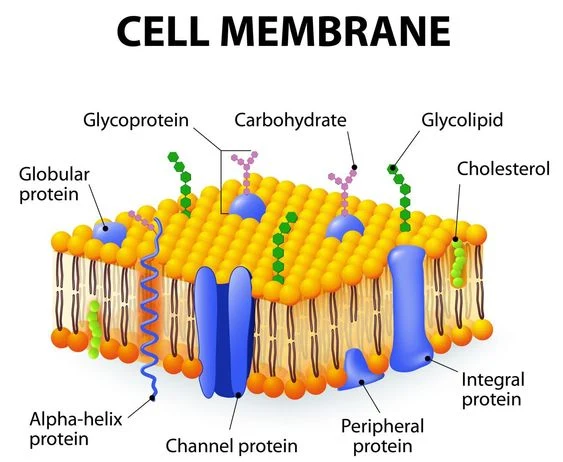
5.1-5.3: Draw a picture of another important lipid found in membranes

5.1-5.3: What are the three major classes of lipids in the membrane?

5.1-5.3 GPS: Endomembrane system functions
Rough endoplasmic reticulum: Synthesizes proteins.
Smooth endoplasmic reticulum: Produces glycolipids, regulates calcium ion levels.
Golgi apparatus: packages proteins for transport out of the cell.
Vesicles: transports proteins and other materials.
Lysosomes: digests old proteins and organelles to recycle materials.
5.4-5.6 Membrane function: Where would you most likely find an integral membrane protein?
Spanning the cell membrane, with parts of the protein visible for both the inside and outside of the cell
5.4-5.6: Substances move through biological membranes against concentration gradients via..
active transport
5.4-5.6: Which of the following increases the strength of the hydrophobic interactions in lipid bilayers and thus makes them less permeable to polar molecules?
By increasing length of the hydrocarbon chains
5.4-5.6: The LDL receptor is an integral protein that crosses the plasma membrane, with portions of the protein extending both outside and into the interior of the cell. The amino acid side chains in the region of the protein that crosses the membrane are most likely to be..
hydrophobic
5.4-5.6 GPS: Diffusion vs Osmosis:
D: The distribution of any substance throughout water.
O: Solely the movement of water across a membrane
5.4-5.6 GPS: Passive vs Active transport
T: Requires no input of energy, moves solutes towards a solute concentration gradient (high to low)
A: Requires direct input of energy from hydrolysis of ATP, and it moves solutes against a solute concentration (low to high)
5.4-5.6 GPS: Hypotonic vs Hypertonic
Hypo: There is a lower solute concentration outside the cell than inside.
Hyper: There is a higher solute concentration outside the cell than inside.
5.4-5.6 GPS: Carrier vs Channel proteins
Carrier: Binds directly to the surface of the molecules they are transporting. Channel: Don’t bind to molecules surface, and instead span the width of the phospholipid bilayer
5.4-5.6: What will happen to a red blood cell (RBC), which has an internal ion concentration of 1%, if it is placed into a beaker of pure water?
The cell would swell because the water in the beaker is hypotonic relative to the cytoplasm of the RBC.
5.4-5.6: Which of the following can diffuse relatively easily across a cell membrane, in the absence of any proteins?
H2O, CO2, Steroid hormone, O2
5.4-5.6: What is a gated channel?
A gate that has something blocking its channel


6.1-6.3 Energy, Redox, and Chemical Rxns, & ATP
6.1-6.3: The first law of thermodynamics states that the total energy in the universe is..
constant
6.1-6.3: Which is false regarding energy?
Living organisms are able to avoid the second law of thermodynamics by decreasing entropy in the universe
6.1-6.3: Which represents available energy?
ΔG (Free Energy)
6.1-6.3: The hydrolysis of ATP..
is exergonic

6.1-6.3: glycolysis formula
6.1-6.3 GPS: What is potential vs kinetic energy?
K: Energy of movement, such as a girl standing at top of slide
P: Stored energy, the girl finally going down the slide
6.1-6.3 GPS: What is the 1st and 2nd law of thermodynamics?
1st: Energy can’t be created or destroyed. It can only change forms (such as lost energy transitioning into heat)
2nd: The total entropy (or disorder) of an isolated system is always increasing
6.1-6.3: What represents a form of potential energy?
Chemical bonds, concentration gradient, and electric charge imbalance
6.1-6.3: redox reactions
Note: An acronym for this is Oil Rig
Oil: loss of electron (oxidation)
Rig: gain of electron (reduction)

6.1-6.3: energy transformation with thermodynamic laws

6.1-6.3: How does the second law of thermodynamics apply to organisms?
To maintain order, life requires a constant input of energy
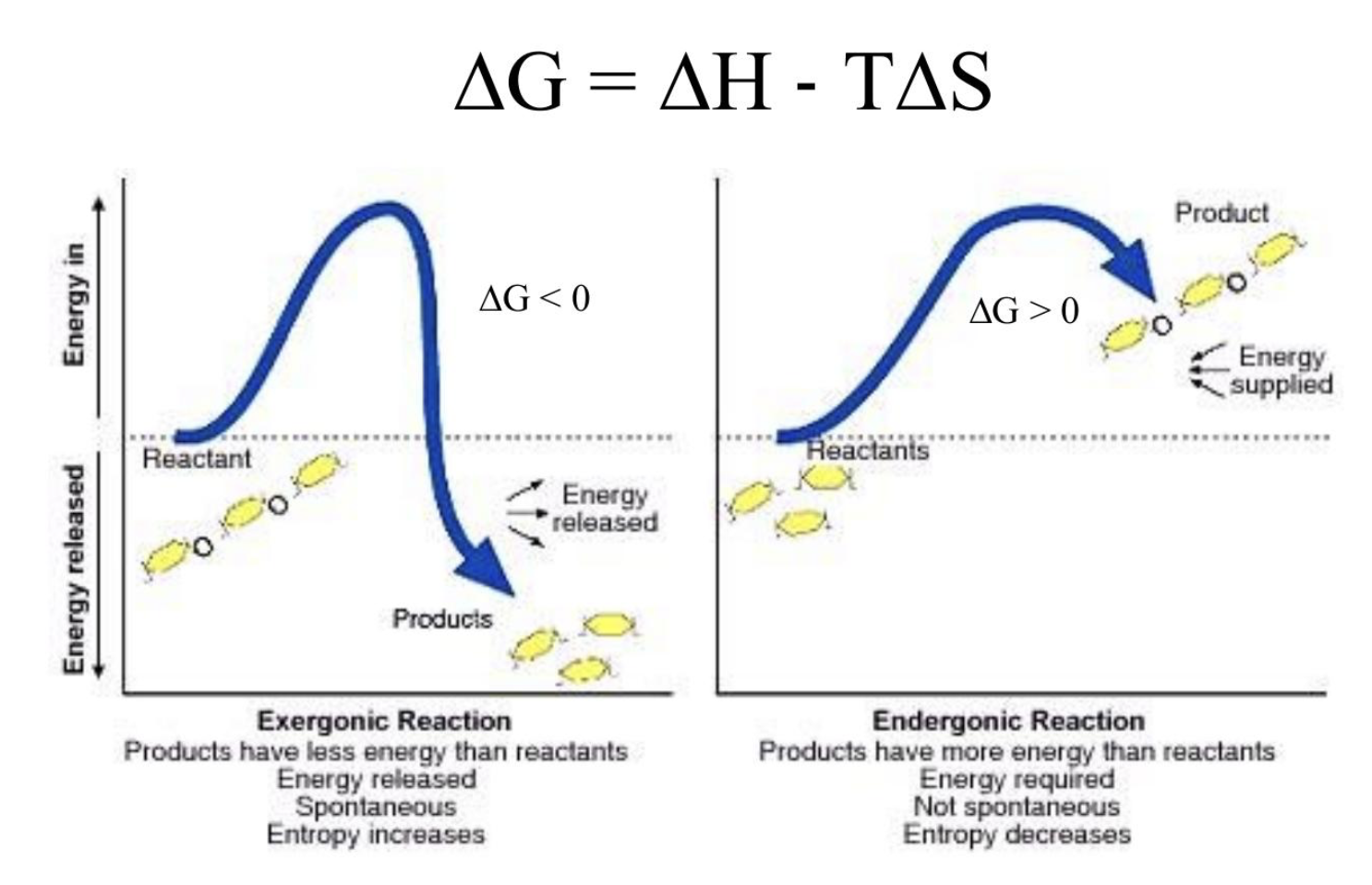
6.1-6.3: Equation that determines whether a chemical or physical process will happen on its own
Formula: ΔG=ΔH-TΔS
ΔG: Change in Gibbs Free Energy
ΔH: Change in Enthalpy
T: Temperature
ΔS: Change in Entropy
6.1-6.3: Catabolic reactions
This involves the breaking of something down. This is an exergonic reaction
6.1-6.3: Anabolic reaction
Something needs to be put into the bond to create it. This is an endergonic reaction
6.1-6.3: ATP vs ADP vs AMP makeups

6.1-6.3: ATP vs ADP formula
Note: Pi (phosphate group)
when positive, it takes energy, and is an endergonic reaction.
when negative, that energy is being broken down and is an exergonic reaction

6.1-6.3: Hydrolysis of Exergonic vs Endergonic reaction

6.1-6.3: ATP cycle
Note: Takes place constantly

Enzymes and Glycolysis: Protein catalysts that speed up the various metabolic biological reactions in an organism are called..
enzymes
Enzymes & Glycolysis: Enzymes have specific _ with which they interact
Substrates
Enzymes & Glycolysis: At the conclusion of an enzyme catalyzed reaction, the enzyme..
frees itself from the products and is ready to be reused
Enzymes & Glycolysis: Enzymes catalyze chemical reactions by lowering the..
activation energy
Enzymes & Glycolysis: Catalyzed vs Uncatalyzed reactions

Enzymes & Glycolysis: Components of an enzyme
Note: Focus on first two

Enzymes & Glycolysis: The following enzyme names reflect their function

Enzymes & Glycolysis: How do enzymes bind substrates and catalyze reactions?

Enzymes & Glycolysis: What is a false statement regarding enzymes?
They catalyze endergonic reactions without ATP
Enzymes & Glycolysis: Effects of temperature on reaction rate.
When temperature increases, kinetic energy increases as well.

Enzymes & Glycolysis: Denaturation
When a reaction gets too hot, its structure can break down.
Enzymes & Glycolysis: Differences in types of enzymes

Enzymes & Glycolysis: Competitive inhibition

Enzymes & Glycolysis: Noncompetitive inhibition

Enzymes & Glycolysis: Allosteric Regulation
Note: Noncompetitive inhibitors bind to allosteric site rather than an active site like competitive inhibitors bind to.

Enzymes & Glycolysis: Anabolic vs Catabolic reactions
Anabolic is for putting molecules together and is an endergonic reaction, while catabolic is for the breaking down of molecules and is exergonic.

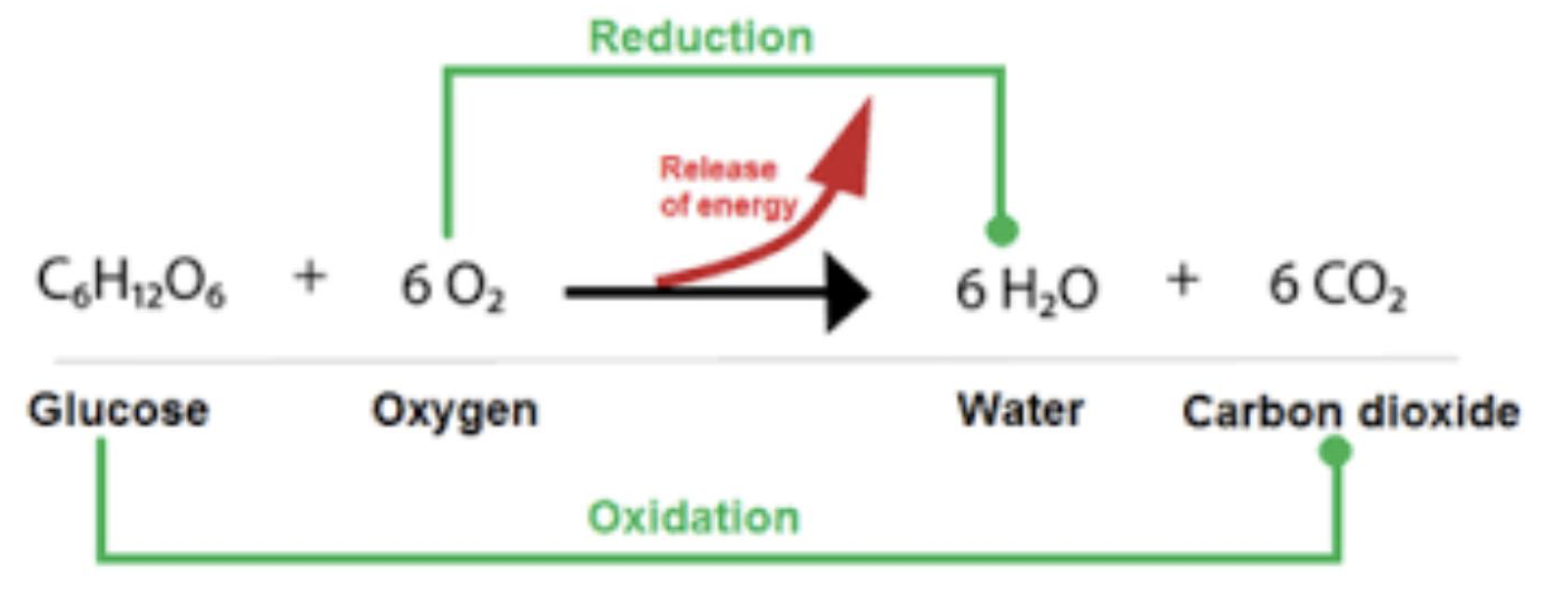
Enzymes & Glycolysis: Cellular respiration formula

Enzymes & Glycolysis: Substrate level phosphorylation

Enzymes & Glycolysis Day 2: Glycolysis formula

Enzymes & Glycolysis Day 2: Glycolysis vs Pyruvate oxidation vs Citric Acid Cycle

Enzymes & Glycolysis Day 2: Pyruvate oxidation

Enzymes & Glycolysis Day 2: Krebs vs TCA vs Citric Acid cycles

Enzymes & Glycolysis Day 2: Glycolysis + Pyruvate oxidation + Krebs cycle formula

Enzymes & Glycolysis Day 2: ATP production in Krebs cycle

Enzymes & Glycolysis Day 2: ATP production in Krebs cycle and Glycolysis

Enzymes & Glycolysis Day 2: Electron transport chain inhibitors and target sites

Enzymes & Glycolysis Day 2: Which isn’t produced by the Krebs cycle?
Acetyl-CoA
Enzymes & Glycolysis Day 2: How does the reduction of pyruvate to lactic acid during fermentation allow glycolysis to continue in the absence of oxygen?
This reaction is coupled to the oxidation of NADH to NAD+
7.6-7.7, 7.9 Respiration & Its Regulation: How much ATP is produced per glucose?

7.6-7.7, 7.9 Respiration & Its Regulation: Why is FADH2 not as effective as NADH in yielding ATP?

7.6-7.7, 7.9 Respiration & Its Regulation: What is the best description of sublate-level phosphorylation?
Transfer of a phosphate group to an ADP
7.6-7.7, 7.9 Respiration & Its Regulation: What process describes what takes place during the Krebs cycle?
Reduction of electron carries to store energy for later use in the ETC
7.6-7.7, 7.9 Respiration & Its Regulation: According to the chemiosmotic theory, what directly provides the energy for ATP synthesis during electron flow down the respiratory chain?
Diffusion of protons
7.6-7.7, 7.9 Respiration & Its Regulation: In muscle cells, which product is predominantly produced as a result of fermentation following glycolysis?
Lactic acid
7.6-7.7, 7.9 Respiration & Its Regulation: Catabolic vs Anabolic roles in Glycolysis vs Citric Acid Cycle

7.6-7.7, 7.9 Respiration & Its Regulation: Catabolism of proteins via deamination

7.6-7.7, 7.9 Respiration & Its Regulation: Examples of anabolic pathways involved in cellular respiration

7.6-7.7, 7.9 Respiration & Its Regulation: The catabolism of fatty acids via Beta-Oxidation

8.1-8.5 Photosynthesis & Light Reactions: What happens when a photon is absorbed by chlorophyll?
Chlorophyll becomes “excited”, or energized.
8.1-8.5 Photosynthesis & Light Reactions: Photosynthesis is the process that uses light energy to extract hydrogen atoms from which source?
Water
8.1-8.5 Photosynthesis & Light Reactions: Which of the following is not a product of the light reaction of photosynthesis?
Glucose
8.1-8.5 Photosynthesis & Light Reactions: ATP is produced during the light reactions via..
Chemiosmosis

8.1-8.5 Photosynthesis & Light Reactions GPS: In this equation, what is being reduced? Oxidized?
Carbon Dioxide (CO2) is being reduced, and Oxygen (O) is being oxidized.
8.1-8.5 Photosynthesis & Light Reactions GPS: What is the difference between anoxygenic and oxygenic photosynthesis, and what organisms use each of these?
Anoxygenic: Photosynthesis that occurs without oxygen.
Oxygenic: Photosynthesis that occurs with oxygen.

8.1-8.5 Photosynthesis & Light Reactions GPS: What are the light-dependent and light-independent reactions of photosynthesis?
Light dependent: Reaction involving chlorophyll in photosystem 2, absorbing a photon of light, exciting the electrons and transferring the energy from that excitement to photosystem 1, where it used to reduce NADP+ into NADPH.
Light independent:
8.1-8.5 Photosynthesis & Light Reactions: Comparison of photosynthesis vs cellular respiration

8.1-8.5 Photosynthesis & Light Reactions: Makeup of a chloroplast
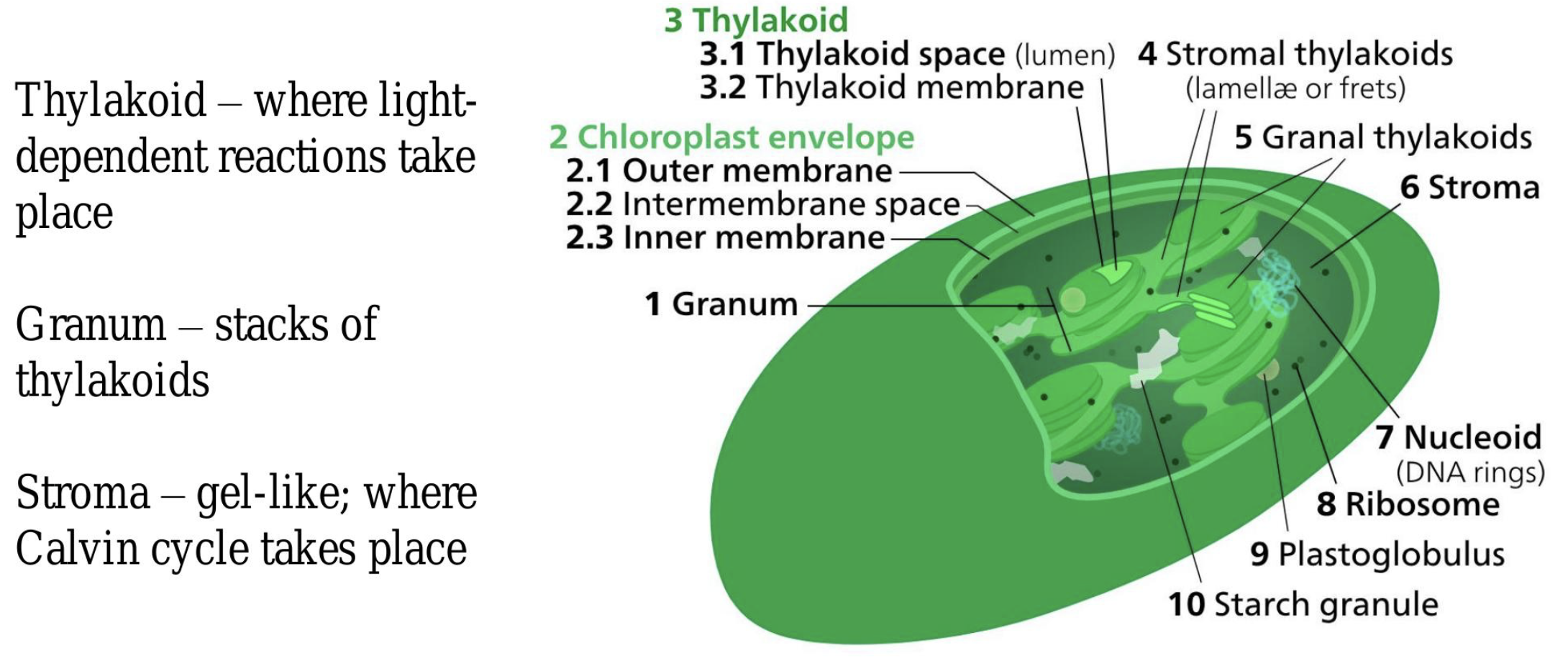
8.1-8.5 Photosynthesis & Light Reactions: Diagram of where a light reaction takes place

8.1-8.5 Photosynthesis & Light Reactions: Two photosynthesis pathways

8.1-8.5 Photosynthesis & Light Reactions: How rate of photosynthesis is affected

8.1-8.5 Photosynthesis & Light Reactions: A shirt may appear blue because..
the shirt is mostly reflecting blue light.
8.1-8.5 Photosynthesis & Light Reactions: The wavelength of X rays is shorter than the wavelength on infrared rays. It is true that..
X rays have more energy per photon than IR have
8.1-8.5 Photosynthesis & Light Reactions: The photosynthetic pigment chlorophyll absorbs..
red and blue light. it reflects green.
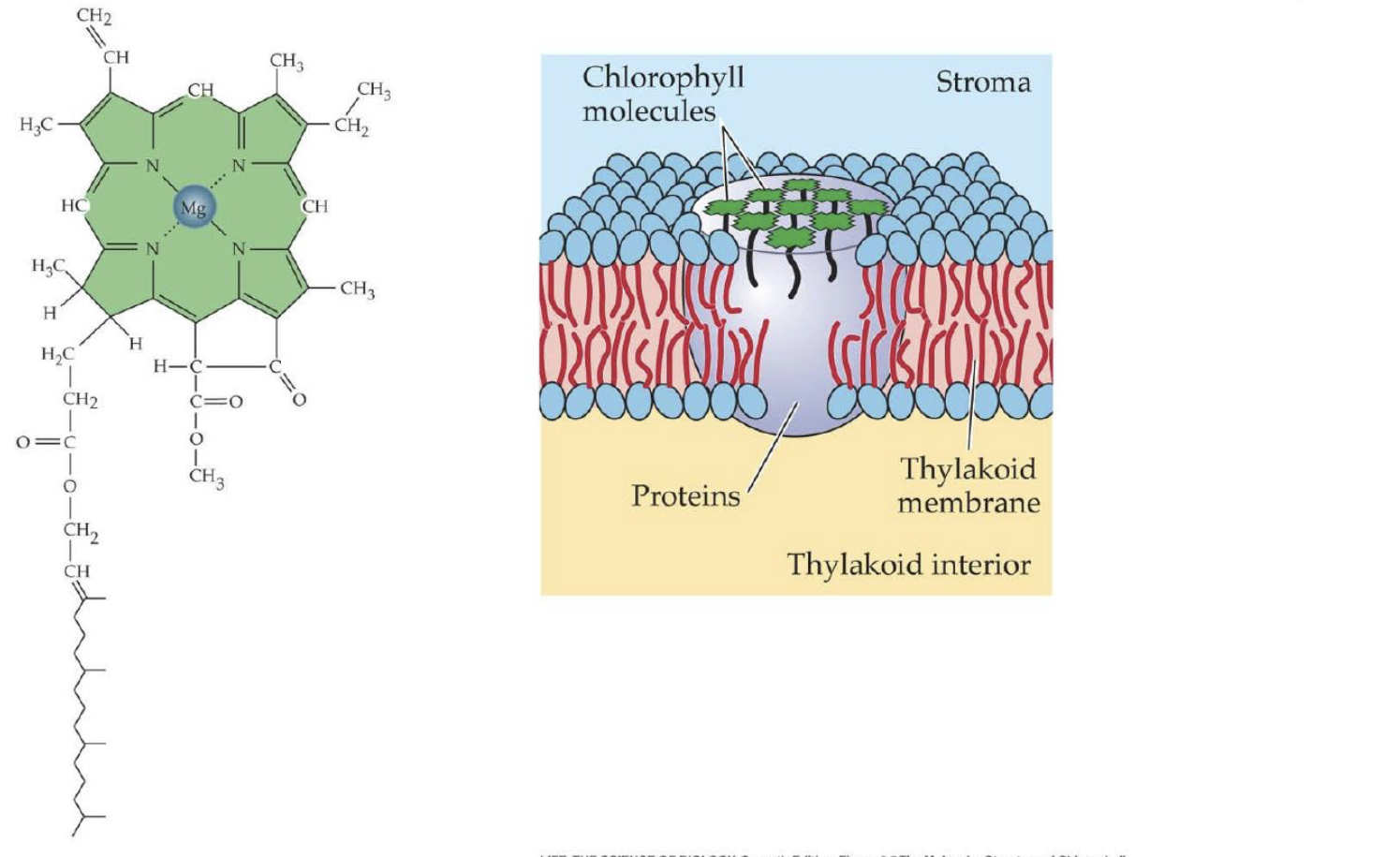
8.1-8.5 Photosynthesis & Light Reactions: Structure of chlorophyll
8.1-8.5 Photosynthesis & Light Reactions:

8.1-8.5 Photosynthesis & Light Reactions: Absorption spectra of chlorophyll a and b

8.1-8.5 Photosynthesis & Light Reactions: Antenna system
