Microbiology Lichens Quiz
 Call Kai
 Learn
Learn Practice Test
 Spaced Repetition
 Match
Match Flashcards
 Knowt Play
1/14

There's no tags or description
Looks like no tags are added yet.
Name | Mastery | Learn | Test | Matching | Spaced | Call with Kai | Chat |
|---|
No analytics yet
Send a link to your students to track their progress
15 Terms
Lichen
a colony of two (or usually more) organisms living in a symbiotic
relationship with each other
microbiont
fungal organism in the lichen
photobiont
photosynthetic organism in the lichen
phycobiont
photosynthetic organism in the lichen that is specifically an algae
epiphyte
organism capable of growing on another plant (many belong to ascomycota and some belong to basidiomycota)
Lichen Morphology
crustose, foliose, fruticose, squamulose
important functions of lichens
• nitrogen fixation
• soil production through erosion
• pioneer species in ecological
succession
• winter food source for animals
• potential medicinal uses (many
produce antimicrobial compounds)
thallus
the lichen body
cortex
an upper and lower tightly packed protective fungal layer
medulla
lower loosely packed fungal layer
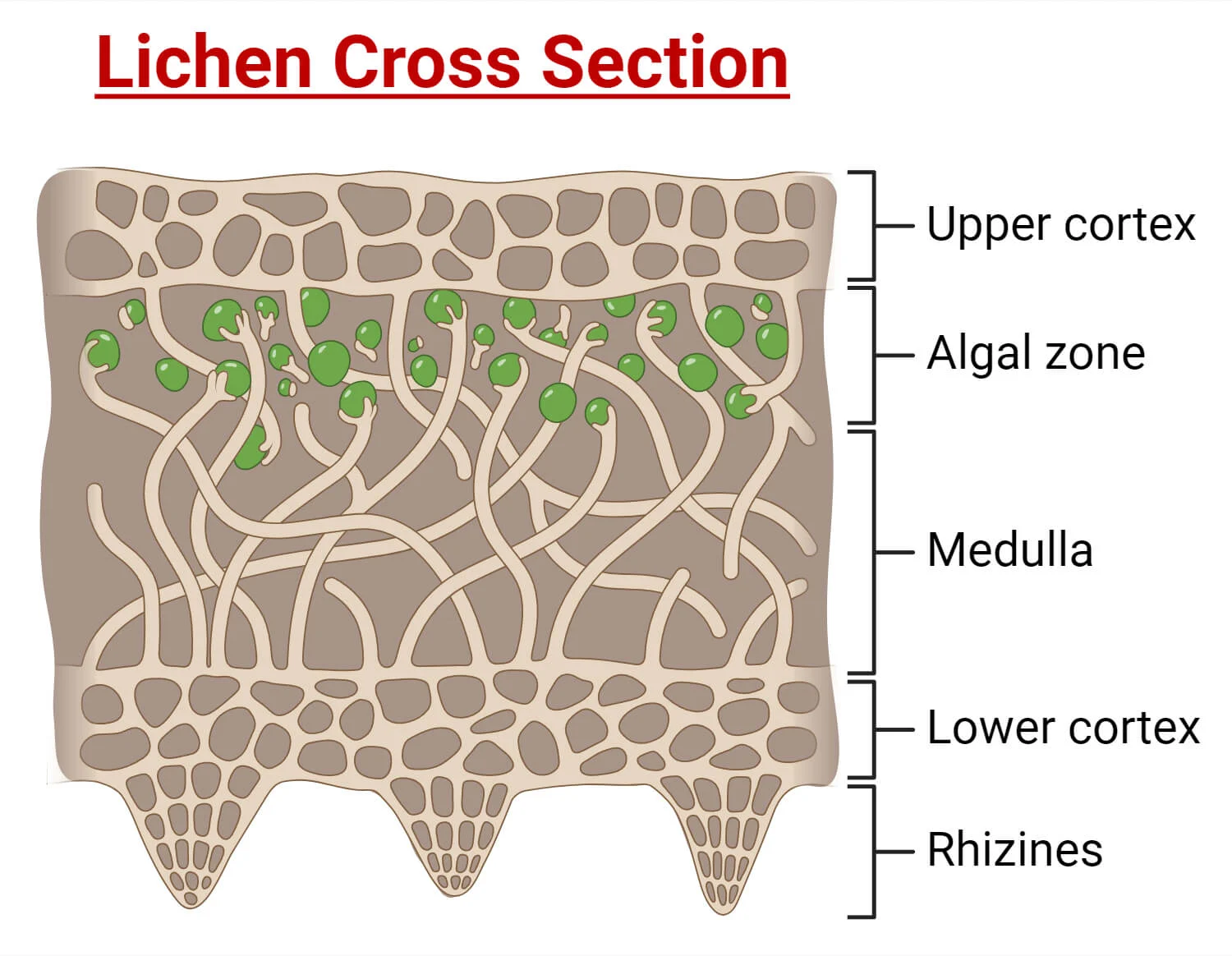
rhizines
bundles of hyphae that bind to surfaces
S reproduction
fungus produces spores→ spores germinate→ form association with photosynthetic component→spores envelop the photobiont with hyphae
vegetative (clonal) reproduction
both fungus and photobiont together form vegetative propagules→ propagules are dispersed via wind, rain etc→ must land in suitable environment to develop in lichens
Lichen Habitats
specific needs: air, nutrients, light, substrates, water
poikilohydry
the inability of an organism to regulate water retention and release via homeostatic mechanisms