Lecture 1: Thinking Scientifically in Bio 111
 Call Kai
 Learn
 Practice Test
 Spaced Repetition
 Match
 Flashcards
 Knowt Play
1/13

There's no tags or description
Looks like no tags are added yet.
14 Terms
What is science?
An approach to understanding the natural world thats based in observations, testable hypotheses, and experimentations.

Hypothesis
a testable and falsifiable statement accounting for a fact or set of facts

Conclusion
the scientists opinion of what the results mean that is supported by the data and results.

Is a scientific opinion the same thing as a public opinion?
NO

What does science produce?
- Facts
- Data
- Explanations
- Technologies and Inventions

Facts
info (data) about the natural world

Data
observations and measurements recorded during an experiment

Qualitative data
non numerical data or data thats defining/ explaining
ex: behavioral data

Quanitive
numerical data that can be easily graphed and analyzed

Explanations
these lead to hypotheses and theories
Theories
well tested and supported hypothesis or set of hypotheses. They are general enough to develop further hypotheses.
Ex: Conservation of Mass

Technologies and Inventions
X rays, vaccinations, cell phones, and cars are all examples of technology produced by science.

What goes on the x-axis of the graph?
independent variable (the factor being manipulated)
ex: mouse color
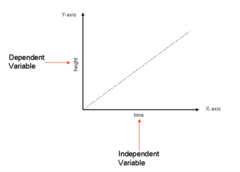
What goes on the y-axis of the graph?
dependent variable(the factor being measured/ the result of the study)
ex:predation rate
