Chemistry Unit 4
 Call Kai
 Learn
 Practice Test
 Spaced Repetition
 Match
 Flashcards
 Knowt Play
1/62

There's no tags or description
Looks like no tags are added yet.
63 Terms
Metal + Non Metal
Transfer of Electron
Ionic Compounds
Attraction of Oppositely Charged Ions
Ionic Compounds
1+ Metal
Attraction between free floating valance electrons and positively charged metal ions
Metallic Bonds
1+ nonmetal or metalloid
Share Electrons
Molecules
Attraction between shared electrons and the positively charged nuclei of the atoms
Covalent Bonds
Molecule
the neutral group of atoms joined together by covalent bond
Molecular Formula
chemical formula of a molecular compound
represents of actual # of atoms not necessarily the lowest ratio
does not show atoms structure
Diatomic Molecule
Molecule consists of 2 atoms of the same element
Molecule Compound
2+ atoms of different compounds
Diatomic elements
Hydrogen
Nitrogen
Oxygen
Fluorine
Chlorine
Bromine
Iodine
lone pairs/ nonbonding pairs
unshared pairs of electrons
Covalent bonds are held together by
attraction between the negatively charged shared electrons and positively charged nuclei of the two atoms
Molecular formula what is listed first
most metallic is listed first
if in the same group, bottom one
Hydrogen exceptions to formula
CH
NH
PH
Bond dissociation energy
the energy required to break the covalently bonded atoms
larger energy the stronger bond
Triple Bonds vs Single
(highest dissociative energy, strongest covalent bonds, shortest bonds) vs (lowest dissociative energy, weakest covalent bonds, longest bonds)
Number prefixes
1- mono
2- di
3- tri
4- tetra
5- penta
6- hexa
7- hepta
8- octa
9- nona
10- deca
Naming Binary covalent compounds

If its one element diatomic molecule its named
just as element name
Spelling rules for naming diatomic compounds
oo- only one o
ao- just o
Chemical formula for tetraohosphorus trisulfide
P2S3
Drawing Lewis Structure Steps
PRACTICE
1.) Find total number of valance (add or subtract for ions)
2.) Put the least electronegative in the center (hydrogen goes outside)
3.) Put 2 valance electrons between atoms to bond
4.) use remaining electrons to complete the octet on outside atoms
5.) use remaining to complete central atom octet (Hydrogen only needs 2)
6.) if you run out: move from outer electrons for double or triple bonds
7.) replace shared electrons with dashes
If odd number of valance electrons
place the unpaired electron on the central atom
Which atom has an incomplete octet
boron (B)
Expanded octet
(only happens when central is from period 3+)
excess electrons go on central atom
(phosphorous or sulfur expand to 10 or 12)
VSEPR
used to determine the 3-D shape of molecules or ions'
the region of highest electron densitiy (electron domains) will arrange as far apart as possible around the central atom
Linear
2 electron domains
0 none bonding or lone

trigonal planar
3 electron domains
0 non bonding or lone

bent
3 or 4 domains
1 or 2 non bonding/lone

tetrahedral
4 domains
0 lone pairs

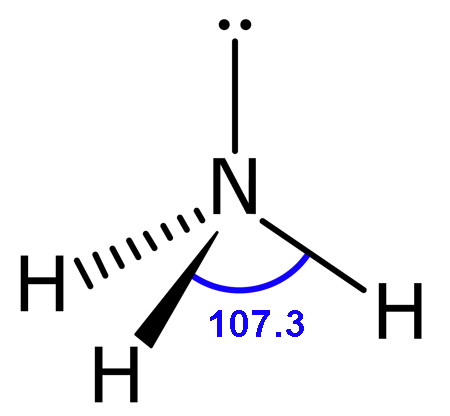
trigonal pyramidal
4 domains
1 none bonding
trigonal bipyramidal
5 domains
0 non bonding

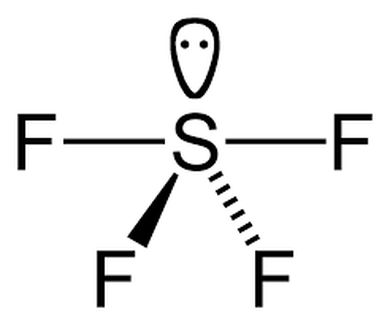
seesaw
5 domains
1 non bonding
T shaped
5 or 6 domains
2 or 3 non bonding

octahedral
6 domains
0 non bonding

square pyramidal
6 domains
1 nonbonding

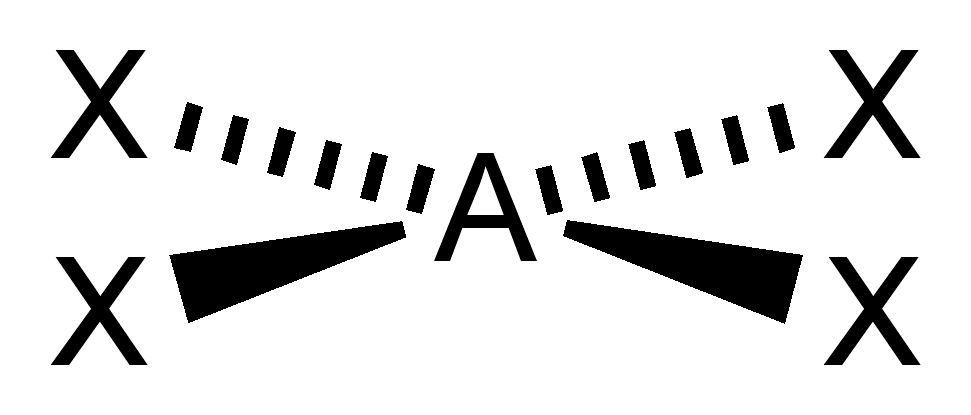
Square Planar
6 domains
2 non bonding
Molecular geometries are or are not always the same as VSPER
ARE NOT
Molecular geometry is determined by atoms bonded to the central atom not
the lone pairs
0 vs 1+ lone pairs makes the molecular geometry
the same vs different from the VSPER
Bonding pair of covalent are pulled between
the nuclei of the atoms sharing electrons
Covalent bonds involve
the sharing of electrons
Non polar coavlent bond
occurs when bonding electrons are shared equally between the two
Polar covalent bond
occurs when bonding electrons are shared unequally between two atoms
Ionic Bonds
no sharing of electrons between ions
Non polar covalent electronegativity difference range
0.0-0.4
polar covalent electronegativity difference range
0.5-1.9
ionic electronegativity difference range
2+
In polar covalent the more electronegative atom attracts electrons more strongly and gains a slightly
negative charge
In polar covalent bonds, less electronegative atoms have
a slightly positive charge
the higher the electronegativity value
the greater the ability of an atom to attract electrons to itself
Partial charges can be shown as
clouds of electron density
an arrow poinitng towards the more electronegaitive atom
Electronegativity can be used to identify
polar bonds in a molecule
Naming conventions to not bend to
electronegativity
polar molecule
a molecule in which one end of the molecule is slightly more positive or negative
Wheter or not a molecule is polar depends on the
bond polarity and molecular shape
Polar molecules contain/ are
1+ polar covalent bond
asymmetric (Contain lone pairs of electrons on the central atoms or habe atoms with different electronegatibity bonded to the.centrl atom)
how to determine if a molecule polar with 2+ atoms
draw lewis structure
does it have any polar bonds (determine w/ electron negativity)
does it have any lone pairs of electrons or different atoms on the central (if no than nonpolar, if yes polar)
Covalent compounds structures
no crystalline
generally indivual molecules
Network covalent compounds
exception from general structures of covalent
3-D lattice “network of strong bonds”
different properties like diamonds
structures of metals vs ionic
organize crystaliane sea of electrons free valance
vs
organized crystalline lattice
3-d repeating
Intramolecular forces
the forces that hold atoms together within the molecule or compound
(metallic, ionic, or covalent bonds)
comparsion of melting points
high metal and ionic compounds
low covalent
very high network covalent
comparsion of boiling points
high metal and ionic
low covalent
very high network covalent compounds
comparisions of conductivity
metals as solid
ionic compounds melted or dissolved
covalent compounds dont
network covalent dont