622 10/28 GLA Bacteria and Viruses
 Call Kai
 Learn
 Practice Test
 Spaced Repetition
 Match
 Flashcards
 Knowt Play
1/73

There's no tags or description
Looks like no tags are added yet.
74 Terms
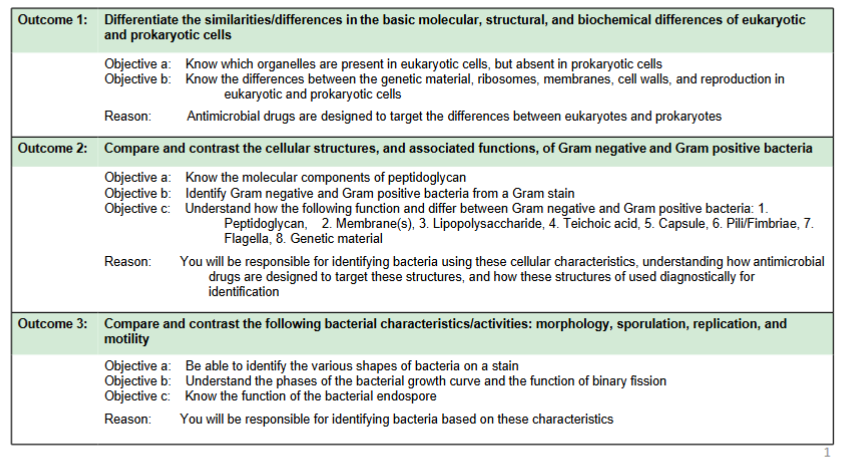
Bacteria Objective and Outcomes
Microbe Naming
Genus species
3 Domains of Microbes
bacteria
archae
eukarya
6 Categories of Microorganisms
bacteria
fungi
protozoa
small mulitcellular animals aka parasites
algae (do not cause infection/disease in humans)
archaea (do not cause infection/disease in humans
Eukaryotic Microbes
fungi, protozoa, parasites
Prokaryotic Microbes
bacteria, algae, archaea
Viruses
considered microbes, debate over if they are living or not (he seems to lean not)
can’t replicate on their own or perform metabolism
Prokaryote Cell

Prokaryotes
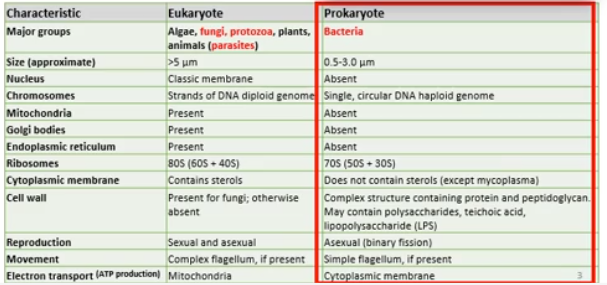
no nucleus, single circular DNA haploid genome, asexual, can have simple flagellum, cytoplasmic membrane, no mito/golgi bodies/ER
ATP production in cytoplasmic membrane
.5-3 um
Eukaryote Cell

Eukaryotes
membrane-bound nucleus, strands of DNA diploid genome, has mitochondria/golgi bodies/ER
contains sterols, sexual and asexual, can have complex flagellum
ATP production in mitochondria
>5um
Eukaryote vs Prokaryote
Prokaryote Cell Wall Components
complex with protein and peptidoglycan
may contain polysaccharides, teichoic acid, and lps
Eukaryotes with Cell Wall
only fungi have them
Eukaryote Ribosome
80S (60S + 40S)
Prokaryote Ribosome
70S (50S + 30S)
diff subunits allow us to target them with antibiotics
Ribosomes Diagram

Ribosomes
have small (30S) and large (50S) subunit
Gram Positive
purple
has thick proteoglycan layer in cell wall, one membrane
Gram Negative
red/pink
call wall has thin proteoglycan layer and lps, two membranes
How do we visualize bacteria?
observing growth colonies on petri dish
microscopically
morphology can refer to the visual of the colony or the microscopic characteristics
Bacerial Morphology: Shapes
cocci/spheres
bacilli/rods
coccobacillus (in-between cocci and bacilli)
curved rods (vibrio)
spirochetes (spiral)
(also gull-winged and barbell)
All Possible Bacteria

-aureus
bacterial colony is golden
Bacterial Morphology: Arrangement
staph
strep
diplococci
short vs long

Diplococci
two cocci bacteria together, uncommon
Strep
chain of bacteria
Staph
cluster of bacteria
Polymicrobial Patient Samples
multiple organisms and types present in one sample because we are a nice environment for organisms, but you are looking for one (we won’t have to do this)

2 Main Types of Cell Walls
one has more peptidoglycan and one cell membrane
the other has an lps (lipopolysaccharides) and two membranes

Mycoplasma
special exception to bacteria that do not have a cell wall
Why is understanding the bacterial cell wall so important for medicine?
structural and functional importance
features that give diagnostic clues (gram + or -)
components that can determine antibiotic resistance
can facilitate adhesion to human cells during infection
can contain components that help evade immune system
Gram + vs Gram - Cell Wall

Gram + Cell Wall
techoic acid, lipotechoic acid
thick peptidoglycan
one cell membrane
Gram - Cell Wall
lipopolysaccharide (lps)
thin proteoglycan
two cell membranes
porin channels
periplasm
secretion systems
3 Peptidoglycan Functions
provides rigid structure/shape by forming a cross-linked mesh
protection from environment (can prevent desiccation)
immune evasion
How does peptidoglycan contribute to immune evasion?
protects from the action of complement (an anti-microbial immune mechanism)
Peptidoglycan Structure
sugar backbone
tetrapeptide (amino acids)
cross links to another molecule via enzymes to form rigid mesh network
Peptidoglycan Structure Diagram

Sugar Backbone of Bacteria
NAG (N-Acetyl-glucosamine)
NAM (N-Acetyl-muramic acid)
Transpeptidase and Carboxypeptidase
create the cross-links of peptidoglycan
transpeptidase is common target of some antibiotics
What is significant about peptidoglycan?
it’s structure is unique, so we can target different parts of it with antibiotics that do not harm the patient
Lysozyme
natural antibiotics our bodies produce that break the bonds between NAG and NAM
in tears, helps prevent eye infections
Techoic Acid
in gram +, inflammatory
adds rigidity to cell wall, negatively charged
adherence to host cells
Inflammatory Function of Techoic Acid on Gram + Bacteria
catches the attention of the immune system
How do we distinguish between bacteria types with techoic acid?
different types of serotypes have different techoic acids
3 Components of LPS (in Gram -)
O antigen
core polysaccharide
lipid a
LPS Diagram

O Antigen
part of LPS, extends away from bacteria surface, many repeating saccharide units made up of 4-7 sugars/unit
Serotype
strain
What part of a gram - bacterial cell wall is important for serotyping?
o antigen
Core Polysaccharide
part of LPS, 9-12 sugar polysaccharide, essential for structure of LPS and bacterial viability (survivability)
Lipid A
part of LPS, endotoxin, fatty acids anchor into membrane, highly inflammatory (often a component of septic shock/toxic shock
Lipid A as an Endotoxin
toxin built into the microbe that is released upon the death of lysis of microbe (vs exotoxins which are secreted from microbes
if gram - bacteria are killed too fast, this will be released and will damage the patient, so this infection must be treated slowly
Porin Channels
part of gram - cell wall, manages movement of molecules into and out of periplasmic space, can restrict some antibiotics
hydrophilic molecules within outer membrane
Periplasm
part of gram - cell wall, allows buildup of virulence factors in space between outer membrane and cytoplasmic membrane
extra barrier for protection, enzymes that can break down certain antibiotics
Bacterial Resistance
gram + are often more resistant to environmental stressors, while gram - are often more resistant to antibiotics
Secretion Systems
component of gram - cell wall, different types, penetrates and delivers proteins across membranes and into host cells
Encapsulated Bacteria
E. coli
neisseria meingitidis
strep pneumoniae
strep agalactiae (group b strep)
haemophilus influensae type B
What types of bacteria can be encapsulated?
gram + and gram -
Encapsulation
carb capsule, provides immune evasion, useful for typing/identification, provides environmental and antibiotic protection, helps bacteria stick to host cell
Immune Evasion of Encapsulation
hard to phagocytose (slippery)
capsule shows up as clear border in staining
Asplenia
more infections with encapsulated bacteria if the spleen is removed or lost due to trauma
3 Other Structural Components of Bacteria
pilus and fimbria
flagella
slime layers
Pilus and Fimbria
bacterial component, adhesion and replication
Flagella
bacterial component, motility
Slime Layers
bacterial component, biofilms, loose network of peptidoglycan amongst neighboring bacteria
helps to adhere bacterial colonies to surfaces
Problem with Slime Layers
issues in hospitals with patients who have in-dwelling catheters, in prosthetic joints
Variety of Flagella
monotrichous
lophotrichous
peritrichous
amphitrichous polar

Amphitrichous Polar
a bacteria with a flagella on each end
Peritrichous
multiple flagella everywhere on a bacteria
Lophotrochus
multiple polar flagella on bacteria
Monotrochus
single polar flagella on bacteria
Gram + vs Gram - Summary
