design for manufacture
 Call Kai
 Learn
 Practice Test
 Spaced Repetition
 Match
 Flashcards
 Knowt Play
1/75

There's no tags or description
Looks like no tags are added yet.
76 Terms
what is hardwood (type of tree) and what types of trees are they? examples (7)?
they are trees with leaves
they are slow growing
deciduous
ash
basswood
beech
birch
maple
oak
walnut
what is softwood? what type of tree are they? examples (4)?
needle bearing
fastgrowing
coniferous
cedar
spruce
fir
pine
what are exit woods? ex(6)?
woods from South America, Africa, and Asia
teak
purpleheart
mahogany
sapele
padauk
zebrawood
what types of grain are there on a piece of wood?
face grain (top (3.5))
edge grain (side (1.5))
end grain end of wood
wood vs timber?
wood - natural fibres that make up a tree
timber - trees or logs that are ready for or being used in construction
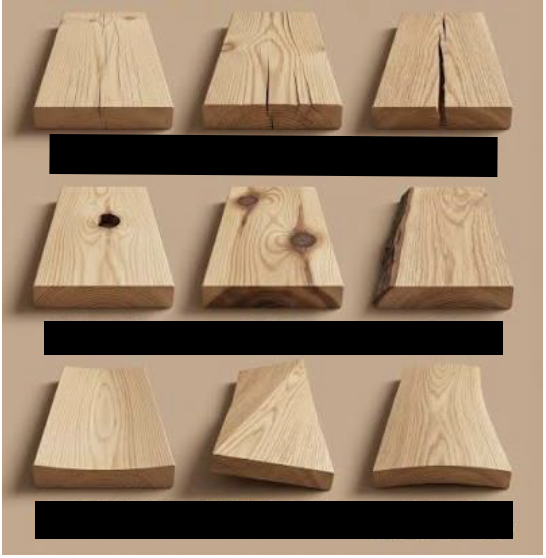
what are these imperfections called?

what are the properties of wood? (4) how are they measured?
weight - a function of the density of wood - slow growing tree is usually higher in density (hardwood)
strength and stiffness - strength is measures by how much force it can withstand in wither tension or compression
hardness - measured in terms of how rich resistance the wood has to indentation or scratching - uses the Janka test (measures the amount of force required to embed a 0.444” steel ball into the wood to half of its diameter)
rot resistance - all wood will eventually rot, some will rot after though
what are some applications of wood? (9)
construction
fenestration
flooring
toys
lighting
furniture
house wears
marine
musical instruments
what does hygroscopic mean? what are two ways of drying wood?
a substance can easily attract and hold water molecules from its surrounding environment
air drying - outside, takes longer, family owned business
kill drying - inside, uses heated air, mass manufacture
how much moisture does Greenwood, wood for outdoor use, and wood for indoor use have?
Greenwood - 28% moisture
wood for outdoors - 12-14% moisture
wood for indoors - 6-8% moisture
how is wood sold? (shapes) (5)
boards
plywood
particleboard
dowel
veneer
what is plywood? what are different grades of plywood (what do they mean)?
at least three sheets of peed off wood from the log laminated in different directions
a, b, c, etc
grade a - sanded Bothe sides, useful for cabinetry and finer work
grade b - a smooth, sanded surface with minor, neatly repaired defects like small sound knots or wood patches up to one inch across
grade c - rough and mostly used in construction
what is particle board ? where is it used?
a way that wood is sold made from woodchips and glue
used in kitchen cabinet construction - IKEA products
what to veneer laminates do? how are they sold ?
provide real wood finishes - applied to the top of plywood or particle board
can come in edging for laminates, sold in rolls or strips
why is bamboo good? (3) where is it grown?
its fast growing
harvest - you don’t need to replant
consumes less water
southern hemisphere
what are types if joints (joining wood) (7)
butt joint - simple, not string, looks bad
mitre joint - join together at an angle (most picture frames)
mitre joint with splines - mitre joint with insterts to keep it together better
biscuit joint - create a circular, flat biscuit shape, cut half of the diameter into two separate pieces of wood, put the biscuit in each side & push them tog.
mortise & tenon - create a hole in one piece, a Male end in the other piece the size of the hole and put them tog - very strong & load bearing
dovetail joint - very strong, decorative - can be done with a router and a gig
box joint - strong - can be done with a router and a gig
what are different types of glue (4)? - what is glueing only as good as?
wood glue - indoor and outdoor
epoxy - very string
cyanoacrylate - crazy glue (need a smooth surface)
polyurethane - foam (expands)
glueing is only as good as your clamping and surface accuracy
what is cork? where does it come form?
the tick outer bark (periderm) of the cork oak tree
protugal/mediteranian region
what is fabrication? (4) + (ex)
usually used for hands-on, custom, smaller projects
focuses on building individual parts and framework structures used in larger systems
making or building something from raw material
a trailer frame, that is wlded from rolled form aluminum extrusions
low volume production
what is manufacturing? (4) +ex
process of turning raw materials into finished goods on a large scale using tools, human labour, machinery, and chemical processing
entire product lifecycle
produces finished goods (cars, electronics)
automated assembly lines and repetitive high-volume output
high volume production
what are three suppliers in Ottawa and what stores sell different metal shapes? (4 + $ fact)
loucon metals
metals pros
metal supermarket
hardware stores
home depot
princess auto
Canadian tire
(getting metal from hardware store is usually more expensive)
steel vs aluminum
Steel
dull inside corners due to bending
heavier
conductive
changes colour when hot
rough surface
Aluminum
sharp corners due to going through a die
soft & light
does not change colour when hot
needs to age to harden
smooth surface
hot rolled vs cold rolled steel (7)3 diff
hot rolled
metal is heated up and rolled into sheet/shape
it cools at room tempurature
it deforms slightly after its rolled so its not suitable for precise projects
it can make bigger things than cold rolling
rough surface - cheaper
I beams, train tracks, construction frames
round edges
Cold rolled
hot rolled, colds at room temp, rolled again, turned, righted, and polished
stronger and more precise
sheet metal
smooth surface, pricy
household appliance, furniture, car body panels
defined edges
3 different ways to cut metal
sawing
hacksaw (not great accuracy)
vertical bandsaw (used for smaller pieces
horizontal bandsaw
oxy-acetylene
a high temperature gas mixed with acetylene and pure oxygen to heat up metal and then cut a hole with the flame pressure
portable, versatile, thin and thick cuts, dangerous
Plasma cutter
shoots pressurized air over an electrode and creates a circuit with the metal piece being cut. the circuit is strong enough to melt the metal and the pressurized air shoots a hole through the molten piece
three different ways to drill into metal
drill press
different materials need different speeds (steel slower than aluminum cause its denser)
smaller diameter cutting tool needs to go faster than a larger diameter
Knee mill
3 axes (large ones) 2 axes (desktop ones)
angled cuts, holes, slots, and pockets
CNC milliing
subtractive prices using milling cutting tools to remove material
Lathe
high accuracy tool that moves a cutter bit along two axes to cut circular items known as ‘turning’
what are the parts of a drill press?
types of tube bending (2)
draw bending
the tube is bent using a machine
manual rotary (compression bending)
using a bending die that has the desired bending radius, a rotary lever with an outside roller is used to shape the tube around the die
how must a tube be bent? what is the neutral axis
beyond its yield point
the materials capacity to resist permanent deformation
not past its ultimate tensile strength
the limit of the materials ability to resits tearing
the tube is then bent, and undergoes distortion, the material outside the bend stretches and the material inside the bend compresses
neutral axis
a boundary line between the tension and compression zones
bending operations are calculated from its location
what are the two types of welding?
forge weldoing
heat up the (iron based) metal to almost its melting point and hammer two pieces together in order to fuse them together
arc welding
creating a very high current, using an electrical arc to melt metal. the arc is created by applying voltage across two separated conductive electrodes until an electrical path is created through the air gap. the arc melts the metal together along either a filler material made from a consumable electrode
shielded metal arc weld - what is it (4)
shielded metal arc welding (stick welding) (SMAW)
most versatile and common
welding rods (electrodes) are covered in a coating of hard flux that melts and deposits as slag, the slag is then removed with a hammer afterwards (is brittle and will break off)
power source can be AC or DC
to create arc, electricity needs to flow from electrode back to source, so the workplace needs to be grounded. to do that we calmp the negative wire to the workplace

arc weld types (3) (just names)
shielded metal arc welding (SMAW) (stick welding)
metal insert gas welding (MIG)
tungsten inter gas welding (TIG)
what’s metal inert gass welding
MIG welding
most simple , most common in industrial practices
uses argon shielding gas to protect the molten metals from the atmosphere
the electrode is a wire spool and machine-fed
when the trigger is pulled, the arc is formed and the wire is fed

what’s tungsten inert gas welding
TIG welding
using a tungsten electrode that will not melt
sometimes a filler wire or thin rod is manually fed into the weld (usually stainless steel)

what are the types of welds (3)
tack
small, temporary made with filler metal to hold metal parts in alignment prevent thermal distortion
bead
single continuous line of solidified metal deposited along a joint
spot
resistance welding that joins overlapping sheet metal by passing a high electrical current though localized points while clamping with copper alloy electrodes
types of joints used in welding (5)
butt
lap
tee
outside corner
edge

types of metal used for sheet metal (5)? how is sheet metal sold?
stainless steel
cold rolled steel
pre-plated steel
aluminium
copper brass
as a flat sheet or in coils
How is sheet metal thickness measured? why is gauge thickness not always the same in diff materials? how can steel sheet metal be sold ?
imperial, metric, gauge
because of historical situations where copper gauge and steel gauge was used in different industries and produced in different mills
mild steel, cold rolled, or hot rolled plated with zinc for corrosion protection
what is perforated sheet metal used for? what’s another name for it? what is the connection between gauge and thickness?
used as a decorative element, to lower the weight, to allow for sound to pass through, or to permit airflow
as gauge increases thickness decreases
what can sheet metal be used fro? why is it used?
computer chassies
chairs
light fixtures
spekaers
toys
it is strong and relatively inexpensive
what is sheet metal siding? (2) what’s an early example of corrugation?
an inexpensive durable way to have siding for a structure
usually corrugated (folded) in some pattern to add strength - each corrugation acts as a mini beam and thus resists bending
used by early plane manufacturers, steel was heavy so they made it really thin, in order to add strength they corrugated it
three types of sheet metal cutting
manual cutting
sheer
nibbling
plasma cutting
digital programed cutting
laser jet
waterjet
what are ways of manually cutting sheet metal (2)
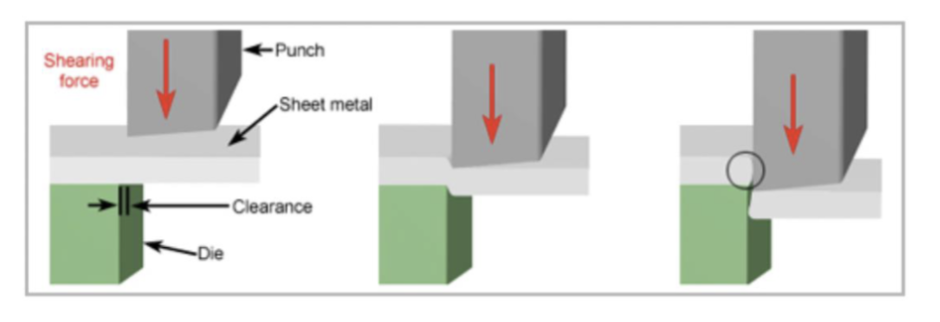
shearing
hand held - good for thin and softer metals, cut edge curls
bench mounted - can cut thicker (mild steel - 14 gauge, aluminium 14 gauge, stainless steel - 18 gauge)
floor mounted - cut very straight, used to cut larger sheets, usually foot operated or powered electrically
will usually have some ‘roll over’ on the edge
nibbling
rapid small-stroke punch and die to remove tiny overlapping pieces of material, allowing you to cut complex curves, straight lines, or interior holes without destroying the metal
ways to digitally program cut sheet metal
laser cutting
a laser beam goes through a focused leans, and out the nozzle, it is fast and economical, requiring simple programming. It can cut complex cuts easily
can cut through plastic, wood, and metal - metal is harder to cut because it is reflective
can be combined with a turret machine to create features such as louvres
waterjet cutting
guided by CNC machinery, cuts thick materials with a hypersonic water stream with abrasive filler that cuts through steel and aluminium easily
less expensive than laser cutting
more noisy and more messy
start at 60k
two ways of forming sheet metals (no def)
brake bending
punching
types of break bending (2)
finger break
features a row of removable “fingers” of varying widths used to bend sheet metal into three dimensional shapes (the green one in Pauls lab)
press break
clamp the workpiece btw a movable upper tool (punch) and a stationary lower tool (die)

what is spring back and what are its factors?
you must overbend your metal slightly because it will spring back.
this is because the material both undergoes elastic (bends back) and plastic (stays bent) deformation and the elastic deformation (stress is less than the yeild strength) will go back to its original state
usually we bend a test one and see how far extra we need to bend it or we bend and check
spring back increases with bend radius and it increases with the materials yield strength

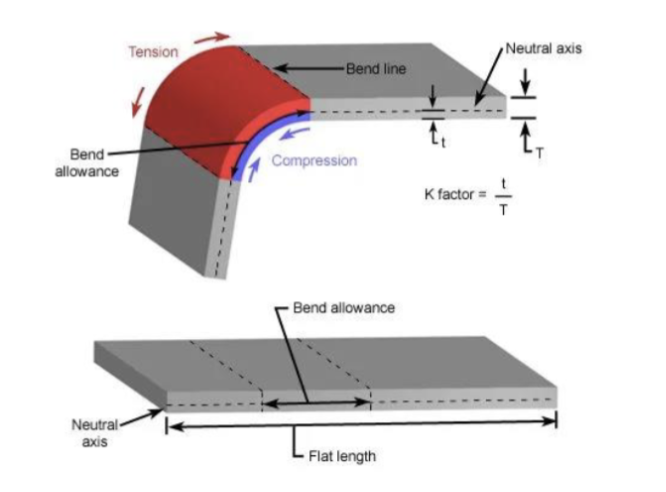
what is the anatomy of a bend (6)
neutral axis is the middle line going through the piece of metal
compression is the inside bend
tension is the outside
bend line is the last point the metal is straight
bend allowance - the amount of material that is bent
flange length - length of the bar when bent
what’s minimum bend distance/radius
smallest inside radius a metal can be formed to without causing surface cracking, structural weakening, or breaking
what’s corner relief
a small cut or notch made at the intersection of two or more 90 degree bends to prevent tearing, cracking, bulging, and dimpling, and to ensure accurate corners

what are 4 different kinds of specialty bends sheet metal
step bends (curves)
taking a large bend radius and dividing it up into multiple bends in order to approximate a larger radius
cannot do with perforated sheet metal (cause the holes are random)
hem bend (stringer edge)
an edge of sheet metal that is bent 180 degrees and flattened on top of itself
using a press break and a large die
can be done on any material as long as it doesn’t exceed the maximum thickness
needs minimum size of half an inch
internal bend (internal flange)
bend that is placed on a particular area of a part where material surrounds the bend rather than on an outermost edge
jog bend (2 operations) / material offset bend (1 operation)
flat, up diagonal, flat
used for adding clearance to a design
parallel distances (jog bends can achieve further distance
W bend (back bend)
to form deep u shapes profiles

what is machine punching? (3) what are punch features? (4)
machine that uses hardened steel tools that punch through the sheet metal using digital code
versatile and fast
used for complex sheet metal parts and compatible with high volume production
hole patterns,
hinges
lock tabs
louvres
what are slot and tabs for? (sheet metal) how can they be named (3)
helps align parts accurately for welding
can be laser cut, water jet, or pumched
what are self clinching fasteners?
threaded or non threaded device that is permanently inserted on sheet metal
panel faster
tools device installed on the outside of the mounting part - has a threaded stud on a spring that allows you to push and fasten into a threaded resepticle
tie down fastener
give you a hint inside the enclosure to organize and tie up cables
stud
permanently threaded screw in enclosure that can be used for mounting or grounding components
pilot pin
unthreaded rod that can be used for locating components in enclosure
threaded nut
for mounting parts
right angle fastener
lets you thread into part at a 90 degree angle
standoff
internal thread used to mount things
blind nut
encapsulated internal thread to prevent foreign material from entering enclosure
flesh nut
mounting point
what is spot welding?
resistance spot welding
an electrical resistance welding process used to join overlapping sheets of metal together at a distinct, localized point

what is the product lifecycle ? what is the holistic lifecycle approach? what’s the cradle to grave concept?
raw material - transportation - processing - transportation - retail and use phase - end of life
rather than treating design, production, marketing, and disposal as isolated steps, a holistic strategy sees the process as a whole, and designs for circularity
that everything you make is going to end up in landfill eventually, so you have to think about the product lifespan and its environmental, material, and energy impacts across every stage pf its existence
what is metallurgy? physical? chemical?
the study of metals
physical
science that looks at the properties of metals and how they are controlled and monitored in the production of raw metal materials, such as tubes and bars
focuses on the mechanical properties of metals and methods to enhance them
chemical
chemical science behind understanding the extraction of ore and how it is chemically processed into desirable raw materials. (understanding atomic structures and how they are achieved)
involves extracting metals, reducing their oxidation, and preventing corrosion
what are the physical properties of metal ?
hardness - does it resist scratching and indentation
elasticity - is it flexible, (springs)
toughness - how much can it withstand without breaking
ductility - is it possible to stretch it (can it be drawn and pulled into wire)
conductivity - does it conduct electricity
oxidation - does it rust
how do we test hardness in metal
Rockwell standardized hardness test
its a standardized test that uses a repeatable method by using a diamond pointed inventor, to measure how far the indenter travels into the specimen for a specific load

what are two internal forces? explain them
compression
steel beams can buckle if the stress of compression is too high
uses calculations with cross sectional geometry and slenderness ratios
brittle materials such as cast iron are good in compression
as cross section reduces, stress increases
tension
when subject to tension, brittle materials tend to crack and break. if the materials too ductile it may stretch
steel tends to be elastic and ductile, allowing it to be used in tension rather than compression
when steel is pulses it is very string, but if its compressed, it will buckle
what are beams? what is the strongest type of beam / why?
they are unique structures because they experience both internal compression and tension force - steel is used in beams because iron is not good with tension and will tear
H beam / I beam
most of the mass is placed into the top and bottom flanges, sitting as far away from the neural centre axis as possible
the ‘web’ in the middle resists vertical shear forces
provides superior stiffness and bending resistance while using less material

what does a tensile testing machine measure and how>
it measures elasticity, ductility, and toughness
it clamps two sides of a piece of metal and using hydraulics exerts a force to elongate the metal, the elongation is measured as a percentage

what is stress?
how much force you put on a certain area - the stress on a smaller cross section is higher than on a thick cross section when the same amount of force is applied
what is the stress strain curve? what’s the equation? what does the graph depict?
the output of the tensile testing machine -
its measures as strain (elongation/original length = % of elongation)
initial stage - specimen will elongate in an elastic fashion (straight slope of the curve) -
if force is removed from the specimen at this point, it will not undergo any permanent deformation, it’ll return to its original shape
the specimen will reach its yield strength where it will then deform plastically (undergoing permanent deformation.
ultimate tensile strength is then reached, then the material will fail and fracture
what’s the engineers job vs the designers job
engineer - to calculate loads and strengths of materials
designer - design in such a way that implements principles to make their designs last longer, be stringer, and also use less material and weigh less
what is iron (1) and why do we smelt it? (2)
iron is an element found in nature
it is rarely found pure in nature so smelting is a process used to strip away oxygen, freeing the pure metallic iron while impurities turn into waste
the pure iron is then too soft to work with, so it is melted and mixed in with other metals to create a string alloy
what is bloomery? blast furnace, how does it work?
an ancient technique for smelting iron ore in a clay oven - the iron melts and collects a the bottom as an iron bloom
blast furnace
a replacement for the bloomery , bigger and better
permanent and continuous
layers of iron ore, coke, and limestone are continuously charged into the top of the tall steel stack - presurized hot air is blow under high pressure into the lower section - hot air burns the coke, making it hotter, limestone and iron melts and collect at bottom - iron is denser so it falls to complete bottom and gets drained
the output from a blast furnace is named pig iron - it has a high carbon content (3.5-4.5%) - high carbon makes it brittle and not usable w/o further processing
what is steel? how was it made back in the day in Japan?
iron with very very low carbon content - can also be called wrought iron
the worker would heat it up and beat it with a hammer. the carbon reacts to the high temperature and the hammering removes the carbon - creating steel
what is cast iron? what’s the bessemer process?
steel with high carbon content , quite brittle, but good for making parts like internal combustion engines - it is also easier to melt iron than steel to put into moulds cause it has a lower melting point
a machine that burns off the carbon from the iron by forcing air though a furnace at a high speed - it creates a lower quality steel though due to the inability to remove sulphur present in the ore
what are steel sustainability concerns? (3)
steel production is a suer polluter
steel production accounts for 8% of the woulds CO2 production
it consumes a lot of energy
what has the bessemer process been replaced by? what are new different forms of steel (2)?
the basic oxygen approach
more controlled and cleaner
draws out unwanted phosphorus by hitting it with a very pure blast of oxygen that converts it into a form that is absorbed in the slag, which is then separated fro the steel
hydrogen steel (hydrogen based direct reduction)
uses hydrogen to bind with oxides in the iron or e to reduce it into iron and water instead of iron and CO2
green steel
electric arc furnace uses a high content of recycled scrap to make steel. an arc is made btw 3 carbon electrodes that are immersed in the mixture of metal and melt the metal
steel vs iron (3)
iron
hard
brittle
easily cast into shapes
steel
maleable
tough
versatile and comes in many different grades of alloy
iron in construction(1)? what is steel used to make (6)
Quebec bridge collapse
buildings
cars
ships
furniture
appliances
hardware and tools
types of steel?
carbon steel
low carbon steel (mild steel)
most common type of steel
strong, versatile, easy to cut and weld
carbon content less than 0.3%
medium carbon steel
0.3-0.6% carbon
high carbon steel
0.6-0.9% carbon
alloy steel
steel is already an alloy, but other metals are added to improve corrosion, resistance, hardness, and mechinability
tend to be used when the application demands a steel that has specific properties
stainless steel
normal steel corrodes easily with exposure to water and salt, so this steel is made with a significant amounts of chromium for rust protection
tool steel
contains specific carbide-forming elements that allow it to shape, cut, stamp, and mold other materials without rapidly losing its structural integrity
high hardness (even when heated)
water resistant
tough
why do they do heat treatment on steel and (2)? what Is heat treatment for steel? (2)
to soften a higher carbon steel so that it can be welded to machined , then quenched to regain hardness
used to alter the grain structure of steel to soften it or used to harden the part
annealing-softening steel
the steel is heated to the annealing temperature and then allowed to cool slowly
removes stresses and makes the steel softer
quenching-hardening of steel
the steel is heated to the appropriate temperature and cooled instantly by quenching in water or oil
this hardens the steel (at least on the surface)
what type of steel do most common applications require? what is the young modulus? for steels?
how does yield strength differ across types of steel?
mild or low carbon steel
automotive or aviation and space may require alloyed steel with special performance requirements
the young modulus (stiffness and deflection) of all steel is pretty much the same
yield strength is lower for low carbon steel, making it easier to bend and weld