Microbio Final Exam Review
 Call Kai
 Learn
 Practice Test
 Spaced Repetition
 Match
 Flashcards
 Knowt Play
1/150

Earn XP
Description and Tags
151 Terms
Which organism category requires oxygen for growth?
Obligate aerobes
Which category can grow by fermentation or anaerobic respiration when oxygen is absent?
Facultative anaerobes
Which category is harmed by oxygen and cannot use it?
Obligate anaerobes
Which organism tolerates oxygen but cannot use it?
Aerotolerant anaerobe
Microaerophiles require:
Oxygen concentration lower than that of air
Reducing media such as sodium thioglycolate are used to:
Cultivate anaerobic bacteria by removing/depleting oxygen
The gas pack jar is used to cultivate anaerobes on plates. Which slide-listed component is an anaerobic indicator?
Methylene blue
In the oxygen-gradient tube, E. coli is shown as:
Facultative anaerobe growing with and without oxygen throughout
Neisseria sicca is shown growing:
Near the top where oxygen is lower than air
Clostridium butyricum is shown as:
Strict anaerobe; bottom growth and does not intolerance oxygen

TBA
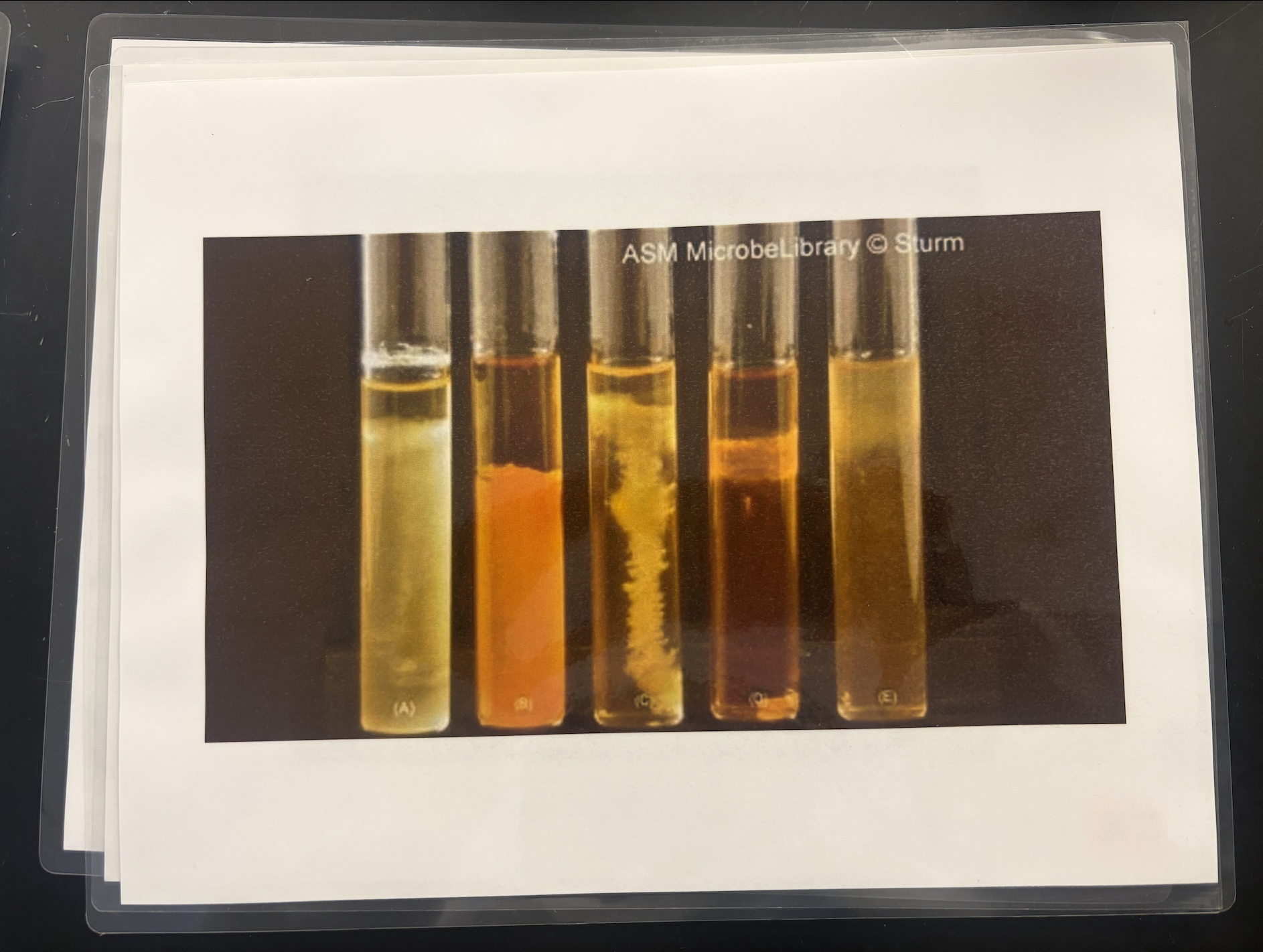
A set of labeled test tubes with different visible reaction/growth patterns

In the oxygen-gradient tube image, a microaerophile grows:
Near the top at reduced oxygen concentration

Which tube pattern represents an obligate anaerobe?
D. Growth at the bottom where oxygen is absent
Before antimicrobial susceptibility testing, the specific bacteria should be:
Isolated from the patient specimen
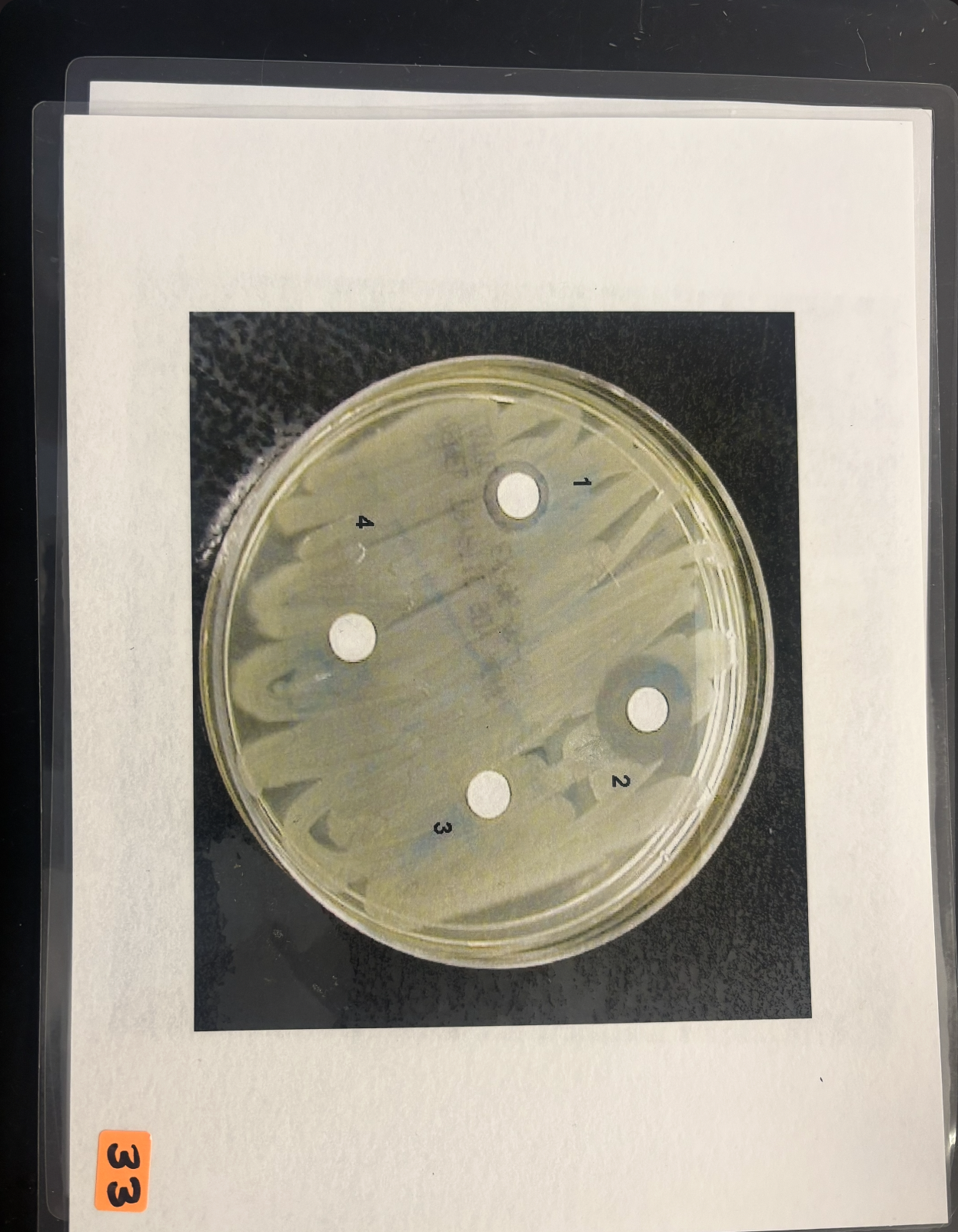
Kirby-Bauer is also called the:
Disc diffusion method
A susceptible organism on a Kirby-Bauer plate is indicated by:
A clear zone of inhibited growth around the disc
In the slide description, the zone size relates to sensitivity and the point at which the:
Minimum inhibitory concentration (MIC) is reached
Which factor listed can affect antimicrobial effectiveness?
Dosage and duration

TBA
Kill microbes directly

TBA
Prevent microbes from growing

TBA
Mechanical removal of microbes from a limited area

TBA
Lowering microbial counts on eating utensils to safe levels
Sterilization is defined as:
Removing and destroying all microbial life
Disinfection is described as destroying harmful microorganisms and is used:
Externally
Antisepsis refers to destroying harmful microorganisms on:
Living tissue
TBA
Eight antiseptics on Staph and E. coli
Staphylococcus cells are described as:
Gram-positive spherical bacteria in grape-like clusters
Staphylococcus are facultative anaerobes that grow well under:
High osmotic pressure/low moisture
Which is listed as a location/source for Staphylococcus?
Nasal secretions, skin, ham and cured meats
Which statement matches staphylococcus aureus?
Wound infections, often antibiotic resistant, enterotoxin production, and major cause of impetigo
Staphylococcus epidermidis is described as:
Very common on skin and opportunistic
Streptococcus are:
Gram-positive spherical bacteria in chains
Streptococcus is associated with which conditions?
Meningitis, endocarditis, sore throats, pneumonia
MSA contains mannitol, 7.5% sodium chloride, and:
Phenol red
MSA is selective because high salt:
Allows most staphylococci to grow and inhibits other organisms
MSA is differential because it distinguishes:
Mannitol fermenters from non-fermenters
Staphylococcus aureus is a fermenter on MSA that typically appears:
Yellow
Staphylococcus epidermidis is a non-fermenter on MSA that typically appears:
Red
According to the MSA pH key, pH below 6.8 is:
Yellow
Blood agar contains:
5% sheep blood in Trypticase Soy Agar base
Beta hemolysis produces:
Clear zones around colonies and a light-yellow zone
Which organism is listed as beta-hemolytic?
S. pyogenes
Alpha hemolysis produces:
Partial greenish areas
Which organism is listed as alpha-hemolytic?
S. pneumoniae
Gamma hemolysis means:
No hemolysis/no change around colonies
Which organism is listed with gamma hemolysis?
S. epidermidis
Hemolysins are exotoxins that destroy:
Red blood cells and hemoglobin
Hemolysin O is oxygen-____ and Hemolysin S is oxygen-____.
Labile; stable
Enterobacteriaceae are commonly called enterics because they:
Inhabit the intestinal tract
Enterics are generally:
Gram-negative rods, carbohydrate fermenters, facultative anaerobes
Coliforms include E. coli and other normal flora that:
Ferment lactose rapidly
The slide lists which organisms as true pathogens?
Salmonella and Shigella
EMB and HEK are used as selective media for:
Gram-negative bacteria often found in digestive tract samples
EMB dyes inhibit most:
Gram-positive organisms
On EMB, E. coli is characterized by:
Green metallic sheen
On EMB, Enterobacter appears:
Pink
Pathogens on EMB are described as generally:
Colorless
HEK stands for: Choices:
Hektoen Enteric Agar
Bacitracin is a topical antibiotic that inhibits:
Cell wall synthesis
Bacitracin is produced by:
Bacillus licheniformis
Bacitracin susceptibility helps confirm:
Beta-hemolytic S. pyogenes
A positive bacitracin result is a clear zone of:
At least 10 mm
Optochin susceptibility is used to confirm:
Alpha-hemolytic S. pneumoniae
TBA
Observed morphology and test/media reactions

TBA
Use the slide’s stated organism/test result and visual evidence together
Ionizing radiation (X-rays, gamma rays, electron beams) damages DNA by:
Ionizing water to form reactive hydroxyl radicals that cause lethal mutations
Nonionizing UV radiation is listed around:
260 nm (250–270 nm range)
UV damages DNA primarily by creating:
Pyrimidine dimers, especially thymine dimers
Microwaves kill microbes mainly by:
Heat; they are not especially antimicrobial
The Enterotube is a multitest system to help identify:
Enteric bacteria
The specimen (stool) is first inoculated onto:
Appropriate isolation medium, then Enterotube

Which pathogen appears bluegreen with no black precipitate on which medium?
Salmonella; HEK
TBA
Indole and VP

TBA
Five-digit numeric code used with a code book
A catalase test commonly detects breakdown of hydrogen peroxide by observing:
Bubbles
Agglutination tests can confirm:
A specific organism; the same principle is used for blood typing
In the Staphyloslide latex test, blue latex particles are coated with:
S. aureus-specific IgG antibodies
Visible clumping occurs because:
Antibody-coated particles bind target and aggregate
A clean-catch urine sample should be:
Midstream: begin urinating, wait about one second, collect, then remove cup before finishing

Which coliforms appear as yellow to salmon/pink colonies on HEK?
E. coli and Enterobacter
Which medium is selective for Gram-negative organisms and shows E. coli green sheen/Enterobacter pink?
EMB
Blood agar in the urine-streak exercise is:
Not selective; differential for hemolysis
Sabouraud agar is selective for:
Fungi
Candida on Sabouraud agar produces:
White creamy colonies
ELISA can detect antigens, antibodies, hormones, and other:
Proteins
Direct ELISA detects:
Antigens
Indirect ELISA detects:
Antibodies
Western blotting is used to:
Confirm a positive ELISA; via electrophoresis and blotter

Which medium is shown?
Kirby-Bauer Method

Which coliform is shown on which medium?
E.coli; EMB

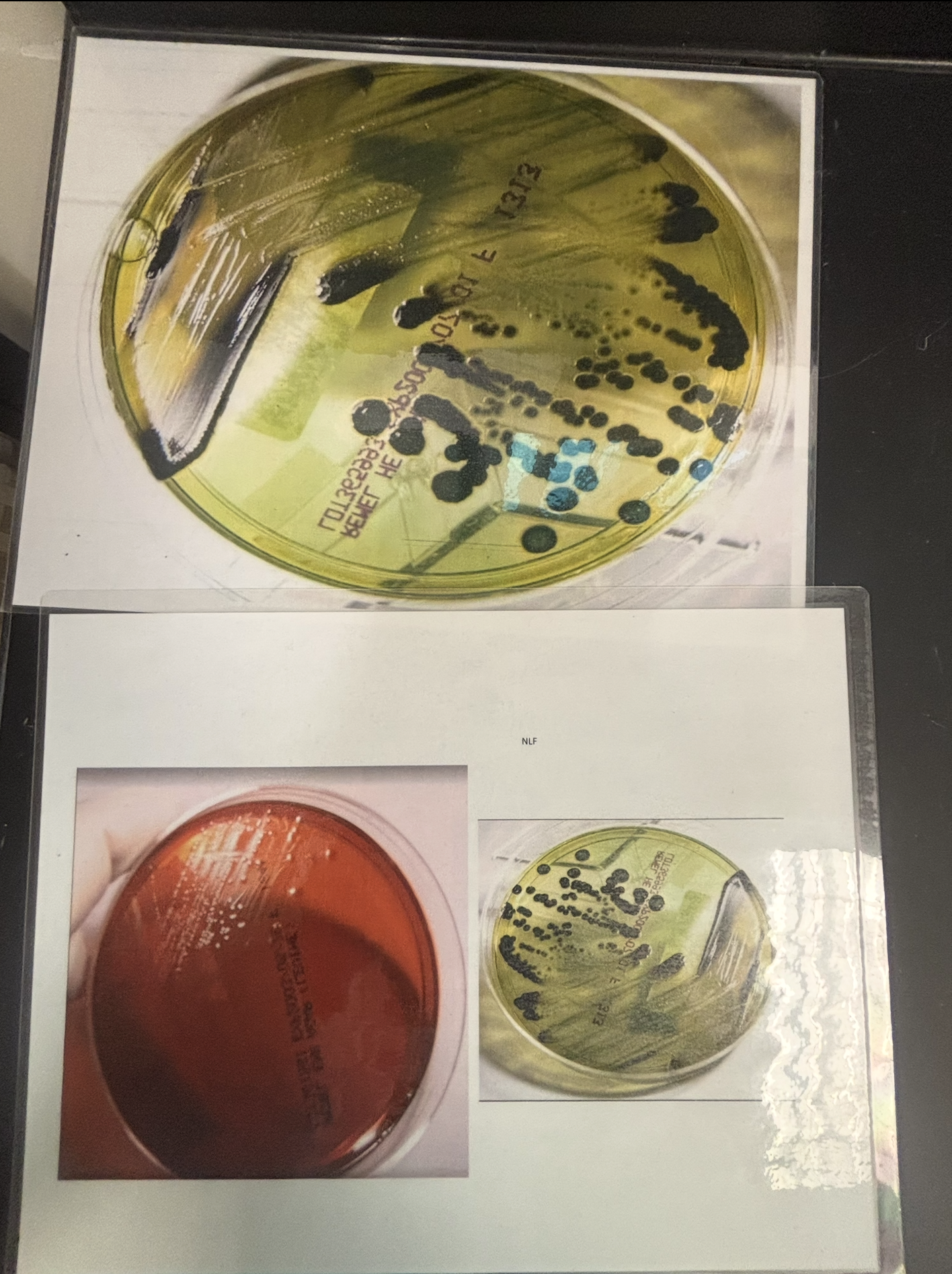
Which pathogen is shown on which medium?
Proteus; HEK

Which medium is shown?
MSA
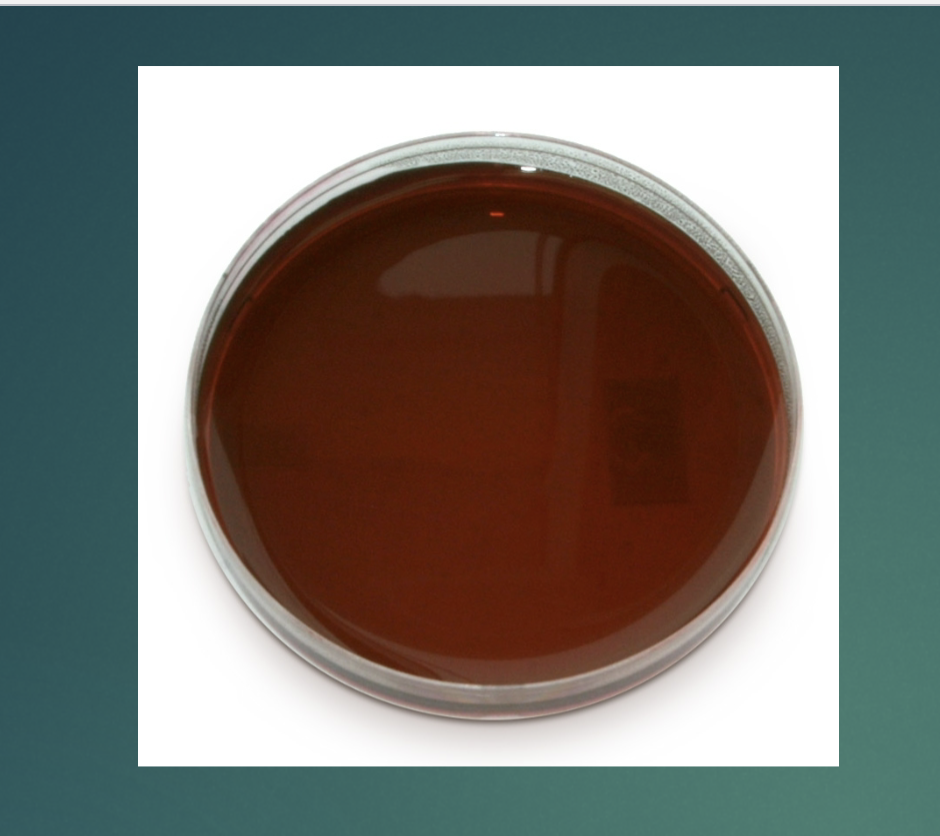
Which medium is shown?
EMB
In the demo, a positive ELISA reading is:
Blue, read within five minutes
Why should readings be recorded within five minutes?
Blue may develop later from reaction to light

Which medium is shown?
HEK
Which media are listed as both selective and differential?
All of the above

Blood agar is classified as:
Differential
The epidemic simulation slide contrasts epidemic as large regional distribution with pandemic as:
Global distribution
Epidemiology studies:
Where/when diseases occur and how they are transmitted in populations