PKSC 4160 test 4
 Call Kai
 Learn
 Practice Test
 Spaced Repetition
 Match
 Flashcards
 Knowt Play
1/72

Earn XP
Description and Tags
polymers test 4 2026, blow molding, foams, orientation, injection molding, sustainability
73 Terms
what is blow molding?
Air pressure is used to shape the inside of the object while the mold shapes the outside, three basic type: extrusion, injection, stretch
blow molding steps
melt the resin
parison or pre-form production
inflation of the parison or preform in a mold to produce the end part
cooling
ejection of the part
trimming and finishing of the part
what is a parison used for
extrusion blow molding
what is a preform used for
injection blow molding
what is the rate determining step in blow molding
Cooling
features of extrusion
simplest
most economical
less wall thickness control
wide variety of bottle shapes
medium to large side
considerable scrap (flash)
high melt strength resin
features of injection (IBM & SBM)
accurate dimension control
expense from 2 sets of molds
little scrap
lower melt strength resins ok
very small to medium size finished product
EBM details
thickness profile modified by gravity
quality of weld line very important
blow pressure can change during molding
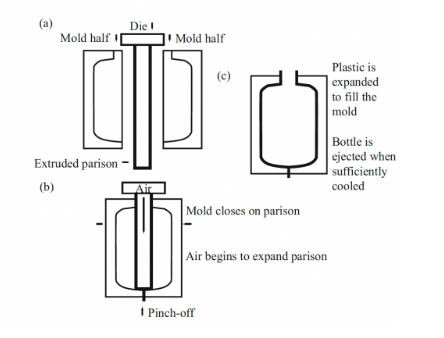
What process is this used for in EBM
continuous
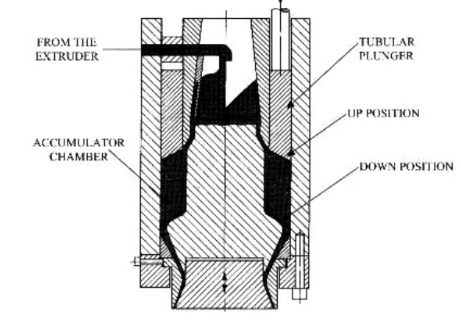
what process is this used for
intermittent
Intermittent vs continuous EBM
Intermittent can have premature cooling but produces a more accurate parison
what can be used for thickness control
programmed mandrel/pin
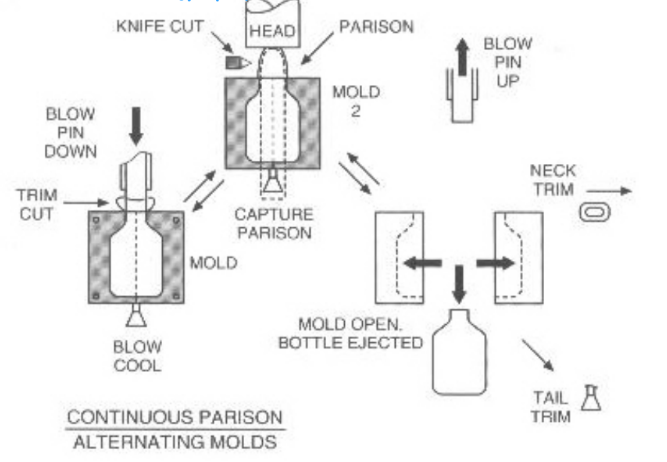
Is this vertical or horizontal movement mold
vertical

Is this vertical or horizontal movement mold
horizontal
what features do EBM containers have
handles
flash line
Steps in IBM process
injection molding the preform
blow molding the preform
IBM bottle features
short
no flash line
gate markt
features of IBM
gate mark on the bottle
limited ability to make handles
better finish tolerances than EBM
size limitations, limited to 10x preform diameter or plastic will be too thin at the bottom
SBM process
uses a rod to stretch preform before blowing air which redistributes plastic material in preform to leave enough at the bottom
what temperature should we heat before SBM
above Tg but below Tm
SBM biaxial orientation
improves impact strength, gas barrier, stiffness, clarity, surface gloss, thinner walls mean lower material cost
define foams
plastic containing gas in an open or closed cell structure
foams key features
very light weight
good insulating capacity
ability to absorb shocks
varied shaping options/easy fabrication
low use of raw materials
cell structure open cell
like a sponge
communicating channels between adjacent cells
liquids or gases can travel through the foam = absorbent
cell structure closed cell
like a pad
cell completely surrounded by polymer
gases or liquids can move only by diffusing
most packaging foams in this category
better insulator
can become open celled
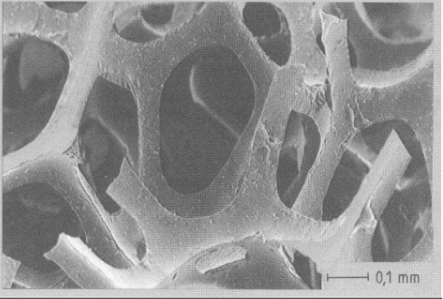
open or closed
open
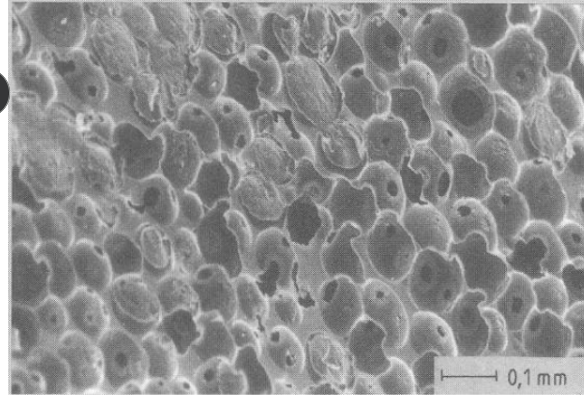
open or closed
closed
types of foam
polystyrene
polyolefin
polyurethane
PS foam characteristics
most common
least expensive
stiffer bc higher Tg
PS foam uses
meat and produce
coffee cup
fast food bowls or clamshells
cushion/shock absorbing capabilities
temperature sensitive shipping
EPS production
hydrocarbon blowing agent
hydrocarbon blowing agent
produces bubbles in the plastic = forms cells as it vaporizes
amnt of agent and operating temp influences properties
Heat the material to form beads and vaporize the pentane (blowing agent)
Age these pre-expanded beads to reach equilibrium
Bubbles are packed into a mold
Heat & pressure are added to cause the beads to fuse together
Shaped or block of material
Extruded PS foam
PS resin melted in extruder
blow agent and nucleator mixed in extruder
cells created as blowing agent evaporates
nucleator provides uniformity and desired cell size
falte sheet or tubular film
sheets might be thermoformed
polyolefin foams
more costly than PS
more flexible and better amble to provide protection from multiple impacts
can be extruded or expanded
polyurethane foam
not widely used but critical in foam-in-place operations
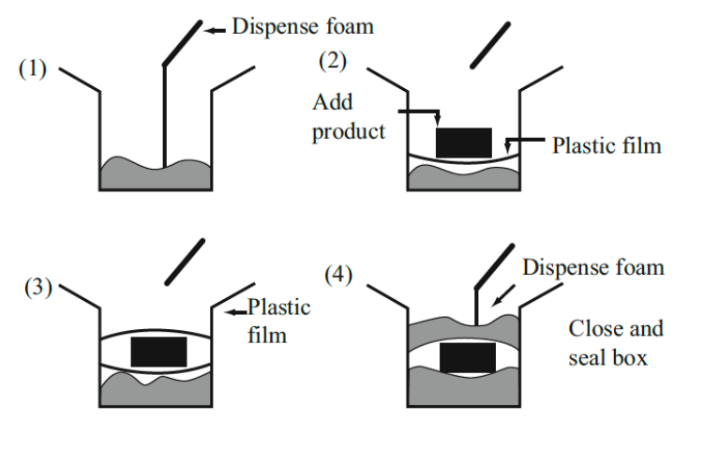
name the process
foam in place
starch based foams
loose-fill packaging shapes
IM Which will be more brittle?
PS
What will happen with the first cushion test impact of a brittle polymer? How will this affect the loss for the second drop?
more spring less rebound
Open cell or closed cell: Which will insulate better?
closed
Open cell or closed cell: Which would you prefer for hamburger?
open cell for leaking
closed for keeping fully cooked warm
what is orientation
Stretching of a material to produce some form of molecular realignment in the direction that it is being stretched
why do we orient?
increased crystallinity (clear in appearance)
barrier properties
strength in the direction of the stretching
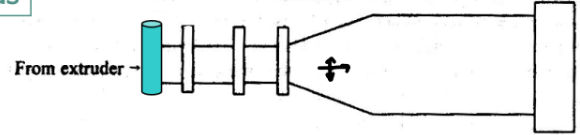
simultaneous vs sequential
simultaneous
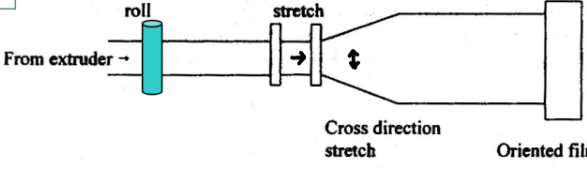
simultaneous vs sequential
sequential
biaxial orientation process steps
cast film- quench into amorphous
heat above Tg but below cold crystallization temp
stretch giving orientation and some oriented crystallinity
heat to Tc and crystallize
controlled shrinkage in on or both directions to relax amorphous chains
coll. slit edge trim and wind up rolls
heat setting
molecular relaxation in the amorphous phase, tie molecules stressed by drawing process can relax
Heat-set biax oriented PET characteristics
clear (small paracrystals)
strong (oriented morphology)
very dimensionally stable (relaxed amorphous regions)
excellent thickness uniformity
good chemical resistance and barrier
simultaneous compared to sequential
wider range of total draw ratios, including draw ratios not possible with sequential
possibility of MD and TD reaction
some polymers like nylon must be drawn simultaneously
more complex process (tenter)
injection molding
the process in which melted plastic is forced into a mold where it is shaped and cooled
injection molding uses
closures
valve and dispenser components
margarine tubs, 5 gal, pails, ect
preform for IBM and SBM bottles
IM steps
resin is melted
screw moves forward. resin is injected into mold
screw withdraws, clamping pressure released, mold opens, part drops out
reciprocating screw
Melted resin accumulates in front of screw and behind a valve
Pressure forces screw backwards
Desired resin volume accumulates
Screw stops rotating and is driven forward; molten plastic forced into mold
Pressure raised to pack mold
non-reciprcating screw
Extruder screw rotates continuously
Molten resin accumulates in shooting pot
Injection piston forces resin into mold
More accurate shot volume
IM features
direct path from resin to molded part
little to no finishing of molded party
can be fully automated
high reproducibility of molded parts
high quality
high cost to fabricate molds
reserved for high volume items where precision is required
clamping unit
holding two halves of the mold together
provides the pressure that keeps the mold closed when plastic is injected
features of IM mold
accurate alignment of mold cores with cavities
water cooled
high quality tool grade steel
polymer flow (steps)
melted plastic enters through sprue
flows through runners
enter mold through gate
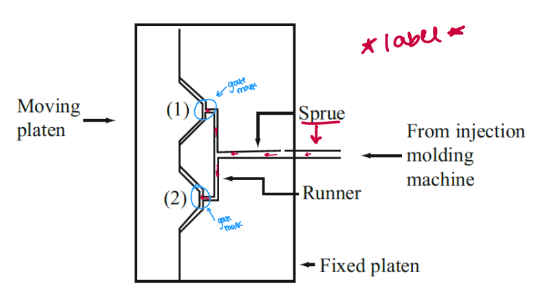
know labels
IM example packages
trays
cups
bottles
buckets
IM polymer characteristics
low viscosities for high melt flow rates
temperature important variable
runners often heated to keep plastic molten also shorter cycle times
polymer molecule orientation decreased by
higher temps
slower cooling
thicker parts
more opportunity for molecular relaxation
lower residual stress
what is an LCA
life cycle analysis- method used to evaluate the environmental impact of a product through its life cycle
greenwashing
deceptive marketing practice that involves unsubstantiated claims about environmentally friendly
macrosorting
Sorting of whole objects; happens prior to any size reduction or cleaning
Can be done by machine or manually
microsorting
Sorting by resin types; typically after cleaning and size reduction
Water is typically the sorting mechanism
molecular sorting
Breaking down the material into individual molecules; dissolving in organic solvent
Required for multi-material structures
Does not exist commercially yet
feedstock/chemical/tertiary recycling
using chemical treatment to break down the polymer structure
reverses initial polymerization process
common process to break down PET
biodegradable polymers
Polymers that can be digested by naturally occurring biological entities in normal environmental conditions, resulting in CO2 , CH4, H20, etc.
are PHA, PLA and sugar derived LDPE biodegradable
PHA yes
PLA and sugar derived LDPE no
compostable polymers
Polymers that can be digested by naturally occurring biological entities in special environmental conditions like a high temperature compost
is PLA compostablw
yes