Orgo 2 EAS
 Call Kai
 Learn
 Practice Test
 Spaced Repetition
 Match
 Flashcards
 Knowt Play
1/102

There's no tags or description
Looks like no tags are added yet.
103 Terms

Halogenation Br
Br2, FeBr3
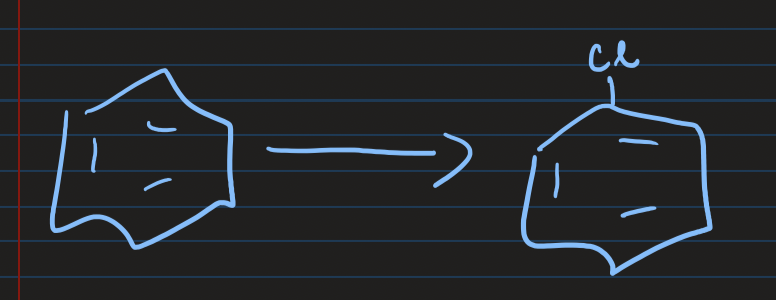
Halogenation Cl
Cl2, AlCl3
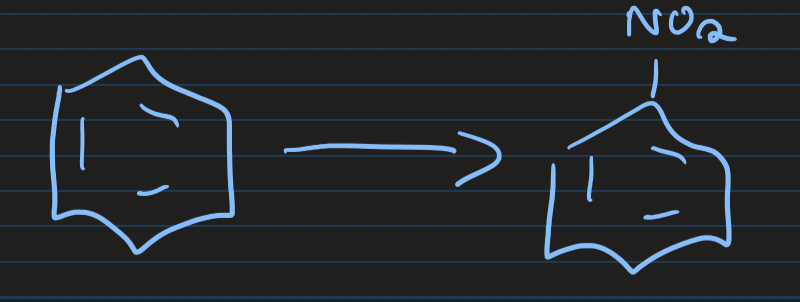
Nitration
HNO3 / H2SO4
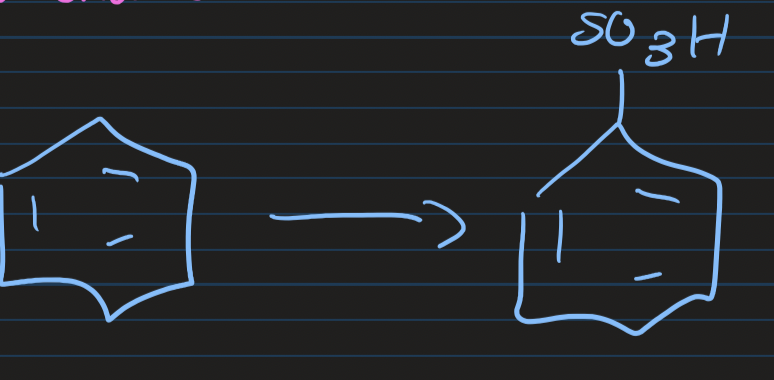
Sulfonation
H2S04, heat

Friedal Crafts Alcylaltion
O=C < Cl, AlCl3

Friedel Crafts Alcylation Rules
Avoid having nitro groups and SO3H groups on the ring during this step
No carbocation rearrangements

Friedel Crafts Alkylcation
/\ Cl and AlCl3

Friedel-Crafts Alkylation Rules
Avoid having nitro groups and SO3H groups on the ring during this step
be careful of carbocation rearrangements with linear chains having more than 2 carbons

Wolff Kischner Transformation
NH2MNH2, -OH, Heat
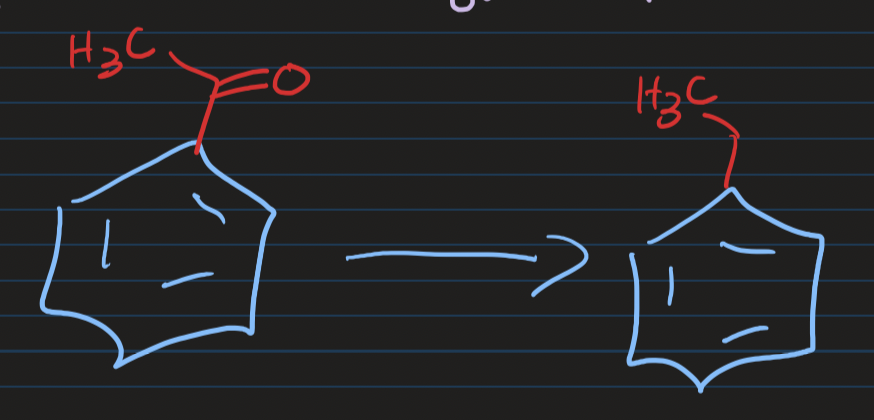
Clemmensen Reduction
Zn (Hg), HCl

Removal of the SO3H group
H3O+ / H2O

Conversion of nitrobenzene to aniline pt 2
H2, Pd/C

Conversion of nitrobenzene to aniline pt 1
SnCl2, HCl

SNAR reaction
OR
SNAR reaction rules
Works best if the ring contains additional electron-withdrawing groups, particularly NO2 and SO3H
addition, elimination

formation of diazonium
NaNO2, HCl

Activating groups
ortho, para directing
acid
has e-donating groups directly connected to ring
includes halogens (F, Cl, etc) but are weak
includes alkyl groups (methyl, ethyl, isopropyl, etc) but are weak
NH2, OH, etc

Deactivating groups
meta directing
base
electron-withdrawing groups
e- donating groups NOT directly connected
SO3H, NO2, +NH2, +NH2R
two substituents on ring and reinforce each other
third substituent mutually formed position
if substituents present on the ring direct incoming electrophile to different positions
the STRONGER activator wins
avoid overcrowding
sterics

mechanism of SNAR step 1
sulfur has lone pair and negative charge
attacks pi bond on ring bearing F

mechanism of SNAR step 2
resonance of lone pair of e-
because pi bond got kicked off, that e- resonance kicks off F to restore aromaticity

mechanism of EAS - Friedel Crafts
dont answer

mechanism of EAS Friedel Crafts step 1a
Cl’s lone pair attacks Al on AlCl3
generation of electrophile

mechanism of EAS Friedel Crafts step 1b
+Cl—-AlCl3 leaves to form carbocation

mechanism of EAS Friedel Crafts step 2a
pi bond on ring attacks carbocation on electrophile
EAS reaction

mechanism of EAS Friedel Crafts step 2b
acid attacks H —> H attacks carbocation —> restores pi bond and aromaticity
addition of strong negatively charged nucleophiles
grignard, organolithium reagent, hydride, wittig reaction, preparation of wittig reagent

Grignard
\/\ MgBr, Et2O
H3O+/H2O
recall that the protonated alcohol is formed after aqueous workup

Organolithium Reagent
\/\ Li, Et2O
H3O+/H2O
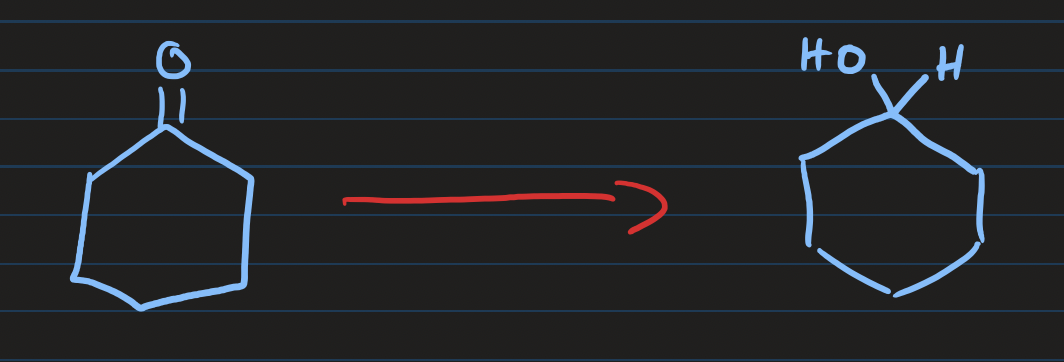
Hydride NaBh4
NaBH4, MeOH
H3O+/H2O
will reduce aldehyde or ketone
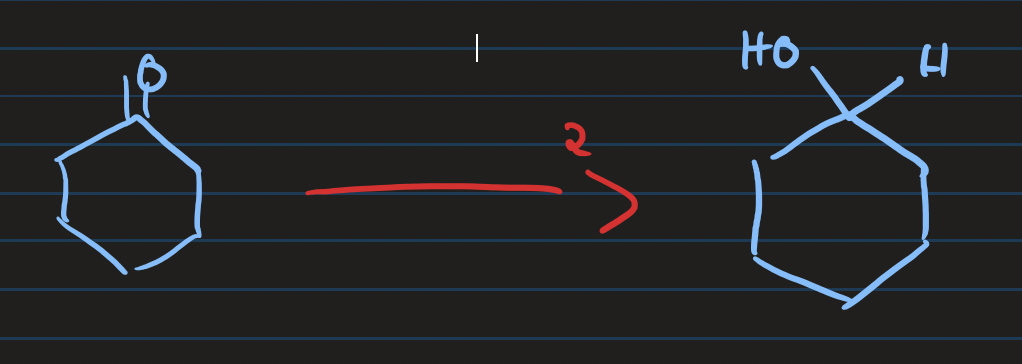
Hydride LiAlH4
LiAlH4
H3O+/H2O
stronger than NaBH4 hydride
If alcohols are present on the substrate, they will be deprotonated with LiAlH4

Wittig reaction
addition followed by immediate elimination

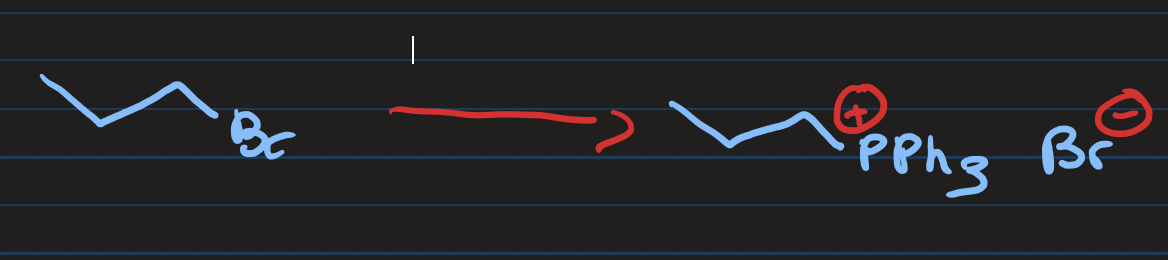
preparation of wittig reagent step 1
PPh3

preparation of wittig reaget step 2
BuLi
addition of nitrogen nucleophiles
primary amines - imine, secondary amine - enamine, reductive amination - amine from imine

primary amines: formation of imines
CH3NH2, catalytic acid
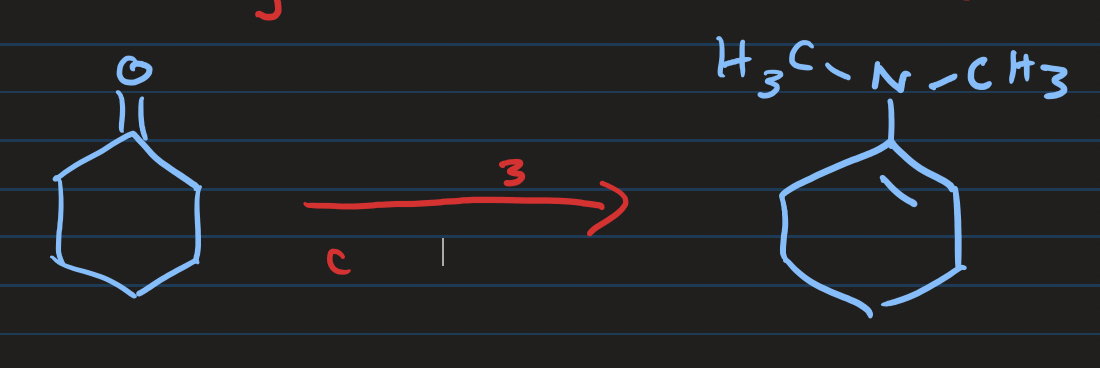
secondary amines: formation of enamines
H3C — NH —CH3, catalytic acid

reductive amination: formation of amine from imine step 1
(+) NH2 — H2C — CH3

reductive amination: formation of amine from imine step 2
NaCNBH3
addition of oxygen nucleophiles
hydrates, hemicacetals, acentals, ketals, acetal hydrolysis

water: formation of hydrates
H2O / HA

alcohols: formation of hemiacetal/hemiketal
CH3OH, HA

alcohols: formation of acetal/product
CH3OH, HA
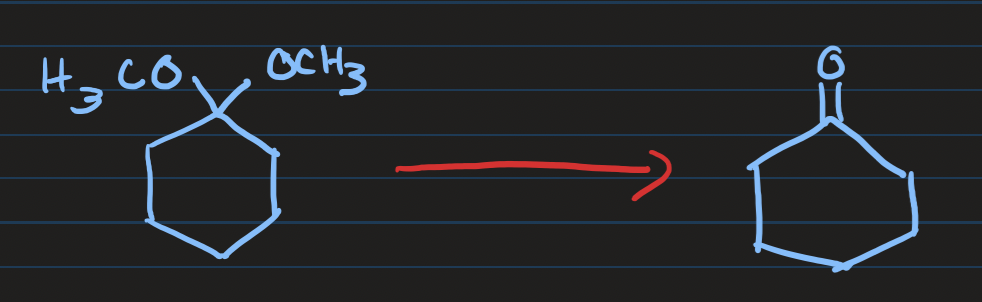
acetal hydrolysis
H3O+ / H2O

conversion of alkene to markovnikov halide
HBr or HCl

conversion of an alkene to markovnikov alcohol
H3O+ / H2O

conversion of an alkene to an anti-markovnikov alcohol
BH3, THF
H2O2, NaOH

conversion of alcohol to halide Br
PBr3

coversion of alcohol to halide Cl
SOCl2

conversion of alcohol or halide to alkene by elimination E2
KOtBu

conversion of alcohol or halide to alkene by elimination E1
H2SO4, Heat

conversion of alcohol to ether: williamson synthesis
Na or NaH
CH3Br

conversion of halide to nucelophillic carbon anion grignard
Mg, Et2O

conversion of halide to nucelophillic carbon anion organolithium
Li, THF

oxidation of alcohol to aldehyde
PCC

oxidation of alcohol to ketone
PCC

oxidarion of primary alcohol to acid
H2CrO4

conversion of carboxylic acid to acid chloride
SOCl2

Grignard Mechanism Step 1
negatively charged nucleophile will attack at the carbon of the carbonyl
push the electrons up to oxygen

Grignard mechanism step 2
the negatively charged oxygen will attack H-A
will go through H3O+ workup
Grignard mechanism product
OH and R next to each other


hydride mechanism step 1
negatively charged LiAlH4 will attack at the carbon on the carbonyl
push the electrons up to oxygen

hydride mechanism step 2
negatively charged will attack H-A
will go through H3O+ workup
hydride mechanism product
OH and H next to each other


Wittig reaction mechanism step 1
carbon of the ylide has a negative charge and attacks carbon of the carbonyl
oxygen has a strong affinity for phosphorus
they form a bond, making a four membered ring

Wittig reaction mechanism step 2
the bond of the oxygen farthest from the Ph3P attacks Ph3P
that causes the bond of the Ph3P to its neighboring substituent to attack its next neighboring bond
four membered ring open
Witting reaction mechanism product


addition of primary amine to form imine mechanism step 1
lone pair on nitrogen attack the carbon of the carbonyl
pushes the electrons up to oxygen

addition of primary amine to form imine mechanism step 2
negative charged oxygen attacks H-A and gets protonated

addition of primary amine to form imine mechanism step 3
acid attacks H connected to positvely charge nitrogen, which makes nitrogen lose that postive charge
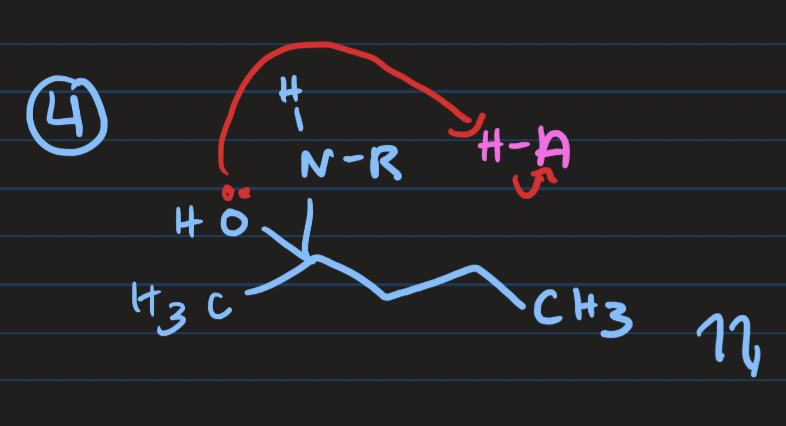
addition of primary amine to form imine mechanism step 4
lone pair on oxygen of OH attacks H-A to create OH2+, a good leaving group

addition of primary amine to form imine mechanism step 5
lone pair on nitrogen helps the OH2+ leave
driving force of reaction

addition of primary amine to form imine mechanism step 6
acid attacks the H connected to the nitrogen, removing the nitrogen of its positive charge
two possible structures for the imminum ion
addition of primary amine to form imine mechanism product
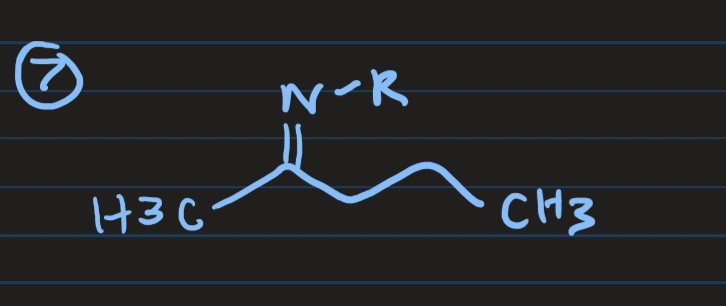

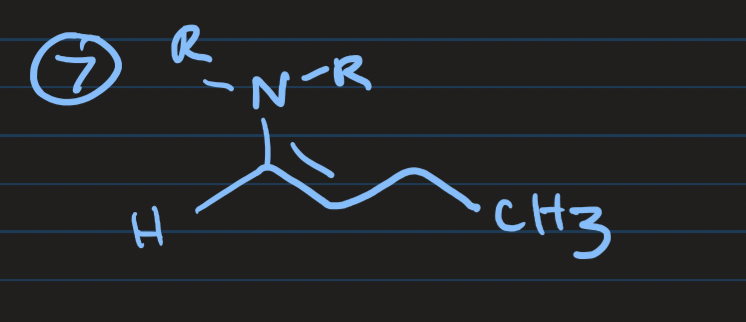
addition of secondary amine to form enamine step 1
lone pair of nitrogen attacks at the carbon of the carbonyl
pushes the electrons UP to oxygen
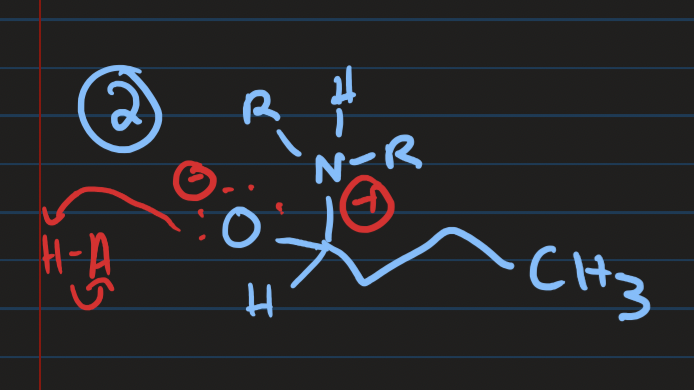
addition of secondary amine to form enamine step 2
lone pair of negatively charged oxygen attacks H-A to become protonated

addition of secondary amine to form enamine step 3
acid attacks H connected to Nitrogen, removing its positive charge

addition of secondary amine to form enamine step 4
lone pair of OH attacks H-A to become water, good leaving group
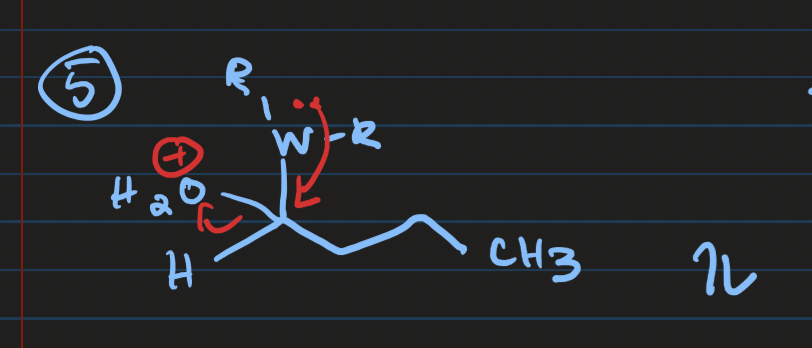
addition of secondary amine to form enamine step 5
lone pair of nitrogen helps water leave

addition of secondary amine to form enamine step 6
acid attacks H two carbons away from nitrogen
helps nitrogen lose double bond and positive charge
there are two possible resonance structure for the imminium ion
addition of secondary amine to form enamine product

hemicetal formation mechanism step 1
oxygen lone pair attacks H-A to get protonated
must protonate carbonyl before adding neutral oxygen nucleophile

hemicetal formation mechanism step 2
lone pair of OH attacks the carbon at the carbonyl, removing the double bond and postive charge of oxygen in the carbonyl
two resoance structures for the protonated carbonyl, explains why the carbon is more electrophillic
we are in acidic conditions, NO oxygen minus in these mechanisms
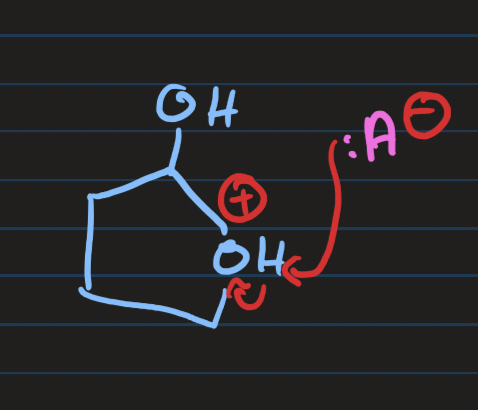
hemicetal formation mechanism step 3
acid attacks the H attached to O, deprotonating and removing the positive charge of O
hemicetal formation mechanism product

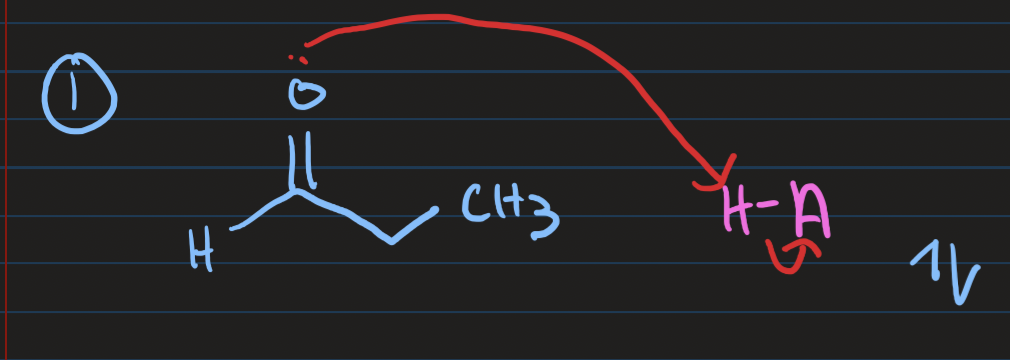
acetal/ketal formation mechanism step 1
lone pair on oxygen attacks H-A to get protonated
must protonate carbonul before adding neutral oxygen nucleophile
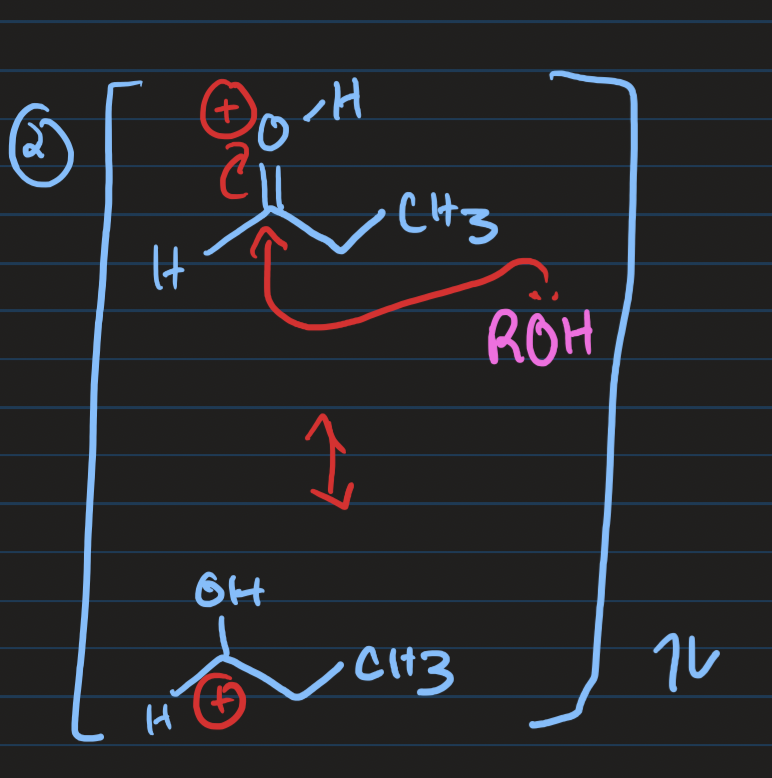
acetal/ketal formation mechanism step 2
lone pair on ROH attacks the carbon at the carbonyl, removing the oxygen’s double bond and positive charge
two resonance structures
no negative charged oxygens

acetal/ketal formation mechanism step 3
acid attacks the H connected to the OR to remove its positive charge
we must neutralize exisitng positive charge before we form the good leaving group

acetal/ketal formation mechanism step 4
lone pair of OH attacks H-A to become H2O, good leaving group
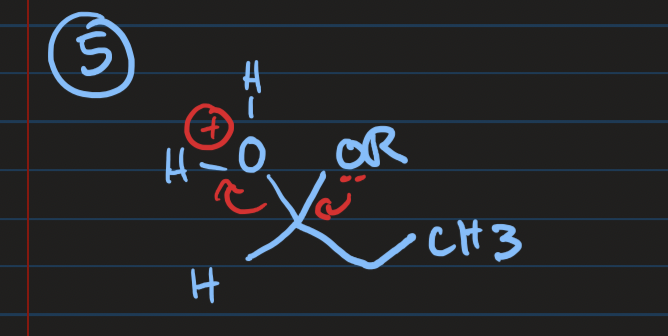
acetal/ketal formation mechanism step 5
lone pair on OR helped water leave

acetal/ketal formation mechanism step 6
ROH attacks the carbon at the carbonyl once again to remove the double bond and positive charge of OR
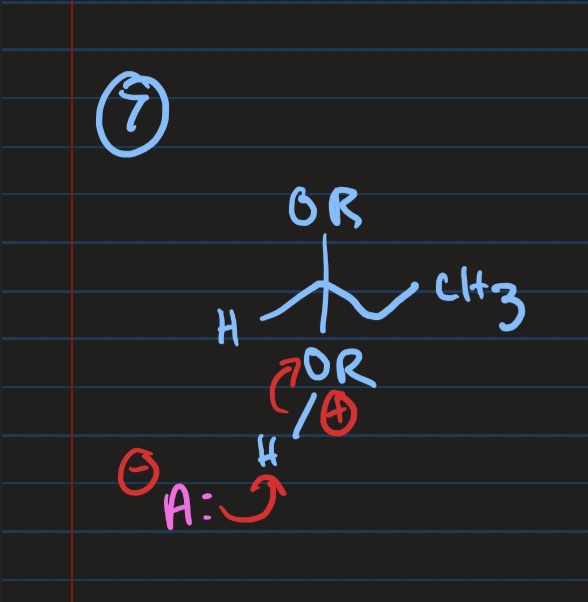
acetal/ketal formation mechanism step 7
acid attacks the H connected to the newer OR to remove the its positive charge
acetal/ketal formation mechanism product
OR and OR across from each other


acetal/ketal hydrolysis mechanism step 1
lone pair on OR attacks H-A to protonate and form good leaving

acetal/ketal hydrolysis mechanism step 2
the lone pair on the other OR kicks off the positively charged HOR

acetal/ketal hydrolysis mechanism step 3
HOH attacks the carbon and the carbonyl to remove the double bond and positive charge of OR

acetal/ketal hydrolysis mechanism step 4
acid attacks the H of the HOH and removes the H bond and positive charge of OH

acetal/ketal hydrolysis mechanism step 5
lone pair on OR attacks H-A to get protonated and form good leaving group