FRIDAY 10/23 Quiz 22: Sensation Intro -smell, taste, sensory interaction
 Call Kai
 Learn
 Practice Test
 Spaced Repetition
 Match
 Flashcards
 Knowt Play
1/12

There's no tags or description
Looks like no tags are added yet.
13 Terms
Sensation
Occurs when one of our senses (sight, smell, hearing, touch, or taste) is activated by something in our environment
THIS is first, then TRANSDUCTION, then PERCEPTION
Transduction
For sensation: the transforming of stimulus energies into neural impulses our brains can interpret, which then becomes a perception
Examples:
· Air vibrations are transformed in the ear which then becomes a sound
· Light waves are transformed by the retina in the eye which then becomes a sight
SENSATION is first, then THIS, then PERCEPTION

Perception
The brain's interpretation of sensory messages
The process of understanding and interpreting sensations
SENSATION is first, then TRANSDUCTION, then THIS

Energy Senses
The senses of vision, hearing, and touch
The senses gather energy in the form of light, sound waves, and pressure, respectively
Chemical Senses
The senses of taste and smell
These senses work by gathering chemicals
Sensory Interaction
Senses contribute to the experience of another sense
Example: smell is essential to taste, but vision can also affect taste.
Synesthesia
In rare cases, people have combined senses.
Examples:
· Some with this see music as colors
· Some with this have different words produce different tastes
· Some see letters and numbers each having a different color
Only in 4% of the overall population, but eight times more likely in artists, musicians, poets, and novelists. Examples include Billie Eilish, Lorde, and Frank Ocean.
VS Ramachandran researches this

Sensory Adaptation
Decreasing responsiveness to stimuli due to constant stimulation
Examples:
(1) We eventually stop perceiving a persistent scent in a room
(2) We eventually stop feeling the cold swimming pool as cold
People who have THIS cannot perceive it unless they re-adjust
Sensory habituation
Our perception of sensation is partially determined by how used to them we are
Examples:
(1) no longer hearing traffic from the nearby freeway after having lived in a place for years
(2) not feeling your shoes and socks on your feet even though they are touching your feet
People who have THIS can still perceive it if directed to focus attention on it
Olfaction
The sense of smell
Structures in the nose and brain process and transduce olfactory stimuli
Smell is the only sense not processed first in the thalamus
Pheromones produce chemical messages for the olfactory system that come from a species body
Pheromones
THESE produce chemical messages for smell
These are animal biochemical odorants that are emitted by other members of a same species that can affect an animal's behavior or physiology, and humans have these "body odors" as well for the sense of smell
Gustation
The sense of taste
Types of taste:
>Sweet
>Sour
>Salty
>Bitter
>Umami
>Oleogustus
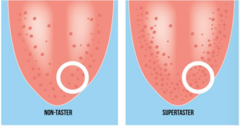
The number of taste receptors on the tongue is related to how sensitive people are to tastes classifying them as supertasters, medium tasters, or non tasters
Supertasters
25% of people have more taste receptors on their taste buds, giving them more sensitivity to taste, and making them supertasters
Supertasters are picky eaters because food taste more bitter
Most are women, because of evolution to protect babies from poisonous food - which are more likely BITTER tastes