Rad 130 Upper Extremity
 Call Kai
 Learn
Learn Practice Test
 Spaced Repetition
 Match
Match Flashcards
 Knowt Play
1/140

There's no tags or description
Looks like no tags are added yet.
Name | Mastery | Learn | Test | Matching | Spaced | Call with Kai | Chat |
|---|
No analytics yet
Send a link to your students to track their progress
141 Terms

What exam is this patient in position for?
PA Hand

Where is the CR centered for this exam?
Third MCP Joint

What is the SID for this exam?
40 inches

What exam is this patient in position for?
PA oblique Hand
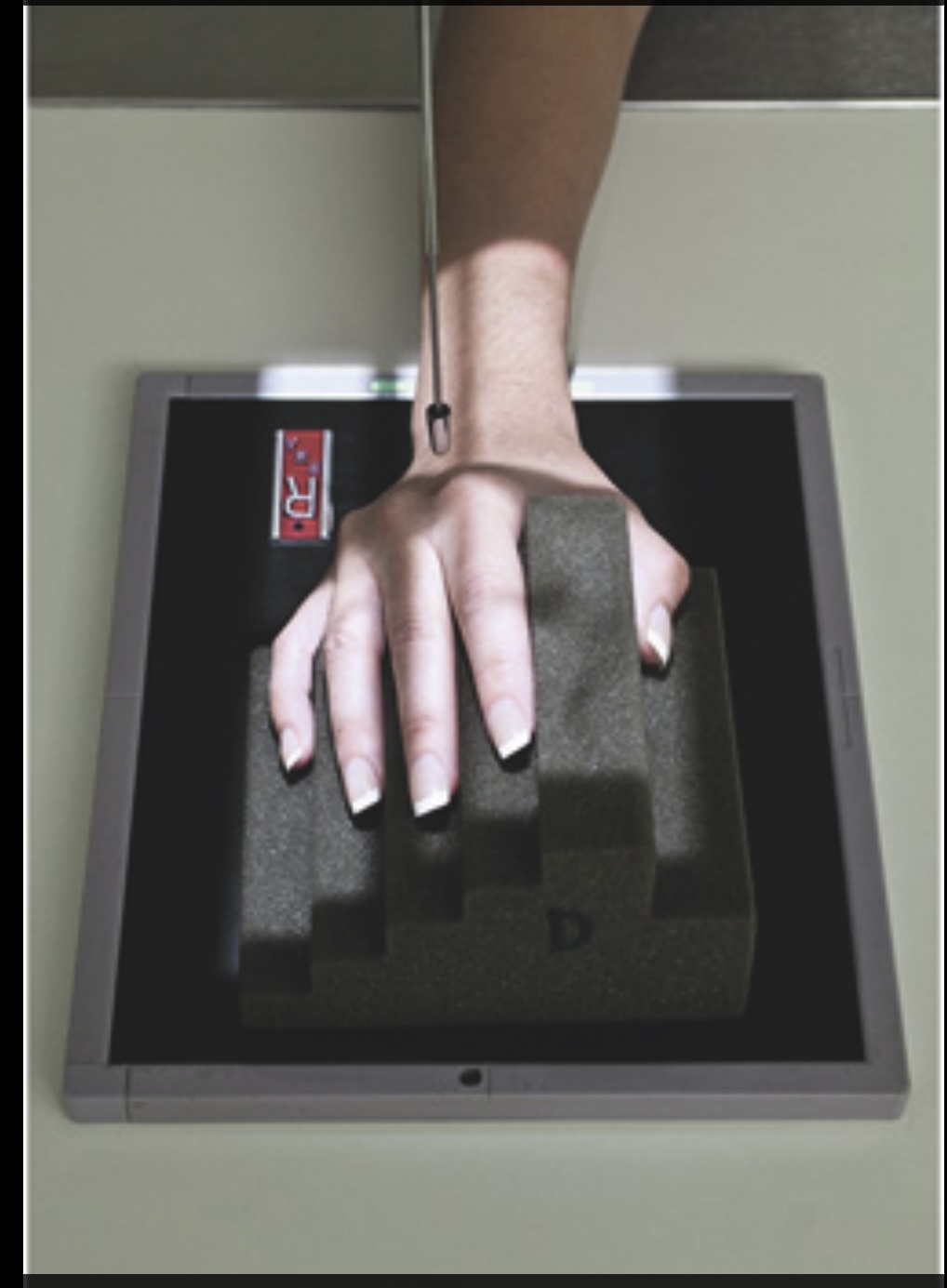
Where is the CR centered for this exam?
Third MCP joint

What exam is this patient in position for?
“Fan” Lateral Hand

What is the projection for this exam?
Lateromedial projection

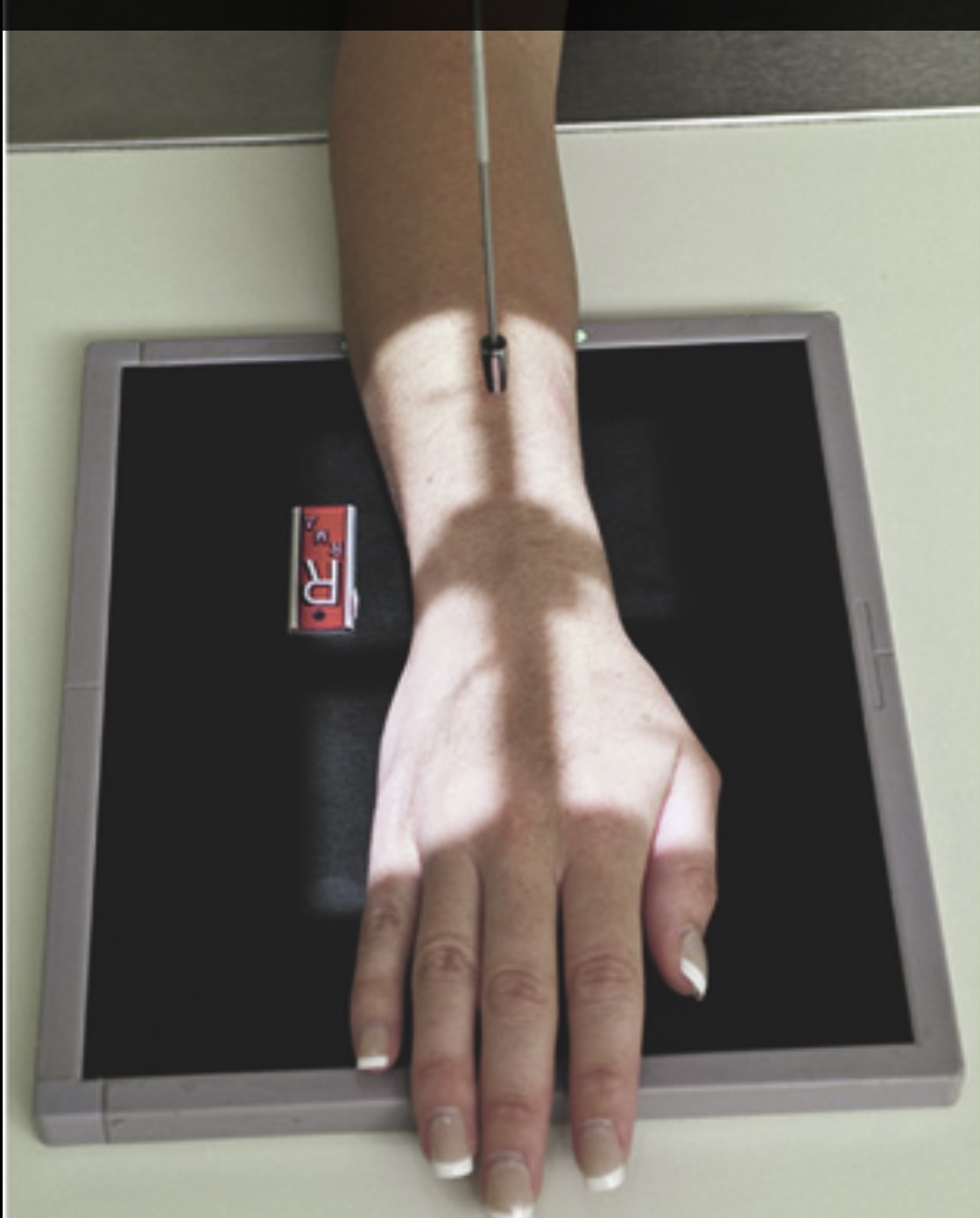
What exam is this patient in position for?
PA Wrist

Where is the CR centered for this exam?
Midcarpal area

What is the recommended field size? (Name the anatomy required)
Outer edges of metacarpals and distal radius/ulna
How many carpal bones should be included in this image?
Eight Carpal Bones

What is letter A?
Scaphoid
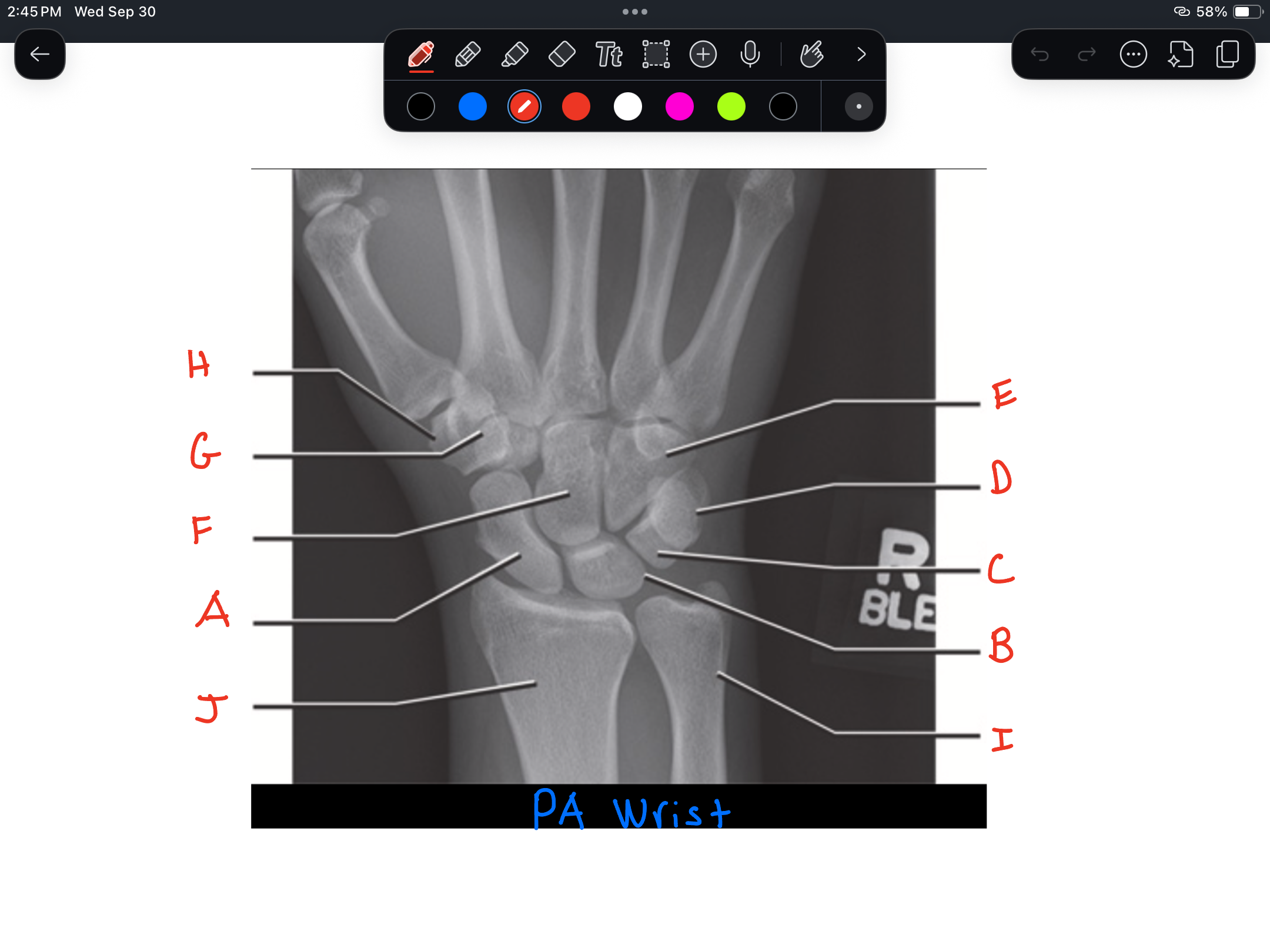
What is letter B?
Lunate

What is letter C?
Triquetrum

What is letter D?
Pisiform

What is letter E?
Hamate
What is letter F?
Capitate

What is letter G?
Trapezoid

What is letter H?
Trapezium
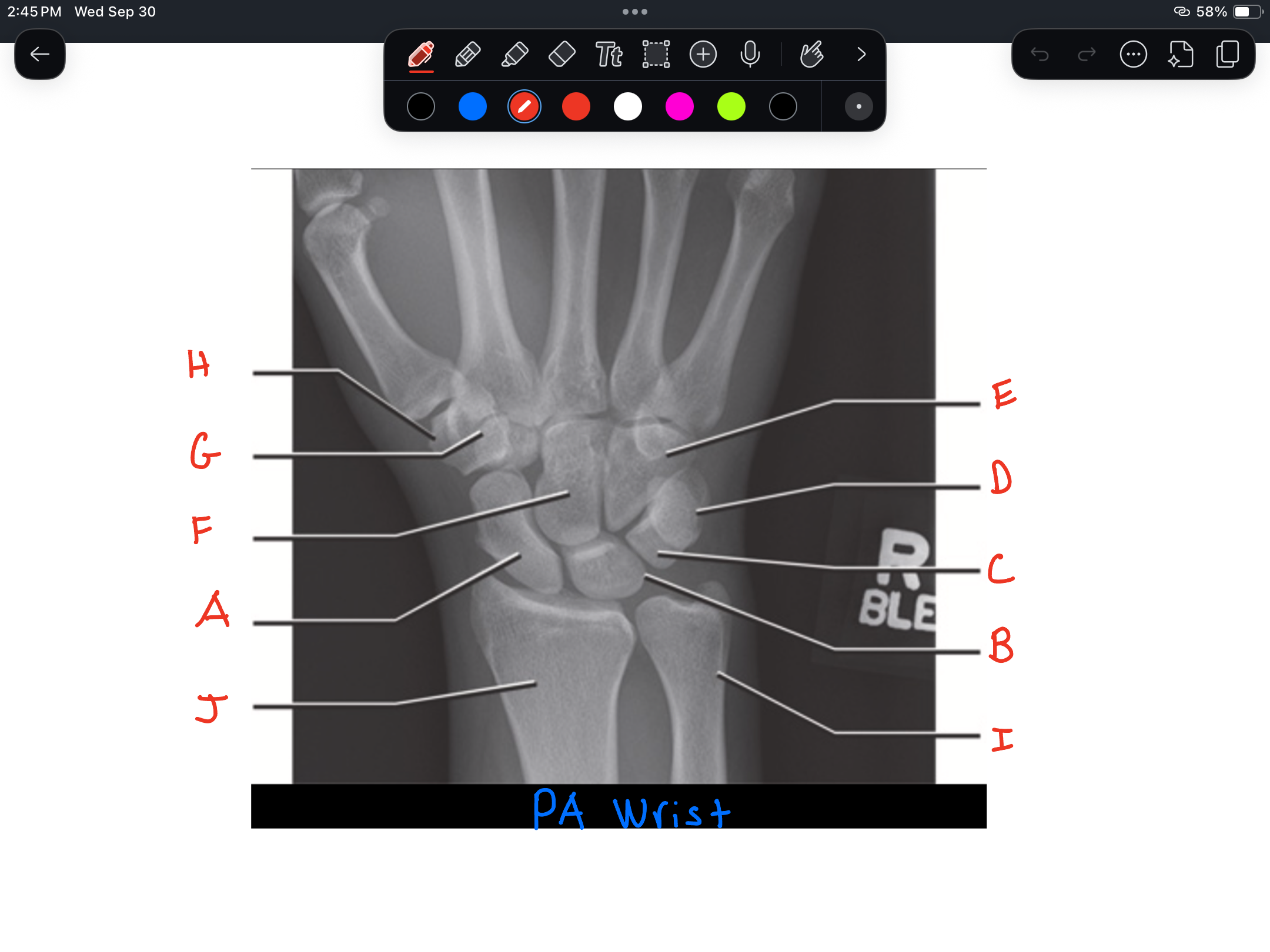
What is letter i?
Ulna

What is letter j?
Radius

What exam is this patient in position for?
PA Oblique wrist (45 degrees)

Is this exam using a lateral or medial rotation?
Lateral Rotation

What exam is this patient in position for?
Lateromedial Wrist Projection

What exam is this patient in position for?
AP Forearm

What two joints are required on this radiograph?
Wrist and Elbow

Where is the CR centered for this exam?
Midforearm

What is the relationship of the epicondyles of the elbow to the IR?
Parallel

What is the purpose of the hand being supinated for this exam?
To prevent the radius/ulna from crossing

What exam is this patient in position for?
Lateral Forearm

What is the projection for this exam?
Lateromedial

What is the relationship between the epicondyles of the elbow and the IR?
Perpendicular

What exam is this patient in position for?
AP Elbow

Where is the CR centered for this exam?
Midelbow joint

What is letter A?
Humerus

What is letter B?
Medial Epicondyle

What is letter C?
Olecranon Process

What is letter D?
Trochela

What is letter E?
Coronoid Tubercle

What is letter F?
Ulna

What is letter G?
Lateral Epicondyle

What is letter H?
Capitulum

What is letter i?
Radial Head

What is letter j?
Radial Tuberosity

What is letter K?
Radius

What exam is this patient in position for?
AP Oblique Elbow (External rotation)

What exam is this patient in position for?
AP oblique elbow (Internal rotation)

What exam is this patient in position for?
Lateral Elbow

What is letter A?
Anterior fat pad

What is letter B?
Coronoid process

What is letter C?
Supinator fat strip

What is letter D?
Radial Head

What is letter E?
Trochlear Sulcus

What is letter F?
Trochlear Notch

What is letter G?
Olecranon Process

What is letter H?
Epicondyles
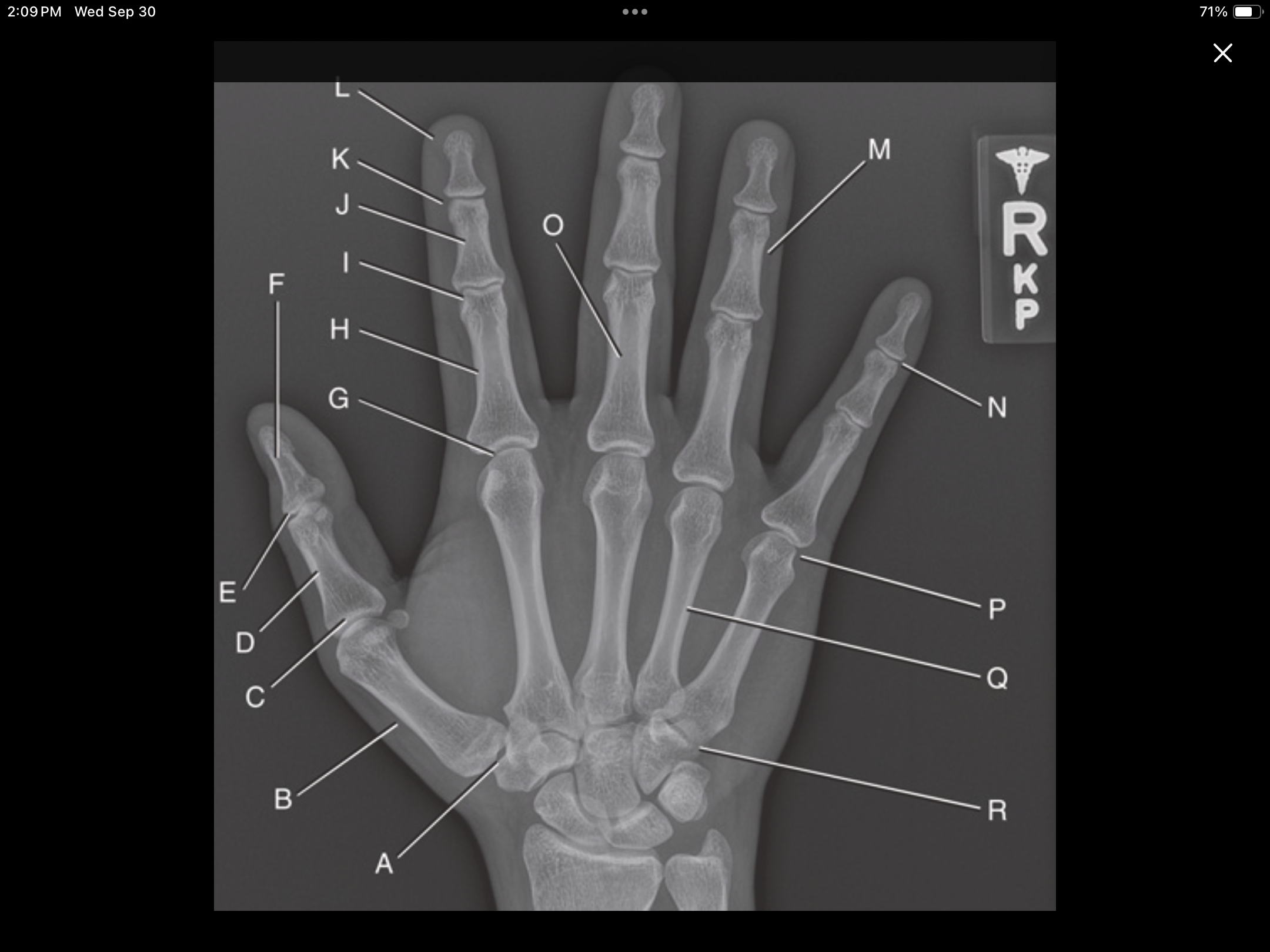
What is letter A?
First CMC joint of right hand

What is letter B?
First metacarpal of right hand
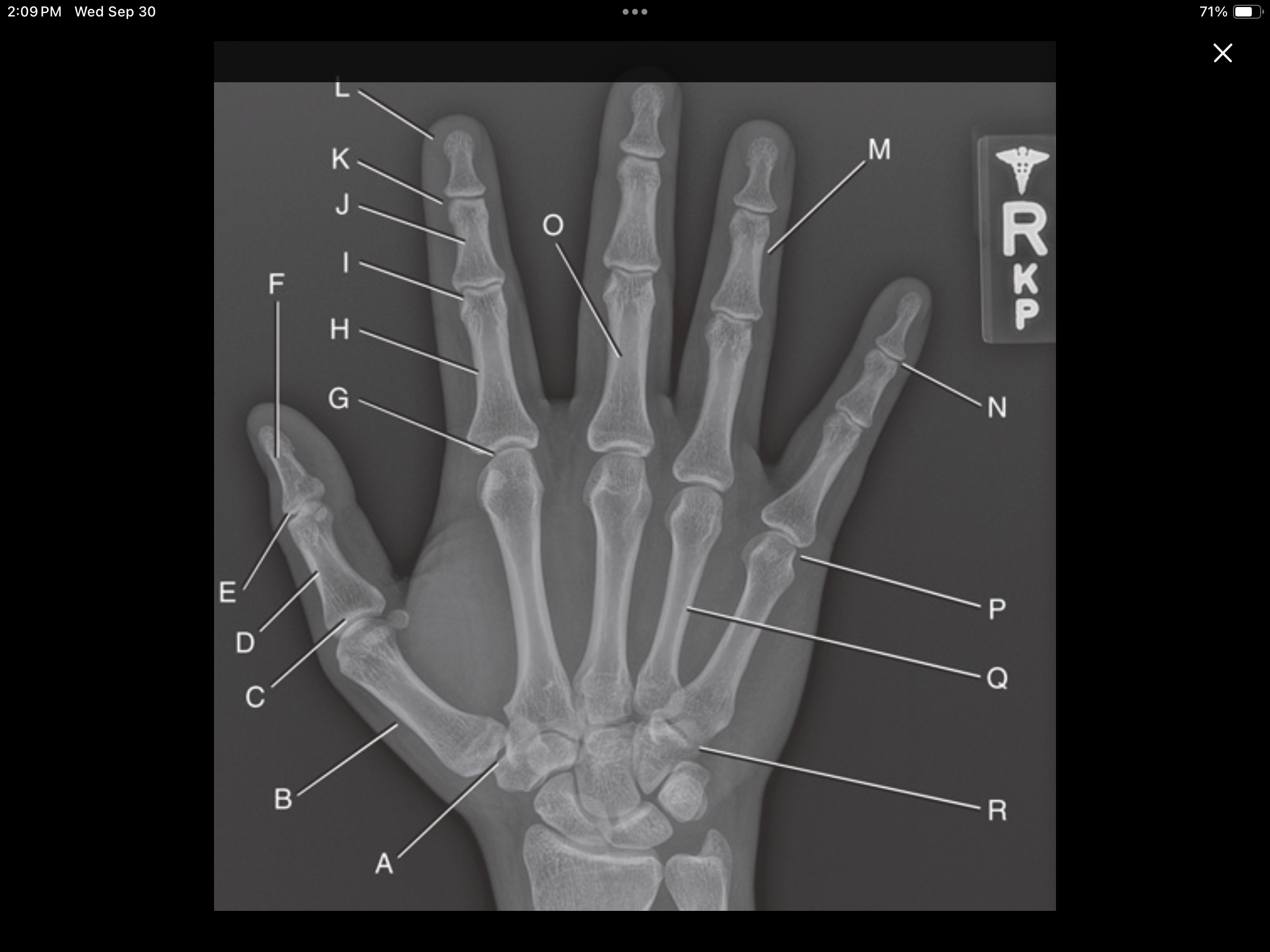
What is letter C?
First MCP joint of right hand
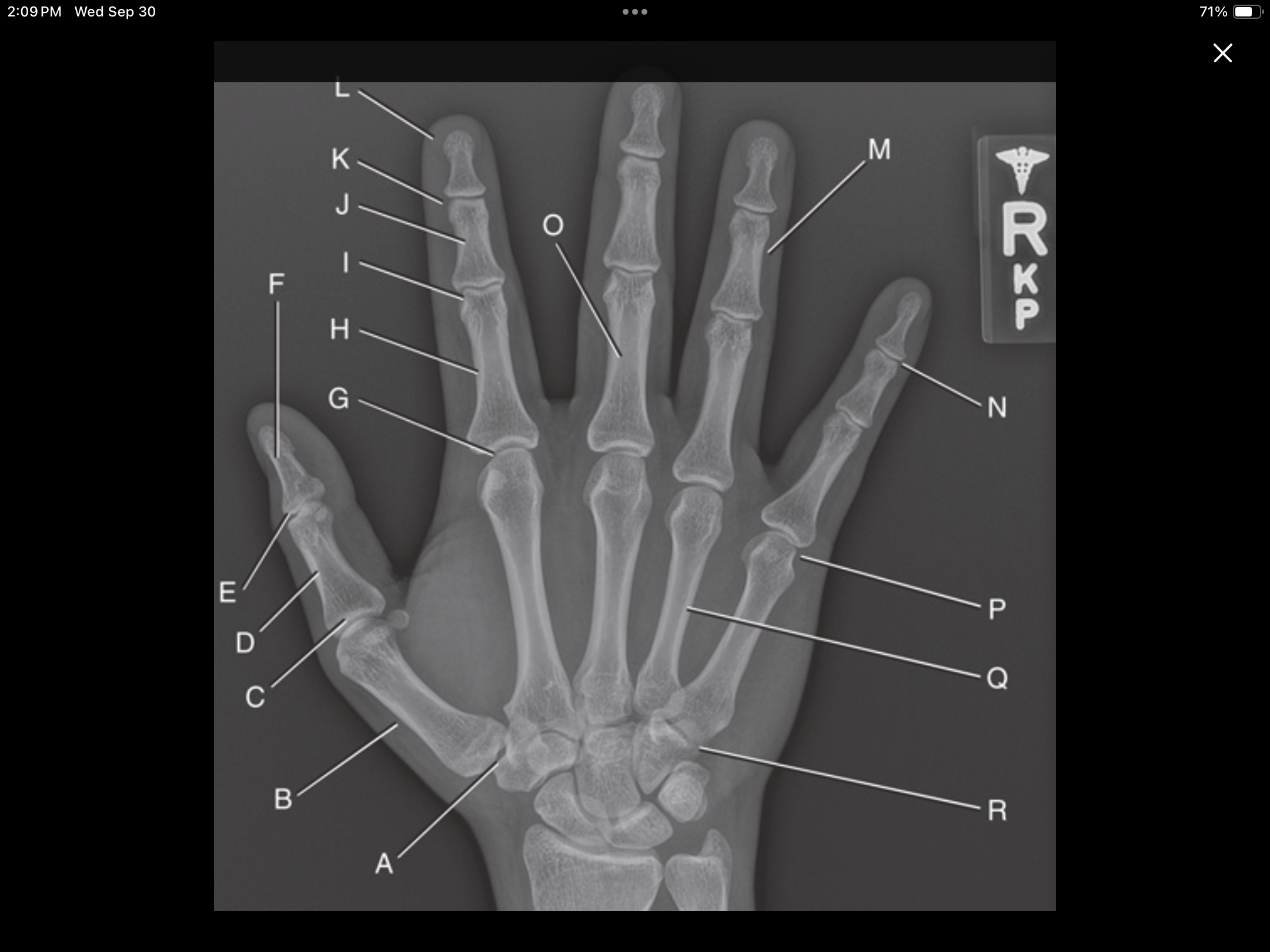
What is letter D?
Proximal phalanx of first digit

What is letter E?
IP joint of first digit

What is letter F?
Distal phalanx of first digit

What is letter G?
Second MCP joint of right hand

What is letter H?
Proximal phalanx of second digit
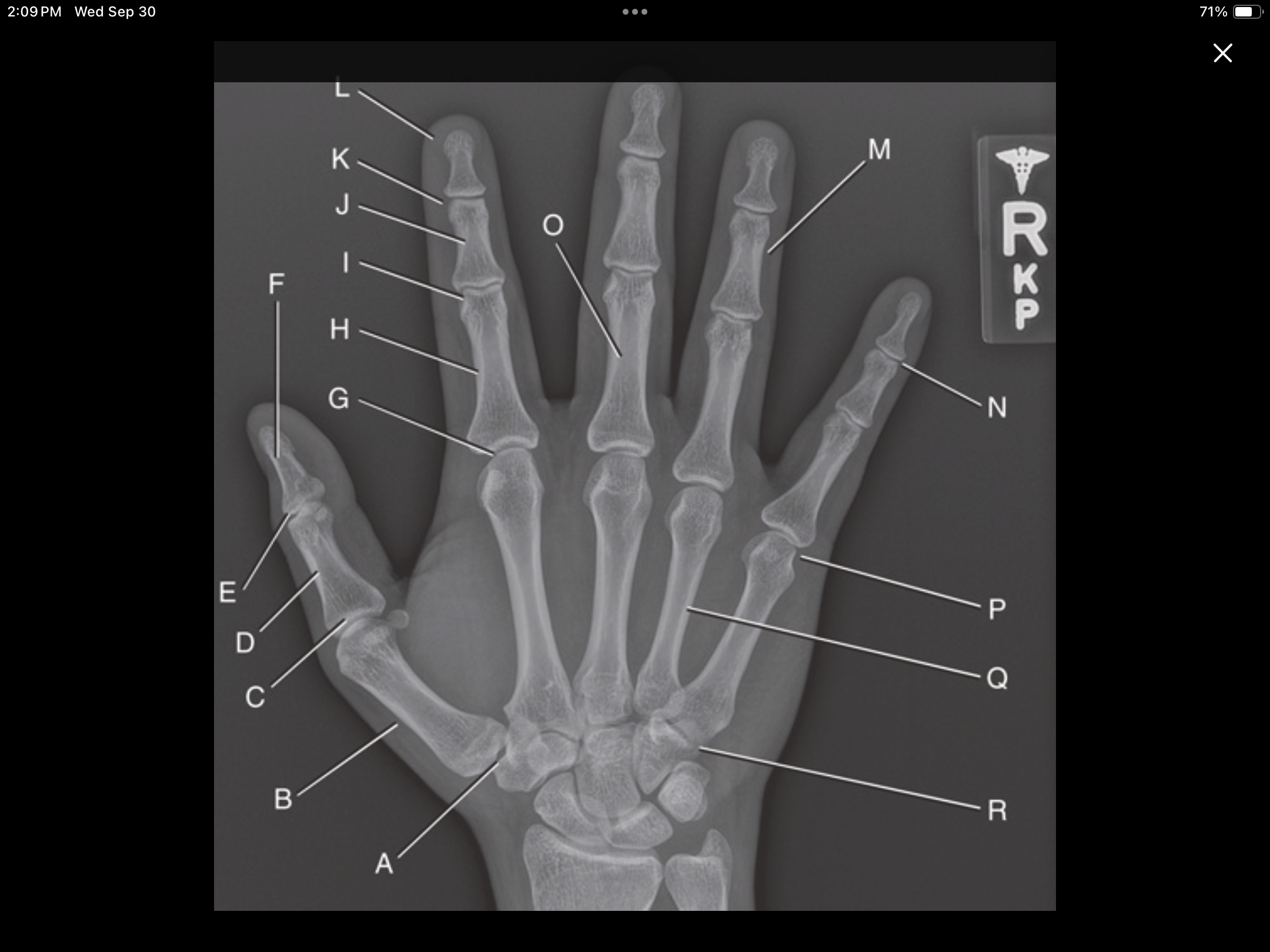
What is letter i?
Proximal IP joint of second digit

What is letter j?
Middle phalanx of second digit

What is letter K?
Distal IP joint of second digit

What is letter L?
Distal phalanx of second digit

What is letter M?
Middle phalanx of fourth digit

What is letter N?
Distal IP joint of fifth digit
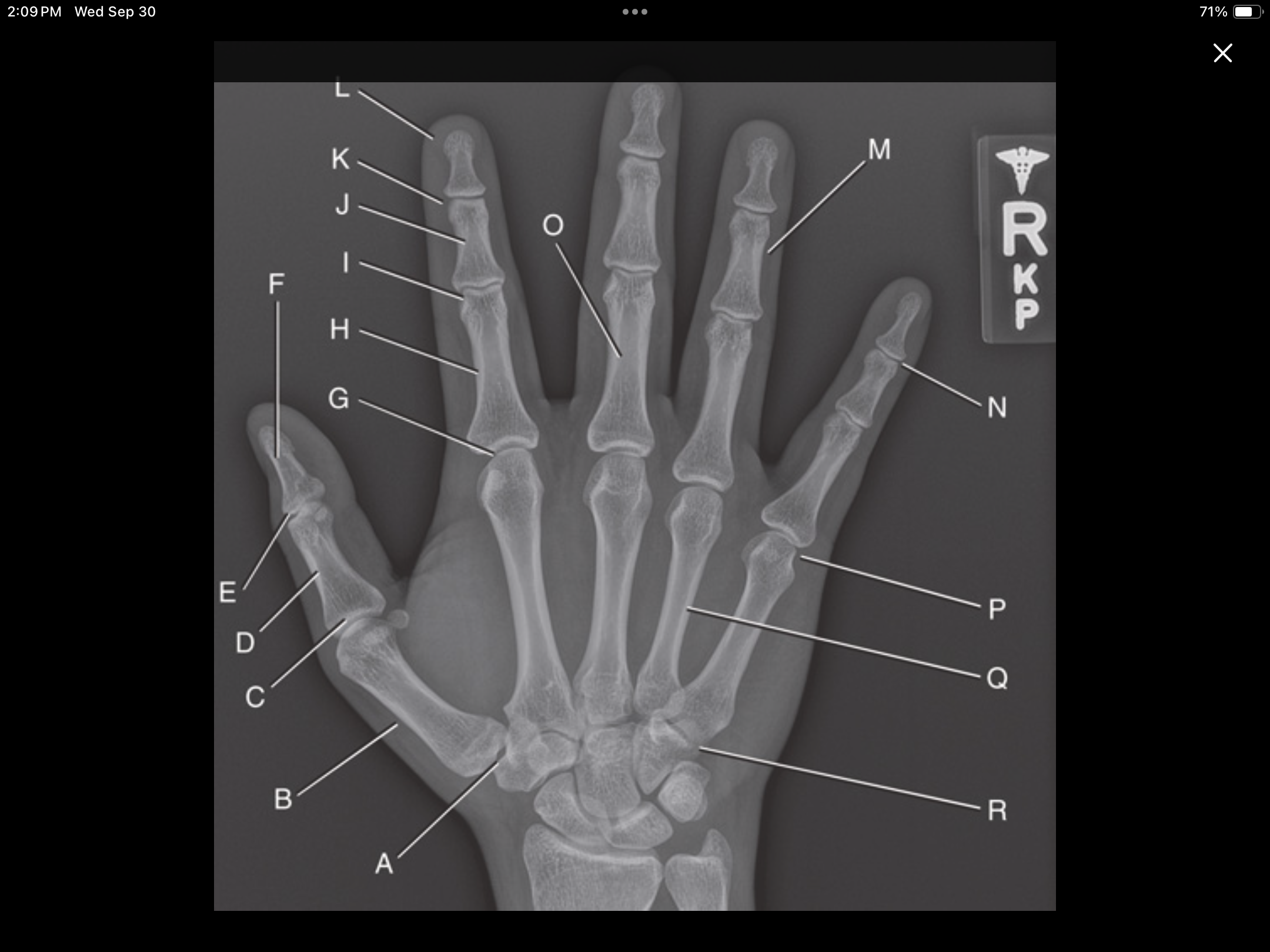
What is letter O?
Proximal phalanx of third digit
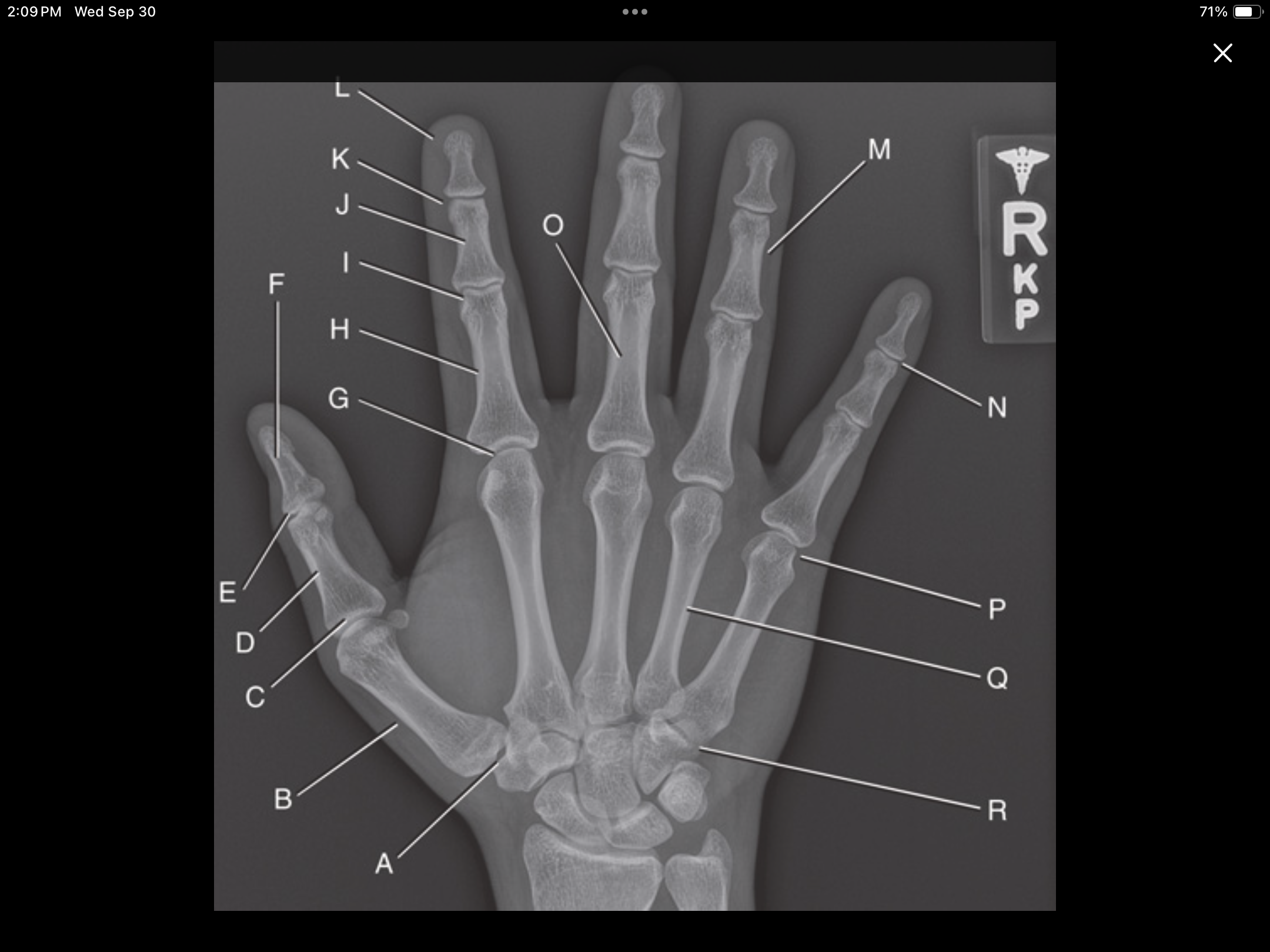
What is letter P?
Fifth MCP joint of right hand

What is letter Q?
Fourth metacarpal of right hand

What is letter R?
Fifth CMC joint of right hand

What exam is this patient in position for?
AP thumb

Where is the CR centered for this exam?
First MCP joint

What exam is this patient in position for?
PA oblique thumb (medial rotation)

What exam is this patient in position for?
Lateral thumb

What exam is this patient in position for?
PA second digit

What exam is this patient in position for?
PA oblique second digit (medial rotation)
How many projections are required for a Thumb radiograph?
Three
How many projections are required for a Hand radiograph?
Three
How many projections are required for a Finger radiograph?
Three
How many projections are required for a Wrist radiograph?
Four
How many projections are required for a Forearm radiograph?
Two
How many projections are required for an Elbow radiograph?
Four
How many projections are required for a Humerus radiograph?
Two
Describe the movement of the Interphalangeal joints. (IP)
Ginglymus (Hinge)
Describe the movement of the Metacarpophalangeal joints
Ellipsoidal (Condyloid)
Describe the movement of the Carpometacarpal joint (CMC)- First Digit
Saddle (Sellar)
describe the movement of the Carpometacarpal joint (CMC)- Second-Fifth Digits
Plane (Gliding)
Describe the movement of the Intercarpal Joints
Plane (Gliding)
Describe the movements of the Wrist (Radiocarpal) joint
Ellipsoidal (Condyloid)
Describe the movement of the Proximal: Radioulnar joint
Pivot (trochoidal)
Describe the movement of the Elbow joint
Ginglymus (Hinge)
Arthrography
Used to image tendinous, ligamentous, and capsular pathology associated with diarthrodial joints
CT and MR (Modalities)
Used to image skeletal lesions and soft tissue injuries
The recommended kVp range for upper limbs is:
60-80 kVp
The minimum SID for upper limbs is:
40 inches
Fracture
A break in the structure of bone cause by force (direct or indirect)