Animal Physiology Exam 1
 Call Kai
 Learn
 Practice Test
 Spaced Repetition
 Match
 Flashcards
 Knowt Play
1/34

There's no tags or description
Looks like no tags are added yet.
35 Terms
Mutations
Come from a random change in a DNA sequence of a gene which creates a new variation in an allele. Happens randomly all the time
Evolution
When an organism changes so much genetically that they are considered a new species. Caused by adaptation
Natural Selection
The increase in frequency of genes that produce phenotypes that raise the likelihood that animals will survive and reproduce. The process in which those that are not best suited for their environment will not survive and be less likely to have babies and pass on their genes
Types of natural selection
Directional, Stablizing, Disruptive
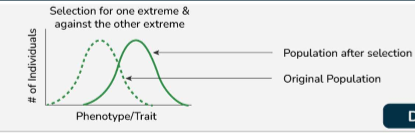
Directional Selection
Selection for one extreme against the other extreme ex. human height
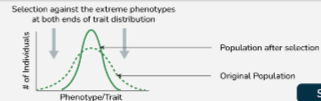
Stabilizing Selection
Selection against the extreme phenotypes at both ends of trait distribution
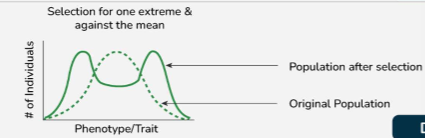
Disruptive Selection
Selection for one extreme & against the mean
Adaptation
A genetic change that occurs to better suit the environment that occurs over many lifetimes. Occurs when a mutated gene is continued to be passed down to other generations
Acclimation
A behavioral change that occurs to better suit the environment in one lifetime. Learned behavior from parents.
Adaptive significance
Why a trait is an asset and why natural selection favored its evolution ex. firefly light significance is mate attraction
Mechanism
How an organism carries out their functions
5 time frames in which physiology changes
Acute (short term individual change), chronic (long term individual change), evolutionary (over multiple generations), developmental, biological clocks
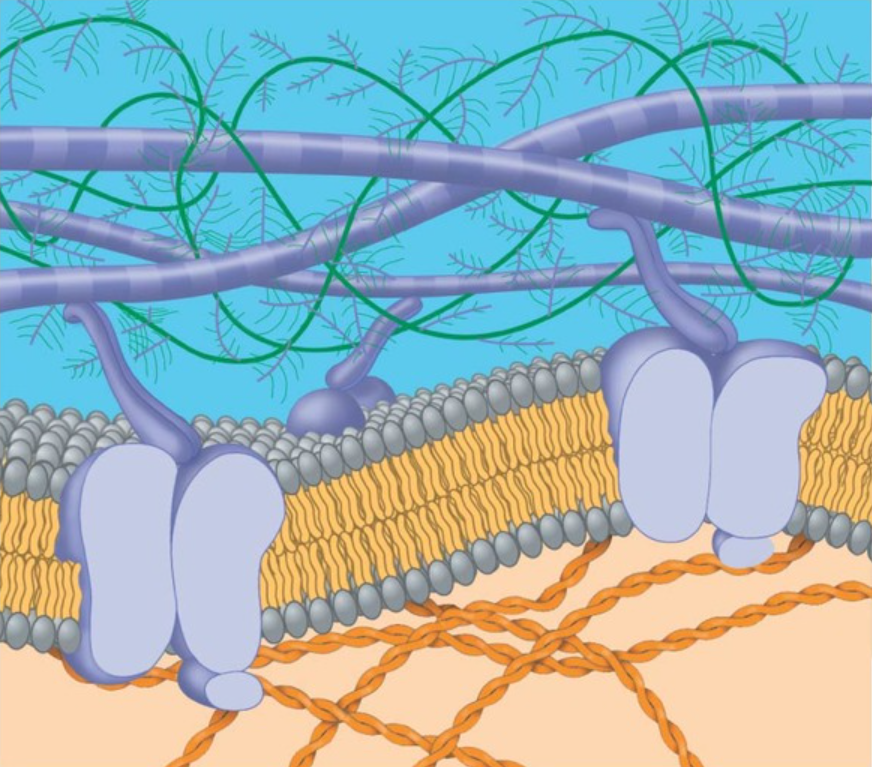
Cell membrane importance
Physically compartmentalizes systems, separates the inside of the cell from the outside so that each can have their own properties, can send and receive signals
Relationship between saturation and fluidity of the phospholipid bilayer
Types of proteins
Channel, transporter (carrier), enzyme, receptor, structural
Channel protein
Provide paths for ions or other materials in aqueous (liquid) solutions to pass through membranes
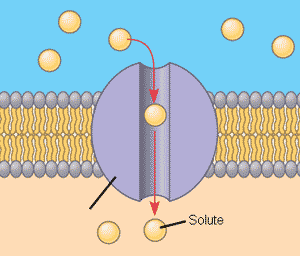
Transporter (carrier) proteins
Embedded in the cell membrane, control the selective passage of ions, nutrients, and waste. Facilitate in both active and passive transport for essential cellular functions like nerve signaling, nutrient uptake, and ion balance.
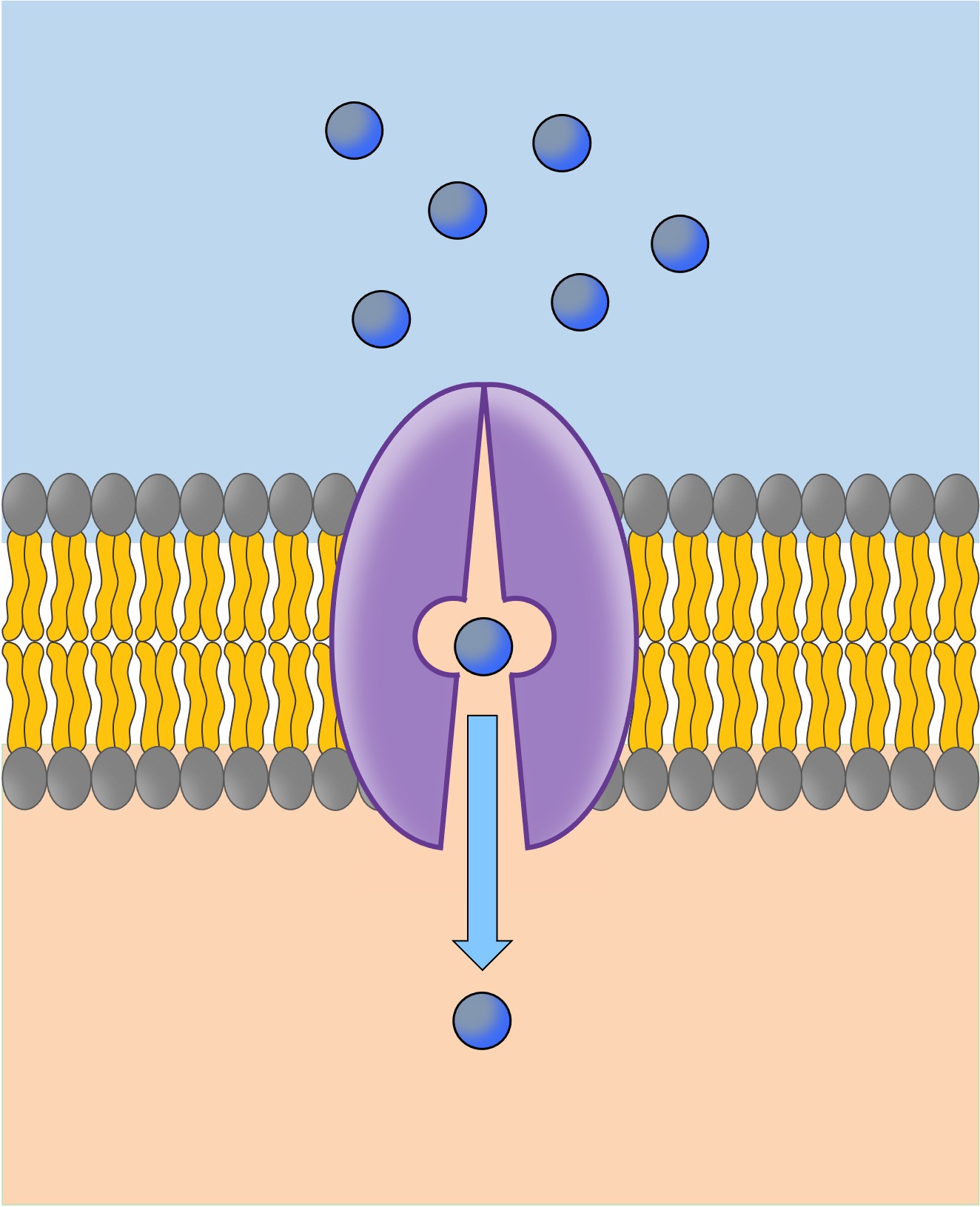
Enzyme protein
Catalyzes and regulates chemical proteins
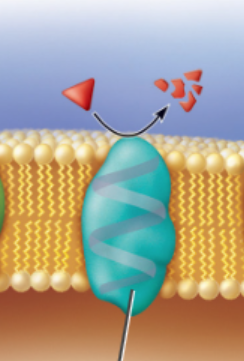
Receptor protein
A specific signaling molecule binds to this protein’s active site. This causes the protein to change its shape which activates internal proteins or opens ion channels, leading to a specific action inside the cell depending on the time of protein. The “key” which starts the chain reaction of events to ultimately react to the signal
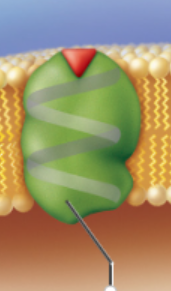
Structural protein
Provide support, shape, and connections, anchoring to the cytoskeleton, extracellular matrix, or other cells
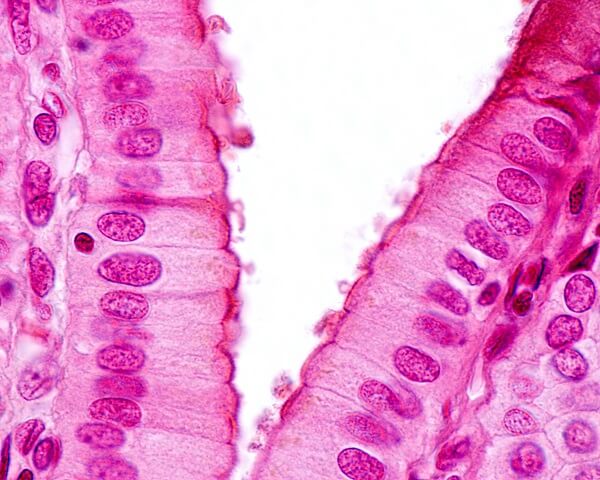
epithelial cell
Sheet of cells that covers the surface of an organ or lines a cavity. Forms the boundaries between body regions
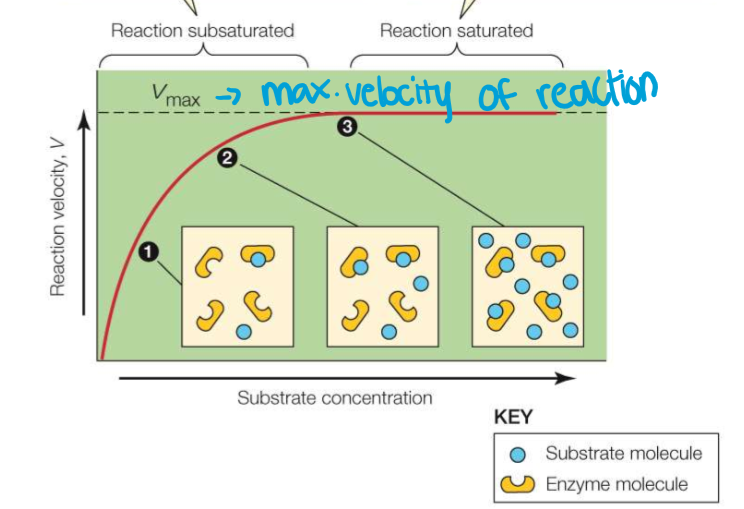
enzyme function
catalysts which speed up and regulate chemical reactions
hyperbolic enzymes
Have independent sites and reaction velocity increases steadily with substrate concentration until it hits Vmax. Produces hyperbolic curve.
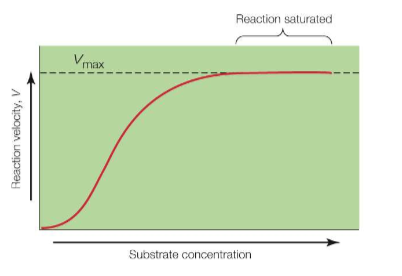
Sigmoid enzymes
Have multiple subunits, each with their own active sites that cooperate with one another, and reaction velocity increases slowly at first, then rapidly once hitting the mid-range and plateaus. Produces S-shaped curve.
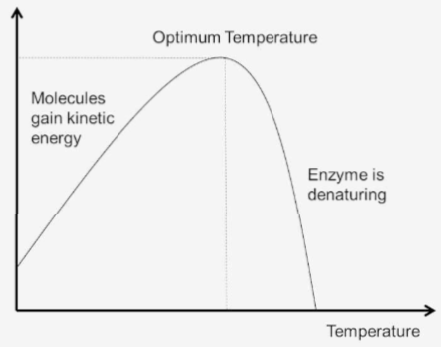
temperature influence on enzyme activity
Rate of reaction increases at optimum temperature, but enzyme will denature if temperature goes over that threshold
ligand
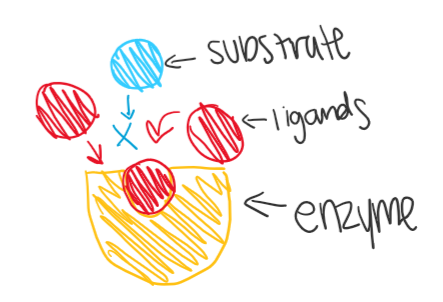
any molecule (substrate or non-substrate) that selectively binds to a structurally and chemically complementary site on a specific protein (enzymes, transporters, receptors, etc.)
Competitive Inhibitor
When non-substrate ligands compete with the substrate for the active site in order to prevent substrates to bind. They reduce the amount of product and reduce reaction rates. Can be overcome by adding more substrate
Non-Competitive (Allosteric) Inhibitor
Bind at an allosteric site (not active site) which changes the enzyme’s shape and makes the active site no longer work properly. Prevents substrates from binding, no product and reduces reaction rates. Can’t be fixed
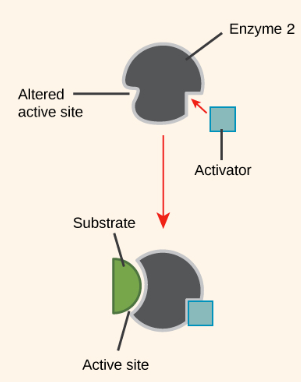
Allosteric Activators
Non-substrate ligands bind at an allosteric site (not the active site) which ensures that the active site on the enzyme has the proper shape. Facilitates substrate binding, more product is produced and reaction rates increase
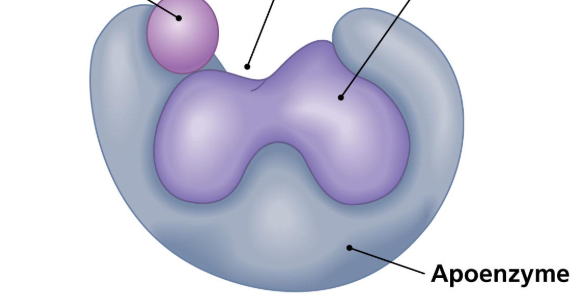
Cofactor/Coenzymes
Non-substrate ligands that are required for enzyme function
Interspecific Enzyme Homologs
Different molecular forms of an enzyme coded by homologous gene loci in different species
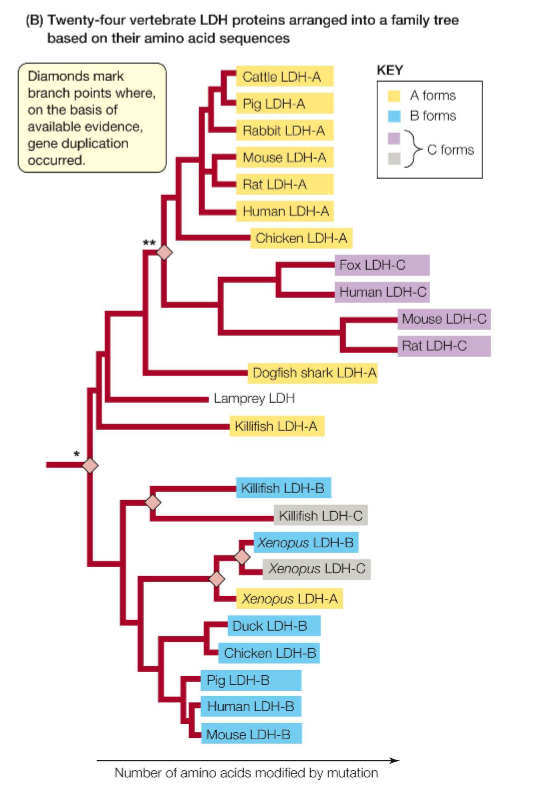
Isozymes
Different molecular forms of an enzyme produced by the same species. May differ slightly in function
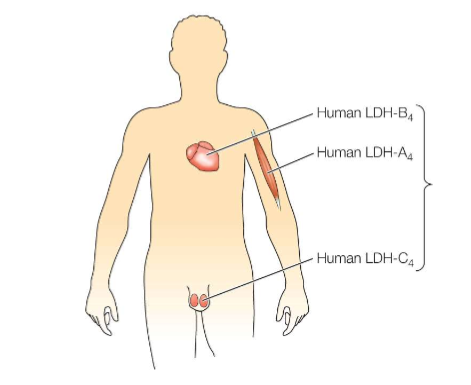
Importance of isozymes and interspecific enzyme homologs
Understand functional variations in enzymes within or across species, discover new functions for the same enzyme, further understand evolution
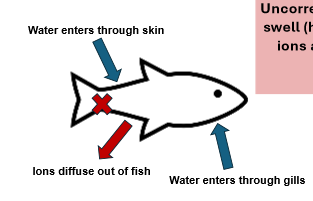
Osmoregulation in freshwater fish
Live in hypoosmotic (lower total solute concentration) solution compared to internal body fluid, meaning water enters fish by osmosis and ions diffuse out. Uncorrected, cells swell and ions depleted
Osmoregulation in saltwater fish
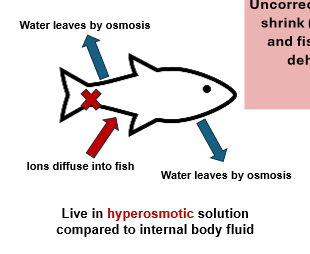
Live in hyperosmotic (higher concentration) solution compared to internal body fluid, meaning water leaves fish by osmosis and ions diffuse in. Uncorrected, cells shrink and fish dehydrated