therapeutic drug monitoring
 Call Kai
 Learn
 Practice Test
 Spaced Repetition
 Match
 Flashcards
 Knowt Play
1/17

There's no tags or description
Looks like no tags are added yet.
18 Terms
what does narrow therapeutic index mean
difference between effective dose and toxic dose is very small
example of a drug with narrow therapeutic index
phenytoin
what is therapeutic drug monitoring
measuring specific drug concs in patients at regular intervals
what is the importance of TDM in patient care
enables medicines to be personlised cos not every patient metabolises or responds to drugs in the same way
what is TDM used for
to avoid underdosing and toxicity
define high risk medicines
medicines that have high risk of causing harm or injury if they are misused or used in error
true or false: error rates with high risk meds are higher than normal meds
false - they are the same. but when the errors occur, the consequences are more significant
examples of high risk meds
methotrexate
lithium
anticoagulants
antibiotics
injectable sedatives
opioids
antipsychotics
insulin
infusion fluids

examples of drugs with narrow therapeutic range
carbamazepine
digoxin
gentamicin
lithium
phenytoin
theophylline
vancomycin
warfarin
role of the pharmacist within TDM
ensure safety
ensure efficacy (that the drug is doing what is needs to do)
ensure quality (standard of care using NICE guidelines and following legislation)
supporting patients
why monitor therapy
ensure efficacy
ensure safety
minimize toxicity
what are the cardiovascular monitoring conditions
heart rate
blood pressure
chest pain
oedema
shortness of breath
weight loss/gain (aligned with oedema)
exercise tolerance
troponin
creatine kinase
monitoring conditions for infection
temp
white blood cell count
microscopy, culture and sensitivites
symptoms
CRP
monitoring conditions for diabetes
blood glucose
HbA1c
insulin dose
hypo/hyperglycaemia
macrovascular complications (CVD)
microvascular complications
eye disease
neuropathy
renal disease
how to monitor pain
pain score
analgesic use
respiration rate
pain is subjective so use a universal pain score
how to monitor respiratory
shortness of breath
PEFR (peak respiratory flow rate - asthma)
FEV1 - forced expiratory volume - COPD)
respiratory rate
reliever use
FVC - first vital capacity - COPD specific
monitoring patient that are taking different conditions
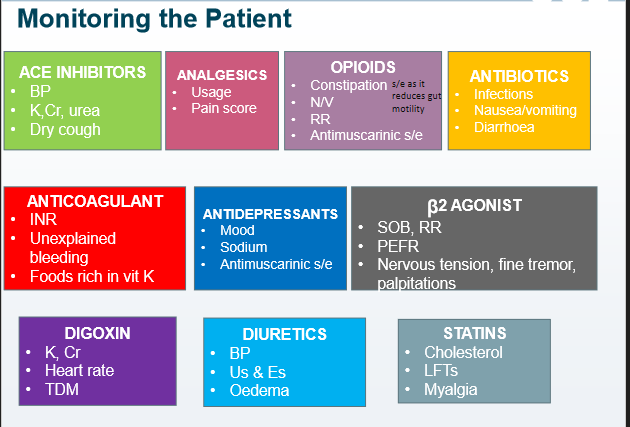
what else to consider if patient is on multiple drugs e.g. amiodarone and theophylline
for example amiodarone is an inhibitor of cytochrome P450 so it inhibits the metabolism of certain drugs
smoking increases clearance of theophylline as smoking is induction at cytochrome P450