Japan: Notable Artists and their Art
 Call Kai
 Learn
 Practice Test
 Spaced Repetition
 Match
 Flashcards
 Knowt Play
1/7

There's no tags or description
Looks like no tags are added yet.
8 Terms
1050s - Jocho (All Facts)
Japanese Sculptor during the Heian Period
His most famous work is the “Amitabha Buddha” in the Phoenix Hall of the Byodo-in Temple
He popularized the yosegi technique of sculpting a single figure out of many pieces of wood
He redefined the canon of body proportions used to create Buddhist imagery
1053 - Jocho: Amitabha Buddha of Phoenix Hall (All Facts)
It is made of wood

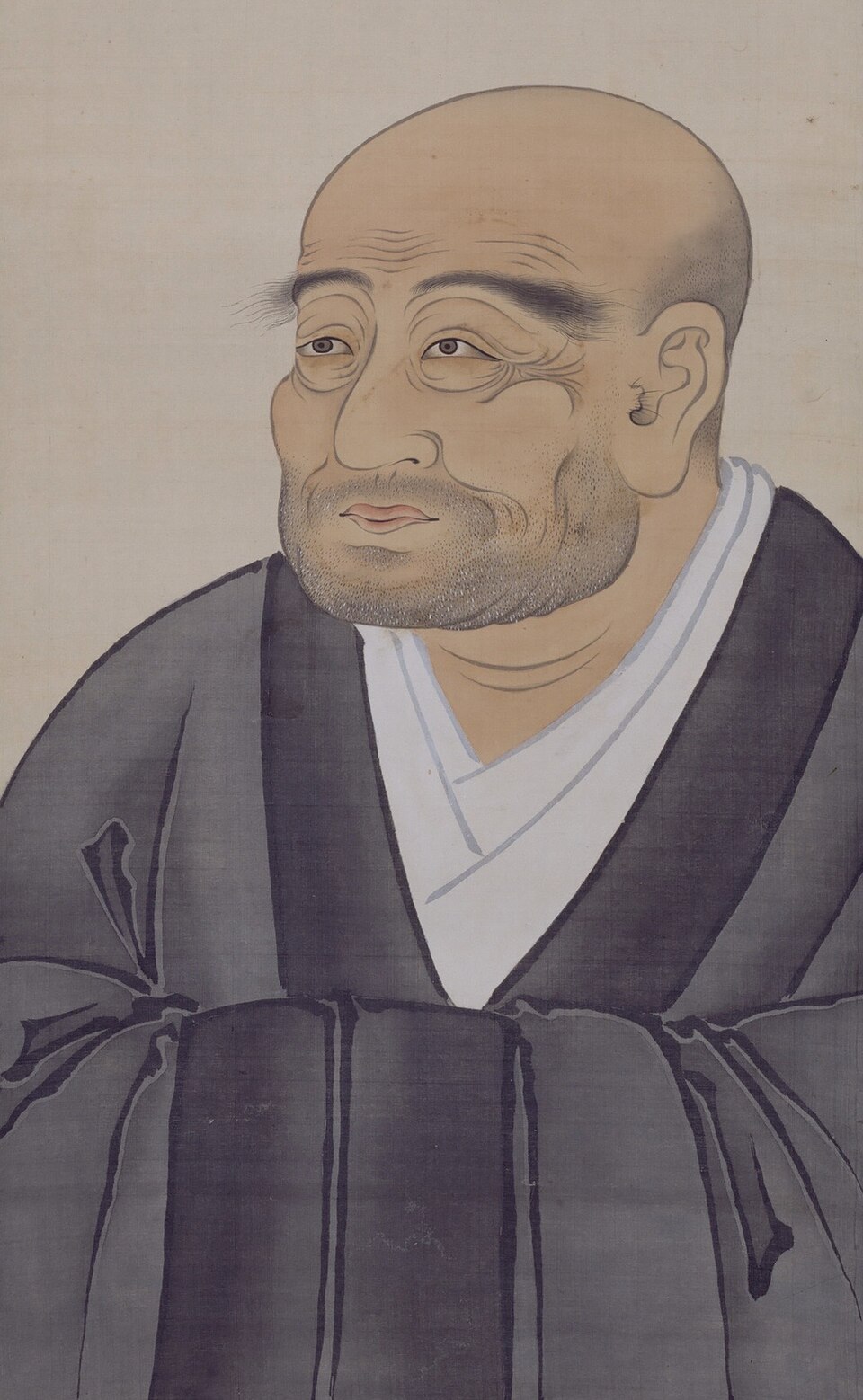
1559 - 1635 - Kano Sanraku (All Facts)
Japanese Painter during the Tokugawa Shogunate
He was (is) best remembered for his Chinese-style ink paintings
He had a restless life, after which he took holy orders in Kyoto
He was the leader of the “Kyoto Kano” School of painting

1558 - 1637 - Honami Koetsu (All Facts)
Japanese Calligrapher during the Tokugawa Shogunae
He was a much admired calligrapher, and his calligraphy earned him the most fame
He was one of the most versatile talents of his day
His brushwork was characterized by its
classical style
soft, full, sensuous, smooth, and graceful lines
He collaborated a lot with Towaraya Sotatsu, one of whose works he embellished with a beautifully written poem
He was also
a swordsmith, who came from a family of swordsmiths
fascinated by the tea ceremony of Japan and was a famous devotee of it
a designer of lacquer ware and ceramics
a gardener
a painter
He
lived out his life in exile at Takagamine, on the orders of Shogun Tokugawa Ieyasu
died at his villages of craftsmen at Takagamine
1570 - 1640 - Tawaraya Sōtatsu (All Facts)
Japanese Painter
He also designed furniture, including screens and fans
He once painted a scroll which was embellished with a poem written by Honami Koetsu

1596 - 1666 - Sakaida Kakeimon (All Facts)
Japanese Potter
He was (is) considered the master of Japanese pottery
He was (is) famous for his development of overglaze enamel-decorated porcelain, in particular the red enamel color
He became the first Japanese potter to sell his ware to Europeans
He won local fame when he presented his gold, silver, and colored enamel to the lord of Nabeshima
It is said that his name was changed by a nobleman for whom he had made a porcelain ornament in the form of two persimmons whose Japanese name was the first four letters of the namesake
1658 - 1716 - Ogata Korin / Ogata Koretomi (All Facts)
Japanese Painter
His works are marked by naturalism and an obvious talent for design
He was born into a wealthy merchant family
His profligate lifestyle led him into financial difficulties, which forced him to take up painting as a profession