L08 spatial behaviour, optimality & tradeoffs
 Call Kai
 Learn
 Practice Test
 Spaced Repetition
 Match
 Flashcards
 Knowt Play
1/32

There's no tags or description
Looks like no tags are added yet.
33 Terms
cute rob frost quote idea
i took road less traveled by and it made all the differences
that making random choice in the future seen as “the correct” path
=> how do we know how to make decisions w limited info
what factors can influence animal space use?
Food, habitat layout, pollution, infrastructure, socioeconomics and other species.
jaguar & hyena example
Jaguars favoured natural areas, revisited agricultural areas less, and moved faster near roads.
Habitat selection for hyena:
Prey availability and perceived risk of competition, aggression or predation.
reasons we move
to disperse/migrate
to pursue resources (food, mates, social partners)
to escape stressors (envmtal, predators, parasites)
(many happen simultaneously)
optimality modelling
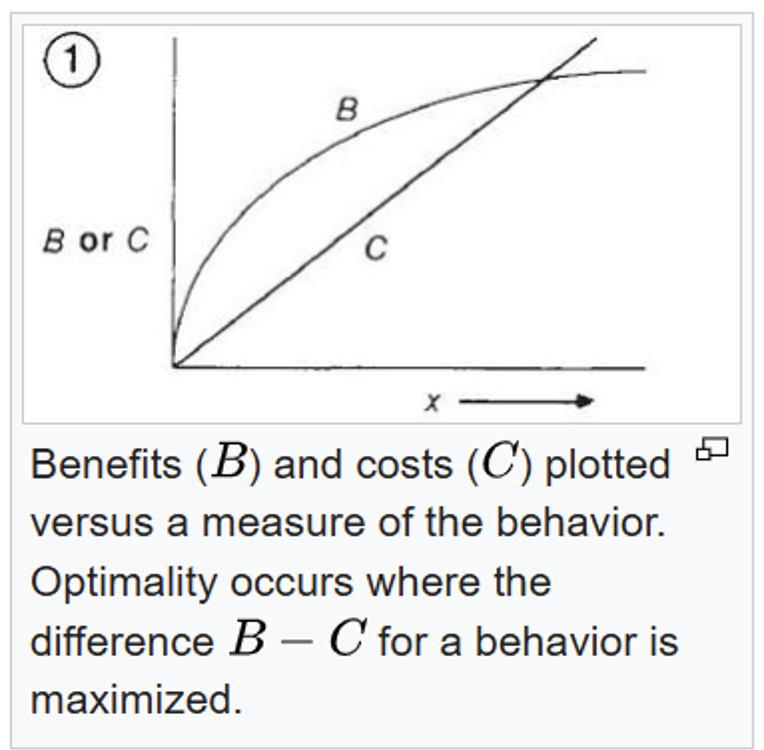
tradeoff
situation where gaining or improving one desired thing requires giving up or reducing another, because all options cannot be maximized at the same time

darwinian daemons
something that is able to optimise everything
they dont exist
basically tradeoff is essential bc cost of living
area’s desirability depend on …
ratio of Resources : Predators

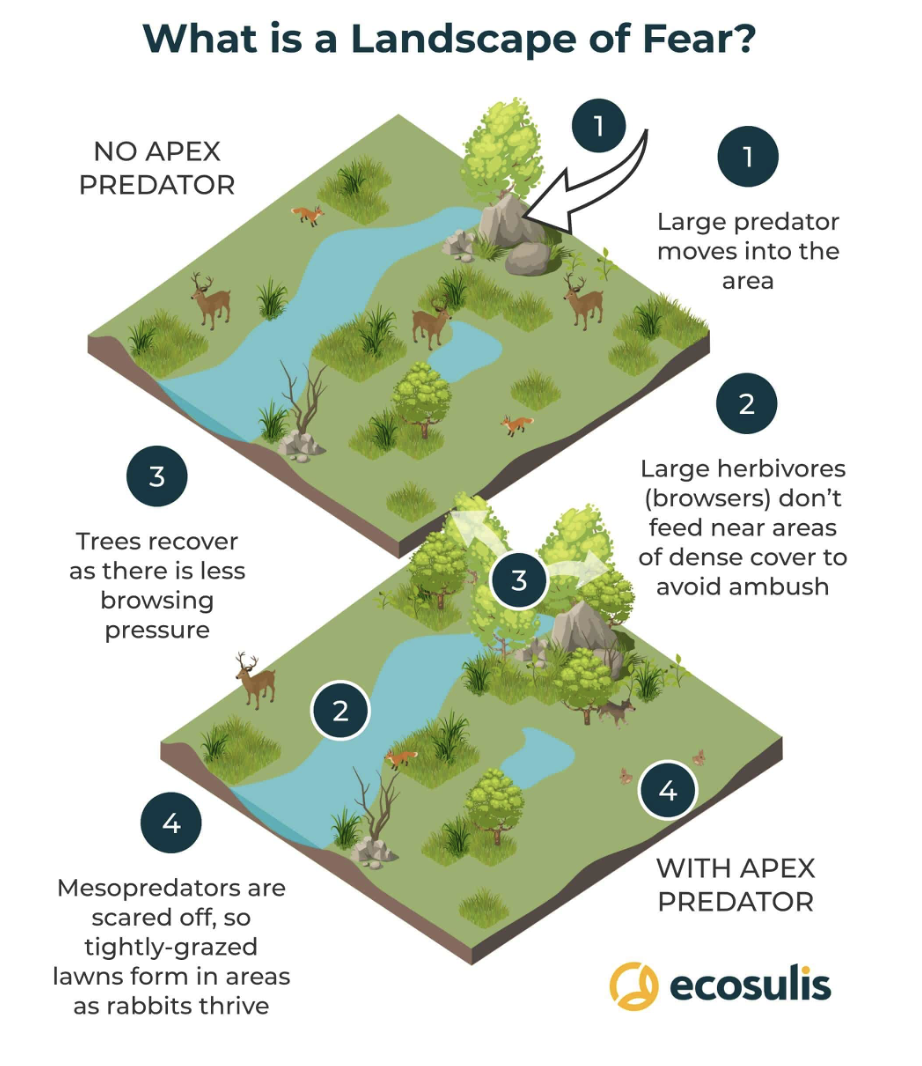
landscape of fear & 2 fx
= A spatial pattern of perceived predation risk that influences animal behaviour.
Without the predator:
Herbivores can feed in more areas.
Browsing pressure is relatively widespread.
Trees and vegetation are more heavily browsed.
With the predator:
avoid areas where they perceive a high risk of ambush.
feed in safer, more open areas instead.
Vegetation can recover in areas where browsing pressure decreases.
Consumptive effects: predators directly kill and consume prey.
Fear effects: predators alter prey behaviour through perceived risk
==> predators can influence an ecosystem even when they are not actively hunting.
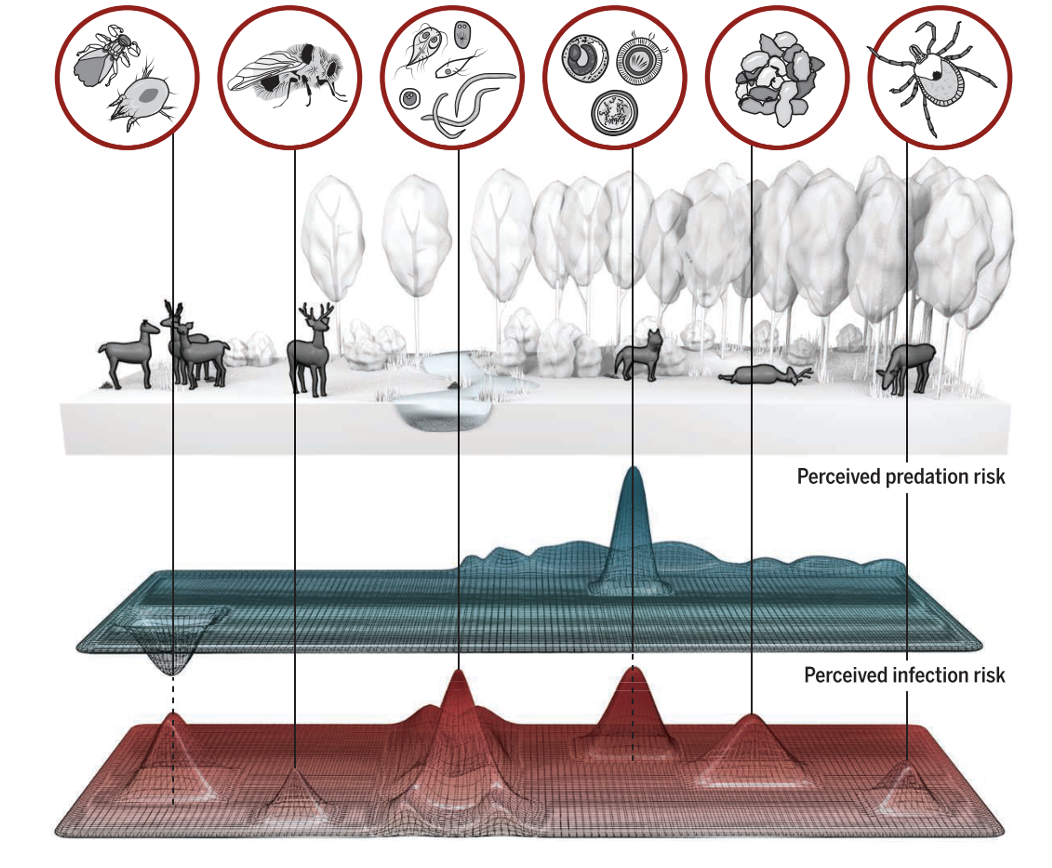
landscape of disgust
= A spatial pattern of perceived infection risk that influences parasite avoidance behaviour.
e.g. an animal might avoid a particular water source because it contains parasites, even though there are no predators nearby.
disease transmission cycle example: zebra/anthrax
Infected zebra dies → carcass contaminates soil → bacteria form spores → another zebra grazes and ingests infectious material
=> spatially unevenly distributed risks → affect spatial beh

resources : parasites
Resources attract more hosts and increase grazing activity, creating more opportunities for parasite transmission and accumulation

Benefit : Cost
Health benefits of avoiding parasites vs costs such as time, energy and reduced access to resources.
Complete avoidance can cost more than the additional health benefit it provides.
=> best to accept some level of cost

examples of optimality currency
time
energy
resources
fx on survival
fx on reproduction
ideal free distribution general concept
animal seeking resources
areas w more resources attract more animals
==> density of these patches +++
++density → ++competition → - - attraction of patch → - - density
===>population perfectly distributed across patches according to their value
wherever u choose to go, everyone is making the same decision ==> same ratio of resources per individual

ideal free distribution assumptions
each available patch has an inherent quality
individuals are free to move
indiviudals are aware of patch quality, choose the ideal one
density => competition
all individuals are competitively equal
=> none are ever met
ideal free distribution: complications
resources fluctuate in availability bc not homogeneous
many non-edible resources that influence , e.g. climate
patches vary in predator density (whom undergo same process)
patches vary in parasite density (whom are driven by host density on patches)
animals often under pressure to make decision + operate under limited information
optimality models…
attempt to predict particular combo of costs/benefits to maximise individuals’ inclusive fitness
understand:
> decisions an animal makes
> currency in use (e.g. amount of rare nutrient…)
> constraints limiting beh (e.g. size of food it can eat)
assumption of optimality models
animal is behaving to maximise its fitness
=> likely but conflicted as maximising several things at at a time
optimal foraging (sub optimality models)
behavioral strategy in which an animal maximizes its net energy intake while minimizing the time, effort, and risk spent searching for, capturing, and processing food
stages in finding and eating prey
travelling time => time to get to / from the site or between feeding patches
teach time => time to spot preferred food
pursuit time => time to stop it running away and subdue it
handling time => time taken to break it open/chop it up and eat
foraging impulses are…
complicated
e.g. crave food bc we are dehydrated not bc we lack energy
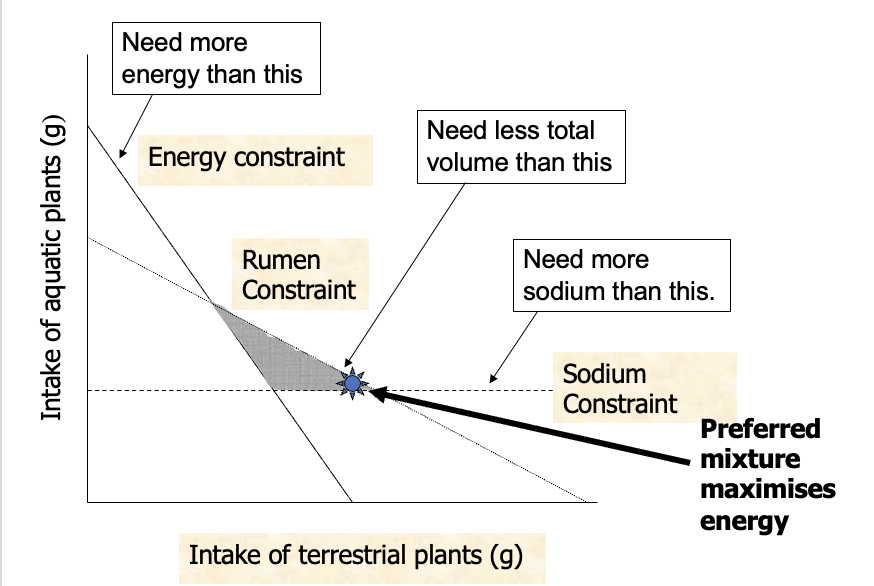
How does a moose optimise its diet when balancing energy, sodium and rumen capacity?
Must meet minimum energy + sodium requirements while keeping total food volume within rumen capacity
Only mixtures within the grey area satisfy all constraints
Preferred mixture maximises energy intake → energy is the key currency, not sodium
How does plant moisture affect water balance and food selection in African savanna herbivores?
Study of bushbuck and kudu: plant moisture, water intake and water conservation
As the dry season progresses, plant moisture declines; herbivores' selection for surface water changes
Water availability/moisture can influence foraging decisions and water balance
law of diminishing returns
food gained per unit time reduces bc:
1/ patch gets depleted as food taken out
2/ food in mouth obstructs further collectoin
=> best for foragers to leave at some point

2 factors that determine total energy intake rate
1/ intake rate
2/ travel time between patches
Marginal Value Theorem
models where forager is on that curve when it’s best option is to leave
indicates optimum search time forager should spend + optimum load it should leave patch with
CF SLIDES 35-37 RELEARN BC WTF

when dealing w conflicting optima b/w u & ur conspecifics
optimality not used
identifying probably of certain type of individual should exist
or proba that it should perform an action (or “be” a given individual type)
// ESS game theory: equilibirum, no better strategy, static like for IFD

cooperation and cheating; complications
Animals have limited, but not zero, information about others.
Costs and benefits of cooperation/cheating vary across time and space, as does population composition.
Cooperators can evolve ways to recognise cheats.
Cooperators and cheats continually evolve and coevolve, so strategy probabilities are never perfectly fixed.
Spatial and temporal structure can affect kin structure, which influences the likelihood of cooperation.
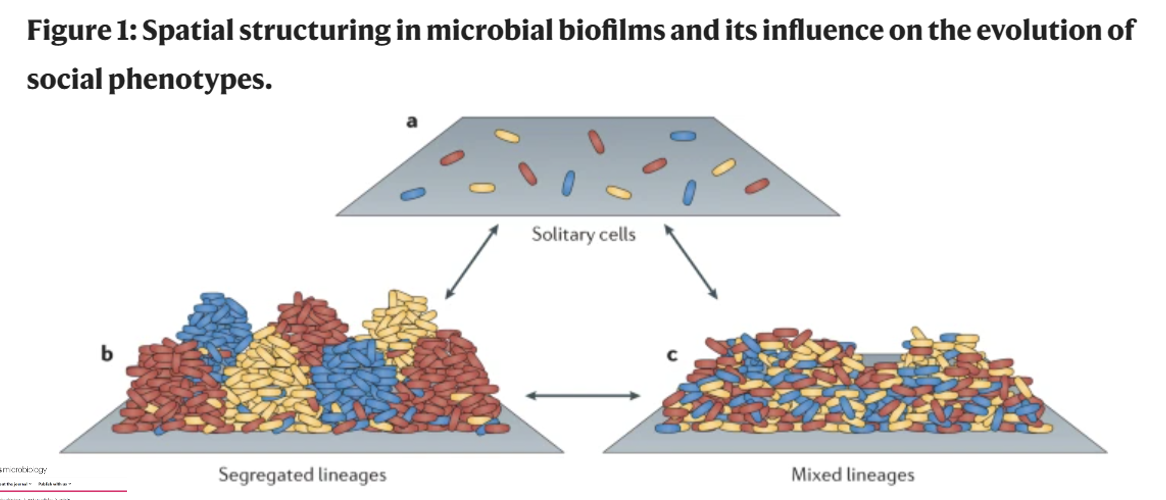
How can spatial structure in bacterial biofilms maintain cooperation?
The arrangement of cells affects which individuals interact and benefit from one another.
Spatially segregated lineages can create local interactions, while mixed lineages create different opportunities for cooperation, cheating, mutualism or competition.
Cooperation is influenced not just by the strategy an individual has, but by who is physically nearby.

What does “optimality is a compromise” mean?
Optimising ≠ maximising everything.
Living organisms work with limited resources and constraints, so they cannot maximise every outcome simultaneously.
Apparent inefficiencies can arise because resources and opportunities are exploited by other individuals.
Organisms do the best they can with what they have; behaviour reflects trade-offs.
How can human disturbance affect animal behaviour and survival?
The “Human Shield Hypothesis” asks whether predators avoid humans, potentially creating refuges for prey.
Human disturbance can influence perceived risk and animal behaviour.
Human effects may interact with habitat quality, food subsidies and landscape modification.
Dominant and subordinate animals may respond differently, affecting behaviour and survival/reproduction
Do trade-offs really manifest, and how do we make choices with limited information?
People make different choices because they prioritise different outcomes (e.g. a bigger house vs. a bigger car).
When choosing between options, we often have incomplete information about which is actually better.
A choice may be random or uncertain at the time, but in hindsight we may interpret it as the correct choice.
Behaviour and decisions depend on the information available when the choice is made.