LECTURE: Metabolism - BIOCHEMICAL ENERGY PRODUCTION
 Call Kai
 Learn
 Practice Test
 Spaced Repetition
 Match
 Flashcards
 Knowt Play
1/10

Earn XP
Description and Tags
Week 13 – Biochemical Energy Production (Lecture Class) Bachelor of Science in Medical Technology (2nd Year)
11 Terms
The sum total of all the biochemical reactions that take place in a living organism
Metabolism
2 subtypes of Metabolism
Anabolism
Catabolism
A series of consecutive biochemical reactions usedto convert a starting material into an end product.
Metabolic Pathways

Series of a reactions generates a final product
What kind of Metabolic Pathway?
Linear
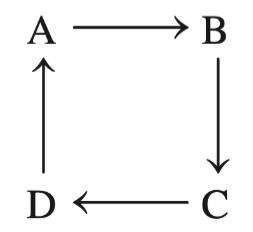
Series of reactions that regenerates the first reactant
What kind of Metabolic Pathway?
Cyclic
Organelles that is responsible for the generation of most of the energy for a cell.
Sausage-shaped organelles containing both an outer membrane and a multifolded inner membrane
Mitochondrion/ Mitochondria
composed for about 50% lipids and 50% protein is freely permeable to small molecules
Outer membrane
composed of about 20% lipids and 80% protein is highly impermeable to most substances
Inner membrane
separate compartments of non permeable nature of the inner membrane divides a mitochondrion
Matrix – interior region
Intermembrane space - between the inner and outer membrane
folds of the inner membrane that protrude in the matrix
Cristae
composed of small spherical knobs attached to the cristae.
It is located on the matrix side of the inner membrane and they are responsible for ATP synthesis.
ATP synthase complex