MERT FINAL
 Call Kai
 Learn
Learn Practice Test
 Spaced Repetition
 Match
Match Flashcards
 Knowt Play
1/102

There's no tags or description
Looks like no tags are added yet.
Name | Mastery | Learn | Test | Matching | Spaced | Call with Kai | Chat |
|---|
No analytics yet
Send a link to your students to track their progress
103 Terms
Director of Operations
Chief authority of the EBoard
Responsible for the daily operations of the organization
Serves as the primary contact for RC MERT and has the final say on all decisions made pertaining to the operations
When to reach out to DO
protocols
general operations
Deputy Director of Operations
Serves under the DO in the operations department
Acts as the organizations disciplinary executor
INITIAL contact regarding all issues pertaining to vehicles under RC MERT
When to reach out to deputy director of operations
vehicle 800
IRS (incident reports)
Director of Training
Coordinates the training department
Responsible for the
Crew Chief Trannie program
Annual EMT class
Mass casualty incident drill
In services
Field training officer program
All other training related projects
when to reach out to director of training
reciprocity
fast tracking
ranking up
802 program
Assistant director of training
Serves under the DOT
Assist him/her in activities and the programs pertinent to the training department
when to reach out to ADOT
NMOP
EMT Class
Inservices
membership officer
Responsible for
Running the application process
Tracking the status of each member
Maintaining certifications and paperwork
Taking attendance during GMM
Recording minutes during scheduled meetings
when to reach out to membership officer
GMM attendance
LOA
Public relations officer
Responsible for
Annual MERT banquet
Advertising
Community outreach
Updated any other channels pertaining to the public image of RC MERT
Keeping positive relations with other student groups on the UR campus
Coordinating the public health activities of RC MERT
When to reach out to public relations officer
co-sponsorships
social media
preceptor/preceptee
Equipment manager
Responsible for inventorying RC MERT equipment at least one timer per month
Restocking all equipment as needed
Maintaining the MERT bunk room
Responsible for keeping in contact with UHS, public safety, and the operations department regarding all aspects of RC MERT equipment
when to reach out to equipment manager
equipment
Webmaster
Responsible for all aspects of the appearance and functionality if the RC MERT website
Coordinating nightly, daily, and standby schedules for the organization
Working in conjunction with other departments to update the RC MERT campus club connection website
when to reach out to webmaster
scheduling shifts
website
QA/QI Chair
Responsible for
running the process of reviewing charts and submitting to emsCharts using the online system
Organizing regular QA/QI sessions
Acquiring statistics reports at the end of each semester as needed
when to reach out to QA/QI chair
charting
General member responsibilities
Attend all GMM
If you cannot make it, submit an absence form by 1200 Sunday
Input shift availability
Peter sends them out every month
At least 5 checkboxes
Leave of Absence (LOQ)
You must file an LOA if you believe you cannot fulfill all membership requirements
Members on LOA
Don't need to attend GMM
DOnt need to take shifts
Guidelines for submitting LOA
Contact Trisha if submitting a LOA
Can only request a LOA for one semester at a time
Can not be on LOA from more than 3 semesters
Must be filed out by Sunday of the preceding week prior to the start of the LOA period
801: Crew Chief Responsibilities
Legally responsible for everything that happens on call
Trains 802s
Reviews charts that 802s write
Patient demographic information
802: EMT responsibilities
Check out form
End of shift form
Broken equipment form
Responsible for direct patient contact and assessment
Charts calls
803: Probationary EMT responsibilities
Help with patient care
Responsible for recording times
Responsible for taking patients vitals
Helps collect patient demographics
times 803 must take
Dispatch
En route
On scene
At patient
Vitals (first, second, and third)
Any interventions done during the call
AMR dispatch
AMR arrival
MERT leave
MERT back in service
vitals 803 must take
Oxygen saturation
Blood pressure
Pulse
Respiratory rate
803 patient demographic
Your 802 may ask you to write down patient demographic information for charting
Patientes birthday
Patients living address
shift times/shift timeline
Shift Times
2000-0700 (night shift)
Fill out your availability on the shift sign up
Arrive at spurrier MERT office @1945(7:45) on the day of your shift for shift checkout
Help 802 with check out if they need
Head to the theta chi bunk room
Take any calls
Head over to superior MERT office @6:45-7:00 to put the bags away and finish your shift
what is an incident report?
A form used to report any violation of RC MERT protocol
who can file an IR?
anyone on MERT
When should you file an IR?
Internal conflict
Member to member
External conflict
Member and public safety
Member and patient conflict
Public safety and patient conflict
how do I file an IR?
Online form available in the #forms-and-links-channel on discord
what happens after you file an IR
The person the IR was written about will be contacted
The identity of the person who wrote the IR will remain anonymous
Who should I go to with questions on IRs?
Callahan (ADO)
who is the director of operations?
Sophie Black
who is the assistant director of operations?
Brennan Callahan-Stiles
who is director of training?
Emily Woodruff
Who is assistant director of training?
Jessica Kim
who is membership?
Trisha George
QA/QI
Noah Paradise
Public relations
Francisca Barria-Lopez
Equipment Manager
Isha Korgankar
Webmaster
Peter Wu
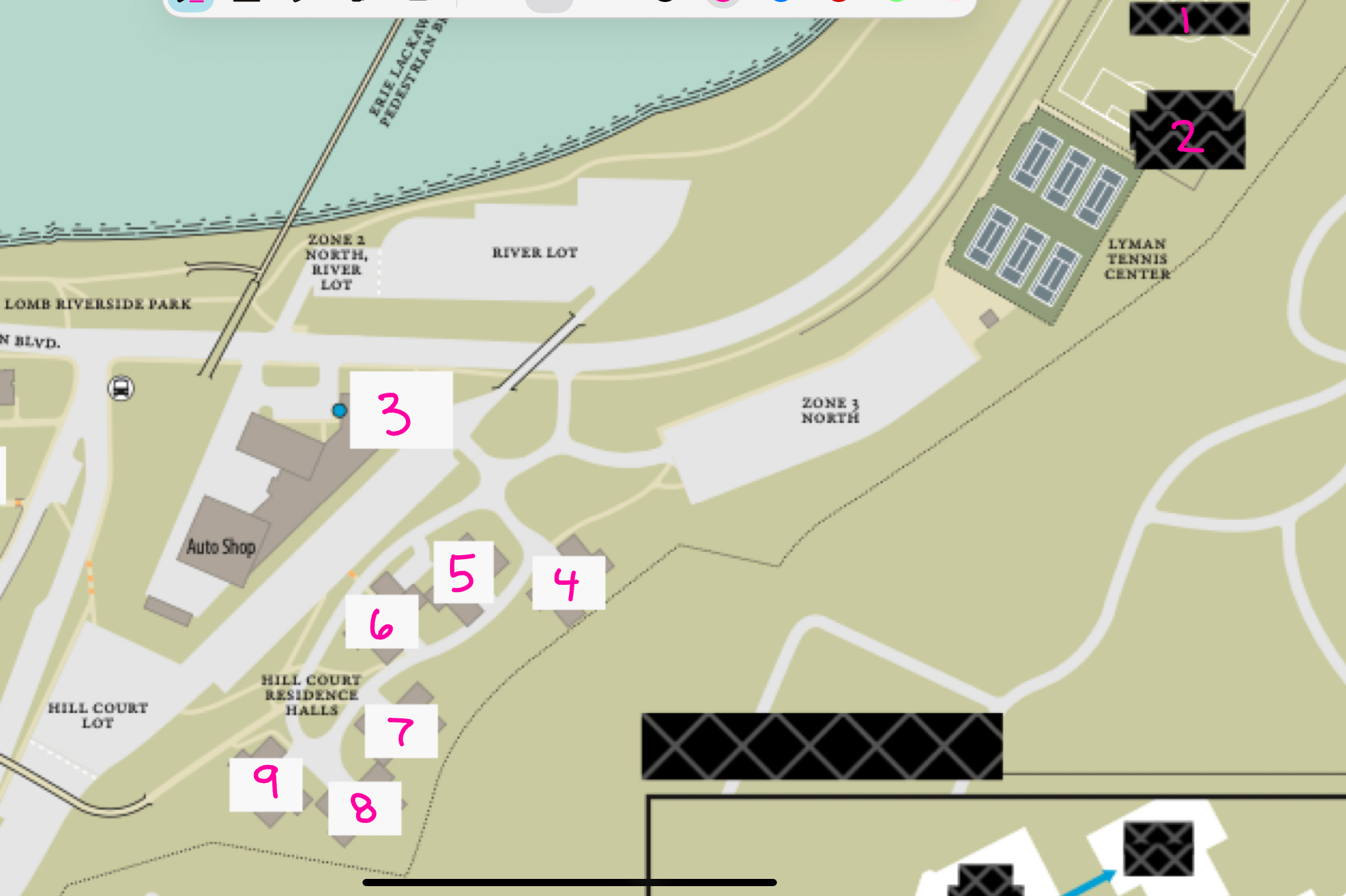
label the map
North field
Prince Athletic Complex
Pub Safe
Chambers
fairchild
gale
kendrick
munro
slater
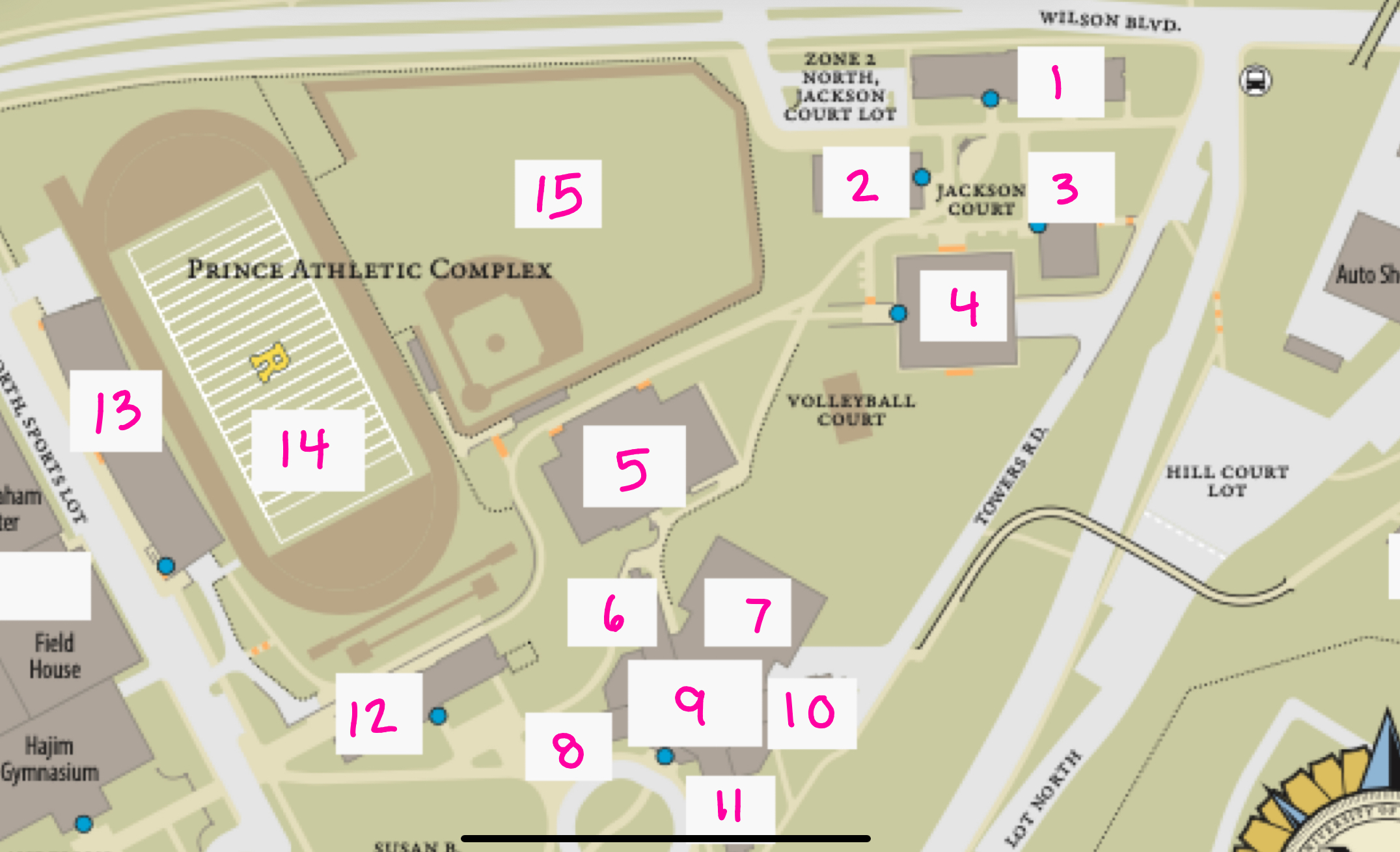
label the map
o’brien
anderson
wilder
sage
spurrier
gannett
danforth
gates
Sue.B
Hollister
Morgan
genessee
fauver stadium
fauver field
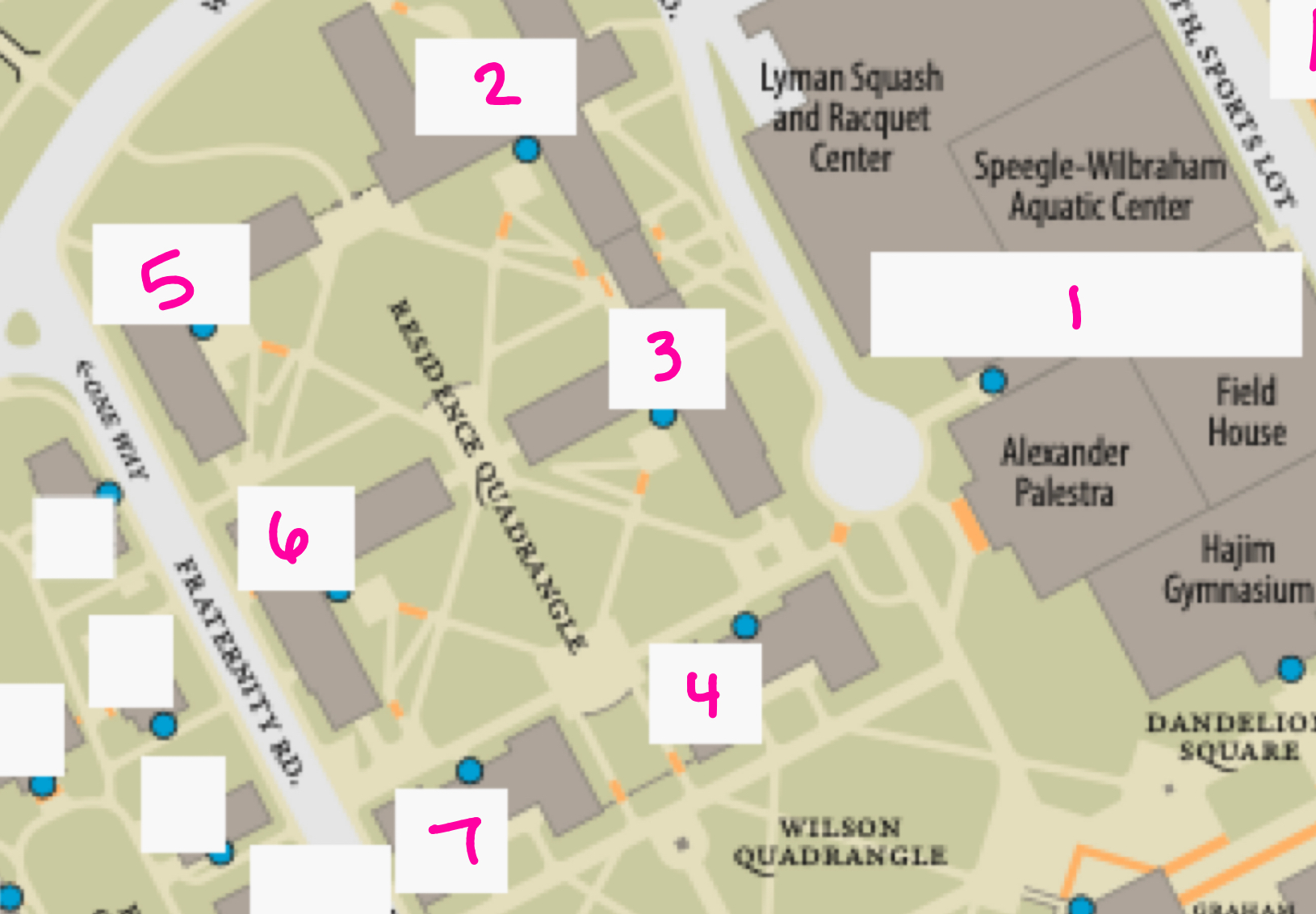
label the map
GAC
gilbert
hoeing
crosby
tiernan
lovejoy
burton
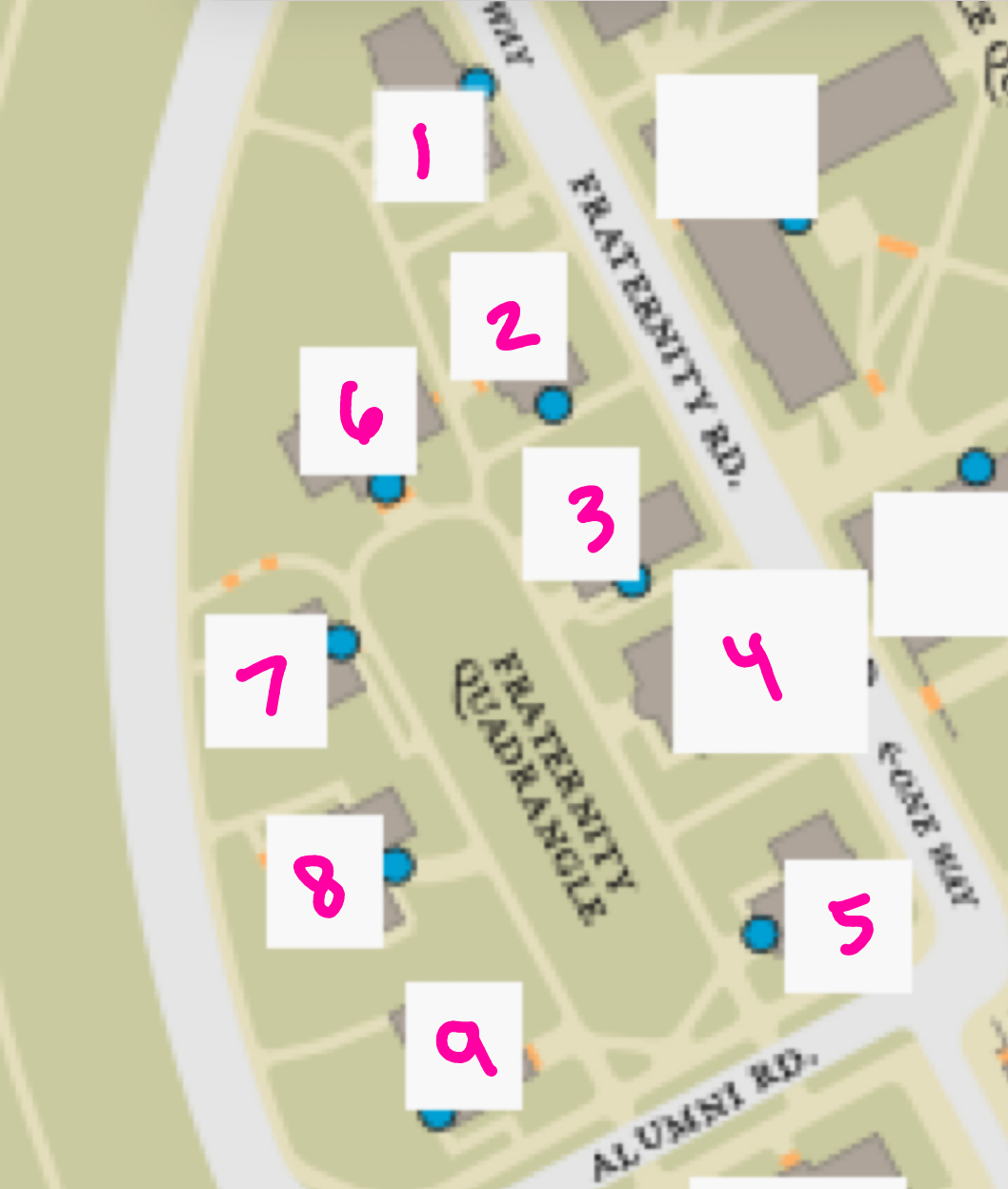
label the map
Sig Ep
SAM
Sigma Chi
DLH
Dramma House
PsiU
Theta CHi
ADP
DKE
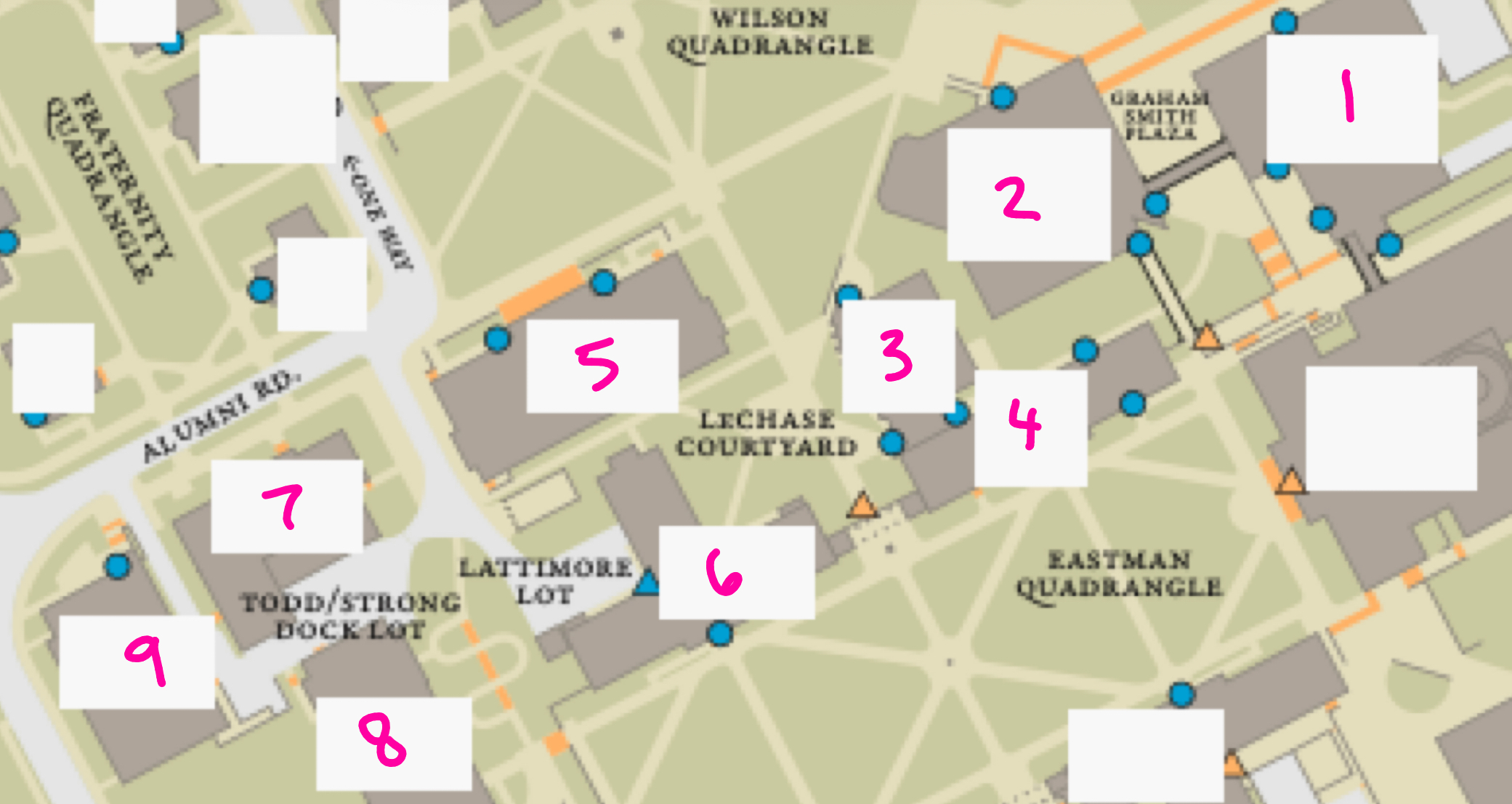
label the map
douglass
willson commons
rettner
morey
lechase
lattimore
Todd
strong suditorium
sloan
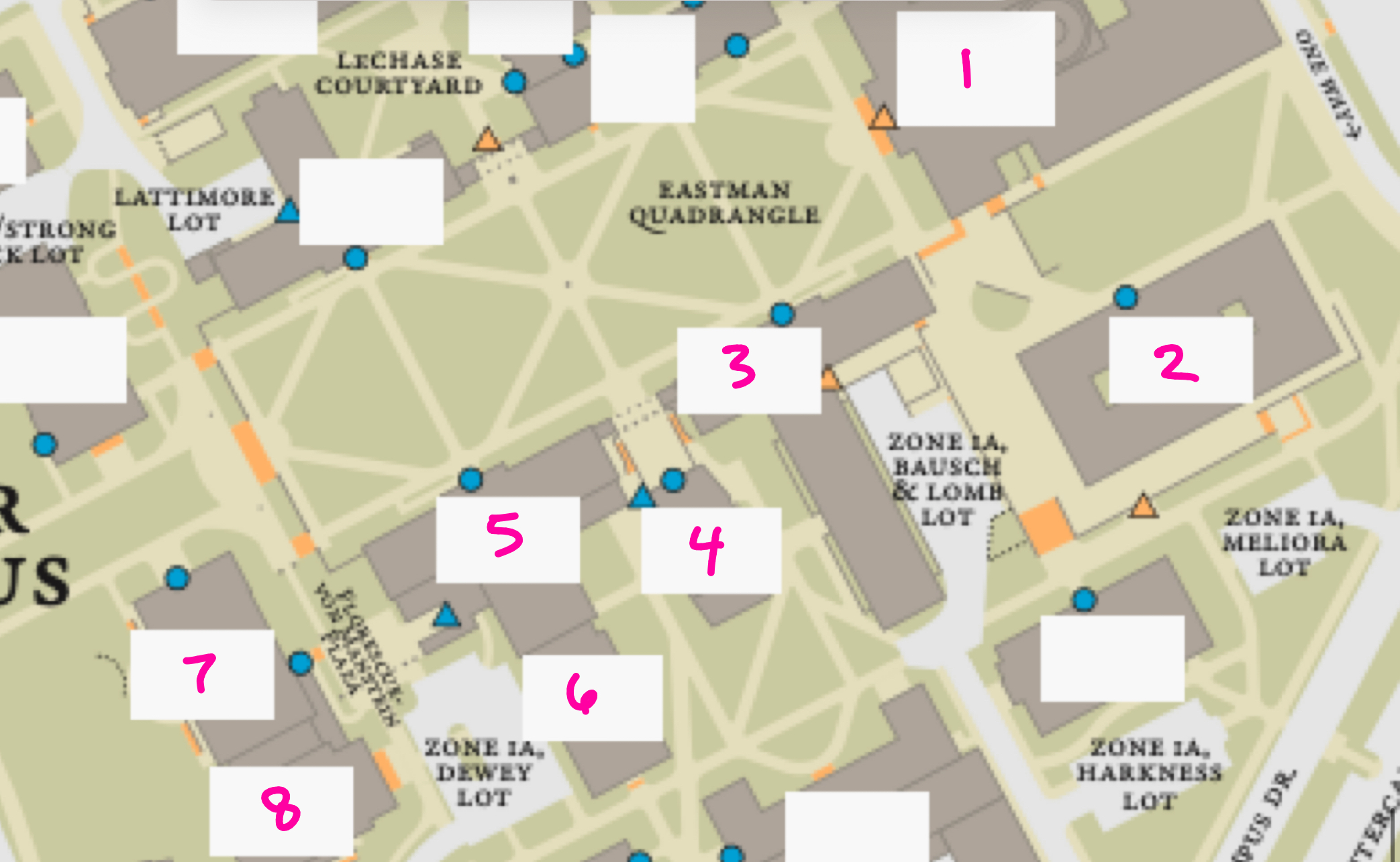
label the map
Rush Rhees
meliora
Bausch & Lomb
Hoyt
Dewey
Carol G. Simon
Schlegel
gleason
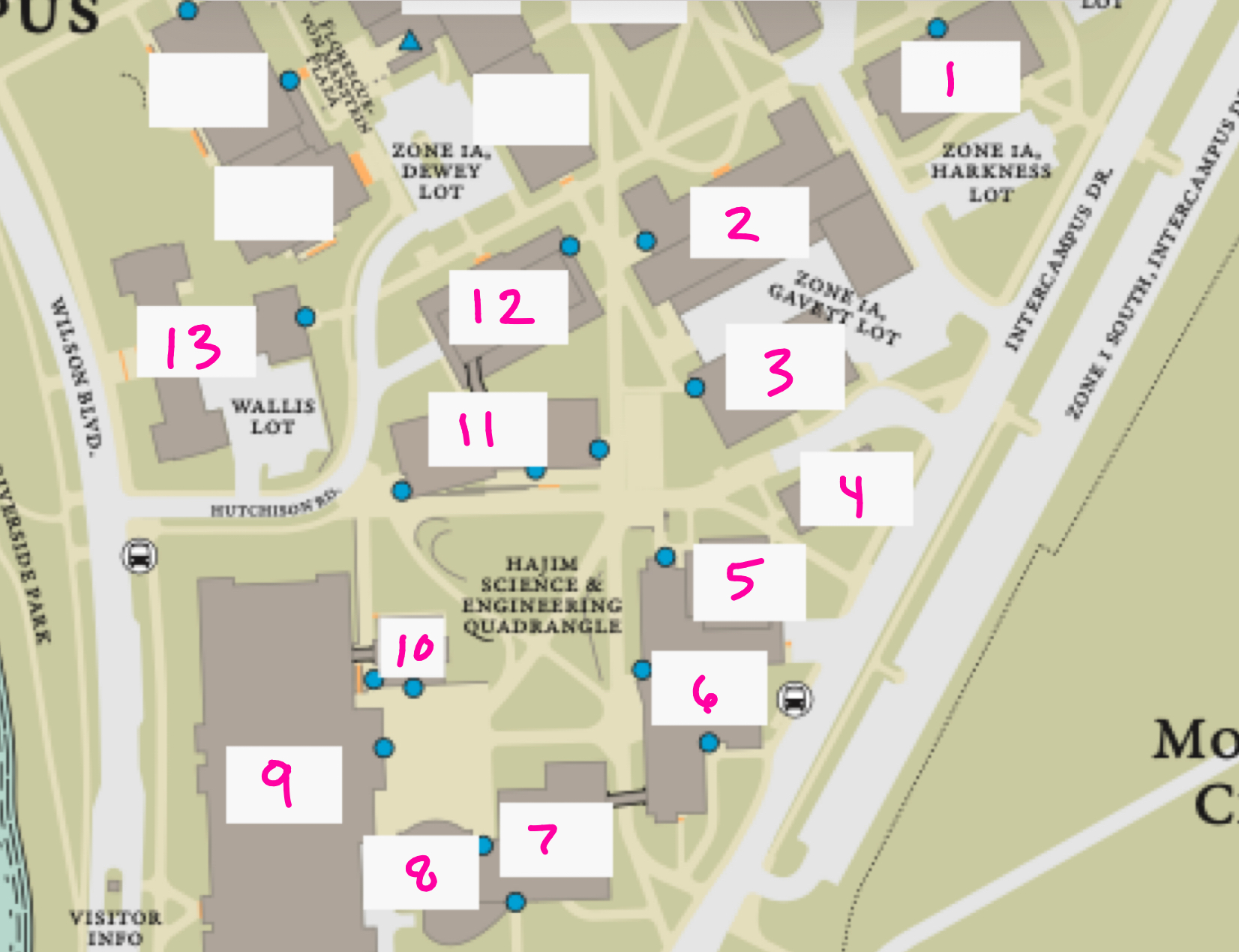
label the map
harkness
gavett
taylor
NYS Optics
wilmont
Goergen
computer studies
carlson library
hutchinson
hylan
wegmans
hopeman
wallis
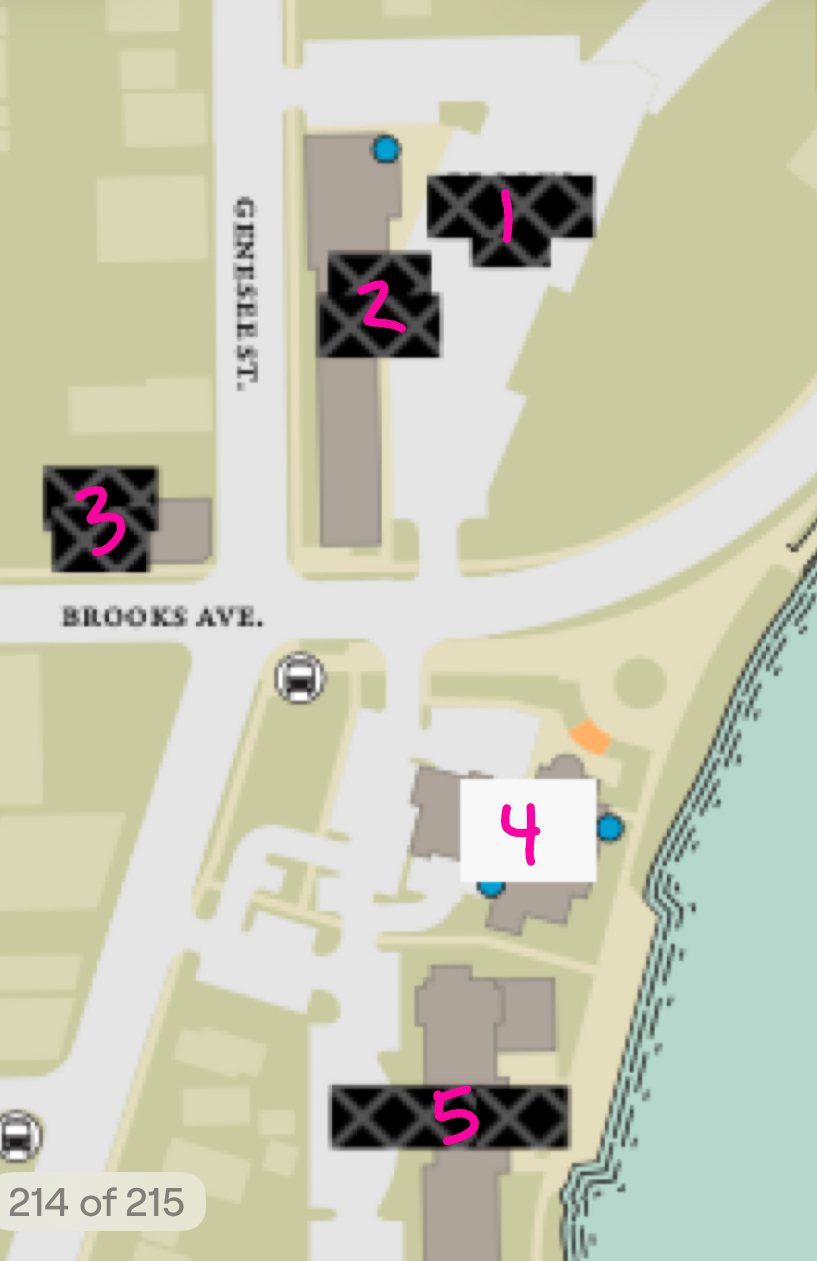
label the map
nothing opps
brooks landing
chabad house
brooks crossing
staybridge suites
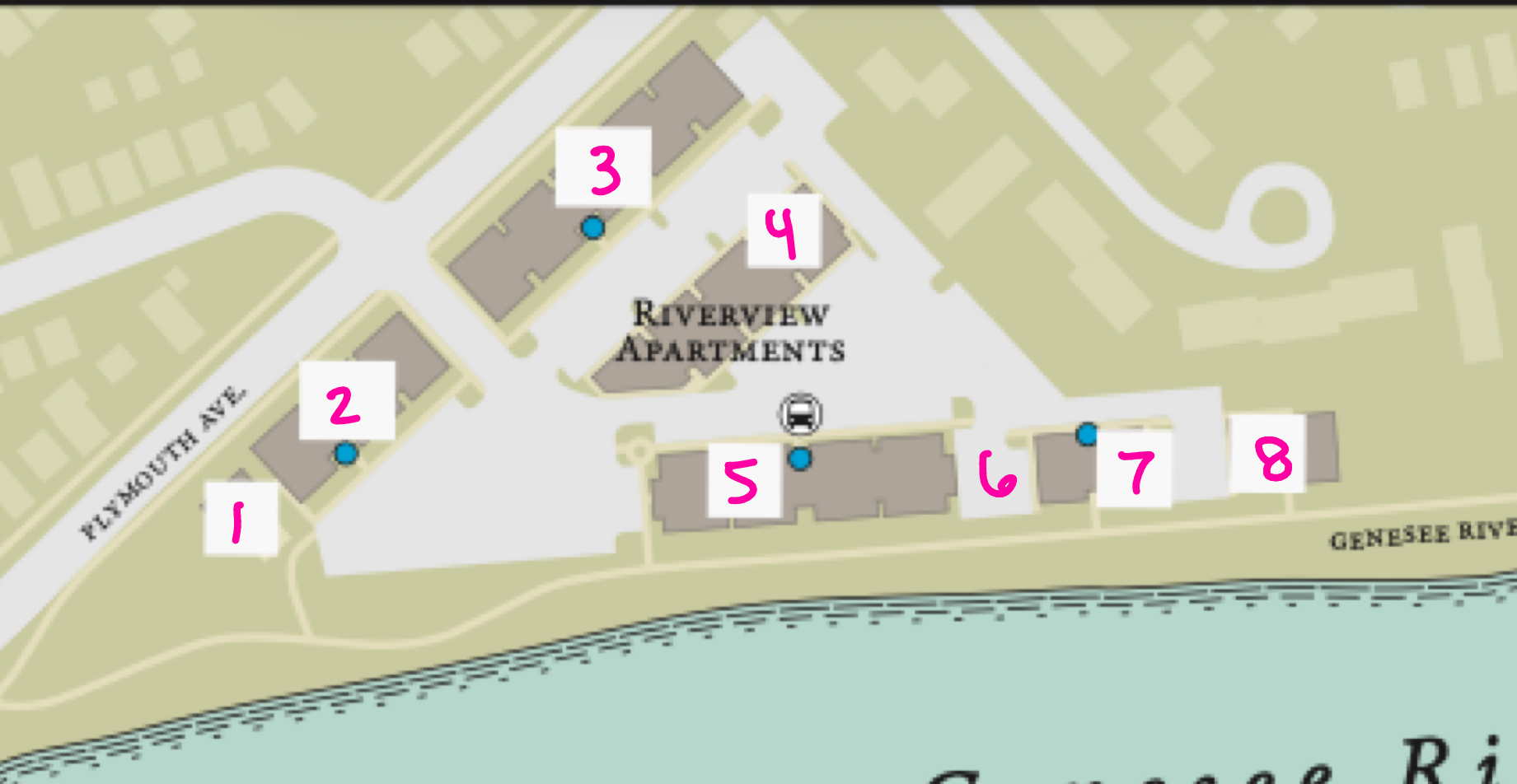
label the map
F
A
B
G
C
nothing opps
D
E
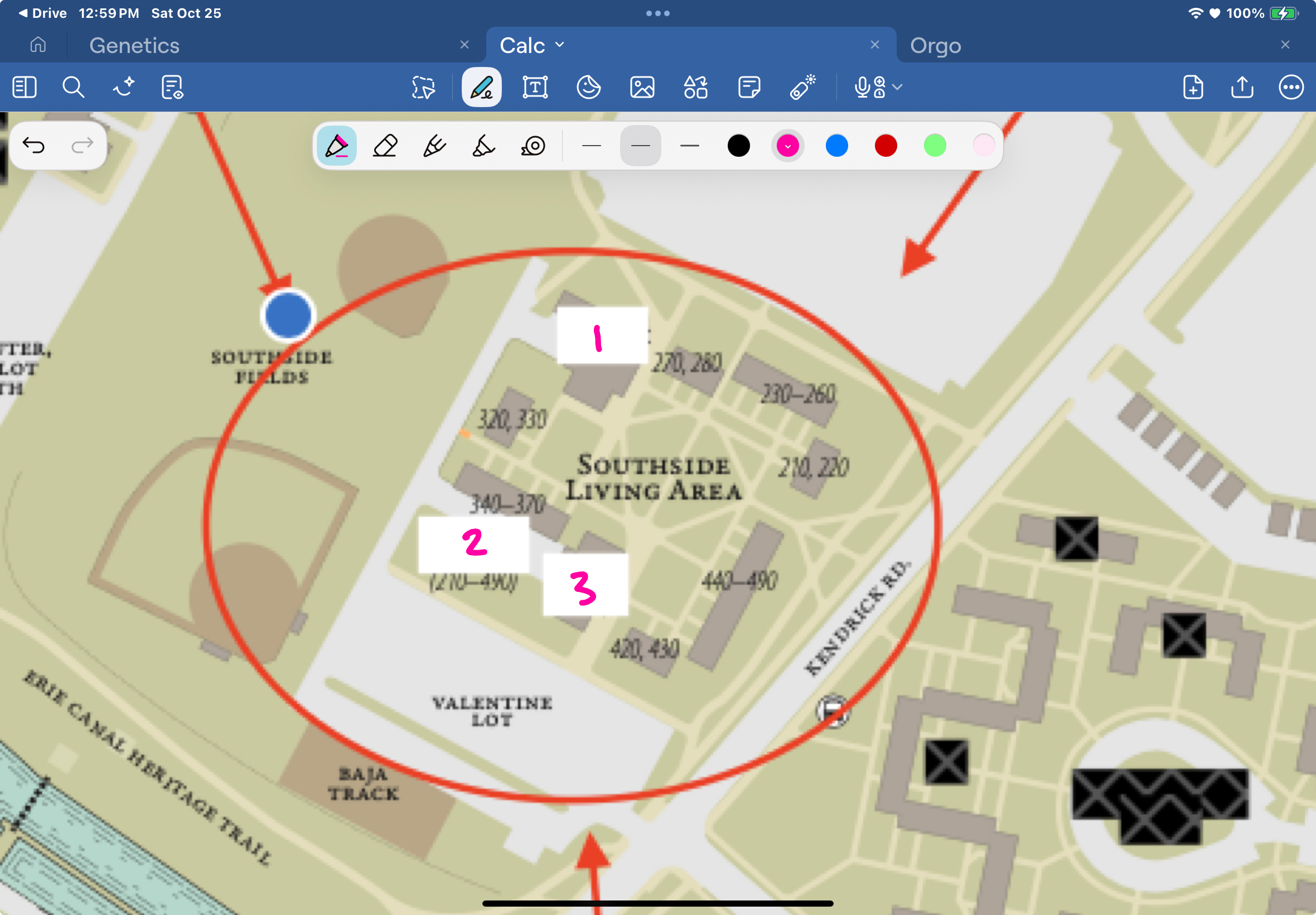
label the map
deKiewiet
maisonettes
valentine
HIPAA Basics
Health Insurance Portability and Accountability Act
HIPPA is a federal law that establishes national standards to protect individual’s medical records and other individually identifiable health information
why is hippa important?
Requires agencies to keep all personal information confidential
Provides trust in health care providers and the system
Sometimes is beneficial to remind your patients that HIPAA exist and that it is to their benefit to divulge all relevant information that we ask for
Violations are serious and will result in disciplinary and/or legal action
Within MERT if you fail to abide by HIPAA, it will likely result in
Your termination from RC MERT
Federal person time
Disbanding of RC MERT by University Administration
how to abide my hippa
Patient information is need to know basis
Patient details should only be discussed within the presence of
RC MERT members who were on the call with you
Once the chart has been locked, the details of the call should no longer be discussed
Other responding transporting EMS agencies
Shared all documentation regarding patient information
Only exception are RMA’s (refusal of medical assistance) forms
ALWAYS ask your 801 before shredding anything
What do I do if I’m approached by a former patient
Do not discuss the details of the call
Inform them that you are not authorized to discuss the details of any RC MERT response in public
MERT HIPPA
1 of 4 can be discussed
Location of call
date/time of call
Gender of patient
Details of assessment and interventions administered
Public Safety and Hippa
There is usually at least one security officer present at a MERT call
Public safety may at times be DIRECTLY involved in patient care
Officers may ask for demographic information about the patient and may ask for the patient's medical condition to relay
Patient friends/family/other & HIPPA
Private patient information should NEVER be given to anyone not involved directly in patient care
If and RA comes up to you after a call and asks what happened you SHOULD NOT tell them
If a partner calls you about your patients you SHOULD NOT tell them
If a school official asks for information about the call, you SHOULD NOT tell them
If a friend comes up to you after a call and asks what happened to their friend, you SHOULD NOT tell them!
Bloodborne Pathogens
Bloodborne pathogens are microorganisms present in human blood/body fluids and other potentially infectious materials that can cause disease in humans
kinds of BBP
blood
Saliva
Semem
Vaginal secretions
CSF
Synovial Pleural fluid
Peritoneal fluid
Pericardial fluid
Amniotic fluid
how are bbp’s transferred?
Accidental punctures and cuts with contaminated sharp materials
Contact between mucous membranes or broken skin and infected body fluids
Mouth
Nose
Ears
Eyes
Contact with open cuts, nicks, and abrasions
Sharing of needles
Sexual contact
Common BBP/ABP
Bloodborne pathogens
HIV
Hepatitis B
Hepatitis C
Common Airborne viruses
TB
Common cold
Influenza
Whooping cough
Measles
COVID 19
contaminated surfaces
Surfaces can be contaminated without visible sings
HIV can survive on surfaces at room temperature for at least a week
Clean all areas that were potentially exposed with appropriate cleaning solutions
Do not touch potentially contaminated surfaces with bare hands
how to prevent BBP transmission
Wear gloves in every call, whether there appears to be body fluids or not
Wear other protective equipment when necessary such as face shields or gowns
Do not keep food or drink on counters where infectious materials may be present
Use gloves when cleaning potentially contaminated areas
The most effective way to prevent the spread of infection is to perform hand hygiene following the WHO five moments of hand hygiene
Before touching a patient
Before clean/aseptic procedures
After body fluid exposure risk
After touching a patient
After touching patient surroundings
PPE
Gloves
Masks - surgical, N95, respiration, etc
Aprons
Faceshields
Gowns
Eyeware
CPR pocket masks
Any other equipment which may reduce contact with skin or other potentially infectious materials
disposing contaminated BBP
Sharps must be placed in the sharps container in the spurrier office
Contained (anything that touches a body fluid) items must be placed in red biohazard bags
Contaminated equipment should be cleaned with appropriate cleaning solution
Contact equipment manager with contained equipment questions, or whenever you place biohazards in the spurrier office
Ryan White Care Act
Requires EMS crops to have a designated officer for exposure control
The designated officer will request that the hospital test for communicable disease
If the hospital finds a communicable disease during the care of the patients
They will contact the provider within 48 hours
what to do in case of exposure
Immediately wash hands and other skin surfaces with soap and water
If you think you may have been exposed you must contact teh assistant director of operations (Callahan), who is MERTS exposure control officer
Trauma bag
Left pocket
immediate trauma
bleeding control, tourniquet, biohazard bags, pocket mask
Right pocket
adult BP cuff, pulse ox and nail polish remover, stethoscope, pens, notebook, trauma sheers, pen light, baindaids
outside sleeve
clipboard w/ RMAs + PCRs
Trauma bag main compartment
burn sheet, multi-trauma dressing, foil blanket
trauma bag inside sleeve
biohazard bags, gloves
trauma bag small sleeve 1 & 2
small sleeve 1
tounge depressors, tape, kling, ACE bandages
small sleeve 2
ABD bandagees, 4 × 4 gauze sponges, roller gauze, coban wrap
trauma bag main compartment (floating)
hot/cold packs, SAM splint, adult C-collar
outside of Medical bag
inside mesh pocket
gowns
left poket (airway)
adult/peds NRBs + NCs, oxygen tubing, nebulizers
outside top pocket
gloves, surgical + N95 mask
Right pocket (Vitals)
adult/bariatric/child BP cuff, big pulse ox, nail polish removers, pen light, notebook, pens, shears
inside of medical bag
manual suction, emesis bags, biohazard, OPAs, NPAs + lube, triage tags
medical pouch
saline sleeve contents, aspirin, glucose, narcan, epi, sharps shuttle, o2 tank + regulator
small trauma pouch (medical bag)
bandaids, antiseptic towelettes, cravats, 4×4 gauze sponges, roller gauze, tape
medical bag main compartment (floating)
adult + peds BVM, tourniquet
vehicle 800 front seat
radio microphone, vehicle registration and hazmat book, light bar
Vehicle 800: trunk
spare tank, snow brushes, KED, hare traction, Kits: airway, peds/burns, extrication, board splints, scoop, backboard
vehicle 800: backseat
blankets, sheets, towels, bag compartment
Orange Bad: airway and breathing
Contains:
Regulator
(2) O2 Tank Keys
CPR Mask
Adult BVM
(2) Adult NRB
(2) Adult Nasal Cannulas
(1) O2 Tubing
(2) Nebulizers
Set of 5 OPAs
Set of 5 NPAs (with Lubricant)
Peds/Burn bag
OPAs, saline, stethoscope, shears, OB kit, pediatric NPAs, Pediatric BP cuff, burn sheet, pediatric BVM
extrication bag
collars: pediatric and adult, head blocks, spider straps, tape
Standby/ D-Day bag main compartment
main compartment:
nebulizers, adult NRBs and NCs, burn sheet, multi-trauma dressing, clipboard with RMAs, oxygen tank, pediatric NRBs and NCs, adult BVM,
medications pouch: sterile water, epi-pens, albuterol, sharps shuttle, glucose, narcans
D-Day bad inside clear pocket
gowns, gloves, emesis bags, surgical masks, biohazard bags, triage tags, sterile water, manual suction, OPAs + NPAs
D-Day Bag Side Vitals Pocket
BP cuffs, stethoscope, pulse ox, adult + peds C-collars, pen, sharpie, pen light
D-Day bag side bleeding/splinting pocket
cold packs, bandaids + alcohol pads, SAM splint
big trauma pouch: ABD pads, gauze, occlusive patch, curity stretch bandage, kerlix bandage roll
small trauma pouch: cravats, trauma shears, tapes
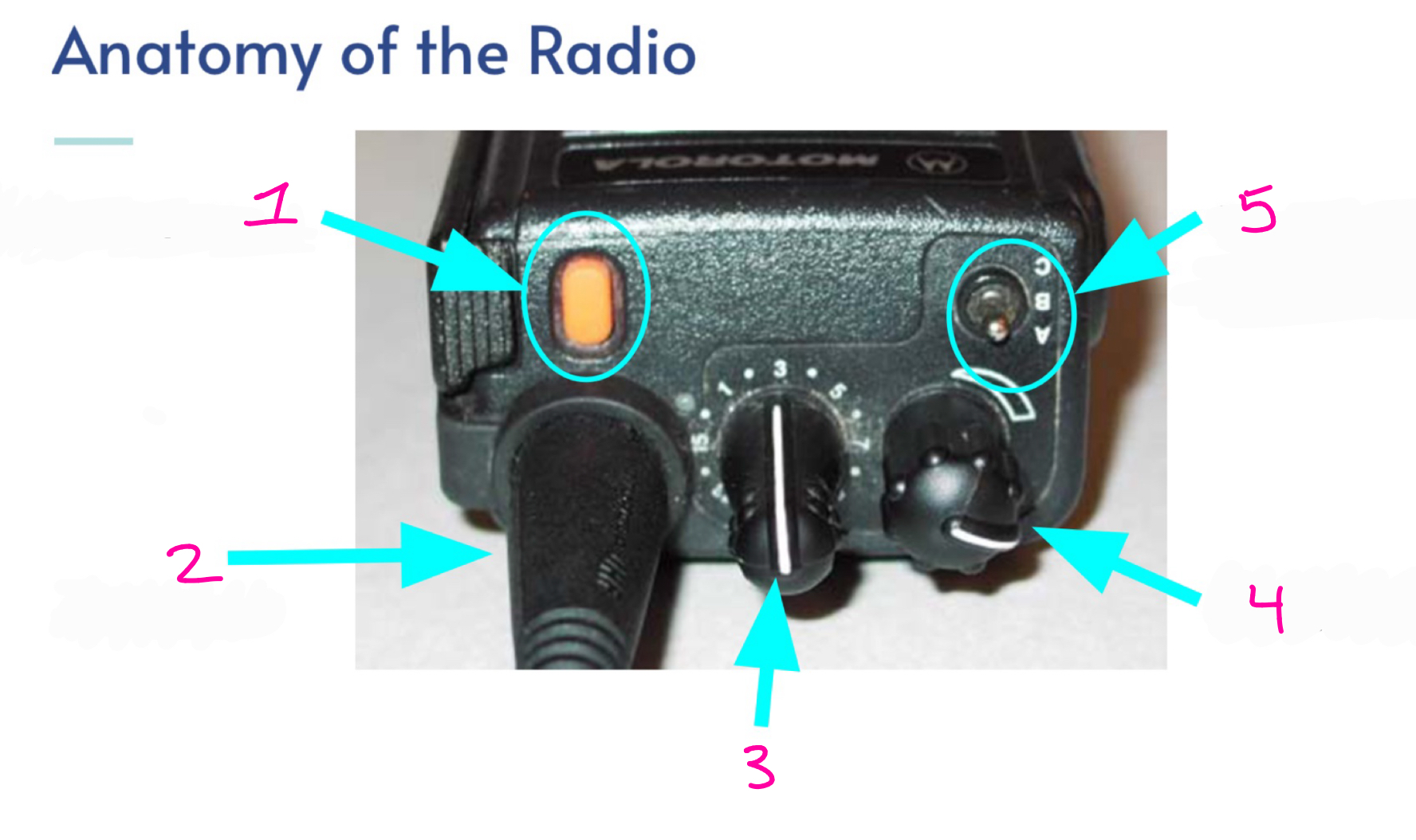
anatomy of the radio
panic button
antenna
channel
mode switch (should be on B)
volume control
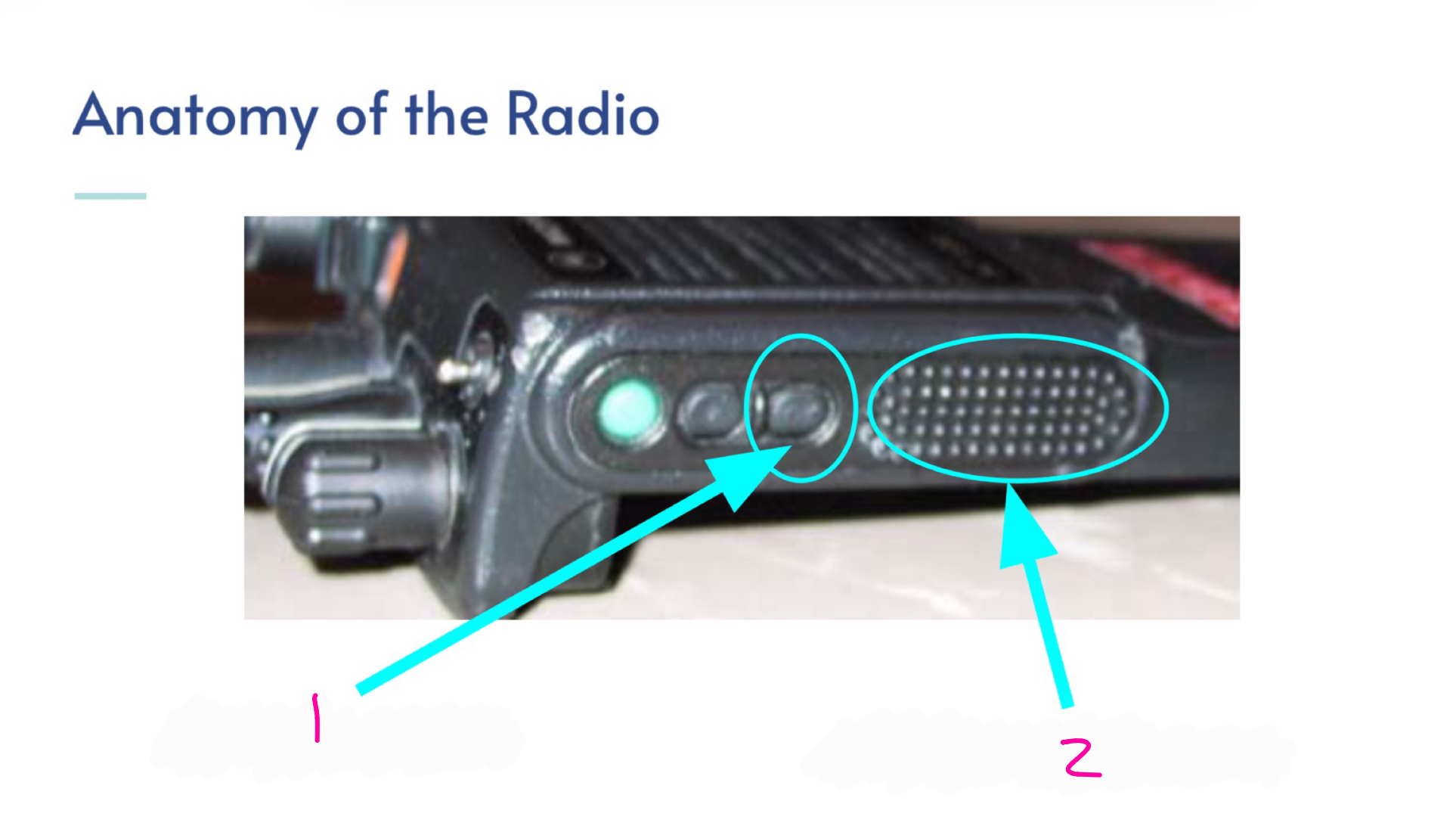
radio anatomy
squelch button
push-to-talk button
squelch button
press this twice in 2 scenatios
after a tone test
after you completely finish a call on your way back to bunkroom
push-to-talk button
push and hold down every time you need to talk on the radio
volume control
adjust radio volume
panic button
only press if you are in immediate danger
forces every radio on campus to listen to you (all of pub safe will hear what you say)
when to use the radio
When responding to the tone test
When responding to a call
If you need to contact your crew for a call-related reason
Please note: we only use the radio in abnormal situations, if you are confused about something or did not hear the dispatch information, call your 801 via cell phone.
tone test
Every evening/weekend day shift will perform a tone test to ensure the radios are working effectively
A tone test - security sets off the radio tone and talks into the radio to make sure the tone and the radio speaker is working
The crew then responds and security confirms they can hear MERT
tone test script
The 802 will call security on the cell phone and ask for a tone test, then the radios will sounds you will hear…
DPS: Public Safety to R/C MERT for their nightly tone test at 2000 hours
801: 801 tone test received thank you.
802: 802 tone test received thank you.
803: 803 tone test received thank you.
801: Vehicle 800 tone test received thank you
Contacting crew via radio
Begin with: “[Rank 1] to [rank 2], over.”
Acknowledging response: [Rank 2] to [rank 1], go ahead.
From there, simply say what you needed to express
Keep communications to less than 10 seconds
Example:
You: “803 to 801, over.”
Your 801: “801 to 803, go ahead.”
“I arrived on scene and the pt is actually located in the Tiernan 2 female bathroom, not the lounge”
getting a call
Toning out
1: Your radio will make a loud high pitched sound
2: The dispatcher will relay information about the call
The call location, what happened, any dangers, etc.
Acknowledging the tone
1: The 801 will acknowledge the call
2: The 802 will acknowledge the call
3: You acknowledge the call
example call
Tone sounds
DPS: R/C MERT dispatch to Gilbert 3 bathroom for the female vomiting
801: 801 responding from UHS to Gilbert ETA 5 minutes
802: 802 Responding from UHS to Gilbert ETA 5 minutes
803: 803 Responding from [location] to Gilbert [ETA]