Lumpy Jaw and Wooden Tongue in Cattle
 Call Kai
 Learn
 Practice Test
 Spaced Repetition
 Match
 Flashcards
 Knowt Play
1/8

Earn XP
Description and Tags
Vocabulary flashcards covering the etiologies, clinical signs, diagnostics, treatments, and prognoses of lumpy jaw and wooden tongue in cattle.
9 Terms

Lumpy jaw
A bovine condition characterized by a gradual onset of hard, non-movable masses on facial bones (rarely draining), accompanied by weight loss and cud dropping.

Wooden tongue
A bovine condition characterized by lethargy, ptyalism, a protruding tongue, swollen throatlatch, stridor, dysphagia, and hard, irregular, firm soft tissues in the mouth and pharynx.

Actinomyces bovis
A Gram-positive rod bacterium that serves as the causative etiology of lumpy jaw in cattle.
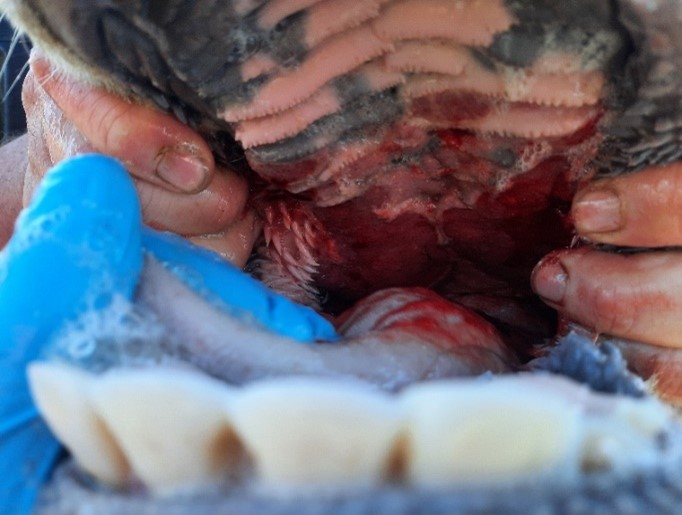
Actinobacillus lignieresii
A Gram-negative bacterium that serves as the causative etiology of wooden tongue in cattle.
IV sodium iodide
The primary medical treatment indicated for cattle presenting with either lumpy jaw or wooden tongue.
Manual pharyngeal exploration
A diagnostic physical examination procedure that must NOT be performed if any neurological signs are present due to the risk of rabies.

Cranial abdominal ultrasound
A diagnostic imaging modality used to diagnose pyogranulomatous lesions in the neck or lungs associated with Actinobacillus lignieresii.
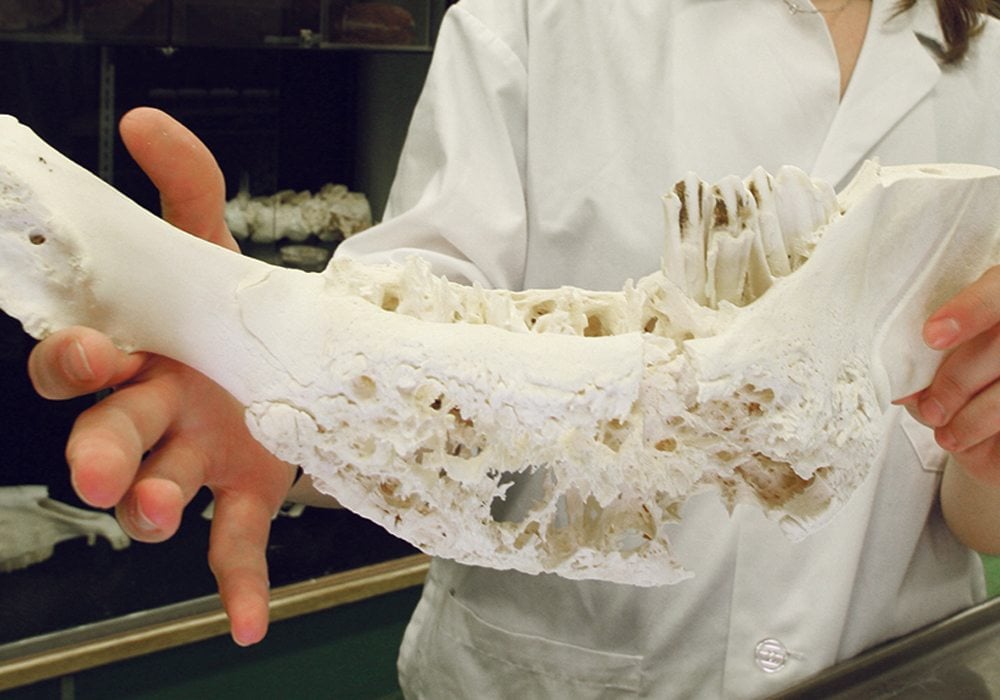
Lumpy jaw prognosis
Described as hard tissues getting softer; carries a fair prognosis where bony deformation is likely to remain and can cause chewing difficulty depending on lesion location.
Wooden tongue prognosis
Described as soft tissue getting harder; carries an excellent prognosis and may be treated with or without penicillin.