mitochondria structure and function
 Call Kai
 Learn
 Practice Test
 Spaced Repetition
 Match
 Flashcards
 Knowt Play
1/10

There's no tags or description
Looks like no tags are added yet.
11 Terms
structure of a mitochondria
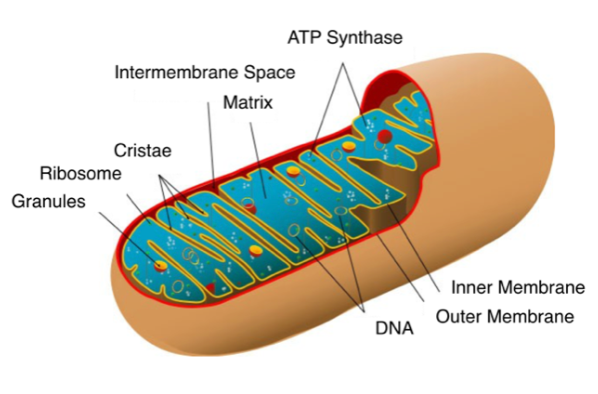
role of mitochondria
site of aerobic respiration in eukaryotic cells
function is also to synthesize ATP
synthesis of ATP in the mitochondria occurs during the last stage of respiration called oxidative phosphorylation
structure of mitochondria membrane
two phospholipid membranes
outer membrane- smooth and permeable to small molecules
inner membrane
outer membrane
separates the contents of the mitochondrion from the rest of the cell, creating a cellular compartment with ideal conditions for aerobic respiration
contains transport proteins for shuttling pyruvate into mitochondrion
inner membrane
folded (cristae)
less permeable
site of electron transport chain- used in oxidative phosphorylation
location of ATP synthase enzymes -used in oxidative phosphorylation
intermembrane space
protons and pumped into here by electron transport chain
low pH due to high conc of protons
conc gradient across inner membrane is formed during oxidative phosphorylation and is essential for ATP synthesis
matrix
contains enzymes for the krebs cycle + link reaction
contains ribosomes + mitochondrial DNA needed for mitochondria function
cristae
are projections of inner membrane which increases the SA available for oxidative phosphorylation
highly folded to increase SA;V ratio
how is the large surface area helpful for function
due to presence of cristae
enables the membrane to hold many electron transport chain proteins and ATP synthase enzymes
how are more active cells adapted to function
larger mitochondria
longer and more tightly packed cristae to enable the synthesis of more ATP because they have a larger surface area
which cells have more mitochondria
muscle cells are more active
so have more mitochondria per cell than fat cells