CBT Exam #2
 Call Kai
 Learn
 Practice Test
 Spaced Repetition
 Match
 Flashcards
 Knowt Play
1/54

There's no tags or description
Looks like no tags are added yet.
55 Terms
Addressing non-compliance
Psychoeducation
Prepare for difficulty of treatment ahead of time
Reduce difficulty of exposures
Problem-solve expected difficulties ahead of time
Enlist at-home support
Increase therapist contact
Identify barriers to compliance
Openly discuss possibility of termination/referrals
Use acceptance-based bx (ABBT) strategies to improve distress tolerance/clarify values
Why do you like ACT over CBT?
Use of metaphors and vivid imagery - helps make it stick
Defusion as a method of having contact with the present moment (leaves on a stream) - mindfulness
Values-based decision making - serves as guidance for personal achievement, meaningful way of life that drives sustainable committed action
Generalized Anxiety Disorder exposures
Worry exposure is a specific variant of imaginal exposure
Worry = a chain of catastrophizing thoughts that are predominantly verbal
Maladaptive worry generates a repetitive range of negative outcomes in which the individual attempts to generate coping solutions until some internal goal is achieved (e.g., “a sense of control”)
Threatening mental images and their corresponding unpleasant emotional arousal are avoided by worrying in words and sentences
Exposure = sustained imaginal exposures of actual worse case scenarios ripe with imagery and emotional content
Common OCD therapist mistakes
Not encouraging patients to go far enough
Choosing wrong form of exposure (in vivo v imaginal)
Encouraging distraction
Providing reassurance
Treating peripheral and not core fear
Infeffectively handling mental compulsions
Research on CBT vs. antidepressants
CBT = medication short term
CBT > medication long term (6-12 mos.)
CBT + medication > medication alone
CBT + medication = CBT alone
Cognitive triad for depression

What is behavioral activation?
Structured, brief psychosocial approach
Based on premise that limited rewarding experiences and reduced ability to experience positive reward from the environment maintain depression
Aims to systematically increase activation such that patients may experience greater contact with sources of reward in their lives and solve life problems that allow them to lead a more rewarding life
Focuses directly on activation and on processes that inhibit activation, such as escape and avoidance behaviors and ruminative thinking
Key elements of behavioral activation
Behavioral case conceptualization
Activity monitoring and scheduling
Identification and elimination of avoidance patterns
Establishment of healthy routines
Behavioral strategies for targeting worry or rumination
Goals are specific to the individual
Targets of behavioral activation
Avoidance behavior
Chaotic routines
Engagement in pleasant or valued activities
Pleasant events
Healthy habits
Mastery of tasks
Values guided activities
Individualizing activation targets
What are you doing more or less of since you became depressed?
What would make your life feel more fulfilling/rewarding?
What is the relationship between specific activities/life contexts/problems and mood?
Conduct detailed examination of what is getting in the way of acting differently or feeling better
Activation chart as a central tool in behavioral activation
Baseline assessment of activity and relationship with mood
Schedule activation
Ongoing monitoring of activity and mood
Evaluation of progress
Practical strategies to maximize activation
plan specific strategy for implementation (what, when, where, etc.)
Write it down
Monitor progress, highlight consequences
Adopt a scientific/experimental attitude
Break tasks into manageable components
Aim for activities that have a high likelihood of natural reinforcement
Consider help from significant others
Identify and block cues for avoidance
Routine regulation
Sleeping
Eating
Exercise
Basic self-care (e.g., showering, brushing teeth, doing laundry)
Work/school
Chores/other responsibilities
Blocking avoidance
Orient patient to avoidance (how it impacts short-term and long-term)
Identify behaviors that function as avoidance
Help patient engage in alternative behaviors
Termination and relapse prevention
Have a plan for termination from the first session (time-limited, goal-focused)
Taper session frequency (weekly → biweekly → monthly); offer booster sessions
Review progress: which skills helped most? → client becomes their own therapist
Identify high-risk situations and early warning signs
Write a relapse prevention plan
Normalize setbacks; lapse is not relapse
Problem solving therapy
Premise: distress is maintained by ineffective coping with life problems
Problem orientation: positive vs. negative
Problem-solving style: rational vs. impulsive, careless, or avoidant
Effective for depression and comparable to other psychotherapies
Core steps
Define problem and set realistic goals
Brainstorm solutions (quantity, defer judgement)
Weigh pros and cons and decide a solution
Implement, evaluate, and revise
Contingency management
Grounded in operant conditioning: reinforce behavior with tangible rewards
Target behavior must be objectively verified (urine screen, attendance)
Reinforce immediately and consistently
Escalating rewards for consecutive successes; reset after a miss
Strongest evidence for substance use disorders, especially stimulants
,
Definitions of theoretical models
Specifies theory of etiology
Intervention technology
Mechanisms of action
Optimal health/functioning (end goal)
Acceptance and commitment therapy (ACT)
Action-oriented approach related to CBT
Focus on present and future, improving current functioning and encouraging patients to try out new ways of behaving in the future
Clients learn to stop avoiding, denying, and struggling with their inner emotions
Instead learn to accept these feelings
Developed in the 1980s by Steven Hayes, PhD

ACT hexaflex model
Acceptance and mindfulness processes:
Contact with the present moment
Acceptance
Defusion
Self as context
Commitment and behavior change processes:
Contact with the present moment
Values
Committed action
Self as context
Psychological flexibility of:
Acceptance: are you willing to have that stuff, fully and without defense? →
Defusion: as this thing is, and not as what it says it is? →
Self as context: given a distinction between you and the stuff you are struggling with and trying to change →
Committed action: AND doing what takes you in the direction of →
Values YOUR chosen values
Contact with the present moment: at this time, in this situation?
Hexaflex in practice
Psychological flexibility of:
Acceptance: are you willing to have that stuff, fully and without defense? →
Defusion: as this thing is, and not as what it says it is? →
Self as context: given a distinction between you and the stuff you are struggling with and trying to change →
Committed action: AND doing what takes you in the direction of →
Values YOUR chosen values
Contact with the present moment: at this time, in this situation?
Experiential avoidance
The unwillingness to remain in contact with distressing internal experiences along with the attempts to control or avoid distressing internal experiences
Has been associated with a range of psychopathological symptoms across a range of clinical presentations of anxiety and fear
Creative hopelessness
You’ve tried just about everything to feel better, get rid of negative emotions; “gold medal” effort
Could simply “try harder,” but how likely is that to work?
What if your experience is valid? What if it won’t work because it CAN’T?
Man in the hole metaphor
Control strategies are limiting and unlikely to be effective
Man in the hole metaphor
A man is doing fine, experiences a catastrophic fall into a deep crisis (the hole), and then uses his own resilience, wit, or outside help to climb back out (his shovel)
Using the only thing he has (his shovel), he tries to get out of the hole; yet, the hole gets deeper and the problem gets worse
Why do we keep trying to dig our way out of holes?
The shovel works elsewhere
It seems to work for others
You are told it should work for you
It often does work in the short run and in some types of situations

Acceptance as the alternative to control
Are you willing?
Not because you want or like it
Not because you’ve given up hope it will get any better
But instead, to openly allow the momentary pain to end the long-term suffering?
The hidden choices
Give up “direct control” of your thoughts and emotions to gain control of your life
Allow yourself to experience all emotions so you can also experience “good” emotions
Metaphors showing acceptance as an alternative to control
Chocolate cake metaphor:
Trying to push away an unwanted thought will almost always backfire
Deliberately try NOT to think about chocolate cake
Polygraph metaphor:
Told you MUST stay relaxed when hooked up to a polygraph…and then having a weapon held to your head. Impossible to relax.
Tug -of-war with a monster metaphor:
If you lose the tug-of-war, you will fall into a pit and be destroyed. So you keep pulling as hard as you can but you are also getting closer to the pit. The most rational solution is to let go
Acceptance of difficult content
Giving up the control agenda means:
Accepting the inevitability of distress; and
Willingness to experience that distress in the service of living a valued life
Psychological acceptance
Ability and willingness to endure/tolerate aversive internal experiences
Learning to accept the presence of uncomfortable internal experiences
Engaging in behaviors even when they produce internal discomfort
What does willingness look like?
A choice
Not a feeling
Not a belief
An action
Doing, not trying
Jump, not a step
Always in the serve of our goals/values and recovery
Not a resignation
Not touching the stove for the sake of touching the stove
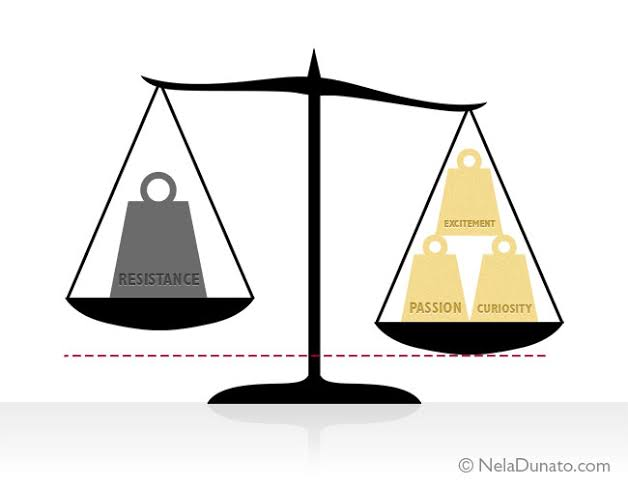
Two scales metaphor:Not trying to control anxiety by bringing it down to zero, but by increasing your willingness. When willingness increases, the weight (distress) of the anxiety becomes less relevant because there is no longer a power struggle.
letting go of the need to control discomfort restores your ability to act on your personal values
Can willingness alter the frequency/intensity of internal experiences?
Short answer, yes
In long term, in an average kind of way
“Rogue waves” and life happens; inability to ever take away ALL negative feelings
We can tell clients this directly but they have to stop trying to pick up the rope
Distress tolerance
Psychological acceptance
Uncoupling
Willingness
Pattern smashing
Dealing with dirty distress
Uncoupling
Converting “but” language into “and” language
I would eat all my meals and snacks today but I am afraid of gaining weight → I will eat all my meals and snacks today and I am afraid of gaining weight
Willingness
Transforming “only if” statements into “even if” statements
I will get go to the social event only if I don’t feel too tired or depressed → I will get go to the social event even if I feel tired and depressed.
Dirty distress
Additional feelings ABOUT your distressing feelings
“I shouldn’t feel sad — I should just get on with it.”
Cognitive defusion
Recognizing that an internal experience is an internal experience-
e.g. labeling and describing thoughts as thoughts, emotions as emotions, etc.
Learning to look at internal experiences, rather than from internal experiences
Automaticity and ease of programming (everyone says “lamb” after, “Mary had a little”) → applied to “I am…” statements
Cognitive fusion and defusion model
Cognitive fusion → believing literal contents of the mind, one becomes fused with their thoughts
Goal of defusion is to disentangle people from their minds
Cognitive defusion exercises
Observe
Describe
Balance
Learning to get distance from and label thoughts, feelings, and physical sensations
Balancing inner and outer wisdom
Cognitive defusion
the act of focusing the mind in the present moment
the ability to bring one’s complete attention to present experiences
the ability to observe and experience rather than evaluate and change internal experiences (thoughts, emotions, urges, hunger, fullness)
Example: leaves on a stream exercise
muck and debris are thoughts, sensations, events, feelings, and that river/stream is our distress as we drift helplessly downstream. But we can stand on the riverbank, watching as those thoughts, events, sensations, feelings go by. You might watch individual items as they pass – perhaps a thought floating on a leaf.
Present moment awareness
Nonjudgmental awareness of the present moment
What it is: A state of full, open, and non-judgmental awareness of your current experience—both internal (thoughts, feelings) and external (sights, sounds, sensations)
The goal: To be fully engaged in what is happening right now, rather than being lost in rumination about the past or worry about the future
Focus on shifting attention back to the present moment when worries about the future or ruminations about the past emerge
Present moment awareness vs. defusion
How they work together:
By using defusion techniques, you create the mental space to make "contact with the present moment" more fully.
Defusion helps you stop being swept away by your thoughts, and contact with the present is the result—a direct, sensory experience of the here and now
Mindful decision-making
Awareness of immediate experiences
Internal : thoughts, feelings, desires, hunger, cravings
“External”: sounds, sights, smells
STOP, THINK
Self-as-context
The Story of Me
Organized into cognitive networks coherent across time and situations
Well-elaborated
Multi-layered
Once we have a story, we don’t like how it feels to be “wrong” about our story: e.g. cognitive dissonance
We work to construct our worlds in a way that confirms the truth of our self-labels.
This approach involves understanding that one's identity is distinct from thoughts and feelings, fostering a stable sense of self amidst changing internal experiences. This perspective helps individuals maintain a consistent sense of self-identity, even as their thoughts and emotions fluctuate
Common treatment-interfering conceptualized selves
Over-attachment to:
Illness as part of identity
Victimhood
Likability
Everyone else is the problem, not me
Busyness as a virtue
Caretaker roles
Success/things come easy to me
What is the alternative? Self-as-context
The sense of self as perspective
You are a person separate from your story
Your story can and should grow and change over time
Not threatened by aversive content
Facilitates willingness, compassion, intimacy
Self-as-context - chessboard metaphor
The Chess Pieces (Content): These represent your transient thoughts, feelings, memories, physical sensations, and judgments. "Good" or pleasant experiences act like one side of the board, while "bad" or distressing experiences (like anxiety, sadness, or self-doubt) act like the opposing side.
The Chessboard (Context): This represents your observing self—your stable, unchanging consciousness that holds and contains these experiences without being harmed, defined, or altered by them.
ACT teaches you to stop identifying as a chess piece trying to win a war. Instead, you shift your perspective to being the chessboard: a chessboard can hold both black and white pieces simultaneously without caring who wins or loses.
Values
Freely chosen, verbally constructed consequences of ongoing dynamic, evolving patterns of activity, which establish predominant reinforcers for that activity that are intrinsic in engagement in the valued behavioral pattern itself
Values-based decision making skills
Values clarity
Building a valued life
Values-based decision making
Values awareness
Up votes and down votes
Using values to address negative mood
Addressing competing values
Values-based decision making
Behaviors as choices
Consider options
Consider values and goals
Engage in behavior congruent with values
Up/down vote for values
Recognize that every decision you make is a vote up or down for your values
Every small action you take—even when your mind is screaming at you with anxiety or self-doubt—acts like an "upvote" for the kind of person you want to be
Using values to address negative feelings/distress
Unpleasant feelings can be an important signal that we are about to make a decision about how to behave or act.
In this way, unpleasant feelings are an important cue that we should use a values-based decision-making skill.

Values conflict/barriers to living a valued life
Clarifying disorder - specific “values”
Values integration
Values prioritization
Values integration
Even though it may feel like our values are incompatible with each other, there are always ways to integrate multiple values into one activity.
In other words, we don’t always have to choose one value over the other – we can live by both.
Values prioritization
Sometimes hard/impossible to make choice that is consistent with 2 values at the same time.
Consider which value is most important to act on (at the moment); prioritize that value
Don’t always default to same value!
Committed action
Encourages taking concrete steps toward goals that are consistent with one’s values, promoting perseverance and adaptability
Involves setting specific, values-driven goals and pursuing them despite obstacles, thereby enhancing overall life satisfaction and achievement
Means living in line with our values even when we have difficult thoughts and feelings
Unlike values, which are constantly instantiated but never achieved as an object, concrete goals that are values consistent can be achieved and ACT protocols almost always involve therapy work and homework linked to short, medium, and long-term behavior change goals.
Behavior change efforts in turn lead to contact with psychological barriers that are addressed through other ACT processes (acceptance, defusion, and so on)
Homework
Use worksheet to identify your values
Identify areas where values are seemingly in conflict
Practice values integration and/or values prioritization strategies