AH 1 miderm works
 Call Kai
 Learn
 Practice Test
 Spaced Repetition
 Match
 Flashcards
 Knowt Play
1/41

There's no tags or description
Looks like no tags are added yet.
42 Terms

Lion-Human
southern Germany
c. 30,000-26,000 BCE.
Mammoth Ivory.
- small, can be held, evidence it was passed around
- possibly shows first religious beliefs; ceremonial object that connected humans to higher being?
- deliberately carved, out of special material → shows significance
- the ears are perked up; the lion is listening, interacting with the viewer
- anthropomorphic; shows dominance of humans > animals

Woman from Willendorf (so-called “venus”)
Austria
c. 24,000 BCE.
Limestone
- form implies it was handheld; could hold it while making it → self portrait!
- object showing how women see themselves, challenges objectification of female body
- exaggerated emphasis on head, breasts, stomach; to track pregnancy? understand one's form? track changes?
- McDermott used photography to prove these were made from a self POV

Chauvet Cave
France
c. 32,000 to 30,000 BCE.
Paint on limestone.
- formal elements underscore the depiction of hunt scene; line, texture, composition, etc.
- utilized curvature of the wall to emphasize scene of capture
- implied motion of figures, deep understanding of animal forms
- probably put pigment in their mouths and exhaled

Lion Panel, Chauvet Cave

Long-Eared Owl, Chauvet Cave

Red Dots, Chauvet Cave
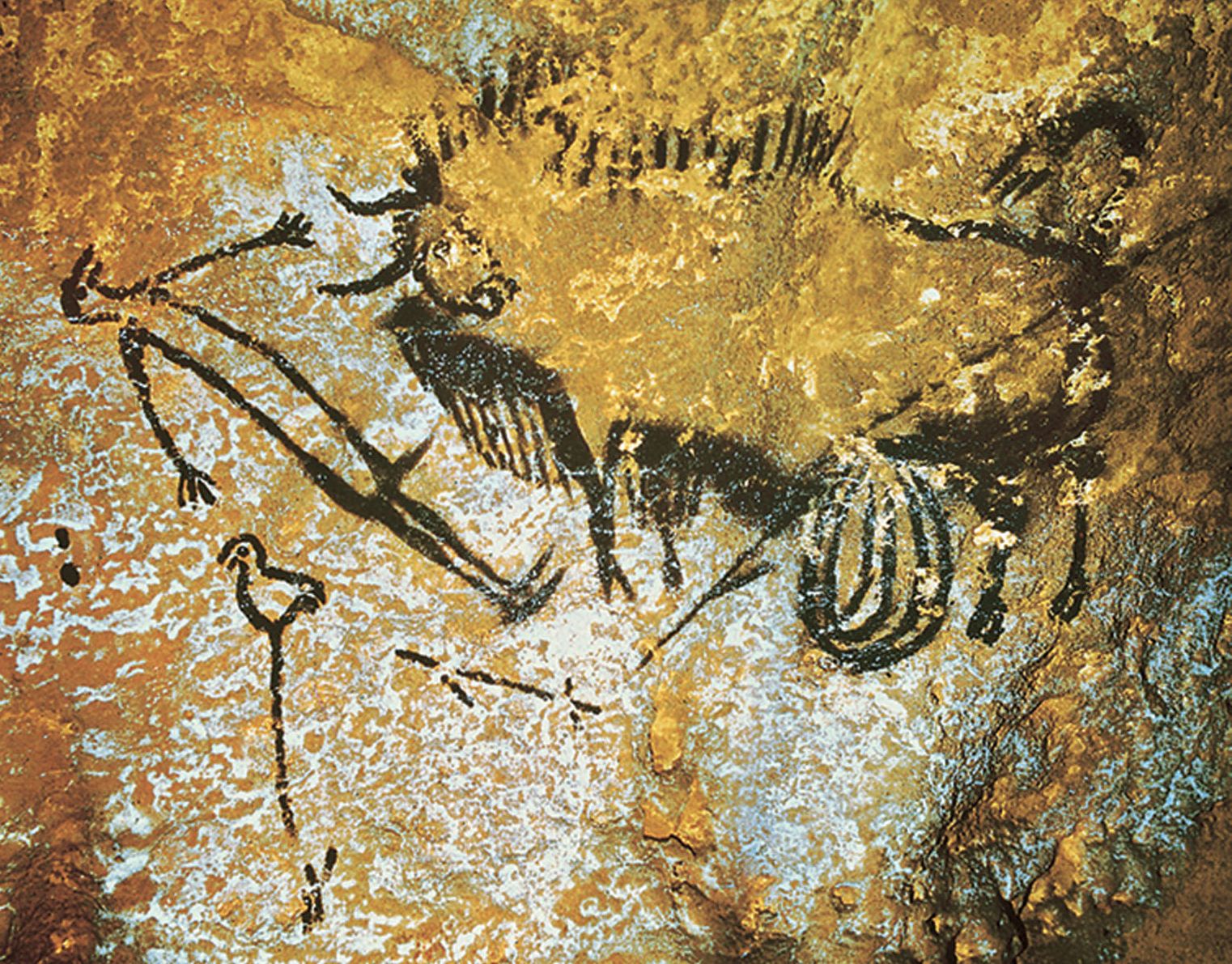
Bird-Headed Man with Bison, Lascaux Cave
France
c. 15,000 BCE.
Paint on limestone
- representation/function = to honor the dying animal; grappling with invisible forces of nature
- rays on the bull's back; could symbolize movement to another world
- showing empathy + entanglement > domination
- only anthropomorphic figure in the whole cave system, lots of depictions of animals hunting other animals

Spotted Horses and Human Hands, Pech-Merle Cave
France
25,000-15,000 BCE
Paint on limestone

The Stele Code of Hammurabi
engraved black basalt
circa 1792-1750 BCE
Babylonian
- engraving on top; we know these are divine figures via composite view, Hammurabi is linking himself to divinity (receiving stele itself from Shamash)
- the laws themselves are divine through this depiction
- bottom holds the laws (more like consequences)
- material = basalt → meant to last, precious material

Oracle Bone
carved and branded ox scapula
16th century BCE (Late Shang Dynasty, China)
- involved in a pyromancy ritual; carved lines into bone (questions for the gods) → intense heat til bone cracked → chirographic interprets lines → wrote answers on bones themselves
- material = shoulder bone of ox → allows for flat surface to write

Victory stele of the King Naram-Sin
pink limestone
c. 2220 -2184 BCE
Akkadian
- to commemorate victory over Lullubi people
- left = Akkadians going up, in composite form vs. right = falling, disordered composition
- stele = represents mountain → Lullubi were mountain peoples
- Naram-Sin assuming identity of the gods; via ground line, hierarchy of scale, heading into heavenly realm
- Cuneiform reads that he pushed empire to the furthest places yet

Bronze head of Akkadian Ruler from Nineveh
bronze
c. 2340 -2284 BCE
Akkadian
- showcase of masculinity: beard (symbol of rulership), reserved expression, smooth skin
- material = bronze → stability, weight, permanence
- was explicitly deconstructed (eyes removed) = form of iconoclasm

Great Pyramids & Sphinx of Giza
limestone with gilt
pyramidion: Khafre and Sphinx (Chefren, ca.2575-2525 BC)
- mortuary complex + temple at each base
- perfect, conceptual architecture; the steps look like the sun is opening up to you, it's a ladder to the sky
- used to have a white limestone casing + gold capstone
- boats found inside → helped pharaohs journey to the afterlife
- pyramids = giant mortuary complex, temples on the Nile = where you paid respects

Statue of Khafre (Chephren) from Giza
4th Dynasty, Old Kingdom
c. 2690-2130 BCE
diorite sculpture
- depictions of Horus, lion, lotus + papyrus (symbolizes unification)
- traditional pharaoh costume
- right hand would've held a scroll
- material = diorite; solidity of stone, would've given him a glow

Statue of Khafre (Chephren) from Giza
ca. 1478-1458 B.C.E. (Dynasty XVIII)
Deir el-Bahri (near Thebes)
Egypt
- New Kingdom valued larger temples → multiple ramps/levels with gardens, statues
- deliberately built into living rock; showing control, even over jagged rock
- buried in a small chamber with her father at the back of the complex (less focus on where the body is)
- all causeways were made for the Amun-Re procession

Large Kneeling Statue of Hatshepsut
ca. 1478-1458 B.C.
granite
Deir el-Bahri (near Thebes)
Egypt
- on knees for Amun-Re, for procession in ritual where a boat is taken from Karnak to the temple → through the ritual, his spirit could be called back to earth
- illustrating her pharaoh-ness and downplaying her femininity
- Pharaoh 20 years later destroys all images of her + her name

Statue of the Seated Scribe
c. 2620-2500 BC.
painted limestone statue
inlaid eyes
nipples of wood
Saqqara, Ancient Egypt
- illustrating verisimilitude: the appearance of being real or true
- extreme naturalism; via color, expression, texture, material, form/figure, etc.
- positioning = caught in the act of writing → representing the office of the royal scribes
- represented a votive offering for the scribe buried
- gave his life to the pharaoh (part of his royal tomb) → in return, he went to the afterlife with him

Votive cow, eye, and ear
From Deir el-Bahri
Hatshepsut Hole
Bronze or copper alloy
ca. 1479-1458 B.C.
- visualizations/amplifications of spoken petitions → made with the expectation they would be answered
- cow: for healthy/plentiful cattle
- eye: divine protection
- ear: so the deity listens

Standing male worshiper
Eshnunna (modern Tell Asmar)
alabaster and shell
ca. 2900-2600 B.C.
Sumerian
- all formal elements accentuate the eyes → representing moment of contact with the god
- votives; the upper class commissioned these figures to perpetually offer prayers to a god
- found buried by a dedicated temple to Abu, god of fertility

Terra Cotta Army
Xi'an China (Qin Dynasty)
ca. 221-210 BCE
originally with paint, patron: Qin Shihuang
- first emperor to unite China, made an army to reflect military prowess
- warriors = mingqi; funerary objects placed in tombs to represent the deceased living life
- terracotta = malleable, used molds + hand-sculpture → individuals, but not portraits
- It's not our world, it's a different one
- Qin Shihuang was obsessed with immortality and made this as votives to himself

Tomb of the Marquise of Dai
silk and ink
Han Dynasty
ca. 180 BCE
- wrapped around the innermost coffin of Lady Dai
- function = mapping of the afterlife
- meta; shows Lady Dai wearing the banner itself
- registers: underworld → mourning → heaven
- first Chinese portrait

King Menkaure (Mycerinus) and queen
grey sandstone
Old Kingdom
Dynasty 4 (2490–2472 B.C.E.)
- idealization of figures; youthful, fit
- statues = vessel of spirit for the god to inhabit
- communicated a stillness with slight movements → the procedure of bringing gods back via statues was a controlled process
- very solid stone, emphasizes authority & permanence

Statue fragments of Senwosret III
12th Dynasty
Middle Kingdom
c. 1850 BCE
- looks stressed; you can see the weight of gravity on his face
- naturalism; connecting what is known (nature) to what is unknown (the godly realm) → conventional body + abnormalities in the face
- protruding ears → he's listening, but it's a burden

Queen Nefertiti
Thutmose (sculptor)
ca. 1350 B.C. [Dynasty XVIII]
polychromed limestone
- very naturalistic; you can see skin, muscle, bone
- symmetry via lines → impossibly perfected humanity
- found in Thutmose's studio → probably a prototype

Marble Statue of a Kouros (New York Kouros)
c. 590–580 B.C.E. (archaic Greek)
marble
- prime example of contrapposto → placing higher priority on movement + muscularity
- probably a copy of bronze, from a ceremonial dump → Athenians buried broken parts from Persian invasion
- using body to show military victory

Doryphoros (Spear-Bearer)
Polykleitos
Classical Period
Roman marble copy after a Greek bronze original
c. 450-440 B.C.E.
- perfection idealized in human form
- found outside ancient workout center
- the Romans were obsessed with Greek art; copied it
- showing harmony in Greek state via harmony in body

Parthenon
Iktinos and Kallikrate (Phidias directed the sculptural program)
Parthenon, Athens
447–432 B.C.E.
- built when Athens was the most powerful city-state → has been rebuilt many times after military invasion
- Doric temple with ionic elements
- devotive building to Athena + Athenian people
- uses slight adjustments to make it look perfect to the human eye
- housed a gold statue of Athena; functioned as a treasury, and hosted the Panathenaic procession
- Hellenistic Baroque sculptural program
- sculptures valuing beauty, order, civilization > barbarianism

The Great Altar of Zeus at Pergamon, gigantomachy
c. 200–150 B.C.E
marble
Hellenistic Greek
located at the top of the city-state
- Hellenistic = last phase of Greek art
- utilizes space/extreme high relief sculptural program for drama
- gigantomachy = metaphor for the political uncertainty post-Alexander

Athena fighting Gaia's sons while Gaia emerges from below, The Great Altar of Zeus at Pergamon
c. 200–150 B.C.E
marble
Hellenistic Greek
- chiastic composition; use of line drawing the eye to Athena
- Athena remains graceful even in this scene of battle
- muscular giants with expressions of despair → elicits empathy & awe
- extreme use of contrasts, while still remaining ordered

Zeus in battle with Giants, The Great Altar of Zeus at Pergamon
c. 200–150 B.C.E
marble
Hellenistic Greek
- impossibly idealized muscles, heavy drapery emphasizes form → thematizes action of the scene
- battle scene, but also represents a study of the male form
- assisted by eagle + lightning bolt = classical Zeus symbols
- the giants are still extremely muscular even after defeat; idealism

Temple of the Murals (rooms 1 and 2)
Bonampak
wall painting
dedicated on November 11, 791 A.D. [likely at behest of Chan Muwan, ruler of Bonampak]
- small rooms with vivid murals
- you can sit on benches and be fully absorbed into the scene
Room One
- orange + blue registers; band of text separates them
- upper; aristocratic figures watching the investiture of newborn heir
- lower; one year later, honoring the new heir, when the Venus star rose for the first time since he took power, rituals and dancers
Room Two
- use of Bonampak blue = azure; local material with vivid, sparkling quality
- chiastic, chaotic composition; warriors in the heat of battle on north side
- showing the ideal in defeating a strong enemy → objectified, slain figures, eroticized, pleading captives
- Muwan stands full frontal, surveying the battle from the top of the pyramid

Dying Gaul and Gaul killing himself and his wife (The Ludovisi Gaul)
marble
Roman copies of 3rd Century B.C.E.
Hellenistic bronzes commemorating Pergamon’s victory over the Gauls, likely from the Acropolis of Pergamon
- show heroism via death & beauty
- over-the-top composition; equal + opposed movement from every angle
- full forms + expressive faces → to see the complete drama of the scene
Ludovisi Gaul
- idealized murder-suicide; would rather kill themselves than surrender
- Greeks thought of Gauls as "pre-civilized" → warriors, hyper futile
- man looking away in guilt; sense of judgment & empathy
Dying Gaul
- sympathetic portrayal of the defeated
- motion parallax; sculpture moves with the viewer
- capturing the exact moment of death; suspense of falling figure

Barberini Faun
c. 220 B.C.E.
marble
Hellenistic Period
- fauns = attendants of Dionysus, god of wine/celebration → scene of hangover
- objectification of male form for all audiences; very intense, erotic gesture
- muscular, but vulnerable & exhausted (mostly shown in face)
- plays into human desires & fears; faun elements de-emphasized
- leopard skin under right leg = smallest allusion to faun-ness
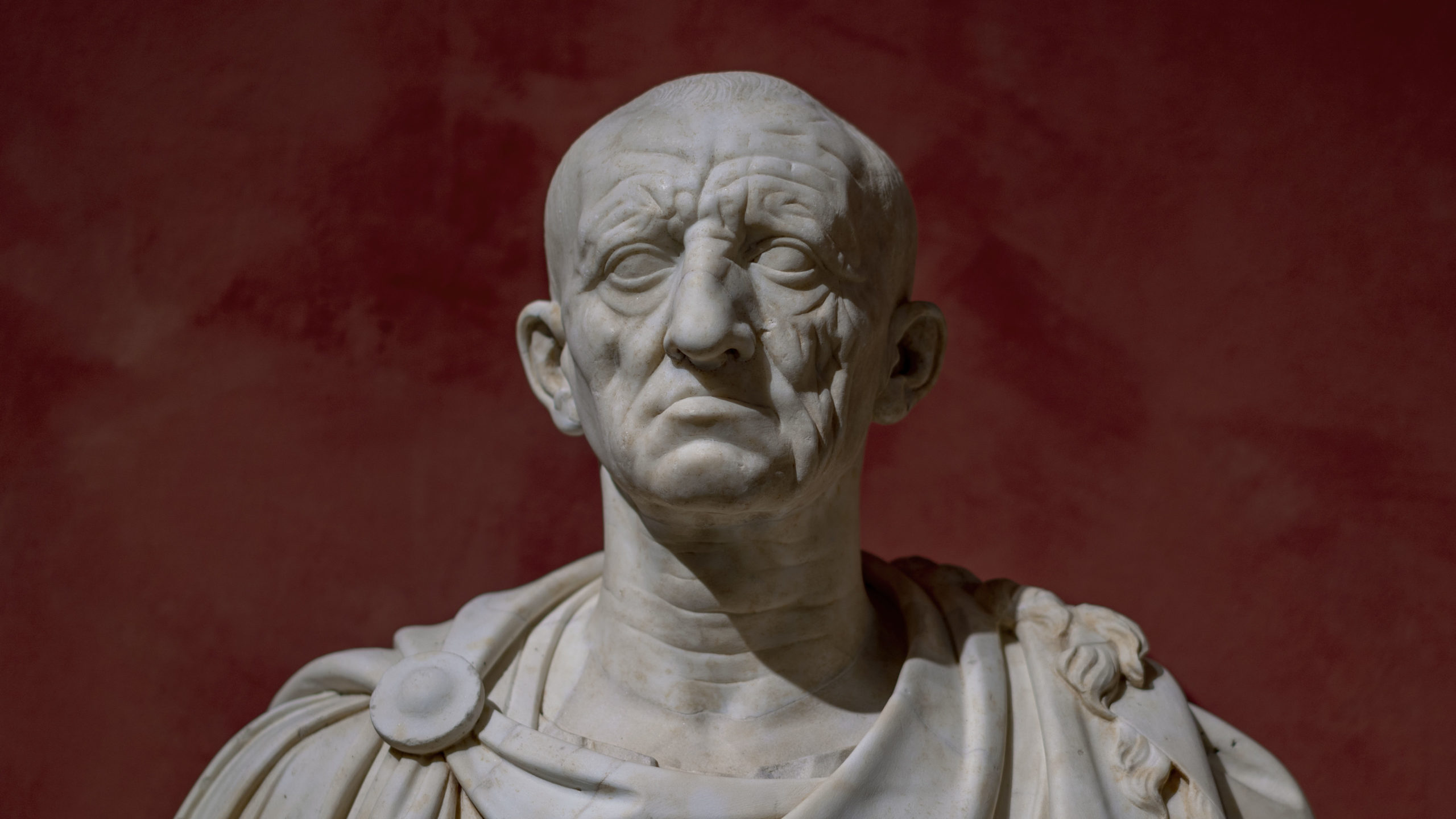
Head of a Roman Patrician from Otricoli
c. 75-70 BCE
marble, life size
Republican Rome
- Veristic portrait: hyper-realistic, emphasizes age/imperfections to convey wisdom, authority, virtue
- showing this figure's success in mercantile activity
- he's a patrician → social climbed

Augustus of Primaporta
1st century C.E.
marble
Early Imperial Roman
- God-like idealism; Greek-inspired, contrapposto, handsome, oratorical iconography (dolphin, cupid, breastplate → all connect him to famous battles/Roman heroes)
- oratorical; engaging in civil virtue = public speaking
- prototype image: actually representing him, not an image of him
- made under the Pax Romana

Ara Pacis Augustae (Altar of Augustan Peace)
9 B.C.E.
Rome, Italy
Early Imperial Roman
- commemorates return from the Gallic Wars, Augustus forced the senate to commission it
- small, walled precinct with altar in the center = sacrificial space, spiritual & political
- bottom register; vegetal sculptures
- top register; the first sacrificial procession? Augustus individualized (dressed in a veil), other important figures, children playing (Augustus wanted to up birth rate)

Colosseum (Flavian Amphitheater)
c. 70-80 C.E.
Early Imperial Roman
concrete
- artificially placed in the center of the city; emphasizing dominance, fortified walls, numerous monumental arches
- held up to 80k people; number sectioned seating → class structure
- 3 stories of columns; 1. Tuscan 2. Ionic 3. Corinthian
- held gladiator fights, theater performances, etc.
- material = concrete; moldable, extremely strong, shift away from marble

The Pantheon
Rome
c. 125
Middle Imperial Rome
- temple to all of the gods; framed niches, tiny chambers
- built on the concept of a perfect sphere; microcosm of divine perfection
- oculus on domed roof, with coffers to take off weight → indexing moving heavens via natural light, shows the viewer something greater than themselves
- mixture of concrete, tufa, terracota roof = light mixture
- NOT a mastery over the gods, but forcing gods to reveal themselves
- heavy use of symmetry, repetitive forms
- monolithic columns = spoilage from Egypt; shows conquering
- built by Hadrian

Arch of Constantine
312-315 C.E. and older spolia
marble and porphyry
Rome
- shows the triumph of the Milvian Bridge War (Constantine's victory over his co-Emperor)
- depicts spolia from the war on the arch → mirror projection of dominance
- Constantine enacted the Edict of Milan, legalizing Christianity in Rome, his mother was extremely religious
Panel of Sol Invictus
- "unconquered sun" = Christianity mapped over a pagan concept
- religious concept via man + horse image; connecting emperor to sun god
- catacomb mosaic shows christ as sol invictus + wine leaves → Christian images, also appear here

Basilica of Maxentius and Constantine (Basilica Nova)
Roman Forum, c. 306-312 C.E.
Constantine
head and fragments from a colossal statue
marble
ca. 313-315
- civic, municipal building; central nave = gathering space
- apse at the end; would've held massive monolithic sculpture of emperor
- semi-circular barrel vaults on side aisles
- clerestory; allows natural light to enter
- pillars + thick walls → weight bearing

Santa Costanza
Rome
354. CE
- mausoleum for Constantine's daughter
- ambulatory; you walk around it, no apse, altar in the center
- central nave = circle
- would've been covered in bright mosaic
semi-apse with mosaic
- young Jesus with no beard, Christ as the good shepherd
- wearing a Roman tunic & sandals
- in paradise with Paul and Peter → giving scroll to Paul, giving peace via law

Hagia Sophia
Istanbul
532-37 CE
- hired two Greek scholars → monumental scale & design
- centrally + longitudinally planned church; via massive dome resting on a square
- inspired by Pantheon
- uses arches & pendentives to carry weight of dome
- many layers of thick, stone piers → pulls weight to exterior → to enjoy the interior
- lots of windows; mosaics can be lit with light; importance of light in Christianity
- use of marble revetment; cut to reveal the natural veining