exercise 25 special senses: hearing and equilibrium
 Call Kai
 Learn
 Practice Test
 Spaced Repetition
 Match
 Flashcards
 Knowt Play
1/56

There's no tags or description
Looks like no tags are added yet.
57 Terms

identify this structure
auricle or pinna

identify this structure
external auditory canal

identify this structure
tympanic membrane

identify this structure
Malleus (hammer)

identify this structure
Incus (anvil)

identify this structure
Stapes (stirrup)

Auditory ossicles transfer method
Lever system made from tiniest bones in the body
Transfers vibrations produced at the ear drum and conveys them to the inner ear at the oval window
Transfers vibrations to liquid perilymph

identify this structure
pharyngotympanic (eustachian) tube
connects middle ear with the nasopharynx / equalizes middle ear pressure
what is otitis media
Mucus membranes of the nasopharynx is continuous with the middle ear
Pharyngeal infections can travel up the Eustachian tube and causes inflammation in the middle ear
Common in young children because their Eustachian tubes are relatively
what is round window
pressure relief from inner ear

identify this structure
Helix

identify this structure
Lobule
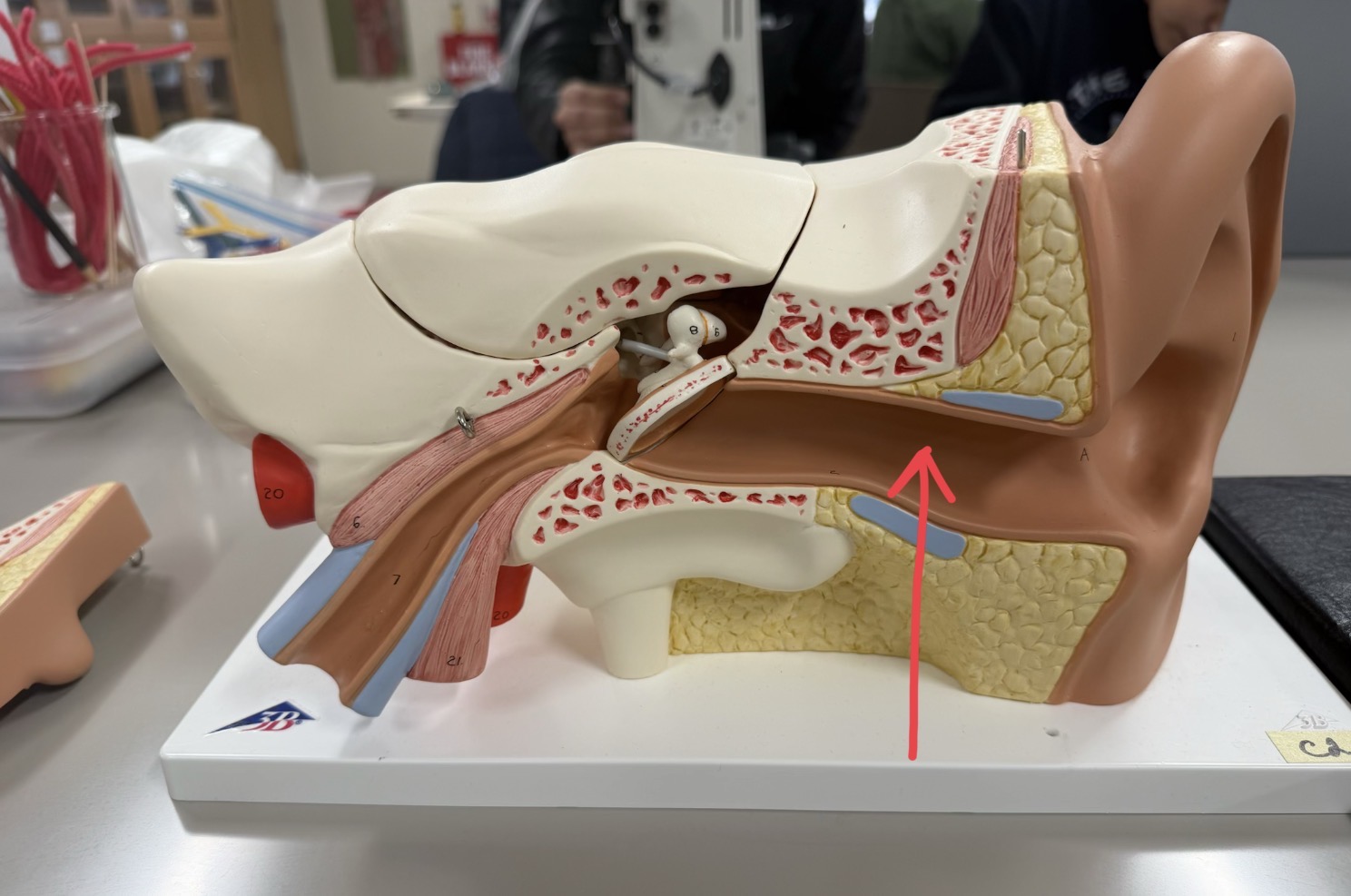
identify this structure
external acoustic meatus

identify this structure
external ear
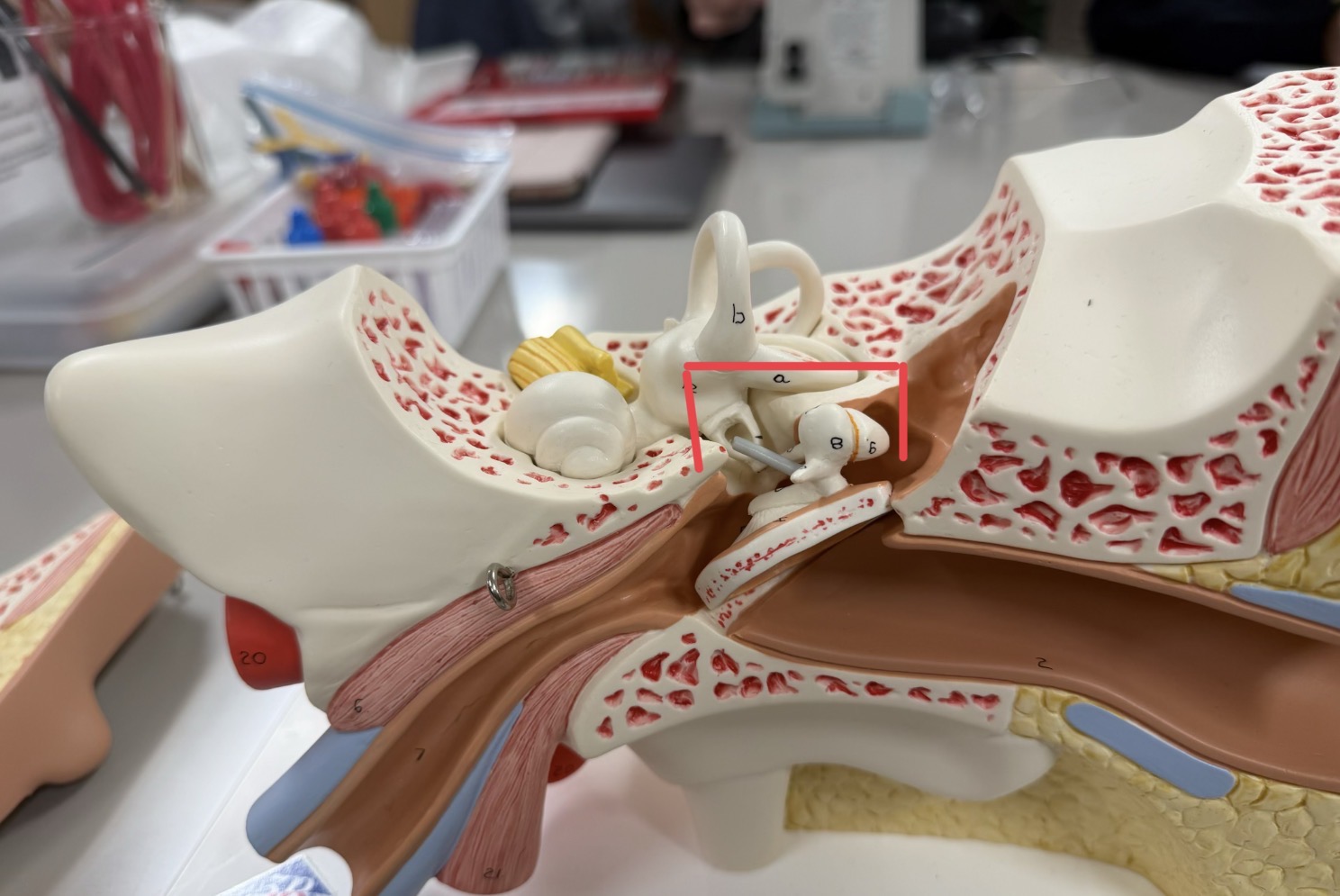
identify this structure
middle ear

identify this structure
internal ear (labyrinth)
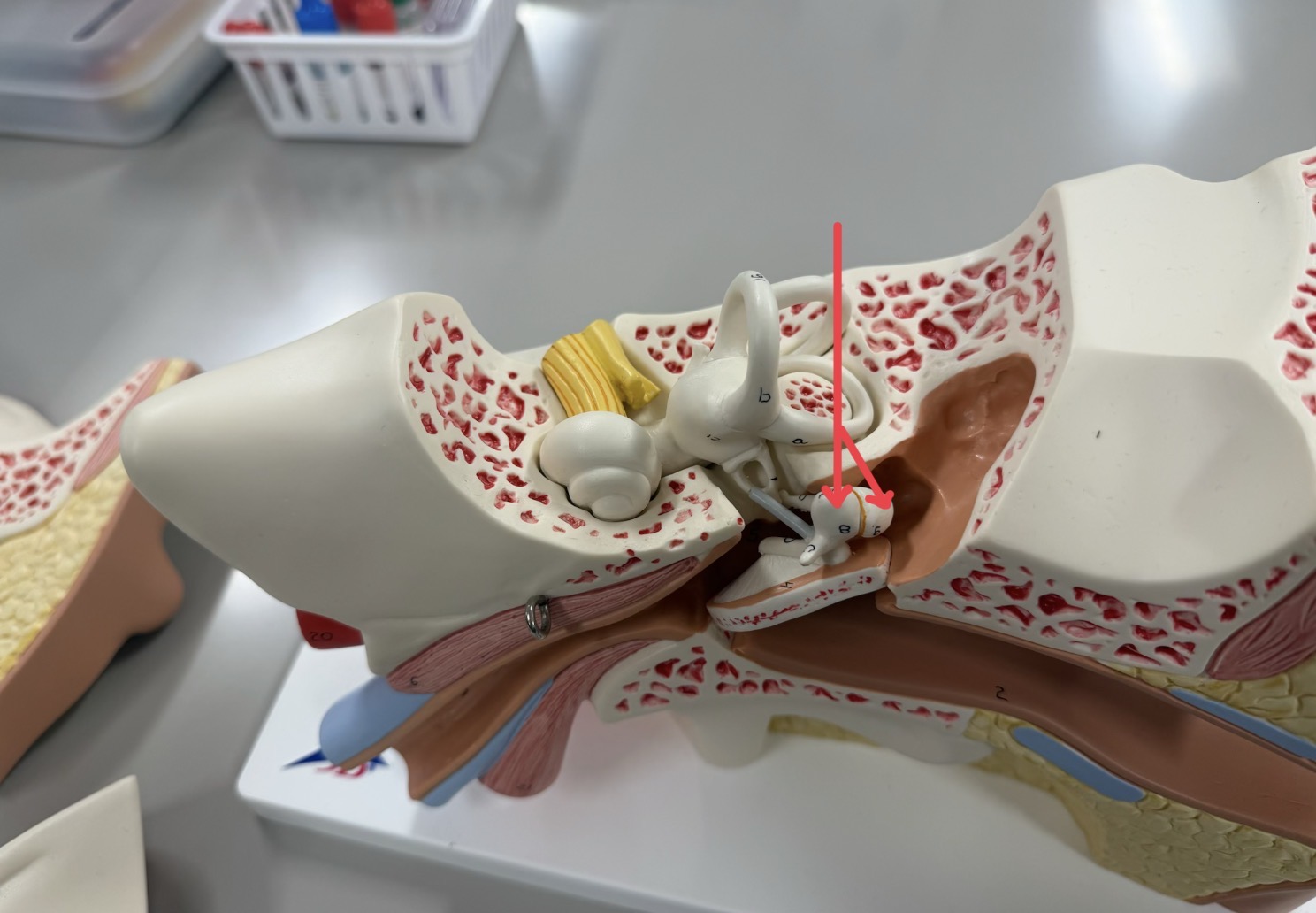
identify this structure
auditory ossicles

identify this structure
vestibular apparatus (balance & equilibrium)

identify this structure
cochlea (hearing)

identify this structure
Vestibulocochlear nerve (VIII)

identify this structure
vestibular branch (VIII)

identify this structure
Cochlear branch (VIII)
what is perilymph
aqueous fluid that fills the bony labyrinth
what is endolymph
viscous fluid that fills the ducts of the membranous labyrinth
created in the cochlear duct and drains into the endolymphatic sac

what is this structure
perilymph

what is this structure
endolymphatic duct

what is this structure
endolymphatic sac

identify this structure and what does it contain
vestibule
contains the sac-like utricle & saccule / involved in static equilibrium (up/down, gravity, G-forces)
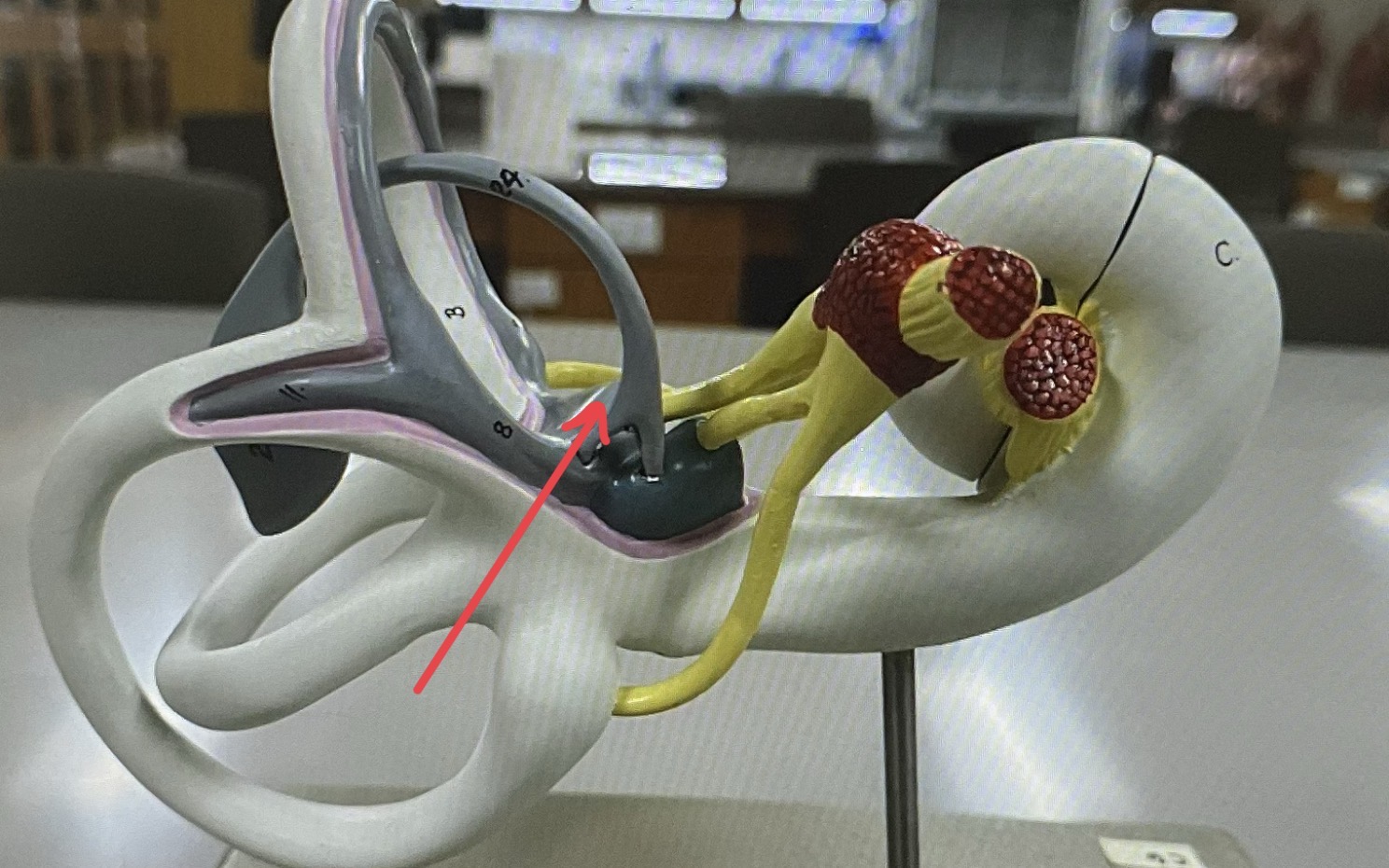
identify this structure
Utricle
horizontal movements

identify this structure
Saccule
vertical movements
movements of the head when the body is static, posture, gravity

identify this structure and what does it contain
semicircular canals
contains the semicircular ducts and involved in dynamic equilibrium (positional and rotation)

identify this structure
semicircular duct

identify this structure and its function
cochlea
which is responsible for hearing

identify this structure
cochlear duct (scala media)
contains the organ of corti and is filled with endolymph
scala vestibuli and scala tympani is filled with what
they are both filled with perilymph

identify this structure
ampulla
Contain crista ampullaris
hair cells covered with a gelatinous cap called a cupula
Moniters dynamic equilibrium
what is the definition of a hair cell and hat are they associated with
Hair cell: the sensory receptors in the semicircular ducts, vestibule (utricle & saccule) & cochlear duct
they are associated with sensory neurons

identify this structure
hair cell
identify this structure
sensory neuron

identify this cell structure
bony labyrinth

identify this cell structure
ampulla

identify this cell structure
crista ampullaris

identify this cell structure
hair cells

identify this cell structure
cochlear duct

identify this cell structure
scala vestibuli

identify this cell structure
scala tympani

identify this cell membrane structure
vestibular membrane

identify this cell membrane structure
tectorial membrane

identify this cell membrane structure
basilar membrane

identify this testing method
weber test
Sound is heard equally in both ears
Equal hearing in both ears (normal hearing)
Equal loss of hearing in both ears
sound is heard unequally
Defective ear does not hear as well as normal ear: Sensorineural hearing loss or deafness
Defective ear hears better than normal ear: Conduction hearing loss or deafness

identify this testing method
Rinne test
Air conduction > Bone conduction
Hearing not impaired (+)
Bone Conduction > Air conduction
Some degree of conduction hearing loss or deafness (-)

what is nystagmus
is involuntary eye movements produced in response to rotating movements
what is Vertigo
is a sensation of dizziness and often accompanies nystagamus
weber test determines sensorineural deafness (presbycusis), but what is the definition of presbycusis
caused by damage of the neural structures

what kind of test is this
rinne test bone conduction

what kind of test is this
rinne test air conduction
weber test determines Conduction deafness, but what is the definition of Conduction deafness
caused by anything that stops the sound conduction to the inner ear