Chem Test 2 (10/22)
 Call Kai
 Learn
 Practice Test
 Spaced Repetition
 Match
 Flashcards
 Knowt Play
1/134

There's no tags or description
Looks like no tags are added yet.
135 Terms
Amines
ammonia that has 1,2, or all hydrogens replaced with carbon (R)
Amine Geometry
trigonal pyramidal 109.5
Amine 1 and 2 bonds
N-H bonds, hydrogen bond in pure solutions with other polar molecules like water
Amine 3 bond
N-C, dipole - dipole, covalent
Amine to Amine BP
1 and 2 have higher BP, because of H bonding, than (3) tertiary
Amine to alcohol BP
lower BP than alcohol of similar size because of lower polarity of N-H bonds compared to OH (alcohol)
Amine solubility
similar to alcohols due to ability to hydrogen bond with water, 1 and 2 more soluble because tertiary doesn’t have N-H bonds so less H bonding
Levels of solubility depending on number of carbons
C3> soluble, C4 somewhat, >C5 insoluble
key functional group in many pharmaceuticals
amines
how do amines work in the brain and body
responsible for physiological activity of neurotransmitters in the brain and other endogenous substances in the body
Alkaloids
naturally occurring compounds that contain amines, examples morphine, codeine, heroin, plant based can come from fugi, bacteria, animals
Bronsted-Lowry Acids in reactions
donate a proton (H+)
Bronsted-Lowry Bases
accept protons (H+)
Ammonia (base) and amines in water
amines will accept a proton from the ammonium ion (NH4+) and hydroxide (OH-)
are reactants or products favored in water
reactants
What happens when an amine reacts with an acid
a neutralization reaction forms and products are favored
accepts proton from water
Conjugate Acid
chemical substance formed when a base accepts a proton during Bronsted Lowry acid-base reaction
Conjugate Base
chemical substance left over after Bronsted Lowry acid donates a proton during chemical reaction
Amine salt solution
soluble in water due to ionic bonds , created when an acid donates a proton to a amine base
Salts
ionic compounds, soluble in water, bioavailable, in an aqueous environment like mucous membranes, blood, stomach; used in chemistry for pharmaceutics
Which is more soluble in water? Ionic compounds (salts) or polar covalent compound
ionic compound salts
Carbonyl
carbon double bonded to a oxygen (C=O)
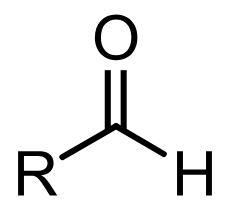
Aldehyde Skeletal and General Structure
RCHO
Ketone Skeletal and General Structure
RCOR

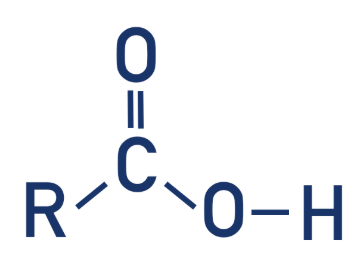
Carboxylic Acid Skeletal and General Structure
RCOOH, RCO2H

Ester Skeletal and General Structure
RCOOR, RCO2R

Amide Skeletal and General Structure
RCONH2, RCONHR, RCOHNR2

Groups always on the end of a molecule (terminal)
Aldehydes, Carboxylic Acid
C=O in Aldehydes
permanent dipole, O has partial negative charge and C has a partial positive

Aldehyde Geometry
trigonal planer 120 degrees
Aldehyde boiling point
C=O is less polar than OH so they cannot hydrogen bond in pure solutions, lower boiling points than alcohols and amines
Aldehyde bonding
dipole-dipole and dispersion forces, can hydrogen bond with water in pure solutions, lower than alcohol

Aldehyde solubility
less soluble than alcohols, increasing carbons decreases solubility
Overal BP Ranking
amides> carboxylic acid> alcohols> amines> aldehydes> ester> ethers> HC
Aldehyde suffix
-al, drop “e“ of “ane”
Ketone Properties
very similar to aldehydes
Ketone Bonding
dipole-dipole, can H bond with water
Ketone BP
lower than alcohols, so close to aldehydes we won’t compare
Ketone solubility
fewer 3 C soluble, larger than 4 C are not
Ketone suffix
- one, replace “e“ of “ane“ with -one, always need locator number
How do carboxylic acids react in water/ in nuetral water
dissociate less, produce fewer H+ ions/ in neutral water it losses a hydrogen to water base and becomes carboxylate ion
Carboxylic Acids are _ _ Acids
weak, organic, weak, they donate a proton (H+)
Carboxylic acid physical properties
depend on the pH of the environment
Carboxylic Acid pH
around 7.4, slightly above neutral
Carboxylic acids will be in which form
carboxylate form
Carboxylic Acid neutral form
Carboxylic Acid carboxylate form

Carboxylic Acids BP
higher than alcohols
Carboxylic Acid Dimer
hydrogen bond in 2 places, strong H-bond with itself due to OH bond, held together by covalent bond sor intermolecular forces

Carboxylic Acid Solubility
more soluble than alcohols due to H bonding
Carboxylic Acid suffix
-oic, leave space between the parent and acid
Carboxylate suffix
-oate
Benzene + carboxylic acid
benzoic acid

Carboxylic Acid Derivative
esters, amides
Ester Bonding
dipole-dipole interactions, in pure solutions, weaker than alcohols or carboxylic acids, can H-bond in water
Ester BP
greater than alkenes lower than carbonyls and alcohol
Ester Solubility
soluble in water with less than 4 C
Ester smell
pleasant, fruity
Ester suffix
-oate, leave a space between the substituents and parent
Amine group location
must be directly attached to carbonyl carbon
Properties of amines vs. amides (organic bases)
amines
Properties of amines vs. amides (form ions at physiological pH)
amines
Properties of amines vs. amides (has some double bond character)
amides
Properties of amines vs. amides (influences shape of proteins)
amides
Amides 1/2 BP
higher than carboxylic acids and can form dimers
Amides 3 BP
lower than primary and secondary, bc no hydrogen for H bonding
Amide vs carboxylic acid form at room temp
amides are solid, carboxylic acids are liquid
Peptides and biomolecules are made from BLANK and connected by BLANK
amino acids, amide bonds - C (=O) - N -H -
Locator number for nitrogen R groups in amides
use “N”
Amide suffix
amide, hexanamide
Reactive sites of a molecule
functional groups
Organic reactions are
transformation of one functional group to another, changes number of c-c bonds, typically one is changed at a time
Biochemical reactions
happen inside of cells using enzymes and coenzymes
how are biochemical reactions done in a lab
synthesized using different chemical reagents and conditions like heat, reagents, catalysts, etc.
Compare biochemical and lab reactions
reactions and products are the same with different routes
number of Biochemical reaction enzyme classes
6, only 4 asked
enzyme suffix
-ase
Oxidation/reduction
oxidoreductases
Acyl Group transfers
transferases
Hydrolysis
hydrolases
hydration/dehydration
lyases
Oxidation-Reduction Reactions
reactant that gains electrons is reduced; reduction refers to a reduction in the charge of the ato, more electrons means more negative charge
Oxidation
increases charge, more positive, C-O bonds increased, C-H bonds decreased, C-C bond can also increase
Reduction
C-O bonds decrease, C-H bonds increase, more negative charge
Oxidizing Agent
loses oxygens, gains hydrogens, reactant that is reduced
Oxidizing agent symbol
[O]
Reducing agent
more oxygen, less hydrogen, reactant that is oxidized
Reducing Agent Symbol
[H]
Common Oxidizing Agents in a lab
NaOCl Bleach
O2 oxygen
H2O2 hydrogen peroxide
(Cr6+) Chromium VI
Common Oxidizing Agents biological
NAD+
FAD
Common reducing agents in a lab
hydrogen gas H2, sodium borohydride (NaBH4)
Commom reducing agents biological
NADH, FADH2
Alkane to alkene
Industrial Synthesis catalytic hydrogenation, needs a catalyst it start, hydrogen gas as a reducing agent, and a heavy metal like Pd or Pt, converts oil to fats
What makes trans fats
trans double-bonded, called hydrogenated or partially. hydrogenated
Oxidation of an alkane
succinate to fumarate,
c-c between 2 and 3 becomes an alkene,
FAD is coenzyme,
FAD →FADH2
Redox of C-C bonds
FADH2
Oxidaizing agent for C-C
FAD from vitamin B2
(oxidation)1* Alcohol →
aldehyde
(oxidation) aldehyde →
carboxylic acid