Unit 3 Orgo Chem Lecture 1
 Call Kai
 Learn
Learn Practice Test
 Spaced Repetition
 Match
Match Flashcards
 Knowt Play
1/24

Earn XP
Description and Tags
Carboxylic Acid derivatives
Name | Mastery | Learn | Test | Matching | Spaced | Call with Kai | Chat |
|---|
No analytics yet
Send a link to your students to track their progress
25 Terms
Acyl substitution
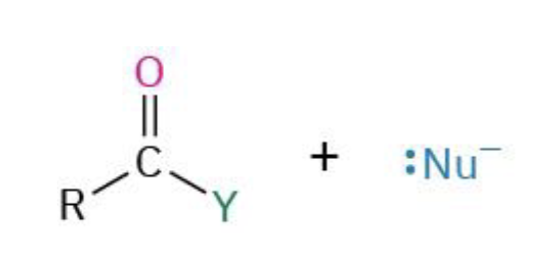

reactivity corresponds with
reactivity of conjugate acid of leaving group
ex. acid chloride is most reactive, HCl con acid is very acidic
nucleophilic addition is
RLS
same factors that determine electrophilicity determine acidity
reactivity order
acid chloride > acid anhydride > ester > amide
making an acid chloride from carboxylic acid

react with SOCl2

turning carb acid into acid chloride


Vilsmier reagent

Making an acid chloride using vilsmeier reagent


DMF was catalyst! regenerated
making the vilsmier reagent


Fisher esterification:
carboxylic acid → ester via acid catalyst
Example fisher esterification

weak nucleophile attacks
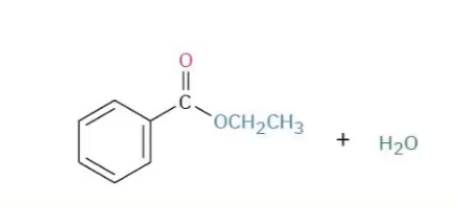
OH made good LG via protonation
need excess of one reagent
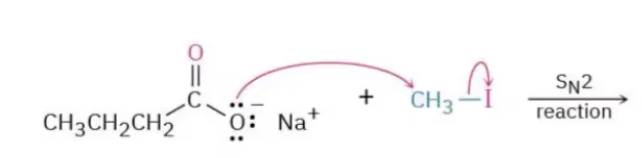
other rxn to make an ester from carb acid

making amides from carboxylic acids
use a carbodiamide
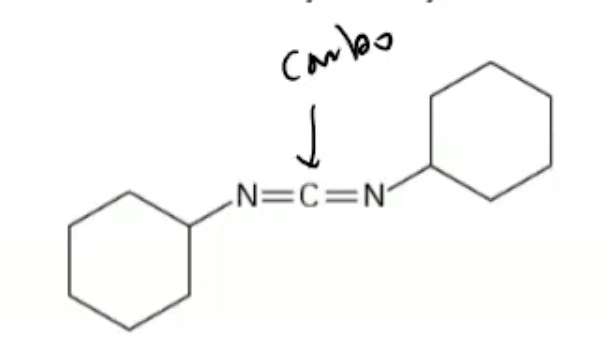

mechanism of amide creation with carb acid

Peptide synthesis


must protect the RHN and OR groups first!
strings peptides together
tBOC of fBOC
protects the RHN and RO in
deprotecting
remove tBOC or fBOC
remove tBOC with CF-C=O-OH
fMOC removed with piperidine
carboxylic acids to alcohol
use LiAlH4 with H+ or BH3, THF with H3O+

example with LiAlH4

if you want a nitrile group to remain intact
use BH3, THF H3O+, LiAlH4 will reduce everything!
it’s a more selective, milder reagent
making a carb acid from acid chloride


making an alcohol from an acid chloride

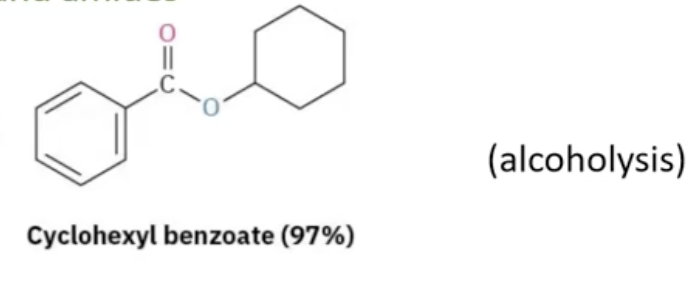
reducing acid chlorides with LiAlH4

with girngard reagent
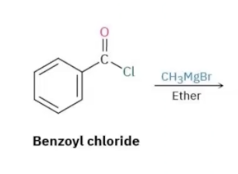
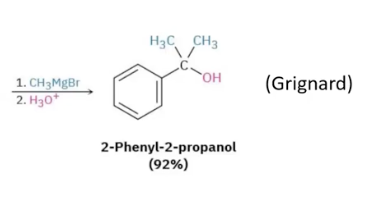
Acid chloride reaction with gilman

